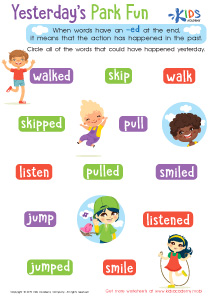
Fine Motor Skills Easy Kindergarten Color Words Worksheets
3 filtered results
-
From - To
Enhance your child's fine motor skills with our Easy Kindergarten Color Words Worksheets! Designed specifically for young learners, these engaging activities help children practice essential motor skills while exploring the vibrant world of color words. Each worksheet features fun, age-appropriate exercises that encourage gripping, coloring, tracing, and writing, promoting hand-eye coordination and dexterity. Perfect for both classroom and home use, these worksheets support the development of early literacy while making learning enjoyable! Ignite your child's creativity and self-expression through playful learning experiences that will build their confidence in using color words. Download now to inspire your little one's educational journey!
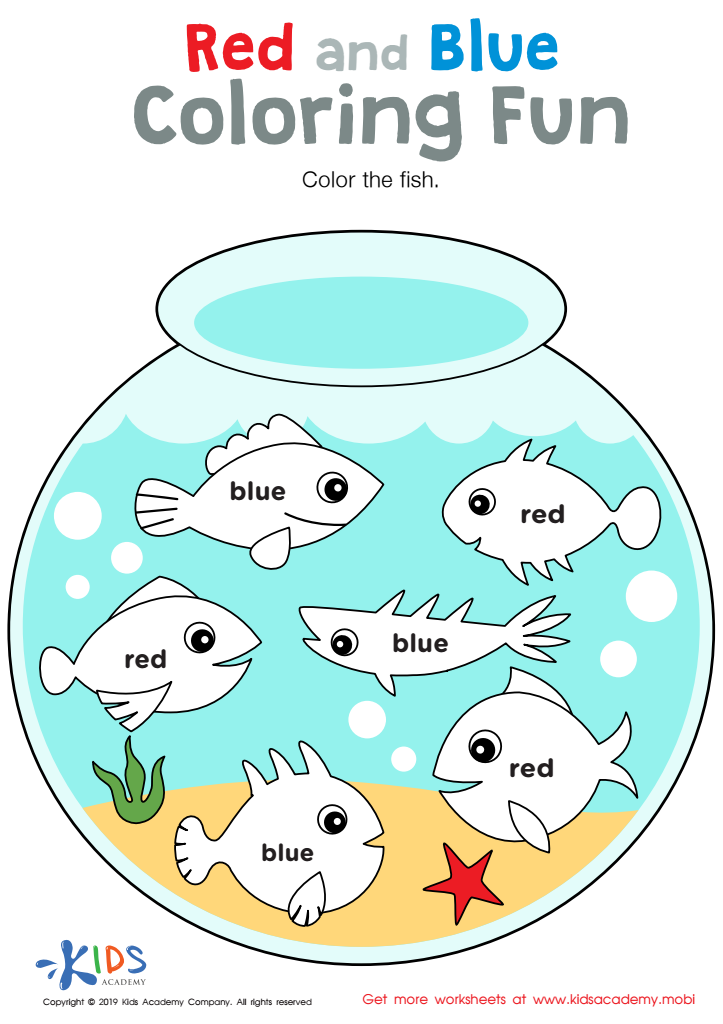
Red and Blue Coloring Fun Worksheet
 Assign to My Students
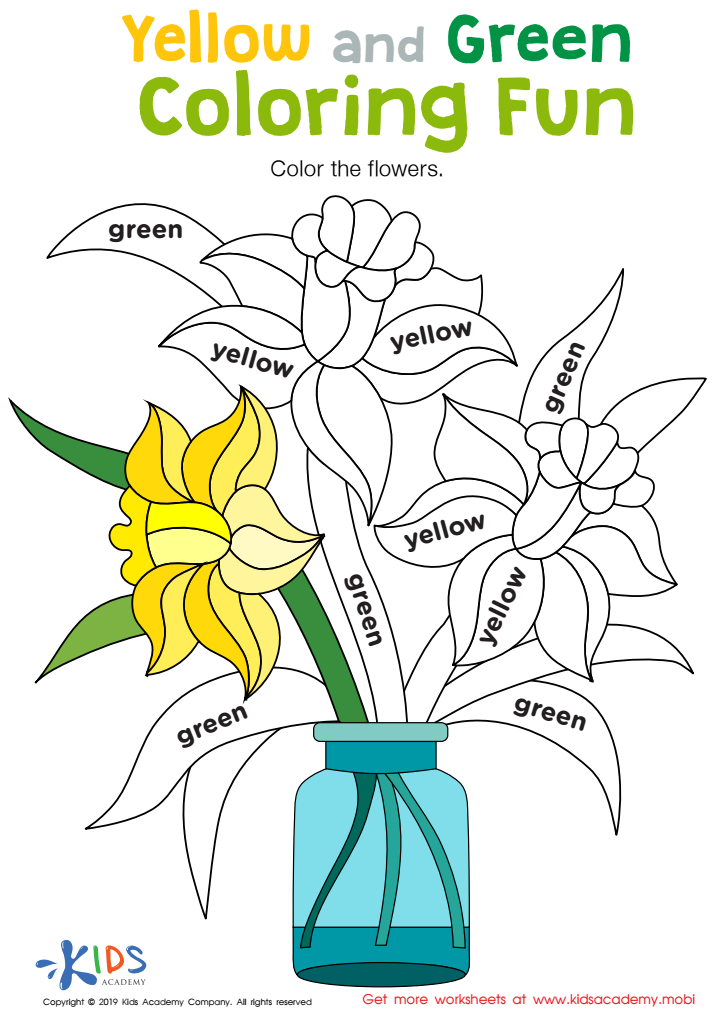
Yellow and Green Coloring Fun Worksheet
Assign to My Students
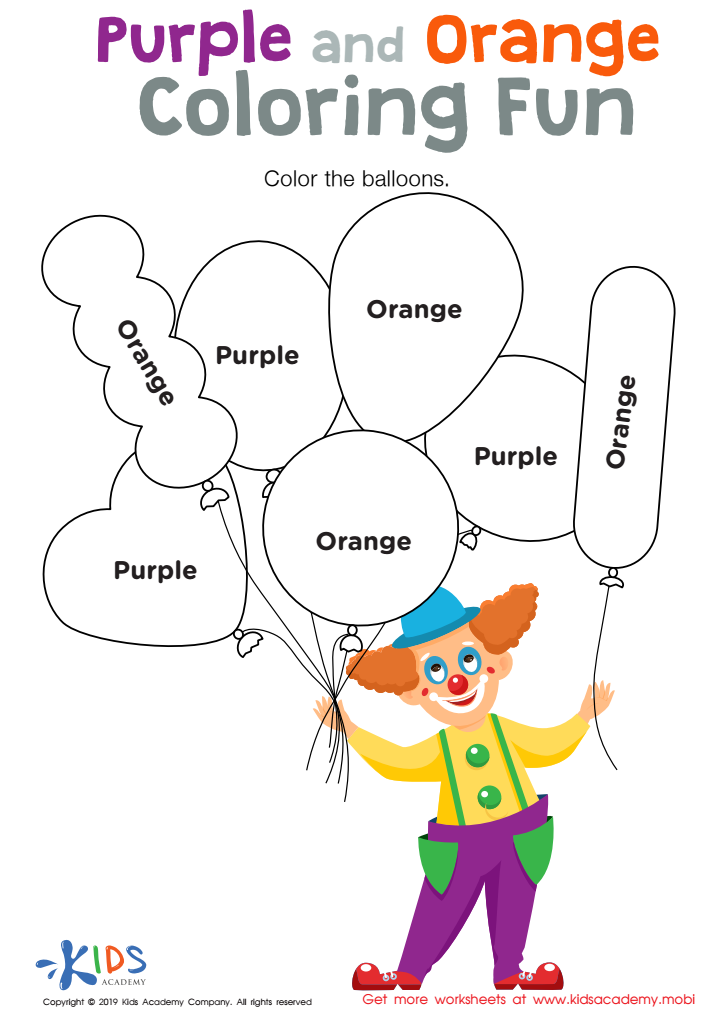
Purple and Orange Coloring Fun Worksheet
Assign to My Students


Fine motor skills are crucial for children's overall development and play a significant role in their early education, particularly in kindergarten. These skills involve precise movements using small muscles in the hands and fingers, which are essential for everyday tasks. Parents and teachers should care about developing fine motor skills for several reasons.
First, fine motor skills enhance children's ability to perform activities like writing, cutting with scissors, and buttoning their clothes, fostering independence and boosting self-esteem. Engaging children in activities that incorporate fine motor skills, like coloring, can make learning fun while subtly reinforcing fundamental concepts like color recognition.
Moreover, strong fine motor skills are linked to cognitive development. As children manipulate crayons or play with small toys, they improve hand-eye coordination and spatial awareness, which are critical for more complex tasks in the future.
Encouraging fine motor activities, such as working on "Fine Motor Skills Easy Kindergarten Color Words," can directly support language development as children learn to recognize and write color words. This multifaceted approach to skill development not only prepares children for academic success but also equips them with valuable life skills, making it essential for both parents and teachers to prioritize fine motor activities in early education.