Sorting skills Easy Kindergarten Worksheets
5 filtered results
Difficulty Level
Grade
Age
-
From - To
Subject
Activity
Standards
Discover our "Sorting Skills Easy Kindergarten Worksheets," designed to enhance early learners' sorting abilities through engaging and interactive activities. These worksheets provide a fun way for young children to identify and classify objects based on various attributes, such as size, color, and shape. Each worksheet incorporates vibrant images and simple instructions that make learning enjoyable. Perfect for home or classroom use, our resources help strengthen critical thinking and cognitive skills in kindergarten students. Encourage exploration and creativity as children practice sorting while developing essential foundational skills for their educational journey. Try our free printable worksheets today and watch your child's confidence grow!
Favorites
With answer key
Interactive
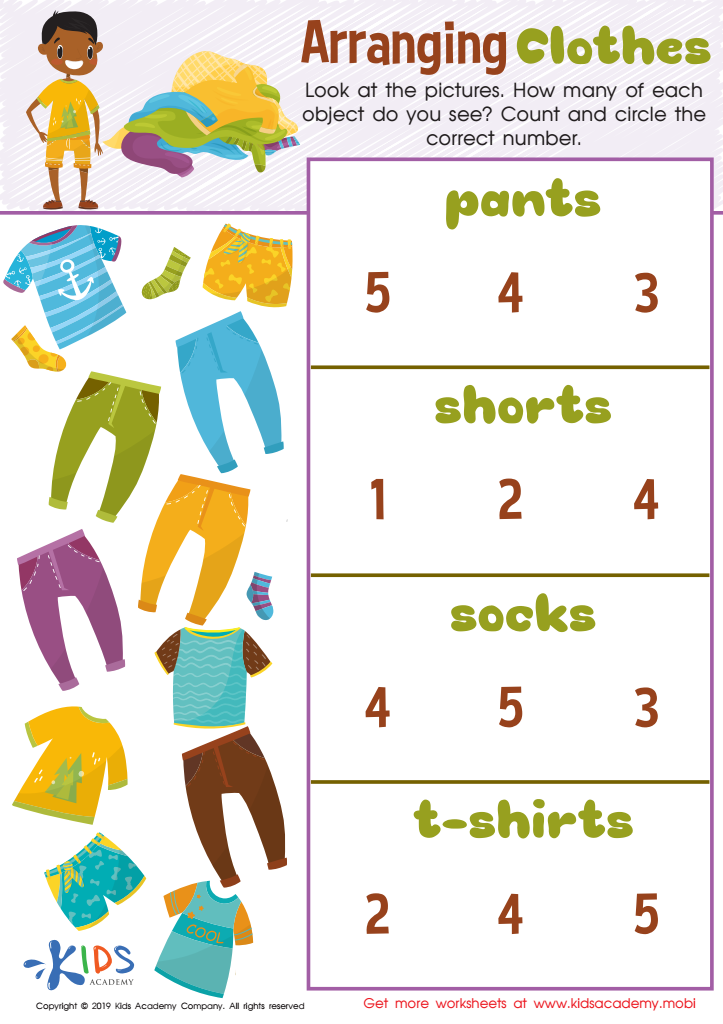
Arranging Clothes Worksheet
This worksheet uses familiar items, brightly colored to attract your kids. Ask them to name each item, then count them and circle the right number.
 Assign to My Students
Arranging Clothes Worksheet
Worksheet
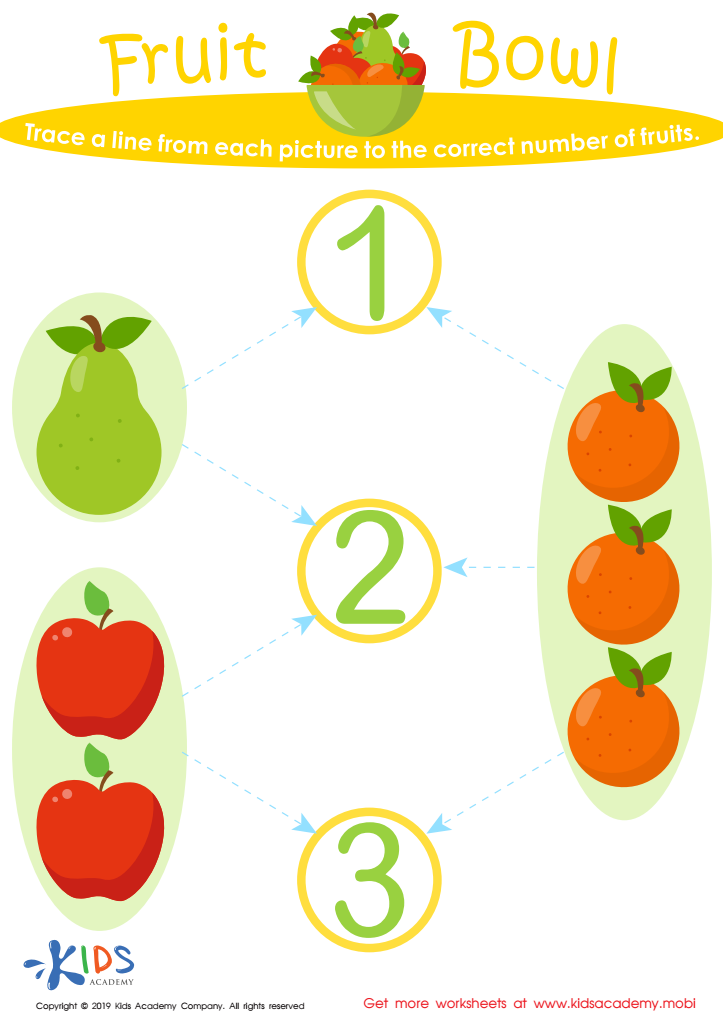
Fruit Bowl Worksheet
Kids love counting fruit! This fun math worksheet lets them count the number of fruit in each group and use the traceable lines to connect the correct number. It's a great way to learn one-to-one number representation, plus it's yummy and delicious!
Fruit Bowl Worksheet
Worksheet
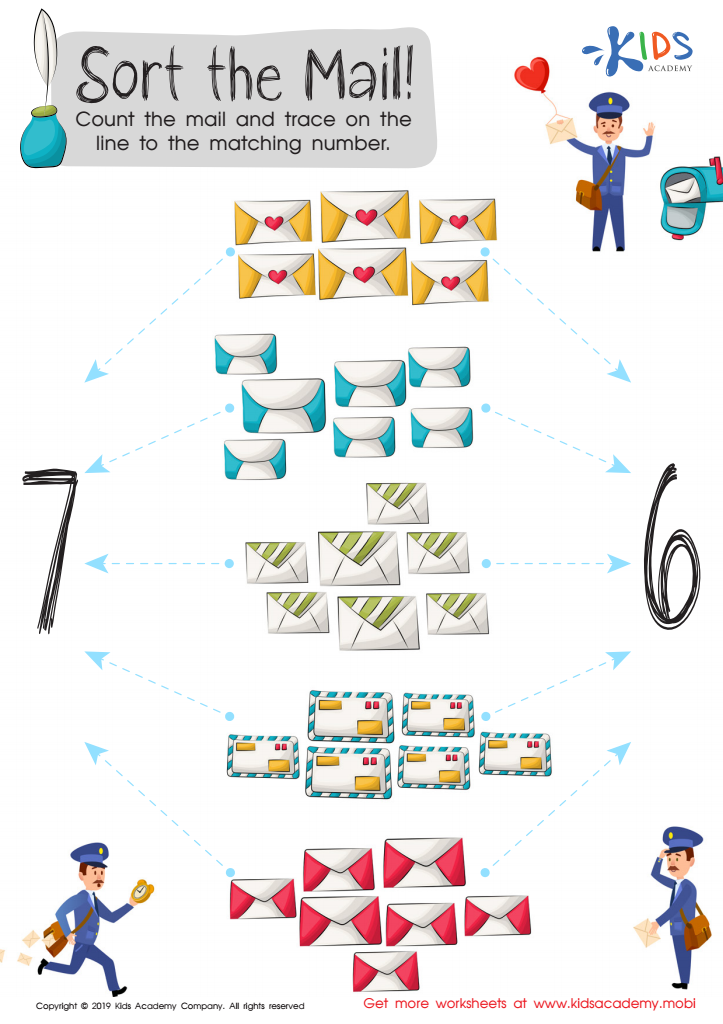
Sort the Mail Worksheet
Kids can learn number sense with one-to-one representation! This worksheet helps them connect groups of letters with the correct numbers by tracing the lines. They'll count and decide whether each group has 6 or 7 envelopes. This exercise gives children a better understanding of numerical representation.
Sort the Mail Worksheet
Worksheet
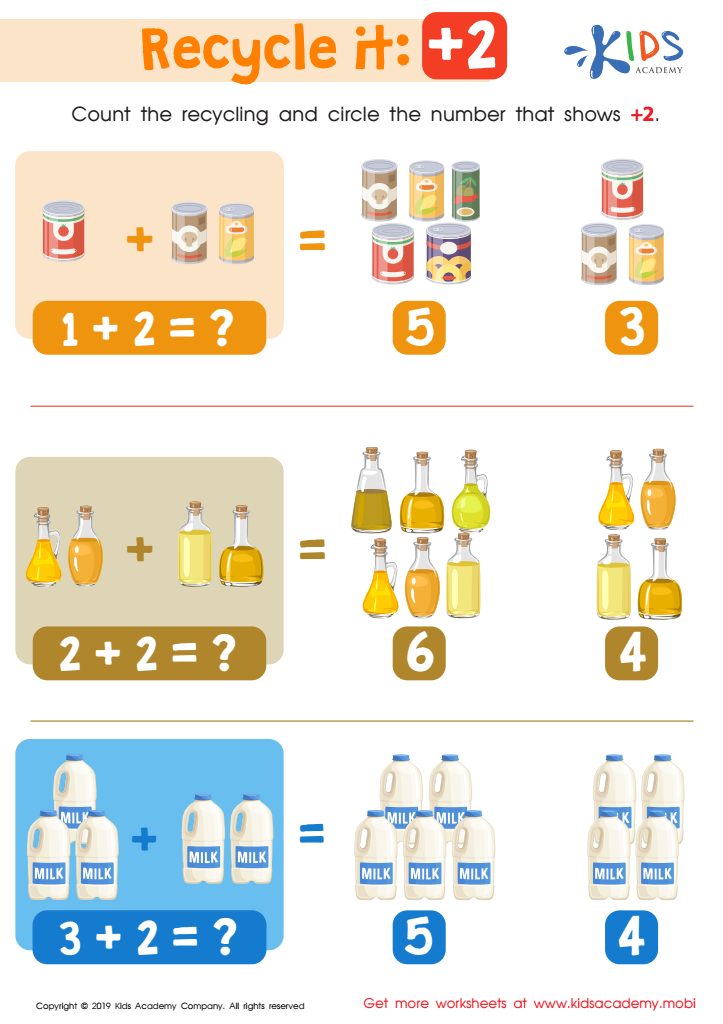
Recycle It: +2 Worksheet
Your kindergartners likely count everything they see, which is great for practice. Give them simple exercises such as in this worksheet to stimulate their minds. Ask them to count the recycling cans and then circle the number that shows +2.
Recycle It: +2 Worksheet
Worksheet
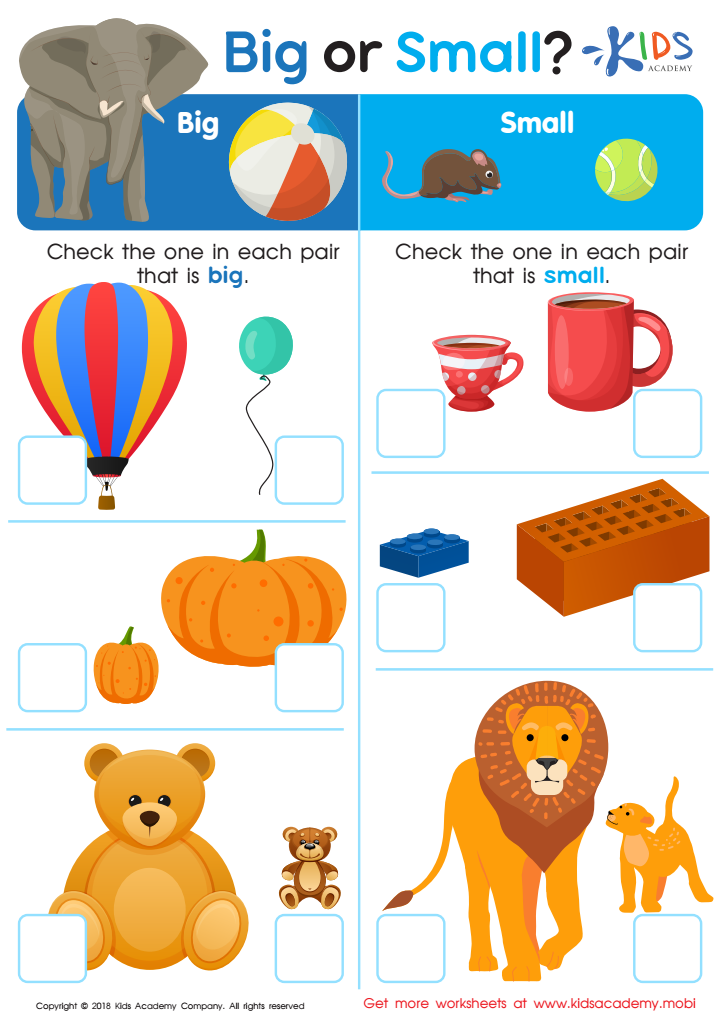
Big or Small? Worksheet
Kids need visuals to understand bigger and smaller concepts. This free PDF worksheet offers fun pictures that let them compare and gain a stronger understanding of sizes. Kids will enjoy it and won't realize they're learning since the pictures are so engaging. It's great preparation for future measurements.
Big or Small? Worksheet
Worksheet
Join Kids Academy for Free
Who is primarily going to use this learning content?


%20(1).jpg)

.jpg)


Sorting skills serve as a fundamental building block for young children’s cognitive development, making them crucial for parents and teachers to emphasize, especially in kindergarten. These skills enable children to categorize and organize information, fostering critical thinking and problem-solving abilities. When children learn to sort objects by attributes such as size, shape, color, or function, they are not just engaging in a fun activity—they are honing their observational skills and developing their ability to make comparisons.
Sorting activities also promote language development as children learn to articulate the criteria used for grouping. This not only expands their vocabulary but also strengthens communication skills. Furthermore, sorting is integral to mathematics, preparing young learners for more complex concepts in addition, subtraction, and data handling later on.
Moreover, sorting can enhance fine motor skills as children manipulate various objects, while also encouraging social skills through collaborative sorting games. As parents and teachers foster sorting skills in a playful and engaging manner, they are setting the stage for academic success and lifelong learning. Ultimately, supporting sorting skills in early learning experiences equips children with essential tools for understanding and navigating the world around them.