Understanding Sequences Easy Kindergarten Worksheets
4 filtered results
Difficulty Level
Grade
Age
-
From - To
Subject
Activity
Standards
Introduce young learners to the foundational concept of sequences with our "Understanding Sequences Easy Kindergarten Worksheets." Designed specifically for kindergarteners, these engaging and colorful activities guide children step-by-step through recognizing and completing sequences. Each worksheet features a variety of fun patterns using familiar objects, helping kids build essential math and critical thinking skills. Perfectly suited for home or classroom use, our worksheets make learning sequences enjoyable and accessible. Empower your child with the confidence to identify and extend patterns, an important stepping stone in their educational journey. Download and print now to start building a solid math foundation.
Favorites
With answer key
Interactive
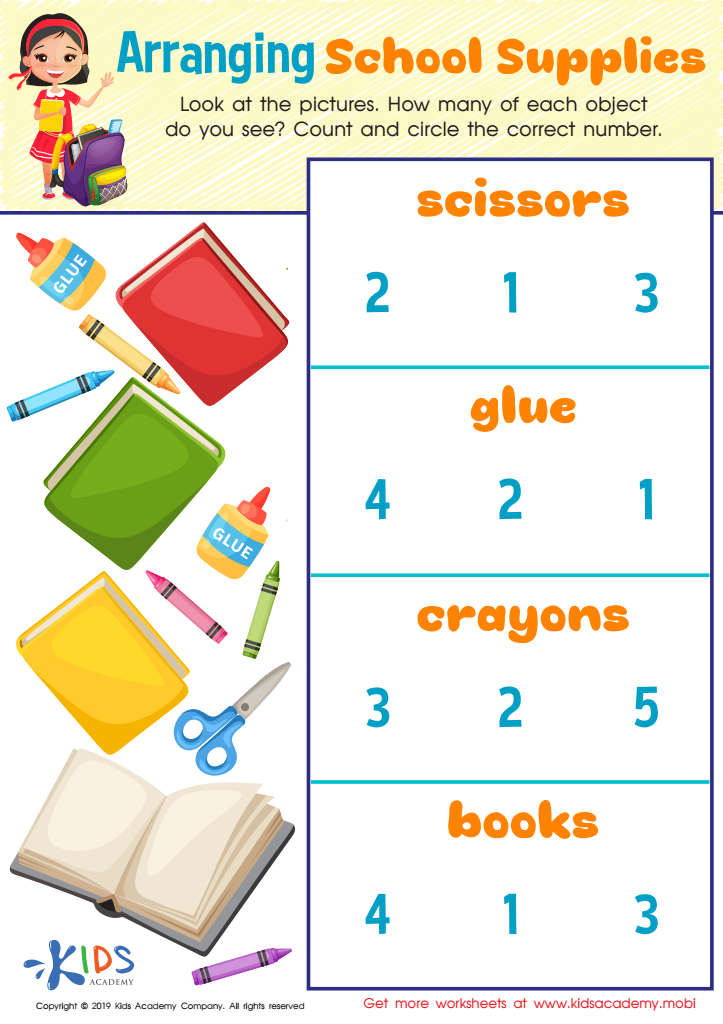
Arranging School Supplies Worksheet
Help your kids identify and count the school supplies in this colorful printout. Ask them to circle the correct number from the options provided. This is an easy and fun way for your child to practice their counting skills and recognize everyday objects.
 Assign to My Students
Arranging School Supplies Worksheet
Worksheet
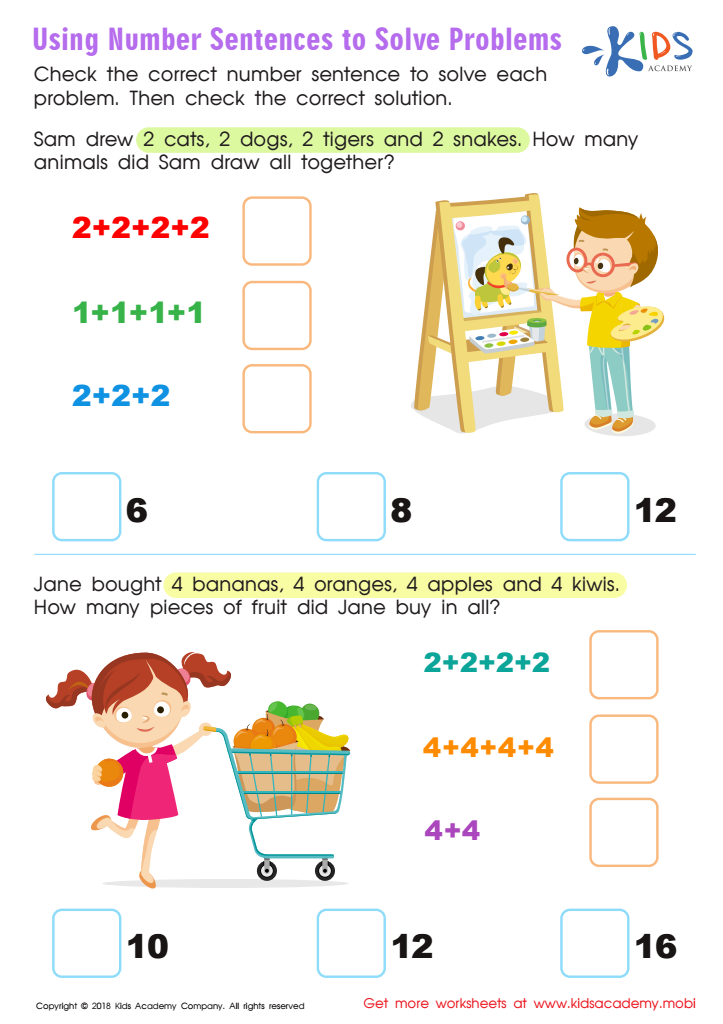
Using Number Sentences to Solve Problems Worksheet
Solving math problems requires an efficient strategy. Picture representation can help young mathematicians with basic addition problems, especially when it involves repeated addends. As they gain confidence, they'll be able to apply their number sentence solving abilities to more complex equations.
Using Number Sentences to Solve Problems Worksheet
Worksheet
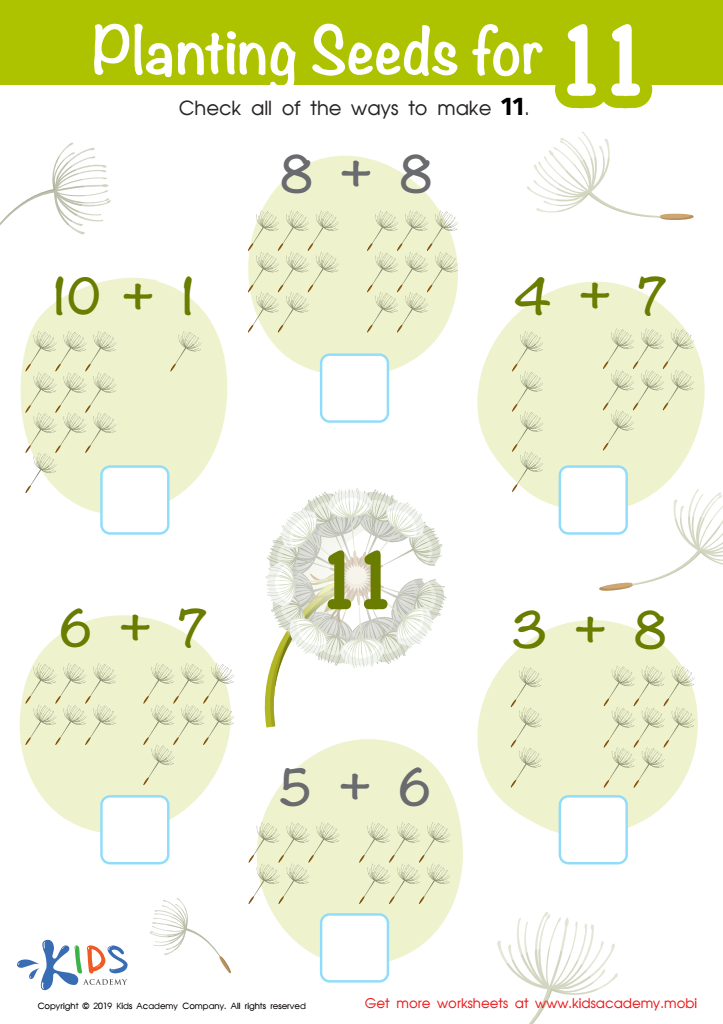
Planting Seeds for 11 Worksheet
Before starting, ask your students to count as high as they can. Explain that different numbers can add up to the same total. Give examples like 2+2 =4 and 3+1 =4. Ask if they can think of other examples. Then have them work through the equations in the printout and circle all that add up to 11.
Planting Seeds for 11 Worksheet
Worksheet
Haystack Steps Worksheet
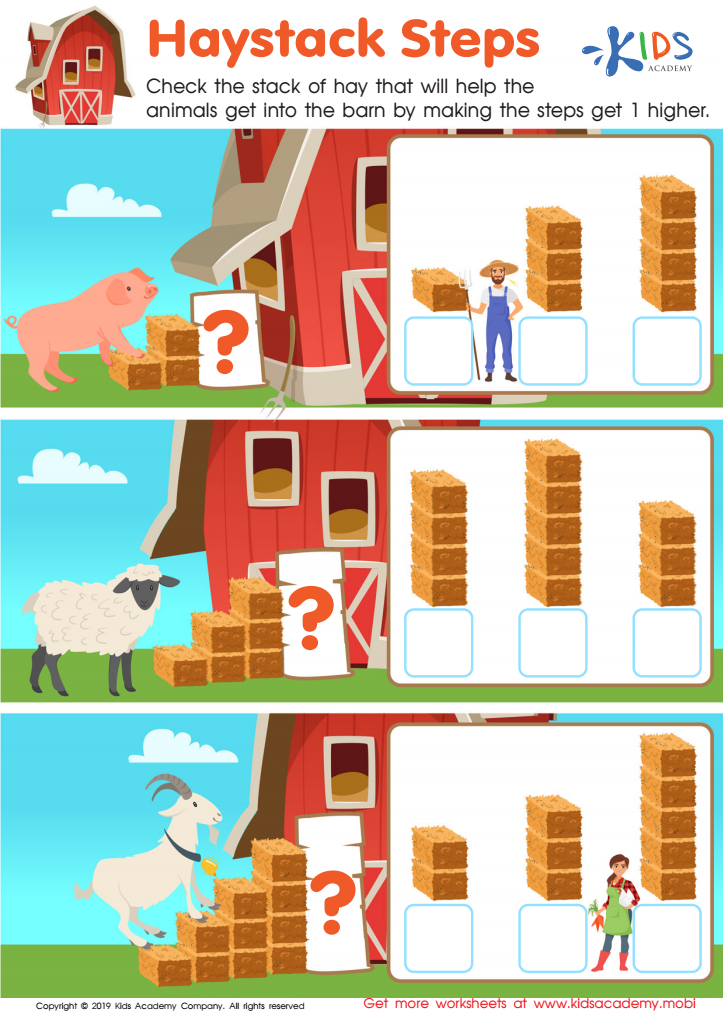
Have your kids ever visited a farm? What activities and sights did they enjoy? Farmers are essential to our lives, growing food and providing us with dairy and eggs. In this worksheet, a farmer has made a haystack for his animals to climb into the barn. Ask your kids to add an extra layer to the stack to make the climb easier.
Haystack Steps Worksheet
Worksheet
Join Kids Academy for Free
Who is primarily going to use this learning content?







Understanding sequences in kindergarten is pivotal as it lays the foundation for several critical cognitive and academic skills. First and foremost, recognizing and predicting sequences fosters logical thinking and problem-solving abilities. This early exposure helps children understand patterns, which are fundamental to mathematics, including arithmetic progression and algebra.
Sequences also enhance memory skills. When children learn to identify patterns, they practice recalling what comes next, which strengthens their short-term and long-term memory. This is beneficial not only in math but in reading and everyday tasks as well.
Furthermore, sequences underpin understanding concepts of order and organization, essential skills for following multi-step instructions and later, planning and organizing tasks independently.
In terms of language development, recognizing sequences builds narrative skills. Knowing the order of events helps children in storytelling, comprehension, and grammar.
Lastly, sequences in daily activities, like routines, foster a sense of predictability and security, which is crucial for young children's emotional development. By knowing what comes next, children feel more in control of their environment, reducing anxiety and promoting confidence.
Parents and teachers investing time in teaching sequences equip children with foundational skills that support lifelong learning. These efforts translate to better academic performance and holistic development.