Counting practice Easy Kindergarten Addition Worksheets
4 filtered results
Difficulty Level
Grade
Age
-
From - To
Subject
Activity
Standards
Introducing our Counting Practice Easy Kindergarten Addition Worksheets, the perfect tool to help your little learners build a strong mathematical foundation. Designed for ages 4-6, these engaging worksheets focus on simple addition concepts using fun visuals and interactive activities. Each worksheet aims to enhance counting skills, boost confidence, and encourage a love for numbers. Whether at home or in the classroom, our worksheets make learning addition enjoyable and effective. Developed by experienced educators, these resources ensure that your child’s early math experiences are positive and successful. Download now to set your kindergartener on the path to numeracy mastery!
Favorites
With answer key
Interactive
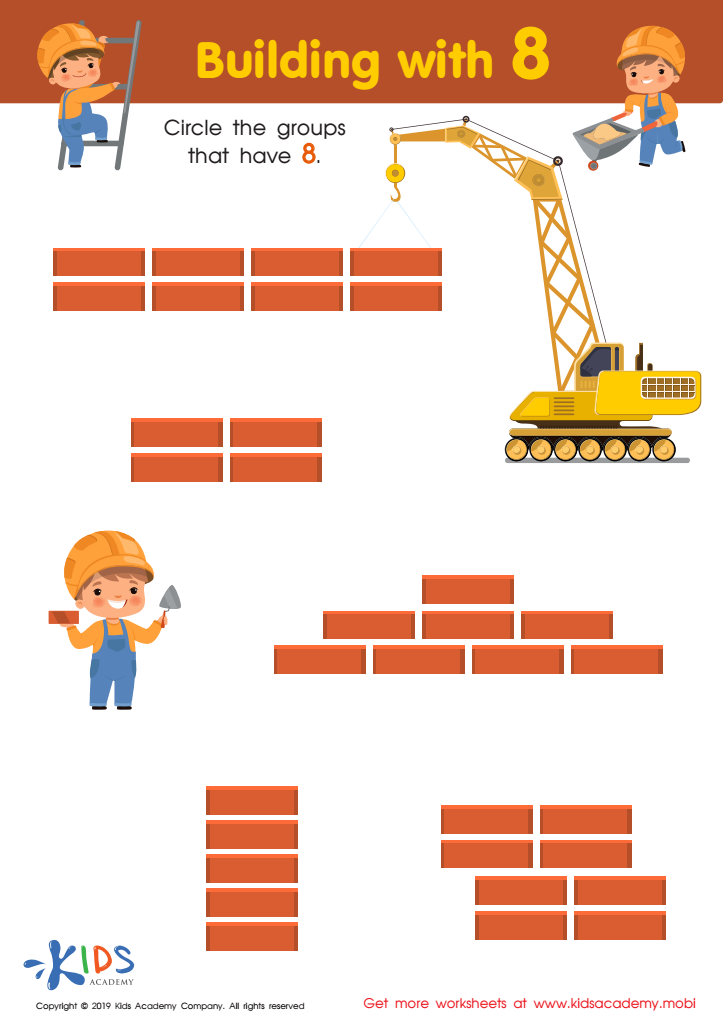
Building with 8 Worksheet
Your child can learn more with this simple exercise! Get them counting and help them circle the groups of 8 bricks. It's a great addition to their post-school lessons, supporting their counting skills. Plus, it's a fun way to learn!
 Assign to My Students
Building with 8 Worksheet
Worksheet
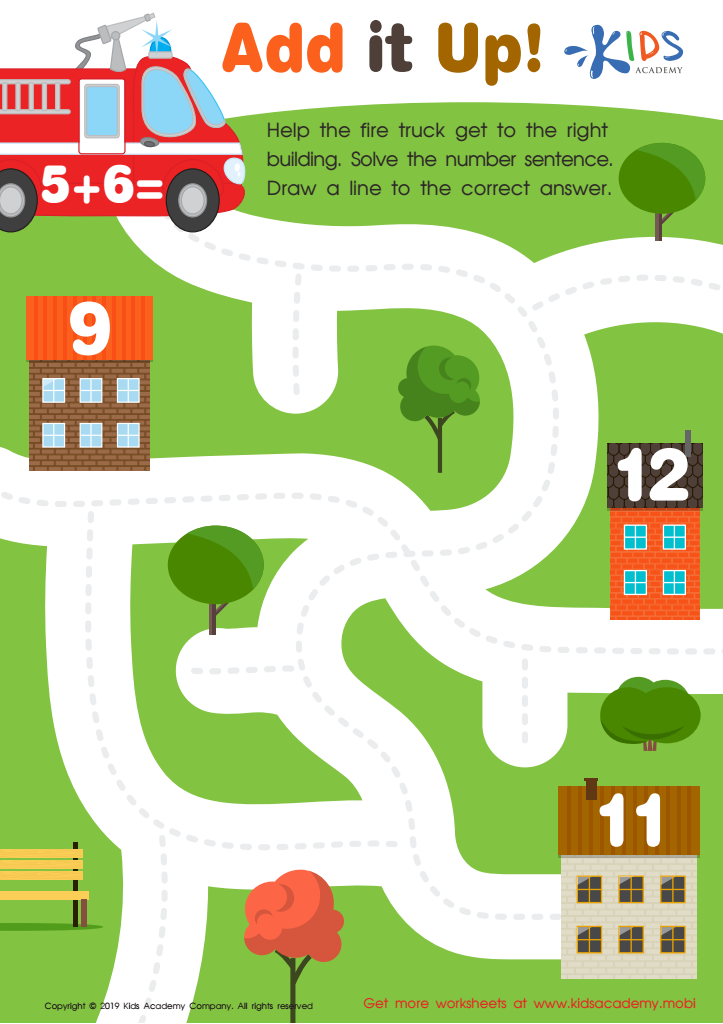
Add it Up Worksheet
The fire service is the right number to call in case of a fire. Test your children's safety knowledge by asking them other emergency numbers. Have them identify the fire truck in the worksheet and solve the number sentences. Guide them in drawing a line to the right answer.
Add it Up Worksheet
Worksheet
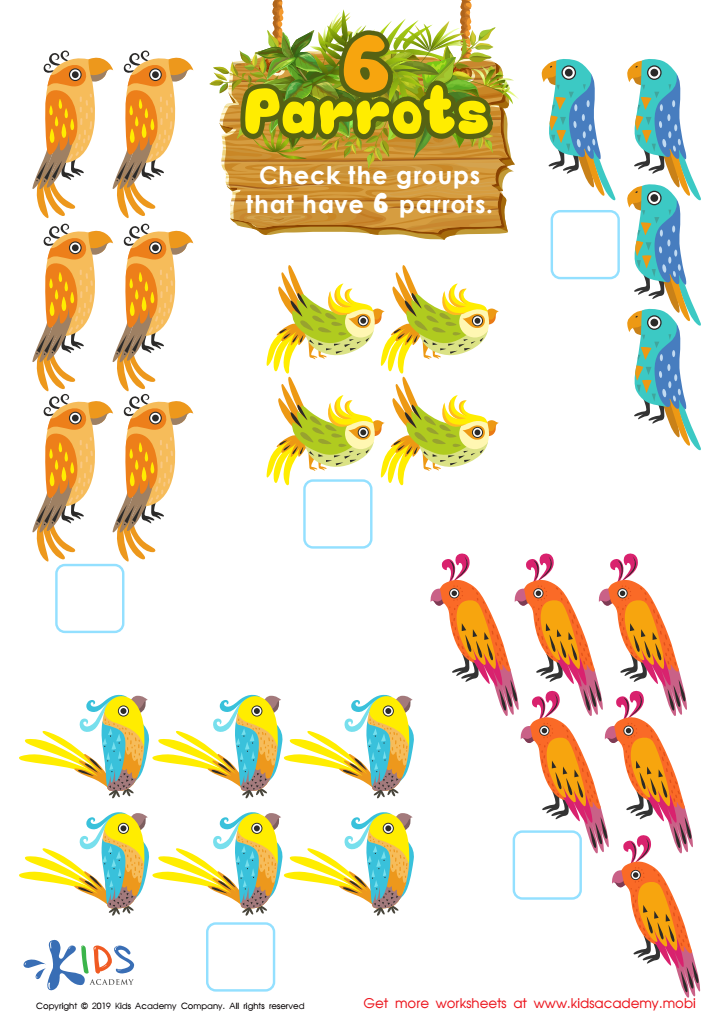
6 Parrots Worksheet
Love parrots? Here's a free worksheet to help your children practice counting to six with colorful parrot representations! Kids will adore counting the parrots and checking off groups of six - and it won't even feel like math! Just a fun way to make some new and exciting friends.
6 Parrots Worksheet
Worksheet
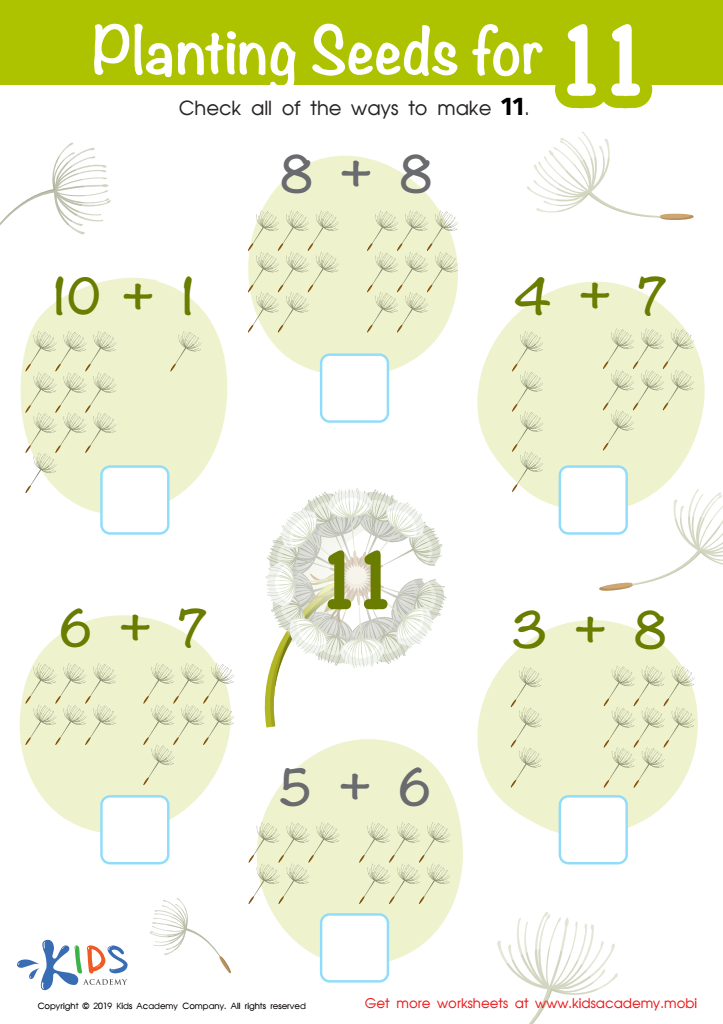
Planting Seeds for 11 Worksheet
Before starting, ask your students to count as high as they can. Explain that different numbers can add up to the same total. Give examples like 2+2 =4 and 3+1 =4. Ask if they can think of other examples. Then have them work through the equations in the printout and circle all that add up to 11.
Planting Seeds for 11 Worksheet
Worksheet
Join Kids Academy for Free
Who is primarily going to use this learning content?








Counting practice and easy kindergarten addition form foundational math skills critical for early childhood education. These concepts lay the groundwork for more complex mathematical operations and problem-solving abilities that children will encounter as they progress through school. Here's why parents and teachers should prioritize these basic skills:
-
Builds Numeracy Skills: Mastery of counting and simple addition equips children with essential numeracy skills. Being able to recognize numbers, count items, and perform basic operations makes math less intimidating and more approachable.
-
Enhances Cognitive Development: Engaging in counting exercises and simple addition problems promotes cognitive growth. It helps develop logical thinking, memory, and analytical skills, all of which are essential for effective learning in other subject areas.
-
Encourages Confidence: Early success in counting and addition can bolster a child’s confidence in their abilities. Positive early learning experiences are critical for shaping a child’s attitude towards future challenges in math and other disciplines.
-
Exploration of the World: Counting and adding are practical skills children use to understand and interact with their environment. Whether it's partitioning snacks, counting toys, or adding days to a calendar, these skills are used daily.
Fostering these abilities in a fun and engaging manner helps establish a strong educational foundation, making the transition to advanced mathematical concepts smoother and more enjoyable. By investing time in counting practice and simple addition activities, parents and teachers can set children up for long-term academic success and practical life skills.