Shape Recognition Easy Kindergarten Numbers Worksheets
3 filtered results
-
From - To
Explore our Shape Recognition Easy Kindergarten Numbers Worksheets, designed to enhance young learners' understanding of shapes and numbers in a fun, engaging way! These worksheets provide colorful, interactive activities that help children recognize various geometric shapes while associating them with numeric concepts. Perfect for early childhood education, these worksheets promote fine motor skills and critical thinking. Each page is thoughtfully crafted to make learning enjoyable, ensuring that children develop a strong foundation in math. Whether at home or in the classroom, our printable worksheets are a great resource for parents and teachers alike to support preschoolers in mastering essential skills.
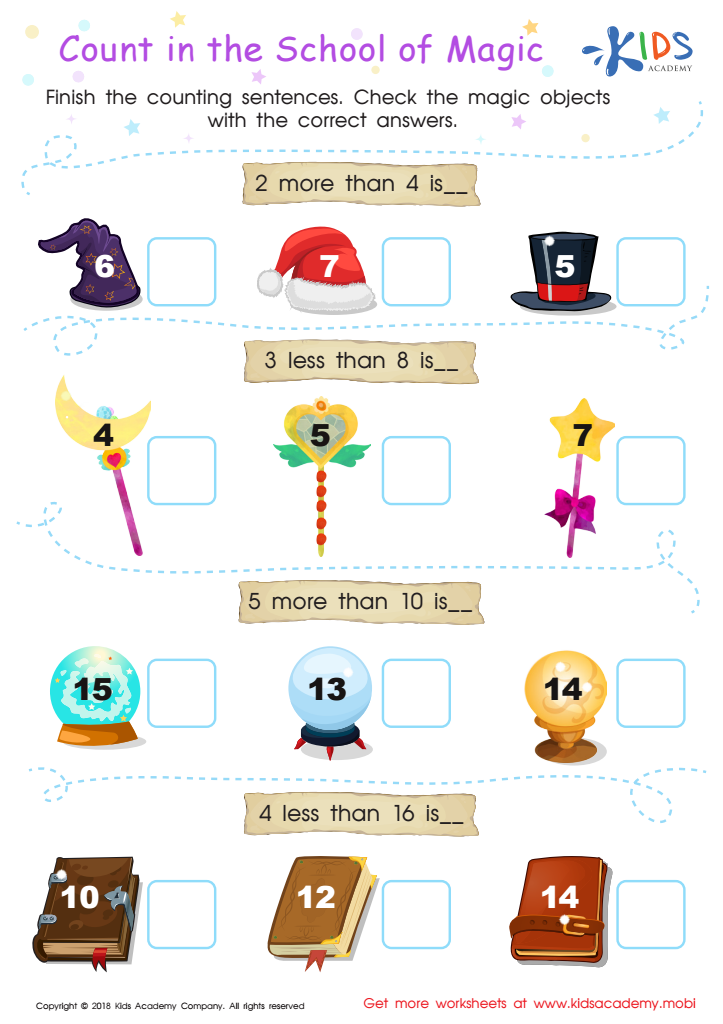
Count in the School of Magic Worksheet
 Assign to My Students
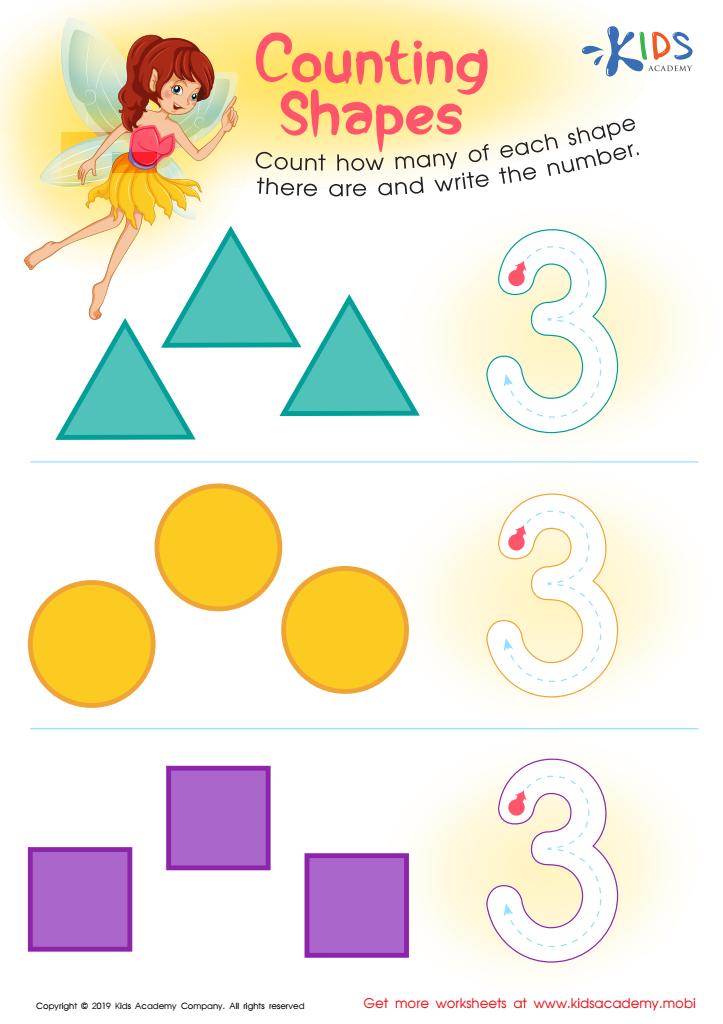
Counting Shapes Worksheet
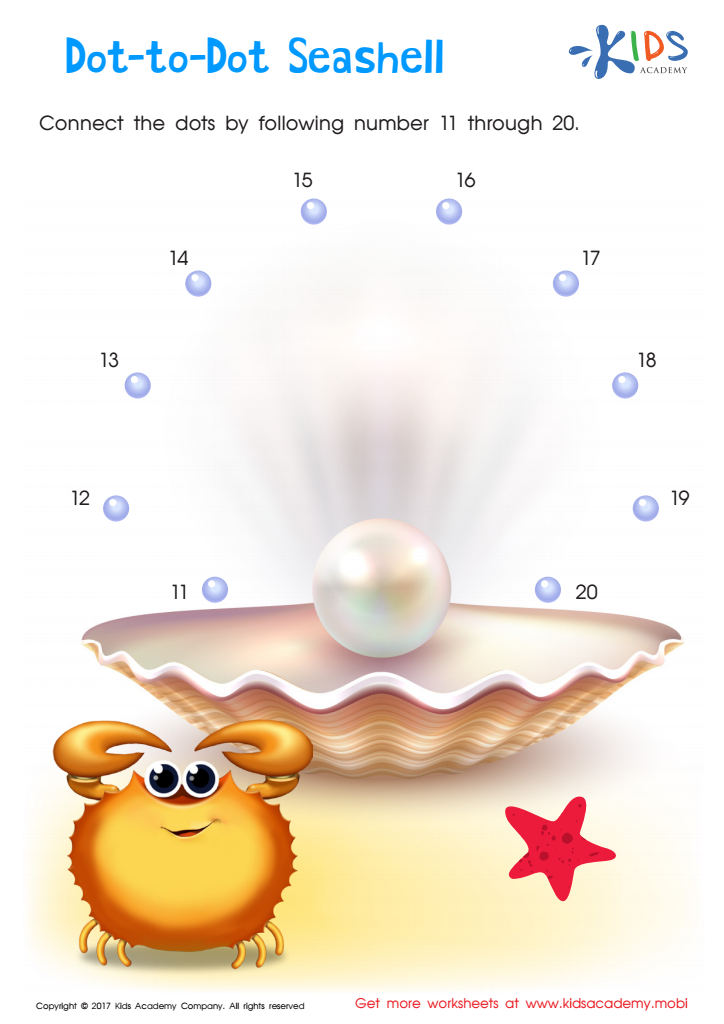
Ordering 11–20: Dot–to–dot Seashell Printable


%20(1).jpg)

.jpg)



Shape recognition is a fundamental skill for young children, particularly in kindergarten, as it lays the groundwork for mathematics and critical thinking. Understanding shapes helps children identify and sort different objects, which enhances their visual perception and cognitive development. When children can recognize and name shapes, they foster their mathematical vocabulary, essential for future learning in geometry and spatial awareness. Moreover, engaging with shapes introduces concepts of symmetry, patterns, and measurement, which are critical in later stages of mathematics.
Incorporating shape recognition with numbers in an early grade classroom promotes a holistic approach to learning. This method creates a supportive environment where children can make connections between shapes and numerical quantities. For instance, understanding that groups of shapes can represent data or quantities is crucial for problem-solving skills. Additionally, it ignites creativity as children explore various uses of shapes in daily life, art, and nature.
Parents and teachers should prioritize enhancing shape recognition skills in kindergarten because these concepts are essential stepping stones toward more complex mathematical understanding and everyday decision-making. By attending to this foundational area, they ensure that students are better prepared for future academic challenges while nurturing a love for learning in a fun and engaging way.