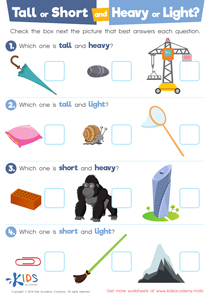
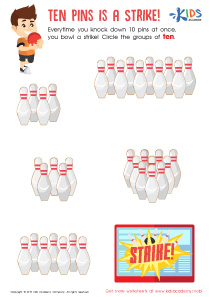
Vocabulary enhancement Easy Kindergarten Math Worksheets
3 filtered results
Difficulty Level
Grade
Age
-
From - To
Subject
Activity
Standards
Boost your child's language and math fluency with our Vocabulary Enhancement Easy Kindergarten Math Worksheets! Designed for young learners, these engaging worksheets seamlessly blend math concepts with vocabulary development. Each activity fosters essential skills through fun exercises, such as identifying numbers, counting, and recognizing math-related terms, all while expanding your child's vocabulary. Our user-friendly format allows parents and educators to easily print and incorporate these activities into daily learning. Perfect for classroom use or at-home practice, these worksheets will encourage a love for learning while ensuring a solid foundation in both language and mathematics. Start enhancing your child's skills today!
Favorites
With answer key
Interactive
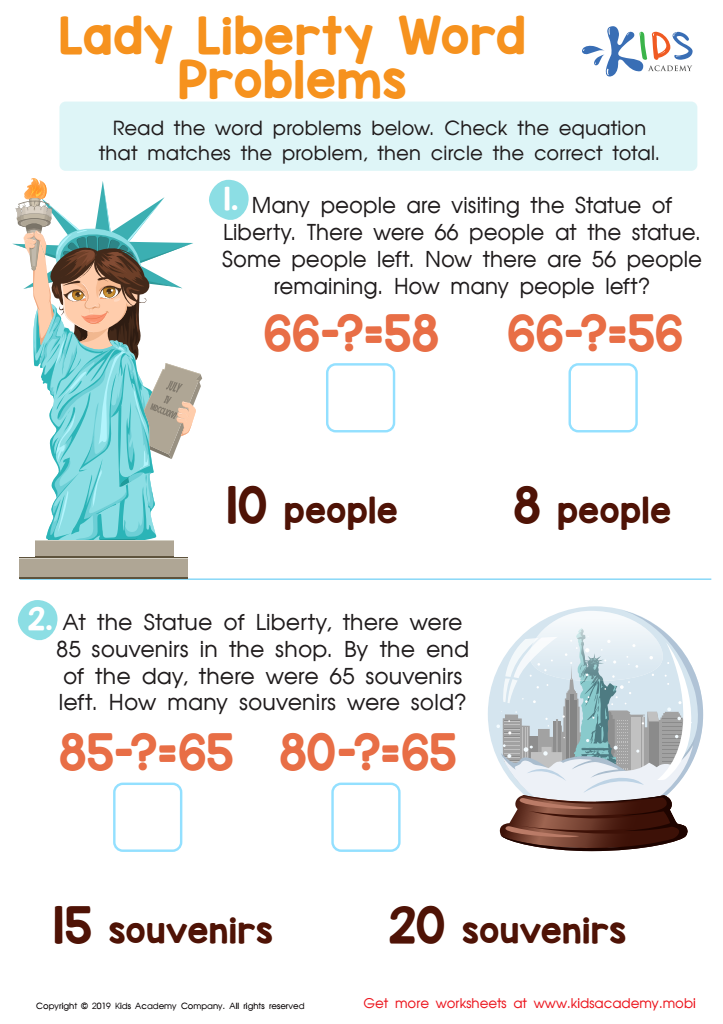
Lady Liberty Worksheet
Have your students ever been to the Statue of Liberty? Ask them to tell you where it is and what it looks like. Every day, the statue draws a crowd admiring its beauty, taking pics and learning more about it. Pose a word problem and help them check the answer. Circle the correct total. (80 words)
 Assign to My Students
Lady Liberty Worksheet
Worksheet
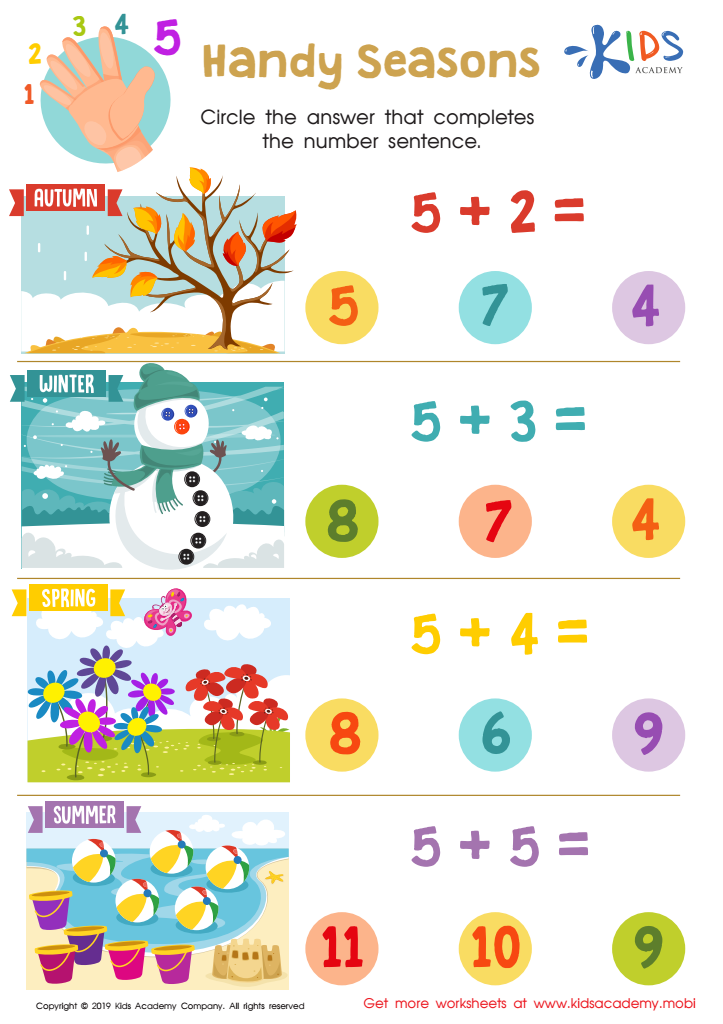
Handy Seasons Worksheet
Help your kids understand number sentences with this fun and colorful worksheet, featuring 4 pictures. Get them to identify each season, then circle the answer that completes the number sentence given. Make math exciting and get your kids excited to learn!
Handy Seasons Worksheet
Worksheet
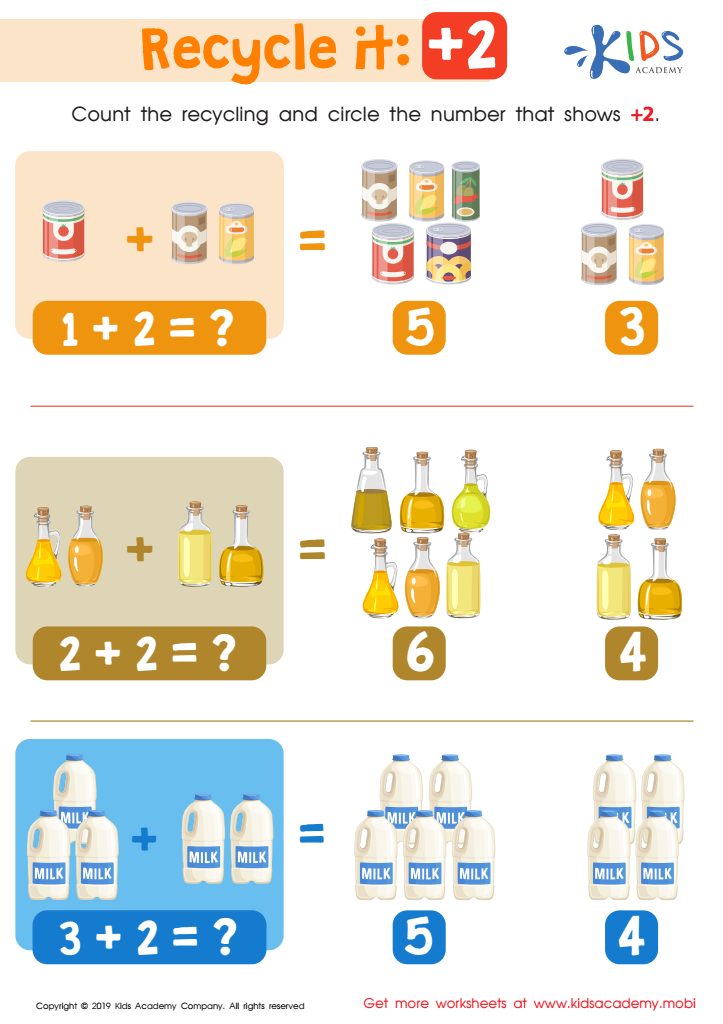
Recycle It: +2 Worksheet
Your kindergartners likely count everything they see, which is great for practice. Give them simple exercises such as in this worksheet to stimulate their minds. Ask them to count the recycling cans and then circle the number that shows +2.
Recycle It: +2 Worksheet
Worksheet
Join Kids Academy for Free
Who is primarily going to use this learning content?








Parents and teachers should prioritize vocabulary enhancement alongside a strong foundation in kindergarten math for several compelling reasons. First, vocabulary is a critical component of literacy development. A rich vocabulary enables young learners to express themselves, understand instructions, and engage with texts effectively. When children are equipped with strong language skills, they are better able to tackle not only reading challenges but also complex math concepts, as math language often includes terms and expressions that are vital for understanding problem-solving.
Moreover, integrating vocabulary enhancement with math learning makes for a holistic educational approach. The use of mathematical vocabulary, such as addition, subtraction, more than, less than, and equals, fosters mathematical comprehension. These language skills stimulate cognitive connections, enhancing children’s ability to think critically about numbers and problems.
Finally, vocabulary development supports social-emotional learning. The ability to articulate feelings or ask questions encourages confidence in classroom interactions and teamwork during collaborative activities. This synergy between vocabulary and math will prepare children not only for advanced academic learning but also for effective communication in their everyday lives. Ultimately, prioritizing these areas ensures children are well-rounded, capable learners who are ready for future educational challenges.