Writing practice Easy Kindergarten Tracing Numbers Worksheets
3 filtered results
Difficulty Level
Grade
Age
-
From - To
Subject
Activity
Standards
Enhance your child's numeracy skills with our "Writing Practice Easy Kindergarten Tracing Numbers Worksheets" at Kids Academy! These engaging worksheets provide young learners with a fun and interactive way to practice writing numbers, reinforcing essential counting skills. Perfectly designed for little hands, each worksheet features traceable numbers accompanied by kid-friendly images that make learning enjoyable. By repetitively tracing, children gain confidence in number formation and develop fine motor skills essential for writing. Ideal for parents and teachers, our easy-to-follow worksheets make early math foundations a delightful experience. Prepare your kindergartner for numeric success with Kids Academy today!
Favorites
With answer key
Interactive
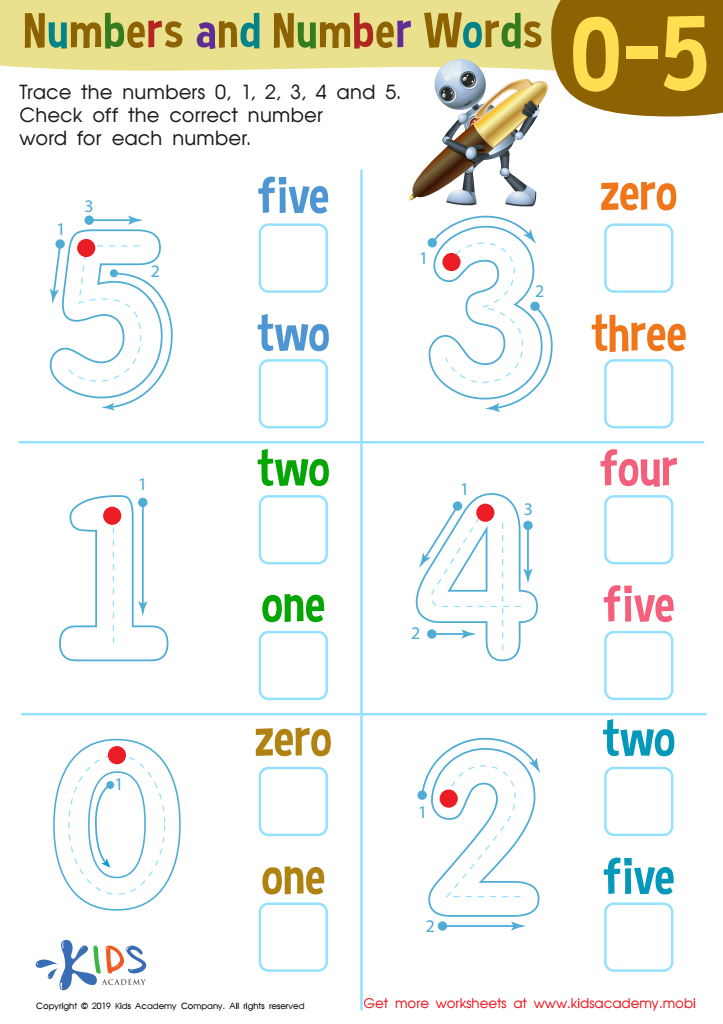
Numbers and Number Words Worksheet
Preschoolers can practice counting and recognizing numbers with this worksheet. Students trace the numbers zero through five and check the boxes next to each number to show the correct number word. Ideal for young kids, this printable helps them learn early math and number words.
 Assign to My Students
Numbers and Number Words Worksheet
Worksheet
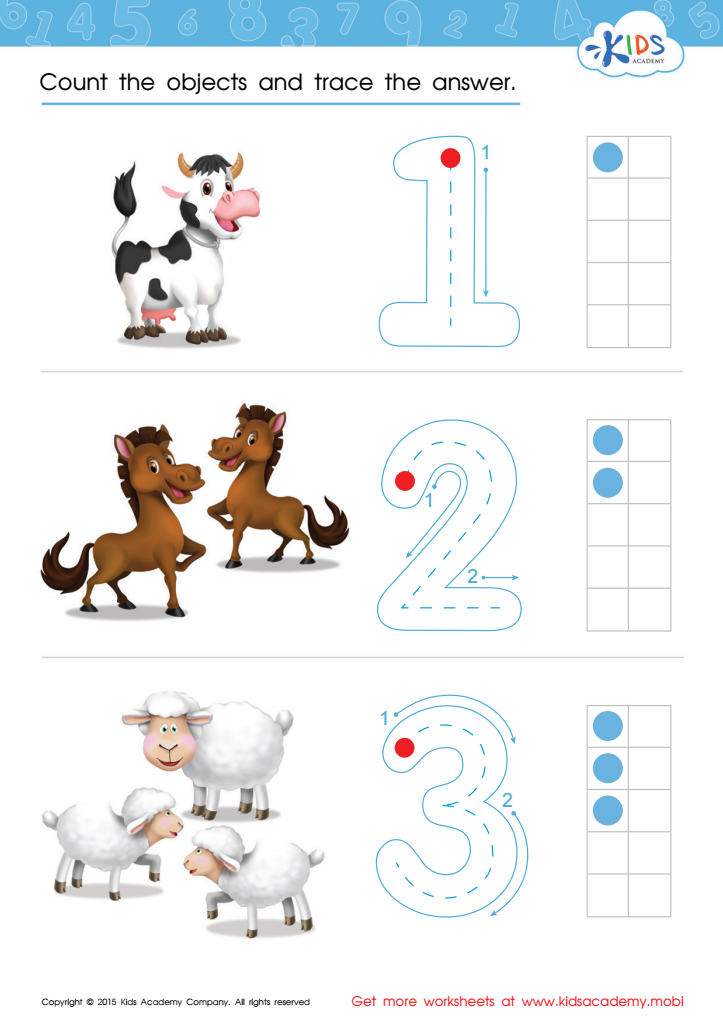
Count and Trace 1 – 3 Worksheet
Get your preschooler started on math with Kids Academy's newest worksheet! It's an enjoyable way for kids to learn how to count and trace numbers 1-3. Print it out and watch your learner have fun as they trace the lines. For more free math worksheets, click here.
Count and Trace 1 – 3 Worksheet
Worksheet
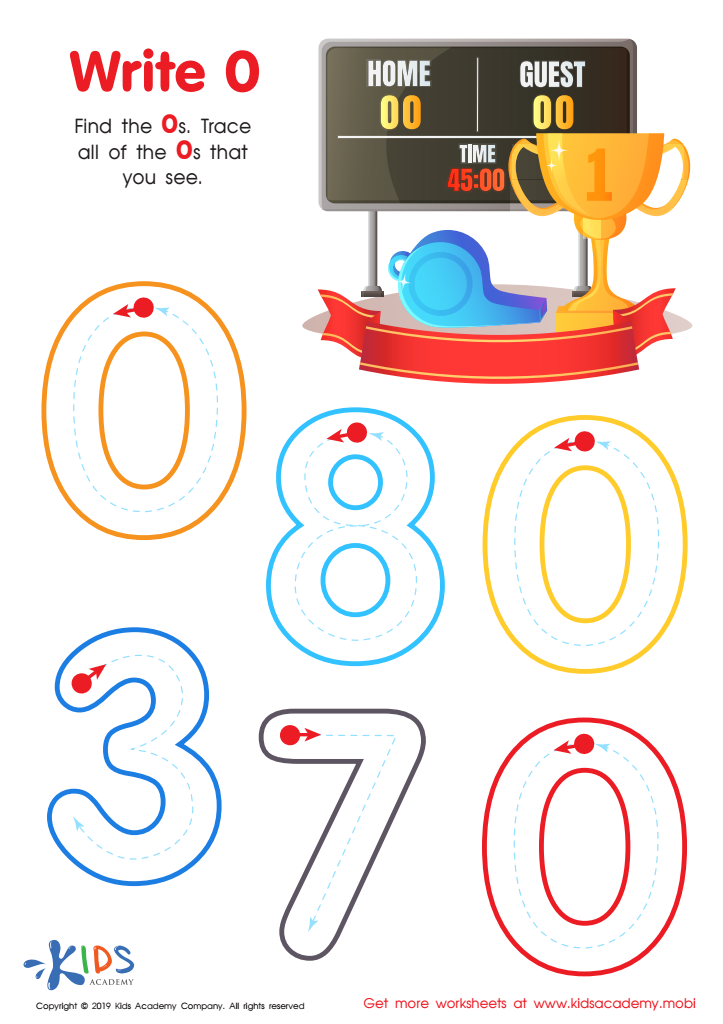
Write 0 Worksheet
Help your children become number pros! This worksheet will give them the edge they need to count, while also helping them practice writing the number 0. Have them find the 0s in the printout, then trace them. It's a great way to build a math foundation and get them ready to succeed with more advanced math concepts.
Write 0 Worksheet
Worksheet
Join Kids Academy for Free
Who is primarily going to use this learning content?








Writing practice, particularly through activities like kindergarten tracing numbers, is incredibly important for young learners. At this formative stage, these exercises do more than just teach children how to write numbers; they support a variety of developmental skills vital for their academic and personal growth.
First, tracing numbers helps children develop fine motor skills. These fine, precise movements of the fingers and hands are necessary for tasks beyond writing, such as buttoning a coat or tying shoelaces. Strengthening these muscles creates a foundation for all sorts of future skills.
Second, tracing numbers reinforces numeral recognition and comprehension. At kindergarten age, recognizing and understanding numbers builds a basis for future mathematical learning. Tracing, as a repetitive activity, helps solidify these basic concepts, making it easier for children to move on to more complicated math problems.
Additionally, it fosters concentration and patience, as children must focus to stay within the lines and practice repeatedly. Such discipline benefits them hugely when they encounter more challenging tasks.
Finally, tracing activities can be fun and boost confidence. Successfully tracing a number gives children a sense of accomplishment, creating a positive emotional link to learning and increasing their enthusiasm for further educational challenges. This early positive experience can shape attitudes toward education in the long run.