Sentence structure Easy Kindergarten Capitalization Worksheets
3 filtered results
-
From - To
Discover engaging and educational "Sentence Structure Easy Kindergarten Capitalization Worksheets" designed specifically for young learners. These fun and colorful worksheets help children practice the basics of sentence formation and proper capitalization through interactive exercises. With age-appropriate activities, kids will learn to identify uppercase and lowercase letters, understand sentence beginnings, and follow simple grammar rules. Perfect for both classroom and home use, these worksheets build a strong foundation in writing skills, ensuring kindergarteners gain confidence in crafting well-structured sentences. Explore our printable resources to help your child dive confidently into the world of writing!
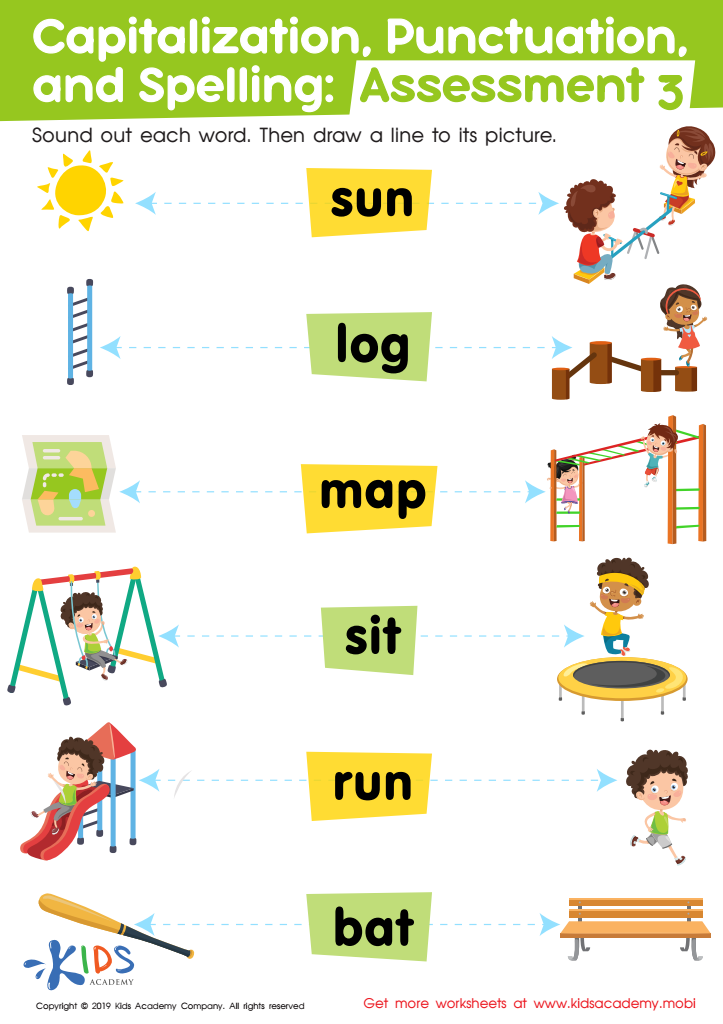
Capitalization. Punctuation. Spelling. Assessment 3 Worksheet
 Assign to My Students
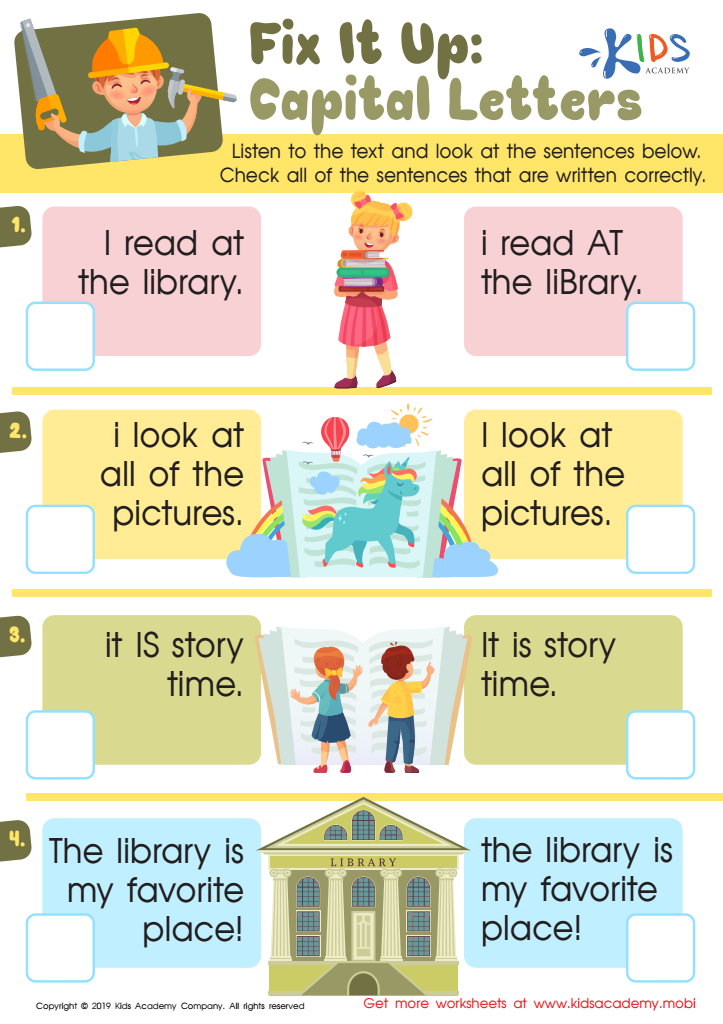
Fix Capital Letters Worksheet

How to Capitalize Worksheet




Parents and teachers should care deeply about sentence structure, easy kindergarten capitalization, as these form the cornerstone of early literacy development. During the formative years of learning, young children are introduced to the basics of reading and writing, which are crucial for their academic success. Proper sentence structure helps children understand how words fit together to convey meaning, fostering clear and effective communication skills.
Capitalization is equally important. Teaching kids to capitalize the first word in a sentence and proper nouns lays the groundwork for more advanced grammar lessons down the line. Correct capitalization provides visual cues that aid in reading comprehension, since children can easily distinguish between different sentences and proper nouns.
Moreover, early mastery of these fundamental skills builds a sense of confidence and achievement, encouraging children to engage more with reading and writing activities. Consistent practices between home and school environments provide a unified approach, making it easier for children to internalize these rules.
In short, paying attention to sentence structure and capitalization from a young age builds a strong foundation for linguistic skills, essential for overall academic performance and effective communication. By prioritizing these elements, we set children up for lifelong educational success.