Visual discrimination skills Easy Math Worksheets
3 filtered results
-
From - To
Enhance your child's visual discrimination skills with our Easy Math Worksheets at Kids Academy! These expertly designed printable worksheets challenge kids to identify differences and similarities in shapes, numbers, and patterns, boosting critical cognitive skills. Perfect for preschoolers and early learners, our engaging activities help children develop attention to detail, improve concentration, and foster essential math abilities. With a variety of exercises tailored to different levels, these worksheets make learning math fun and effective. Visit Kids Academy to access our free, high-quality worksheets and give your child a head start in their educational journey!
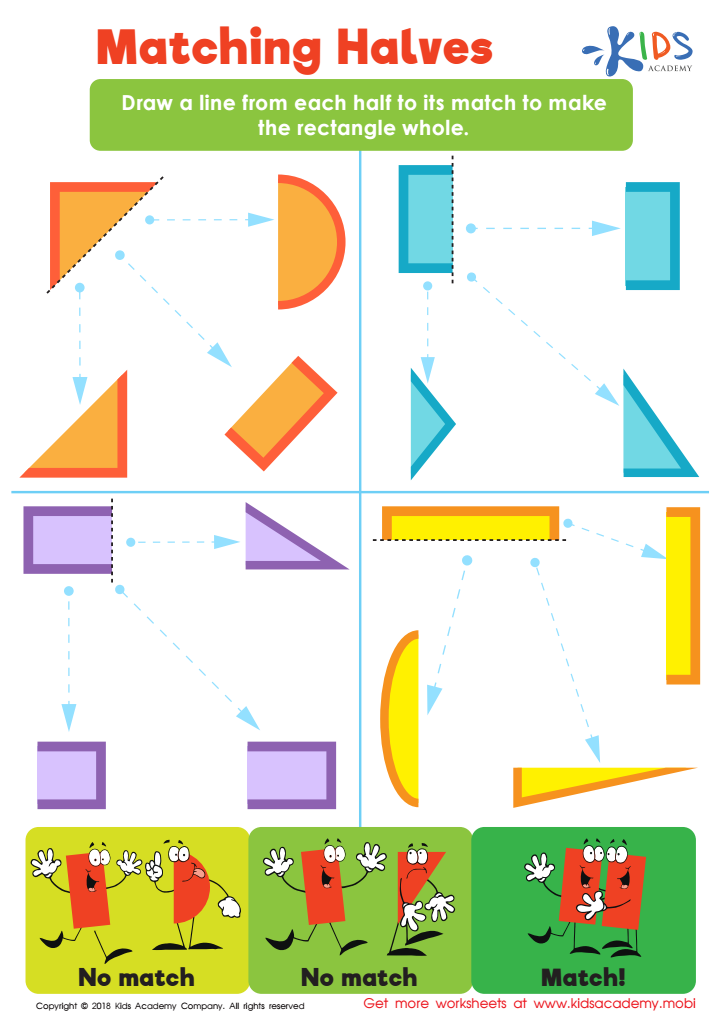
Matching Halves Worksheet
 Assign to My Students
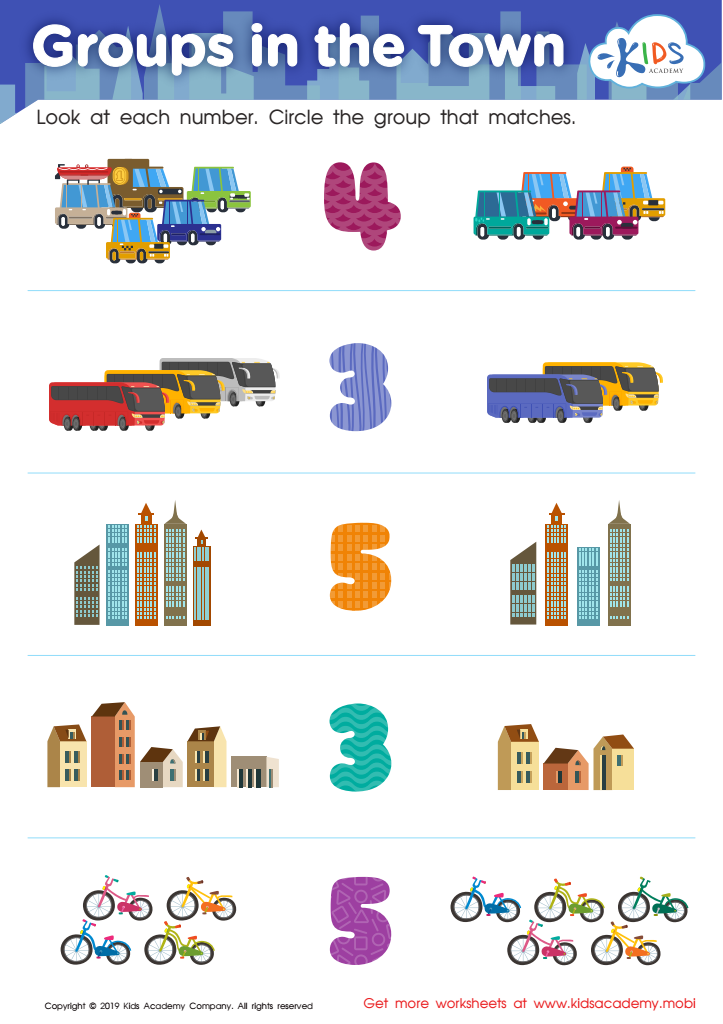
Groups in the Town Worksheet
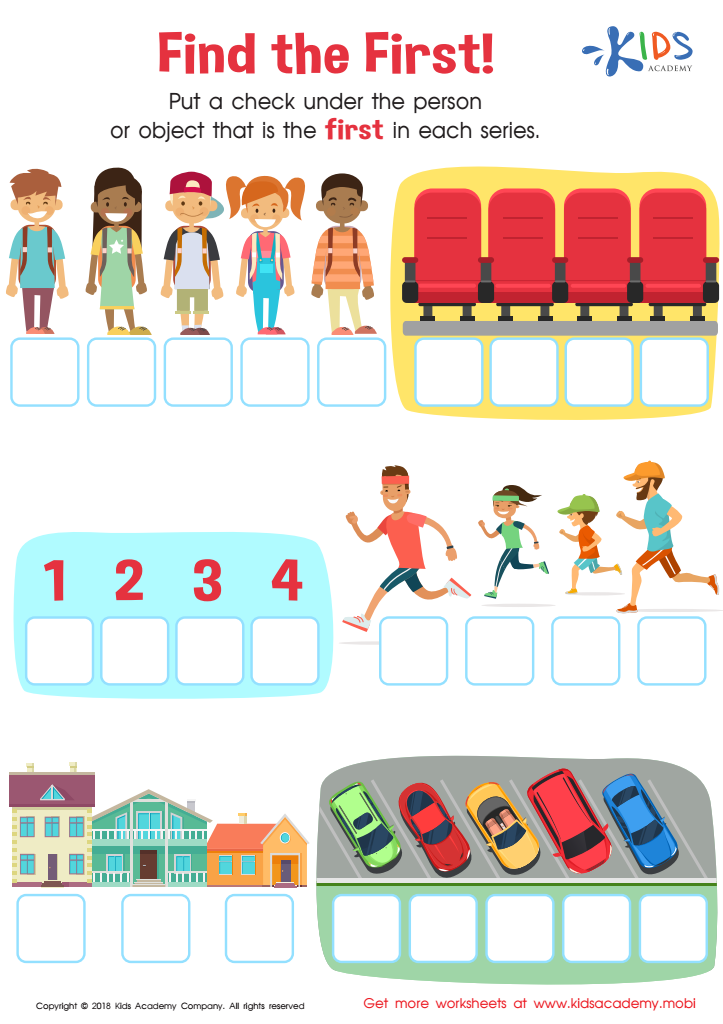
Find the First! Worksheet








Visual discrimination skills are essential for young learners, and both parents and teachers should pay attention to their development to support early math learning effectively. Visual discrimination refers to the ability to notice and recognize differences and similarities in shapes, patterns, and objects—skills crucial for understanding mathematical concepts.
Firstly, these skills help children distinguish numbers and symbols, ensuring they don't confuse similar-looking figures (like 6 and 9) or operational signs (+ and -). This accuracy is fundamental for solving math problems correctly. Additionally, visual discrimination supports pattern recognition, a foundational math skill that aids in understanding sequences, predicting outcomes, and basic algebra.
In the realm of geometry, children with strong visual discrimination can better identify shapes and comprehend spatial relationships. This leads to a clearer understanding of the properties of different geometric forms. Furthermore, activities enhancing visual discrimination, such as sorting and matching games, also improve attention to detail, concentration, and working memory, all important for overall academic success.
In summary, by fostering visual discrimination skills, parents and teachers provide children with the tools to excel in mathematics and other learning areas. Through engaging, simple activities, they can help children build a solid foundation for their future education.








