Number Recognition Easy Word Problems Worksheets
9 filtered results
-
From - To
Explore our engaging "Number Recognition Easy Word Problems Worksheets" designed to help early grade students develop crucial math skills through fun, interactive challenges. These worksheets focus on number recognition in real-world contexts, allowing children to practice their counting, addition, and subtraction abilities while problem-solving in an enjoyable way. Perfect for classroom activities or quiet time at home, these resources encourage critical thinking and enhance numeracy comprehension. Each worksheet features colorful illustrations and relatable scenarios that make learning exciting. Printable and easy to use, our worksheets are ideal for parents and teachers looking to support their kids' early math development. Get started today!
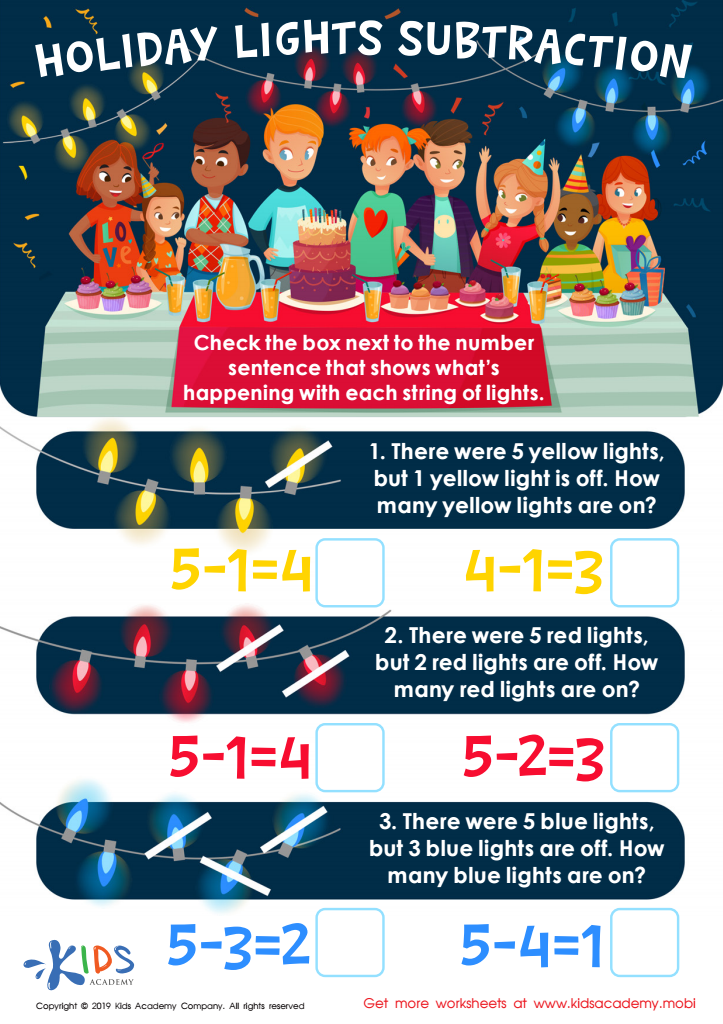
Holiday Lights Subtraction Worksheet
 Assign to My Students
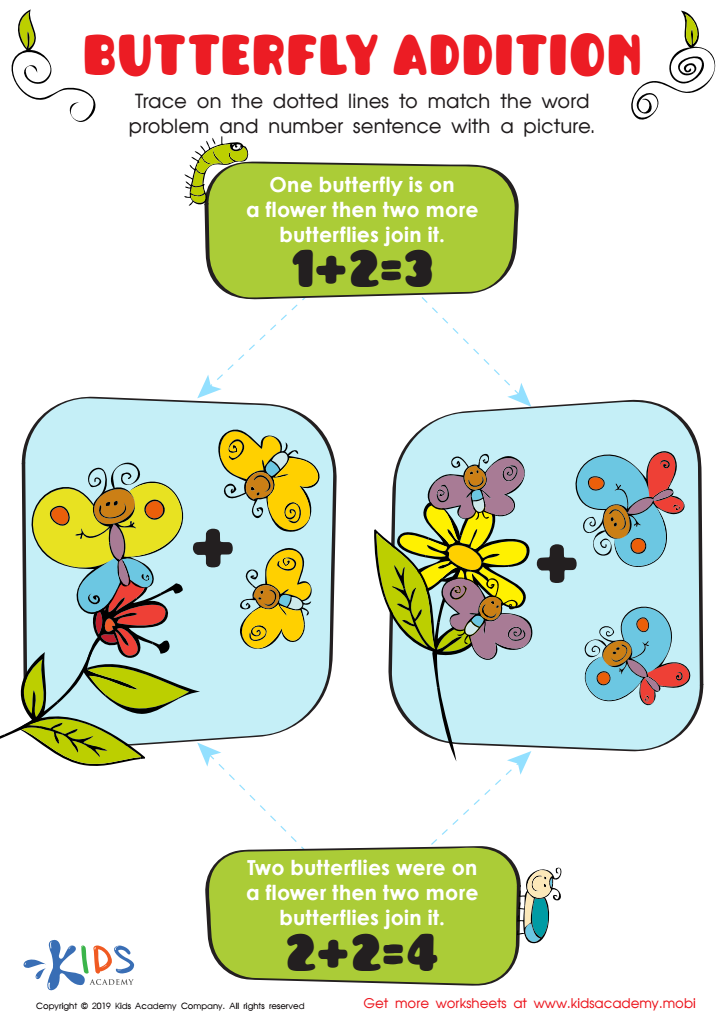
Butterfly Addition Worksheet
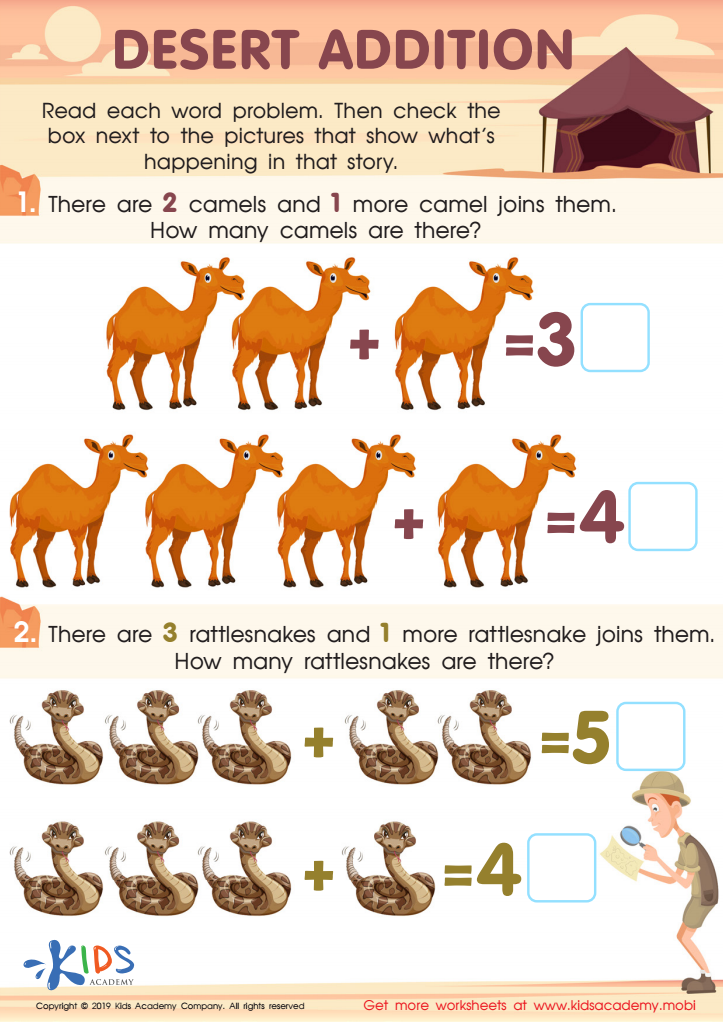
Desert Addition Worksheet
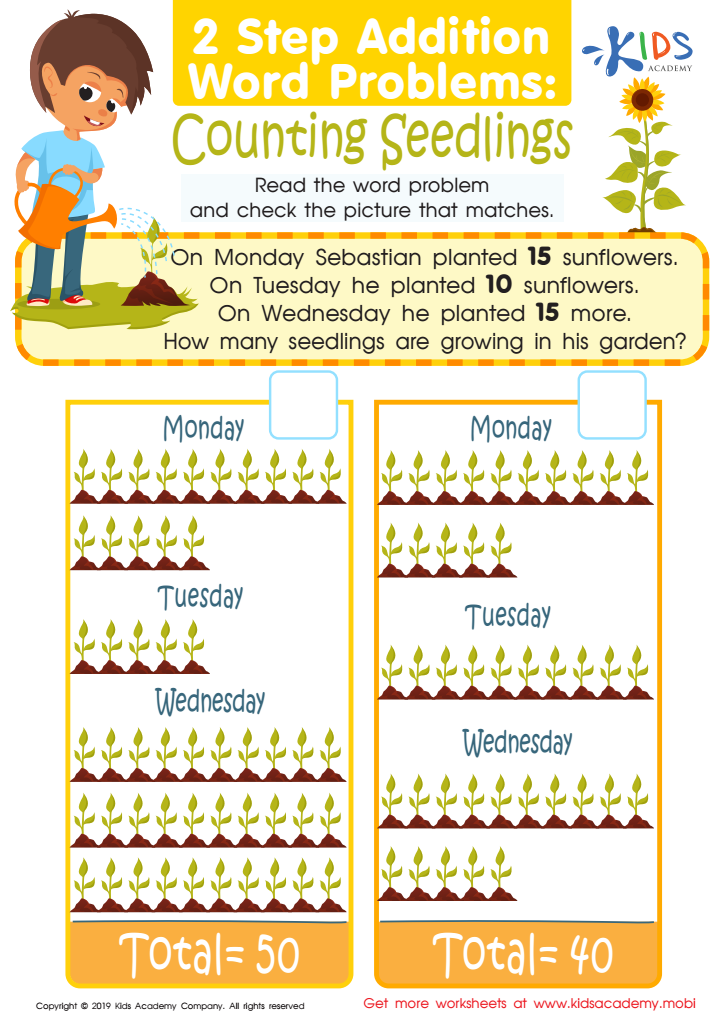
Counting Seedlings Worksheet
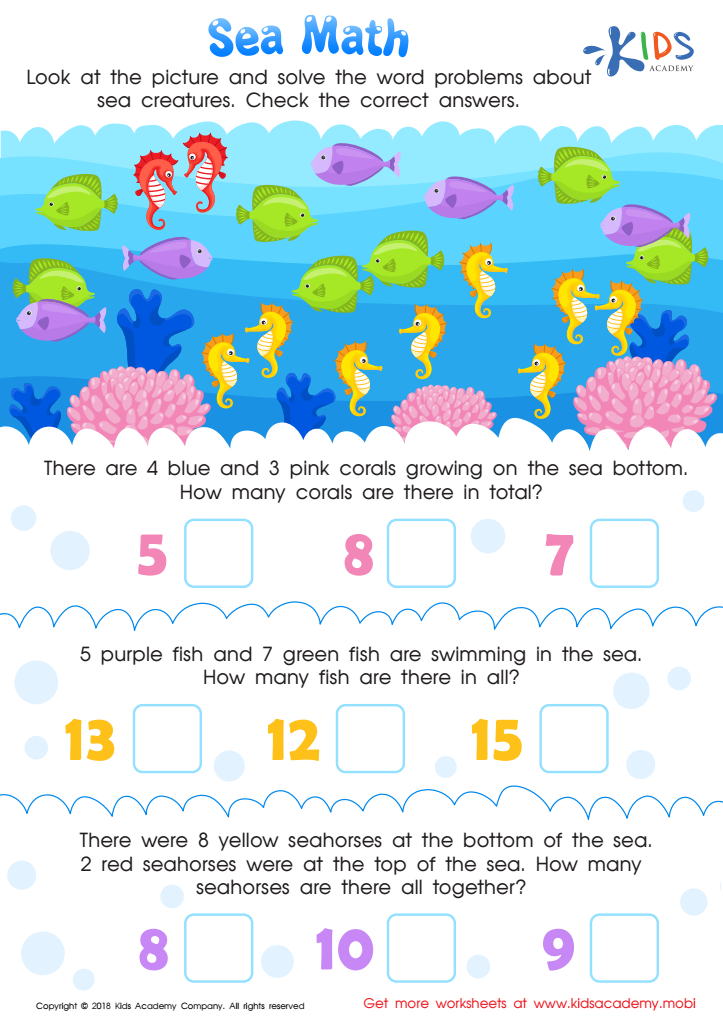
Sea Math Worksheet
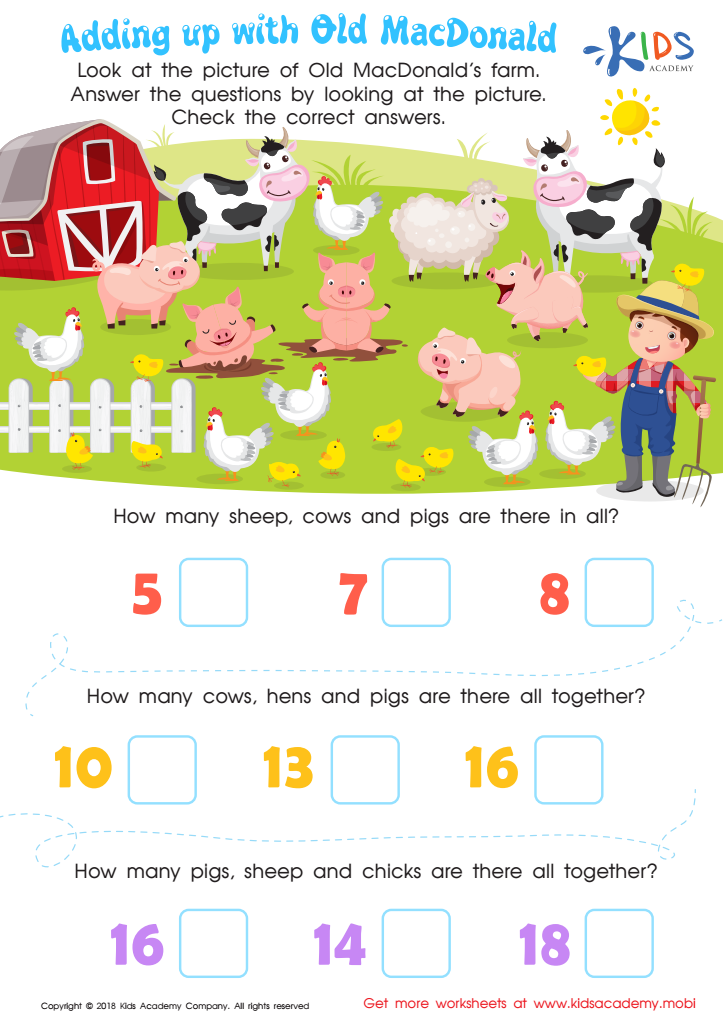
Adding Up with Old MacDonald Worksheet
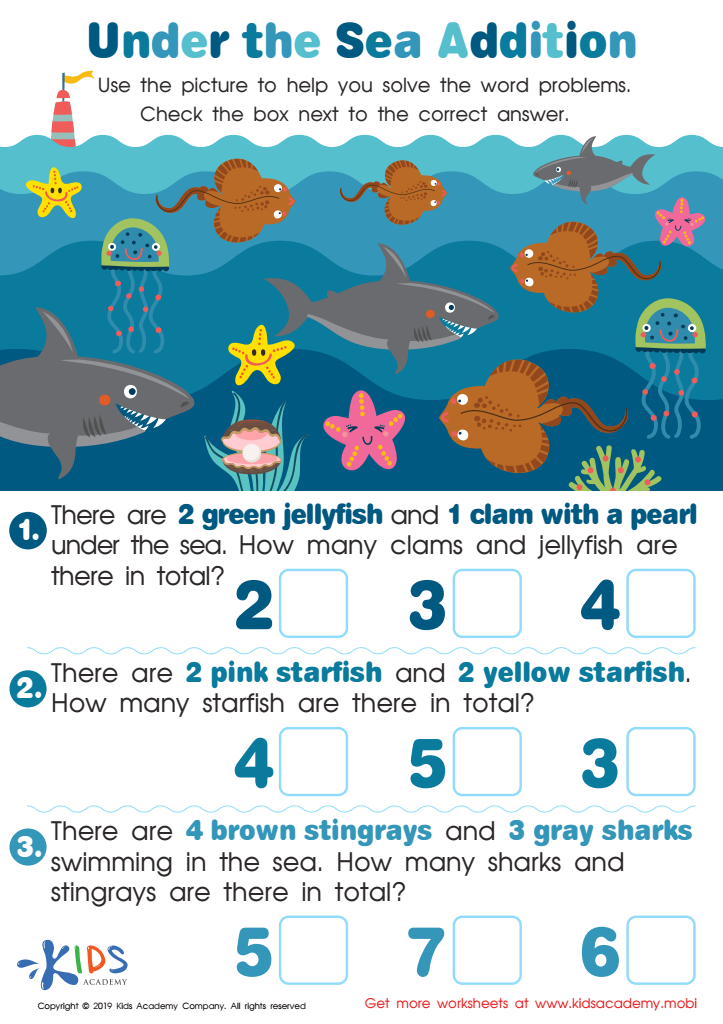
Under the Sea Addition Worksheet
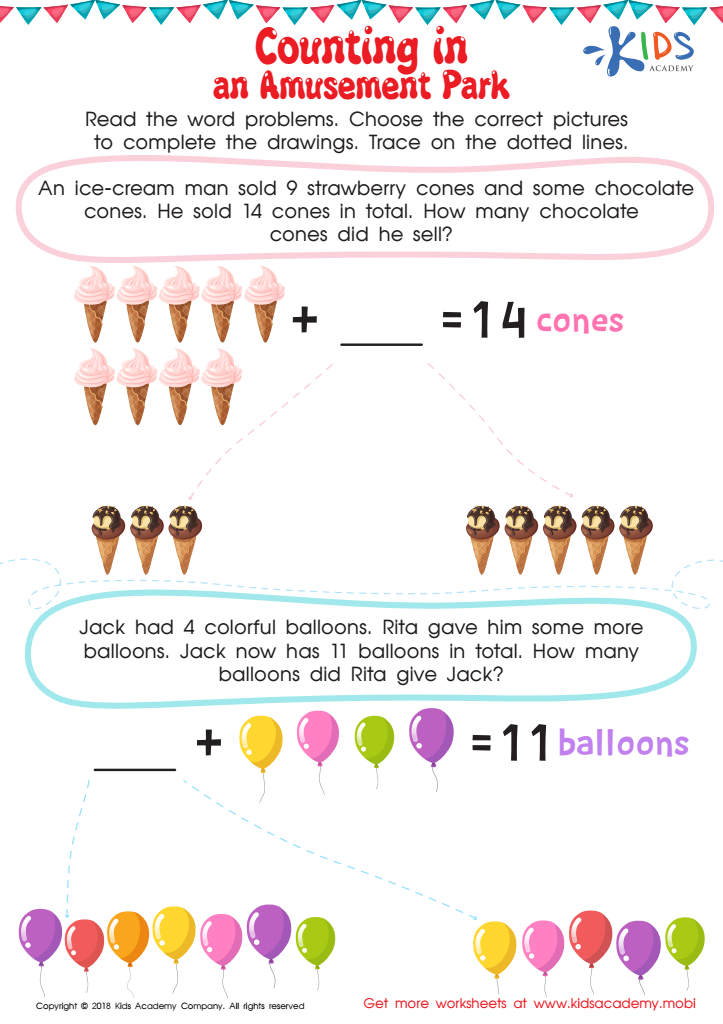
Counting in an Amusement Park Worksheet
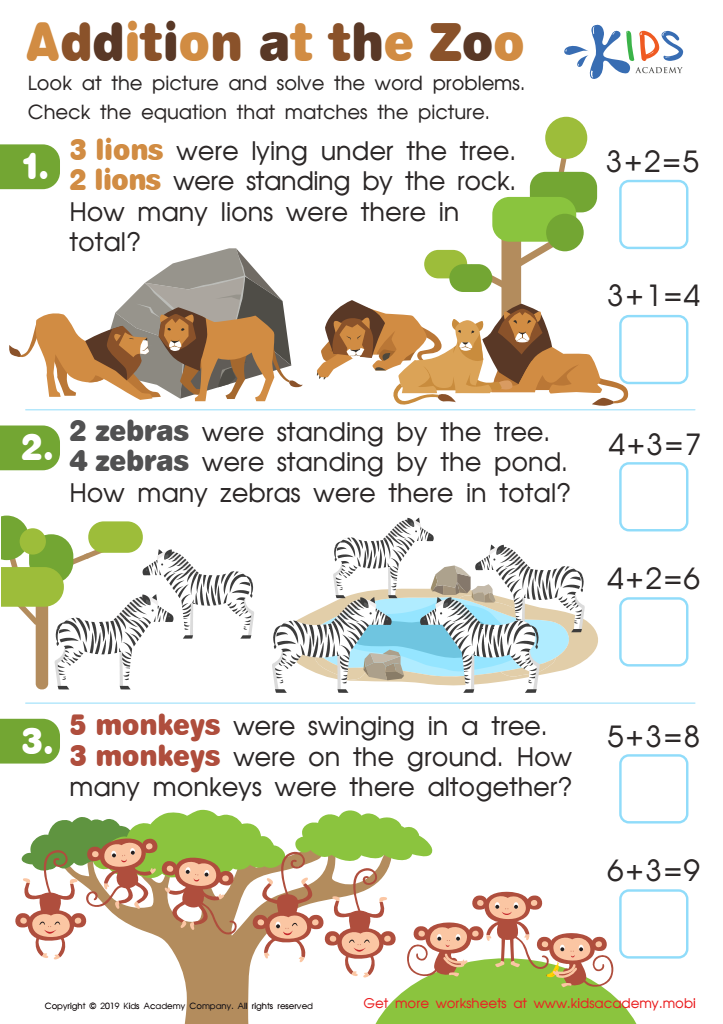
Addition at the Zoo Worksheet








Number recognition and easy word problems are foundational skills essential for early math development. Parents and teachers should prioritize these areas because they form the groundwork for a child’s mathematical understanding and problem-solving abilities, which are crucial for academic success.
First, number recognition helps children identify and understand numerals, setting the stage for basic arithmetic. Mastering this skill enables students to count, understand quantities, and eventually engage with more complex math concepts.
Secondly, easy word problems encourage children to apply their numerical skills in real-life contexts. When children practice solving simple word problems, they develop critical thinking, comprehension, and analytical skills. This not only enhances their mathematical abilities but also builds confidence in their problem-solving capabilities.
Moreover, early proficiency in these areas promotes a positive attitude towards math. If students feel competent in understanding numbers and solving problems, they are more likely to approach math with enthusiasm as they progress in their education.
In summary, fostering number recognition and engaging in easy word problems equips children with tools for lifelong learning, making it imperative for parents and teachers to support and encourage these practices from an early age.








