Understanding life cycles Easy Grade 2 Reading Non-Fiction Worksheets
3 filtered results
-
From - To
"Understanding Life Cycles" Easy Grade 2 Reading Non-Fiction Worksheets are designed to teach young learners about the fascinating stages of life for various plants and animals. Engaging and educational, these worksheets help children grasp complex concepts through simple, age-appropriate texts and vibrant illustrations. Perfect for both classroom and at-home learning, they foster reading comprehension and critical thinking. With fun activities and clear explanations, second graders will explore life cycles with curiosity and ease. Equip your child with the skills to understand the natural world better and enjoy the learning process with these expertly crafted worksheets.
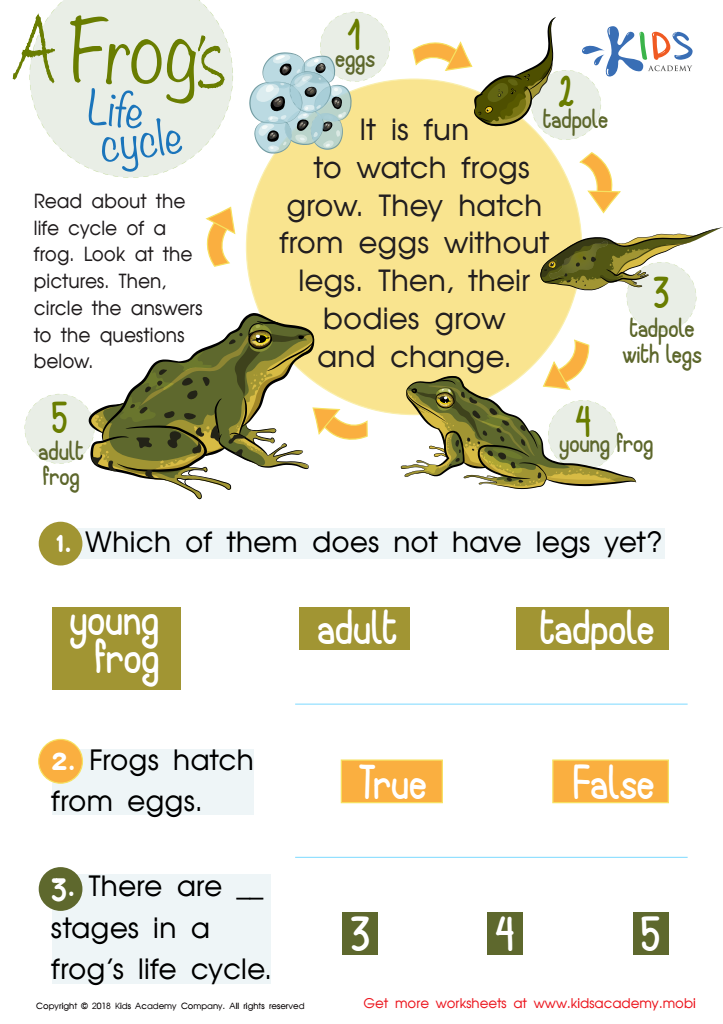
A Frog’s Life Cycle Worksheet
 Assign to My Students
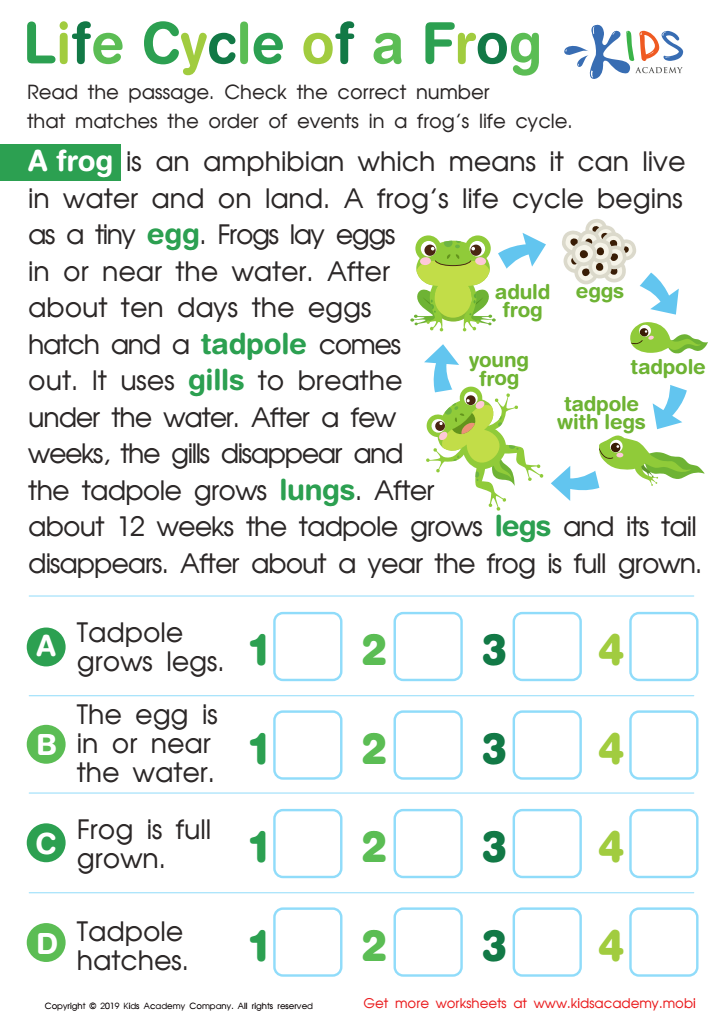
Life Cycle of a Frog Worksheet
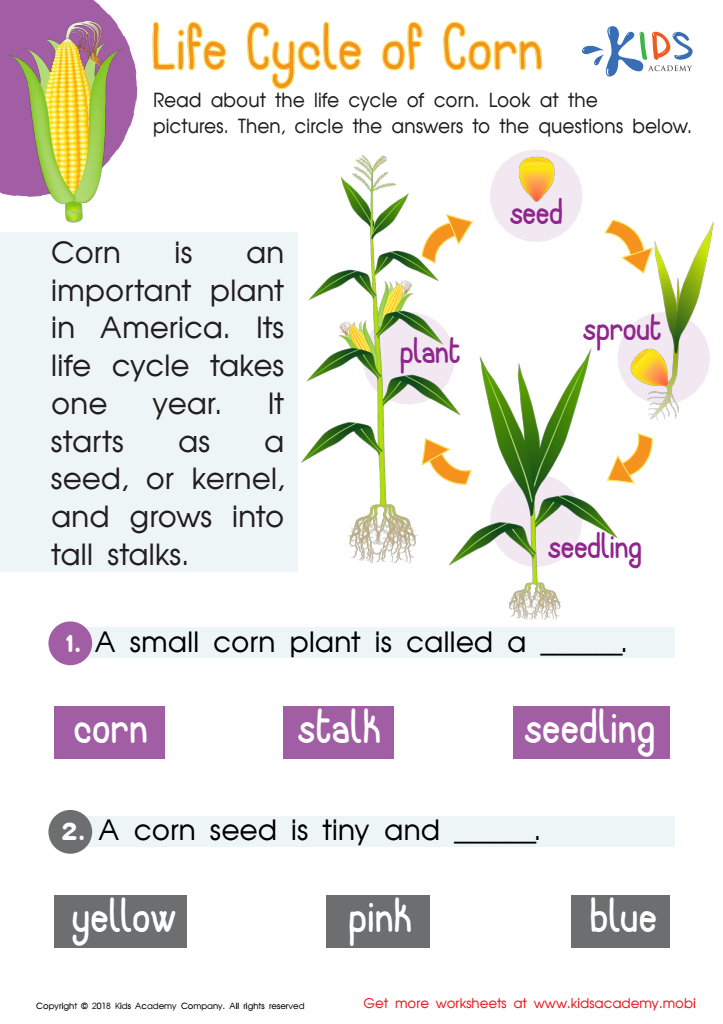
Life Cycle of Corn Worksheet



Understanding life cycles is fundamental for Grade 2 students because it lays the groundwork for comprehending broader biological and environmental concepts. At this developmental stage, children are curious about the world around them. Introducing life cycles through easy, grade-appropriate non-fiction reading materials can significantly enhance their cognitive skills and nurture a sense of curiosity.
For parents and teachers, cultivating an early awareness of life cycles in children helps develop critical thinking and observational skills. It promotes a scientific temperament by encouraging students to ask questions, make predictions, and draw conclusions from what they observe. Life cycles of plants, animals, and insects provide practical examples in everyday life that children can relate to, which makes learning both engaging and meaningful.
Additionally, understanding life cycles supports other areas of learning such as math and literacy. By reading about life cycles, students build vocabulary, improve reading fluency, and enhance comprehension skills. It also introduces basic concepts of time, sequencing, and patterns, which are foundational in math.
This knowledge instills a sense of respect for living things and the environment, fostering responsible future citizens. Overall, early exposure to life cycles through non-fiction reading sets the stage for lifelong learning and curiosity, making it a valuable educational focus for second graders.