Animal recognition Easy Grade 3 Worksheets
3 filtered results
Difficulty Level
Grade
Age
-
From - To
Subject
Activity
Standards
Boost your child’s animal recognition skills with our engaging and educational Easy Grade 3 Animal Recognition Worksheets! Perfectly designed for third graders, our worksheets help young learners identify various animals, understand their habitats, and learn fun facts that tickle curiosity. Each activity features colorful illustrations and simple instructions to enhance comprehension and retention. Tailored to align with core learning standards, our resources seamlessly incorporate educational content and play. Watch as your child's confidence grows while mastering new skills. Explore our selection and make learning about animals an adventure. Dive into nature's wonders today with our exciting printable worksheets!
Favorites
With answer key
Interactive
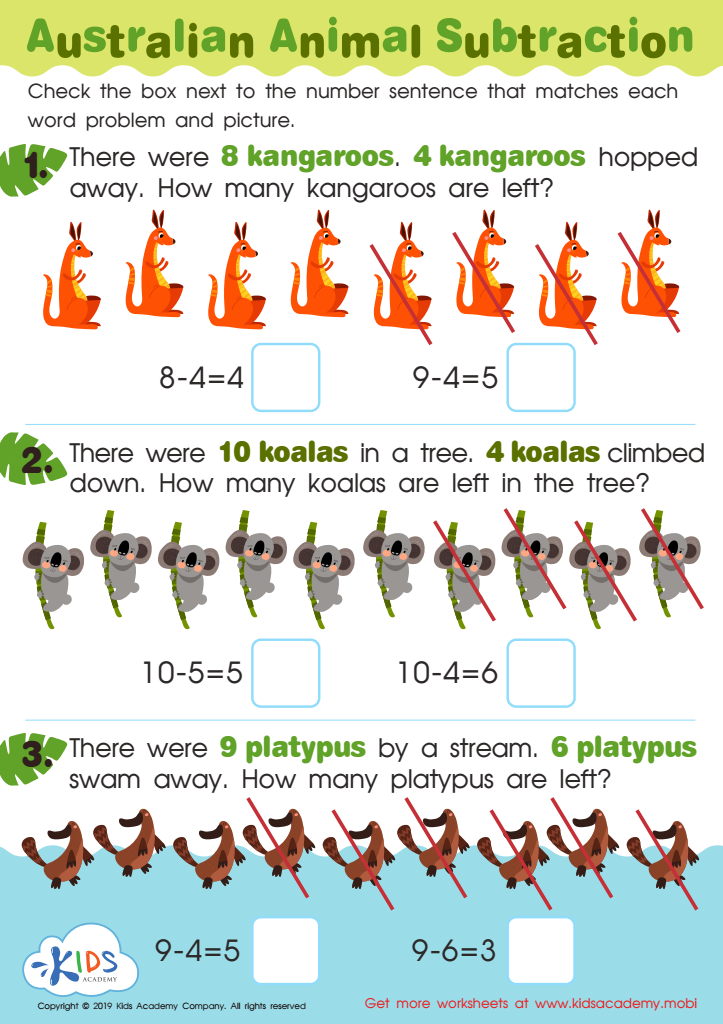
Australian Animal Subtraction Worksheet
Test your child's wildlife knowledge. Ask them to name animals indigenous to Australia or other countries. Show them the animals in this worksheet and have them match each word problem and picture with the correct number sentence.
 Assign to My Students
Australian Animal Subtraction Worksheet
Worksheet
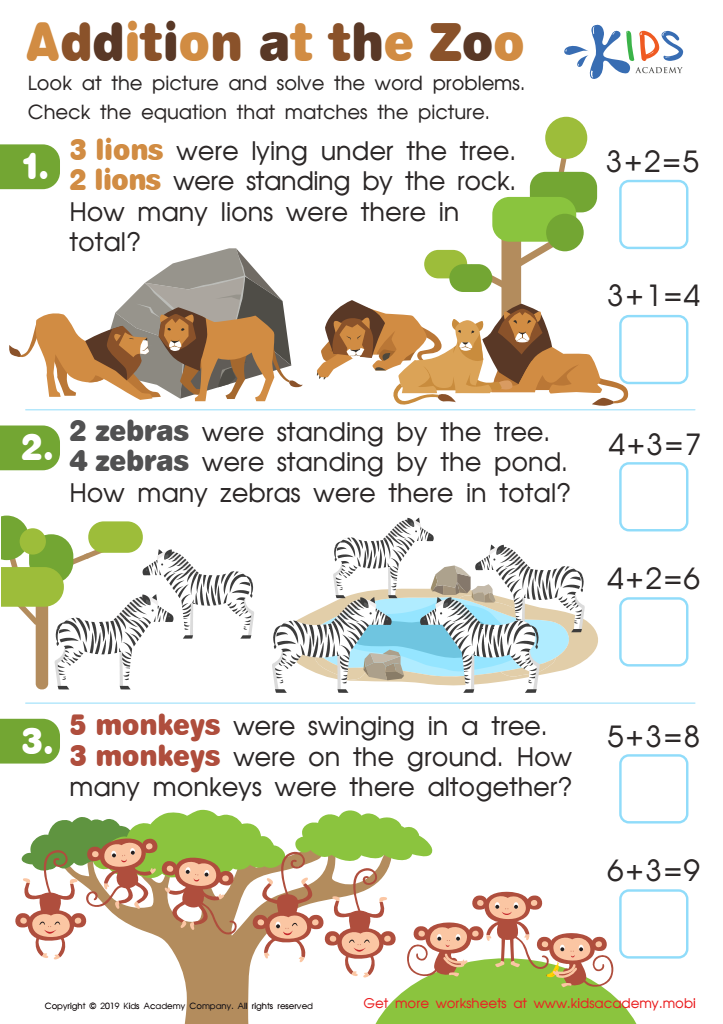
Addition at the Zoo Worksheet
Visit the zoo with your kids and point out all the different animals. Ask them to name their favorites and identify animals on a worksheet. Challenge them to solve word problems related to the pictures. Ask them for the equation that fits the picture and check the answer.
Addition at the Zoo Worksheet
Worksheet
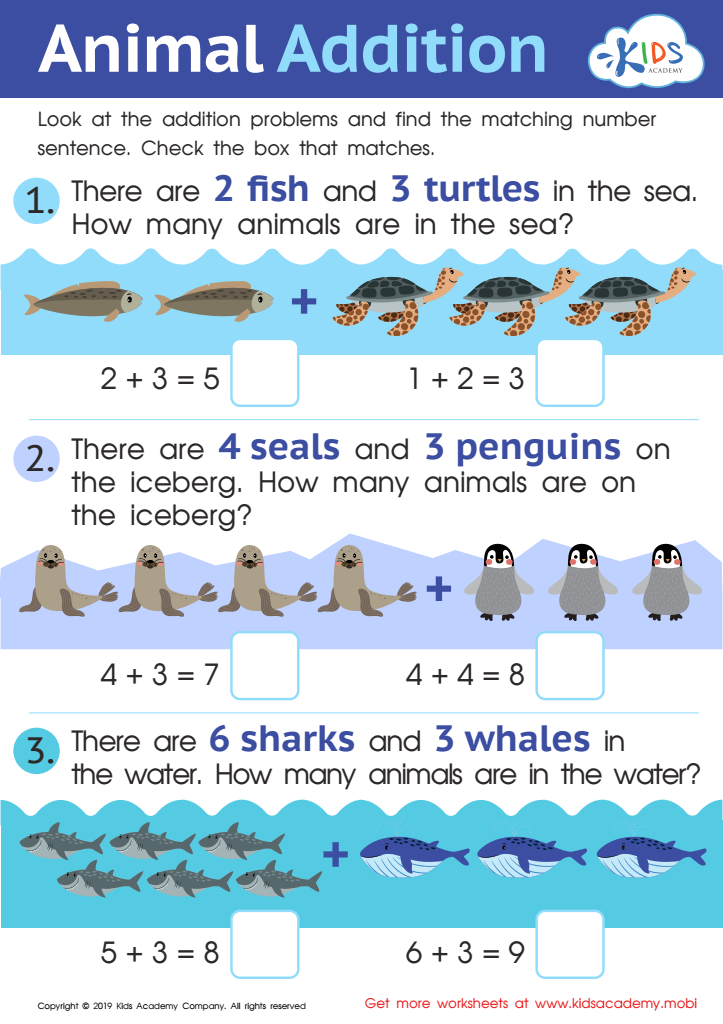
Animal Addition Worksheet
Get your kids learning addition and subtraction with this fun worksheet! Show them that solving equations can be enjoyable and help them match number sentences to the correct boxes. By doing this together, you'll create a positive learning experience that your kids won't forget.
Animal Addition Worksheet
Worksheet
Join Kids Academy for Free
Who is primarily going to use this learning content?







Animal recognition is an important skill for Grade 3 students as it contributes to their overall cognitive and emotional development. First, learning to recognize different animals helps enhance children's observational skills and attention to detail. This foundational knowledge broadens their understanding of the natural world and fosters a sense of curiosity and wonder.
Moreover, animal recognition plays a role in teaching responsibility and compassion. By learning about different animals and their habits, habitats, and needs, children develop empathy and an appreciation for other living creatures. This can translate into respectful behavior towards animals, whether pets at home or wildlife encountered outdoors.
Additionally, integrating animal recognition into the curriculum can strengthen cross-curricular skills. For instance, students can improve their reading and comprehension abilities through animal-themed stories and texts. Math skills can be honed by identifying patterns such as the number of legs, sizes, or habitats. Art and creativity are also nurtured when children draw or craft animals and their environments.
Engaging with animals, even through pictures and stories, can contribute to social-emotional learning by providing an outlet for students to express their thoughts and feelings. Parents and teachers who support animal recognition education help cultivate well-rounded, observant, and empathetic individuals.