Historical Knowledge Easy Grade 3 Worksheets
5 filtered results
-
From - To
Explore fascinating past events with our "Historical Knowledge Easy Grade 3 Worksheets"! Tailored for third-graders, these worksheets make history come alive with engaging activities that simplify complex concepts. Young learners will travel through time, from ancient civilizations to modern-day explorations, building a solid foundation of historical understanding. Each worksheet is designed to captivate students' interest while reinforcing essential skills, fostering a love for learning history. Perfect for both classroom and home use, our worksheets promote critical thinking and make history accessible and enjoyable. Embark on an exciting educational journey through time with us!
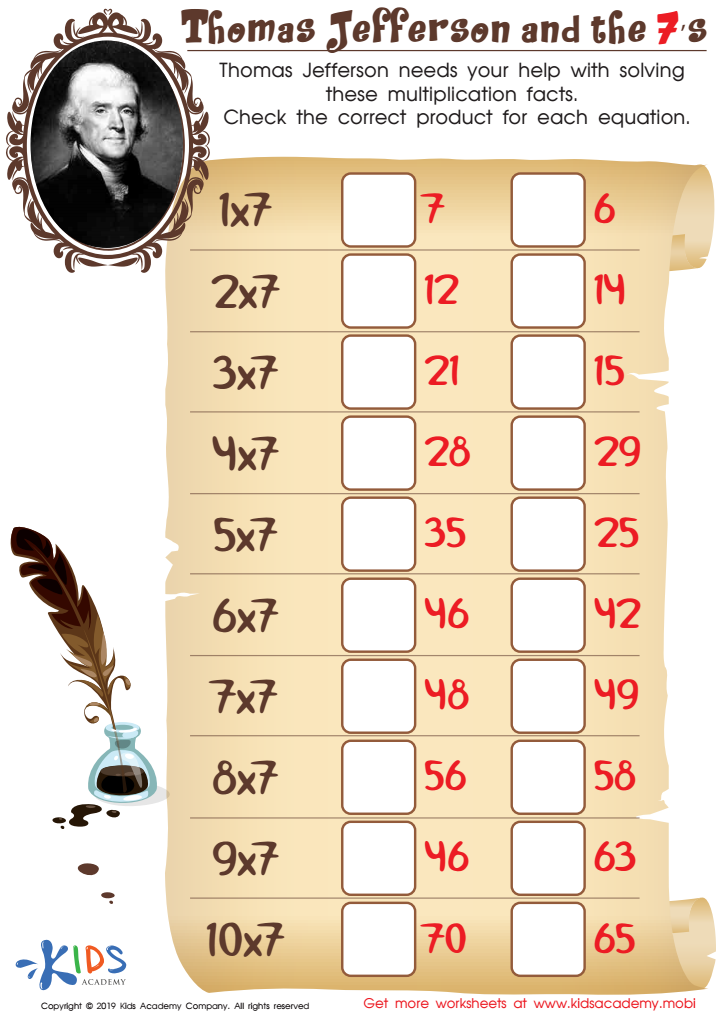
Thomas Jefferson and the 7’s Worksheet
 Assign to My Students






Parents and teachers should care about historical knowledge for third graders because it's foundational for developing well-rounded, informed citizens. At this age, children are naturally curious and eager to understand the world around them. Introducing history provides context about how societies have evolved, helping youngsters grasp why we live how we do today. Learning about historical events, figures, and cultures fosters critical thinking as children compare life in different periods, draw connections, and ask probing questions.
Historical knowledge also cultivates empathy. When students learn about diverse cultures and important struggles, they develop an appreciation for the experiences and contributions of others. This can instill a sense of gratitude and respect for various perspectives.
Helping children understand history at an early age also supports other academic areas. Reading historical texts and timelines can improve literacy and numeracy skills. Discussing causes and effects of historical events can boost reasoning abilities. Integrating history lessons with other subjects like geography or science enhances interdisciplinary learning.
Finally, a grounding in history aids in understanding current events and the importance of responsible citizenship. Third graders equipped with historical knowledge are better prepared to engage with their communities and the broader world thoughtfully and compassionately. This early foundation ultimately contributes to a more knowledgeable and empathetic society.