Animal recognition Easy Grade 3 Math Worksheets
3 filtered results
-
From - To
Explore our "Animal Recognition Easy Grade 3 Math Worksheets" designed to make learning fun and engaging for young learners! These worksheets combine essential math skills with exciting animal themes, making it easier for students to recognize various animals while practicing addition, subtraction, and other fundamental math concepts. Perfect for enhancing observational skills and numeracy, our resources encourage critical thinking and problem-solving through colorful illustrations and relatable scenarios. Whether in the classroom or at home, these worksheets provide an interactive learning experience that fosters a love for both mathematics and wildlife. Start your students' math journey with these delightful and educational worksheets today!
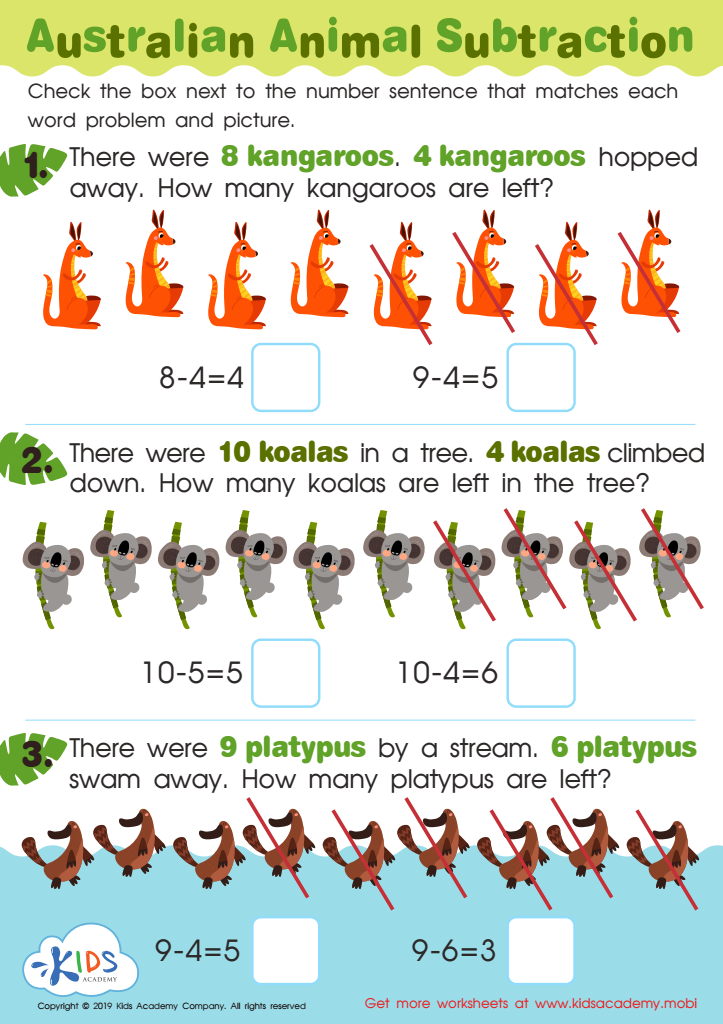
Australian Animal Subtraction Worksheet
 Assign to My Students
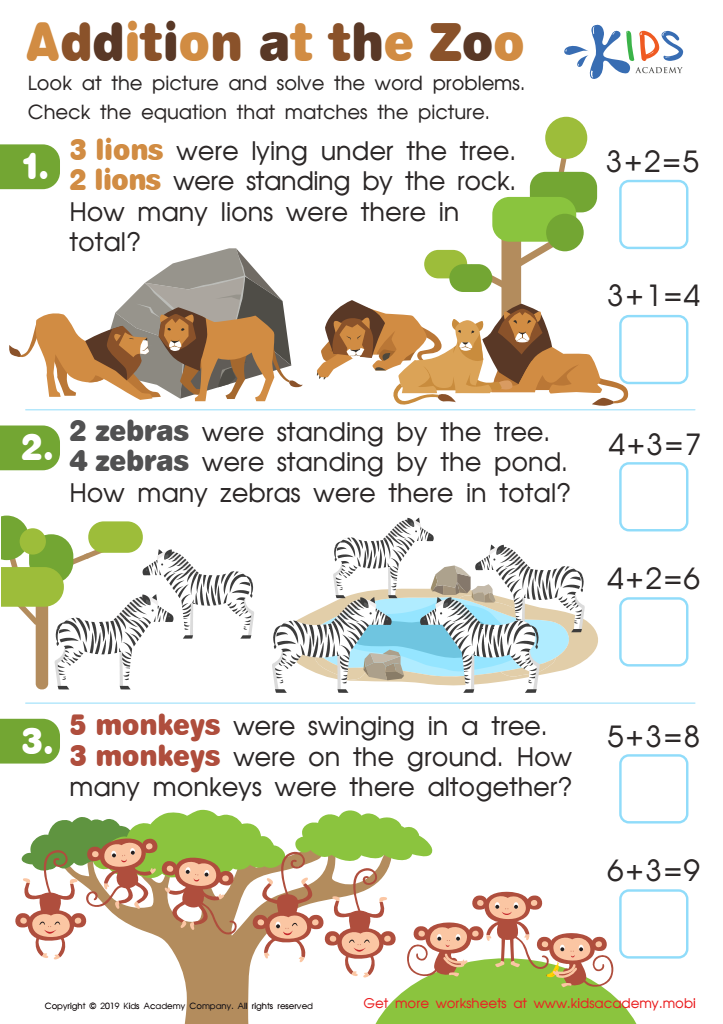
Addition at the Zoo Worksheet
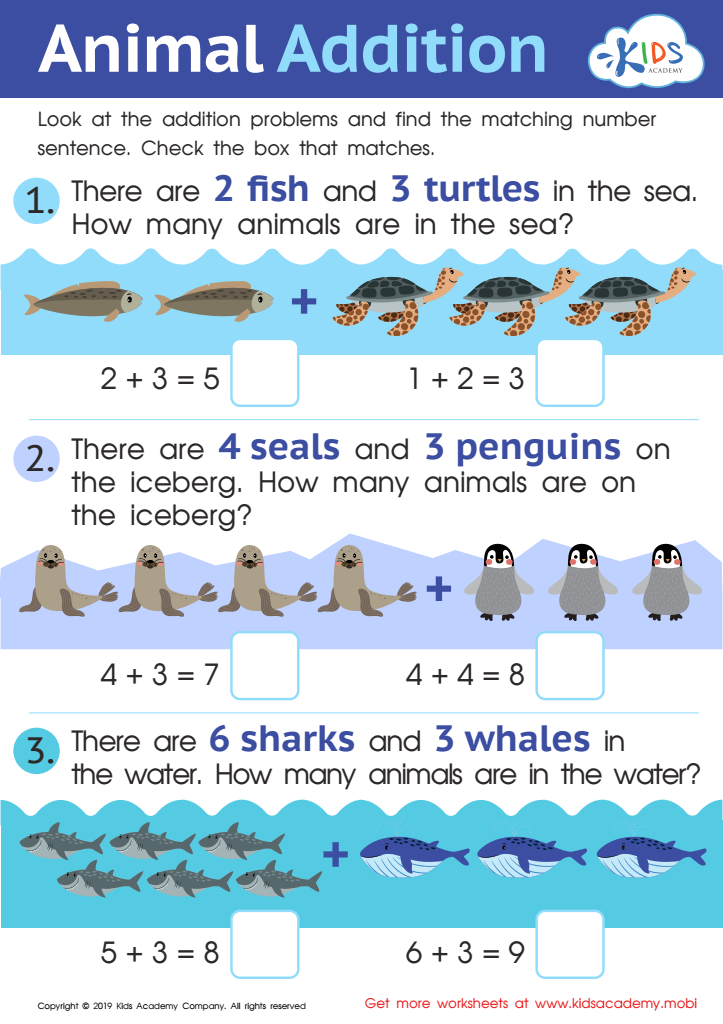
Animal Addition Worksheet







Parents and teachers should care about animal recognition in easy Grade 3 math for several important reasons. First, integrating animals into math lessons makes learning more engaging and relatable for young students. Children are often fascinated by animals, and using familiar creatures as examples can spark interest and enthusiasm for learning.
Animal recognition activities can promote critical thinking as students classify animals, identify their characteristics, and compare different species. These skills not only strengthen their mathematical understanding, such as counting, categorizing, and measuring but also enhance their observational skills.
Furthermore, learning about animals encourages the development of empathy and respect for living beings. Students begin to understand their environment and the importance of biodiversity, fostering a sense of responsibility towards nature. Incorporating animal themes in math allows students to connect academic content with real-world experiences, helping them make sense of their surroundings.
Finally, these activities can support vocabulary development as students learn to describe various animals, enriching their language skills. In summary, by integrating animal recognition into easy Grade 3 math, educators can create a dynamic learning experience that nurtures curiosity, critical thinking, and compassion in young learners.