Counting skills Grade 1 Alphabet Worksheets
3 filtered results
-
From - To
Unlock your child's counting potential with our Grade 1 Alphabet Worksheets! Designed to seamlessly blend letter recognition with fundamental counting skills, these interactive resources make learning fun and engaging. Each worksheet encourages students to practice counting through exciting activities that integrate letters and numbers. From counting objects that start with each letter to tracing and identifying letters, children will enhance their language and numeracy skills simultaneously. Perfect for classroom use or at-home learning, these worksheets are an excellent tool for helping first graders build a strong foundation in both counting and literacy. Download our printable worksheets and watch your child excel!
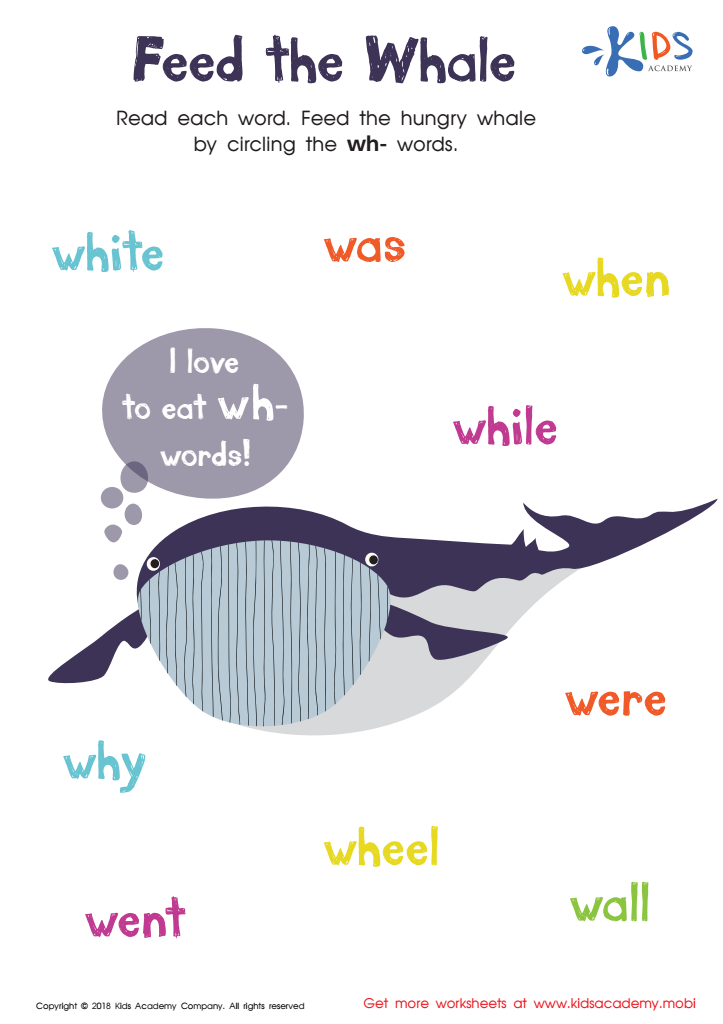
Feed the Whale Worksheet
 Assign to My Students
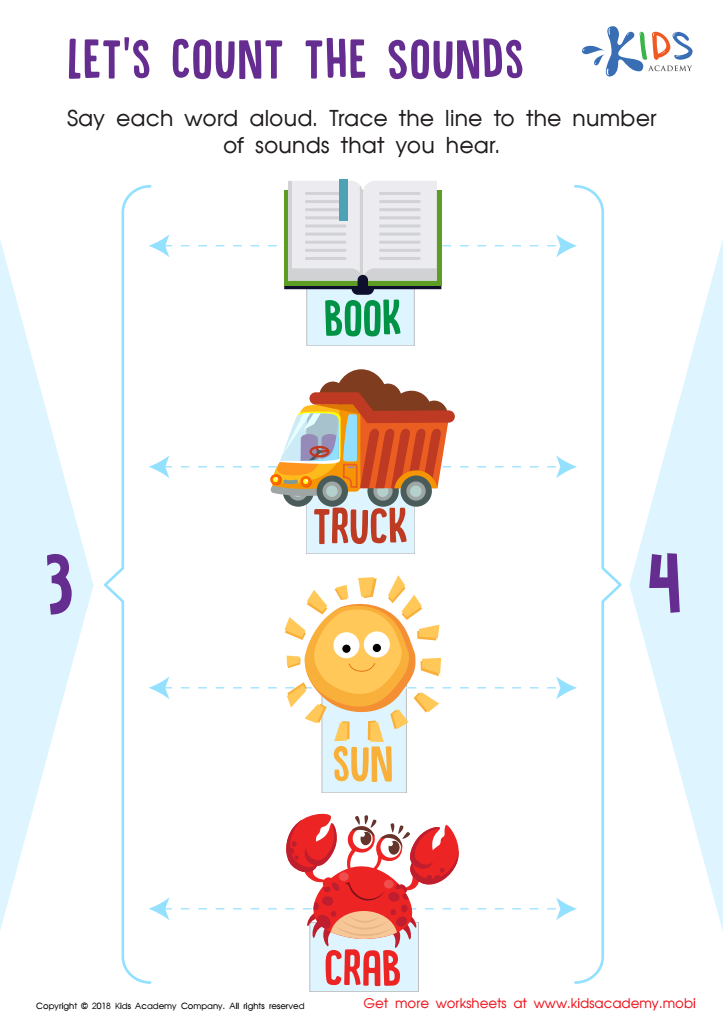
Let's Count the Sounds Worksheet
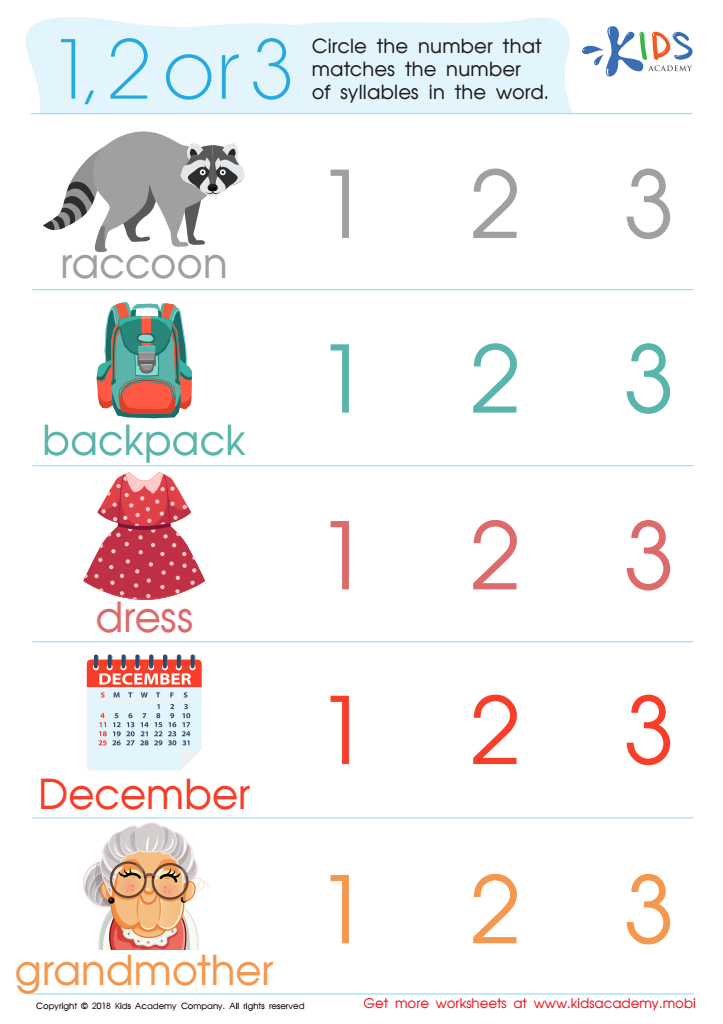
1, 2 or 3? Worksheet








Counting skills and knowledge of the alphabet are foundational components of early education in Grade 1, and instilling these skills is crucial for a child's overall development. First, counting lays the groundwork for numerical literacy, which is essential for understanding mathematical concepts as children progress through school. Proficient counting skills enable students to grasp addition, subtraction, and more complex problem-solving techniques later on, paving the way for success in subjects like math and science.
Similarly, familiarity with the alphabet is vital for literacy development. Recognizing letters and their corresponding sounds facilitates reading and writing skills, which are critical for effective communication. Mastery of the alphabet encourages children to express their thoughts, engage in creative storytelling, and explore literature.
Moreover, both counting and alphabet skills support cognitive development, enhance memory, and boost confidence. Children who excel in these areas tend to perform better academically and social-emotionally. By supporting skill development in counting and the alphabet, parents and teachers empower children to build a strong educational foundation, instilling a love for learning that can last a lifetime. These skills also scaffold their ability to tackle more complex learning tasks in subsequent grades, making them indispensable milestones in early childhood education.