Fine Motor Skills Grade 1 Letter A Worksheets
3 filtered results
-
From - To
Enhance your child's fine motor skills with our engaging Grade 1 Letter A worksheets! Designed for young learners, these worksheets provide a fun and interactive way to practice writing the letter A while developing essential hand coordination and control. Activities include tracing, coloring, and cutting, all centered around the letter A. Not only will students improve their handwriting, but they will also connect creativity and learning. Perfect for classroom or home use, these worksheets are tailored to make mastery of the alphabet enjoyable. Download and print our Letter A fine motor skills worksheets today, and watch your child flourish!
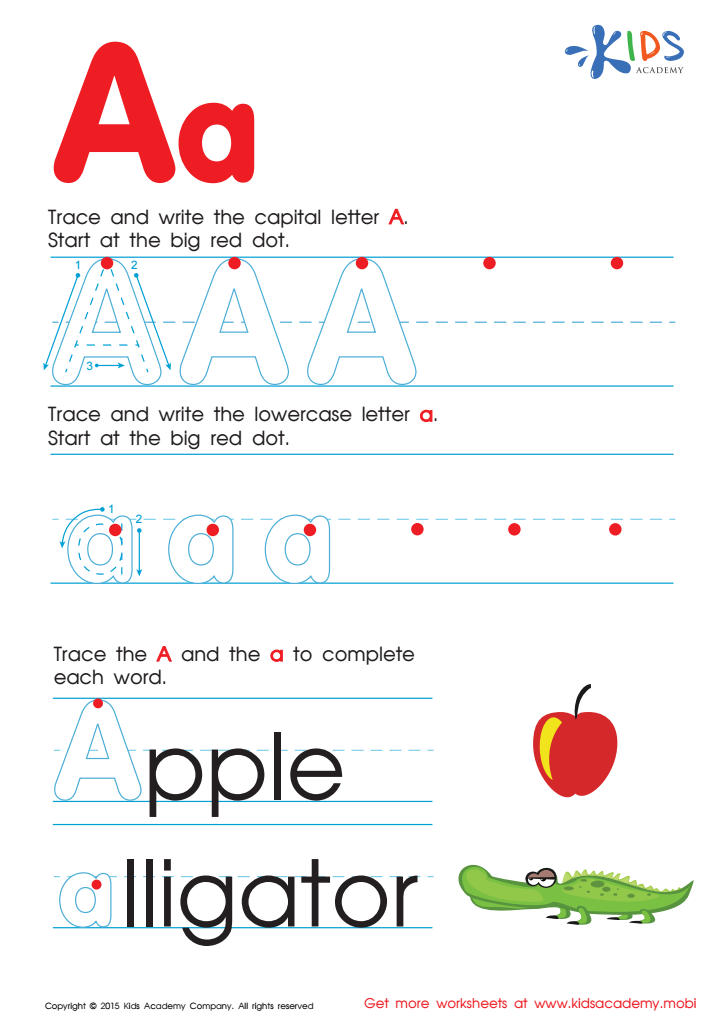
Letter A Tracing Page
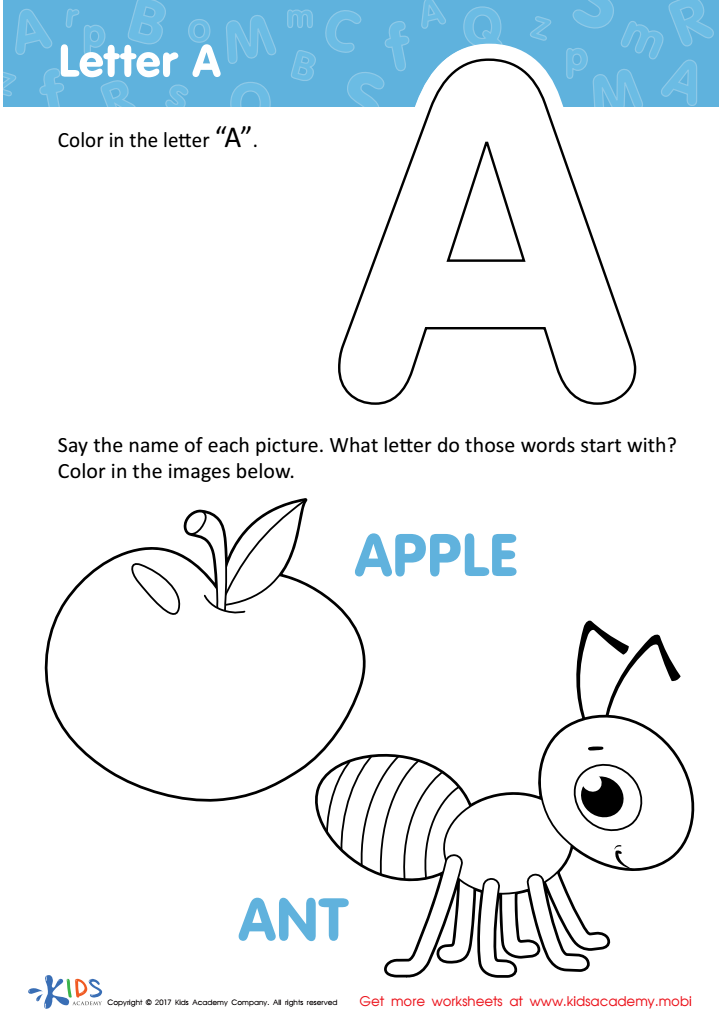
Letter A Coloring Sheet
 Assign to My Students
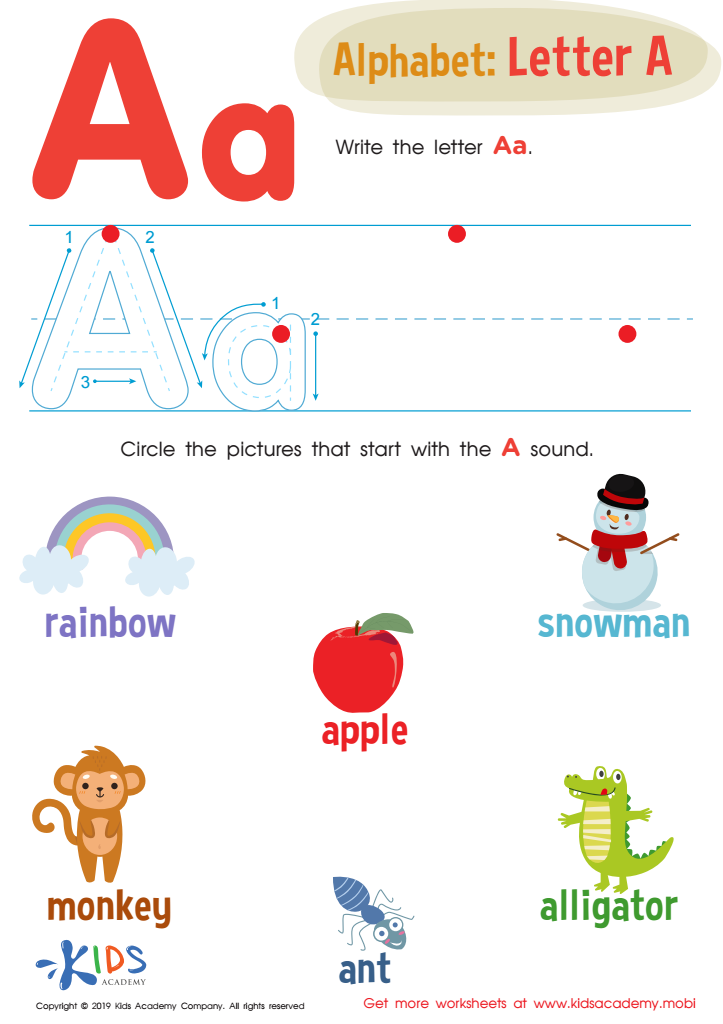
Letter A Tracing Worksheet






Fine motor skills are crucial for children, particularly in Grade 1, as they directly impact a child's development and learning ability. At this stage, students are refining their hand-eye coordination and are often engaged in writing, drawing, and other hands-on activities. The ability to control small movements is vital for tasks such as writing the letter "A" and manipulating classroom tools like scissors and crayons.
When children master fine motor skills, they gain the confidence to express themselves through art and writing. For teachers, fostering these skills can enhance classroom participation and promote tidy, legible work. For parents, encouraging fine motor development at home can spare their children from frustration in the classroom and set a strong foundation for learning.
Activities such as tracing the letter "A," playing with clay, or engaging in simple puzzles help strengthen these essential skills. Moreover, incorporating fine motor activities aids in cognitive development, as it fosters concentration and promotes problem-solving abilities.
In summary, by prioritizing fine motor skill development, both parents and teachers are actively supporting children’s overall growth, confidence, and readiness for future educational challenges. Encouraging these skills ensures a smooth transition into more complex tasks as students progress through their education.