Sound Association Grade 1 Phonics Worksheets
6 filtered results
-
From - To
Discover the perfect resource to bolster early reading skills with our Grade 1 Phonics Worksheets focused on sound association. Crafted specifically for first graders, these engaging worksheets help students connect letters with their corresponding sounds, enhancing their phonemic awareness. Featuring fun and interactive activities like matching games and word puzzles, our phonics worksheets make learning enjoyable and effective. Ideal for classroom use or extra practice at home, these worksheets support children in mastering fundamental language skills, paving the way for fluent reading. Explore our collection today and watch your child’s confidence and proficiency soar!
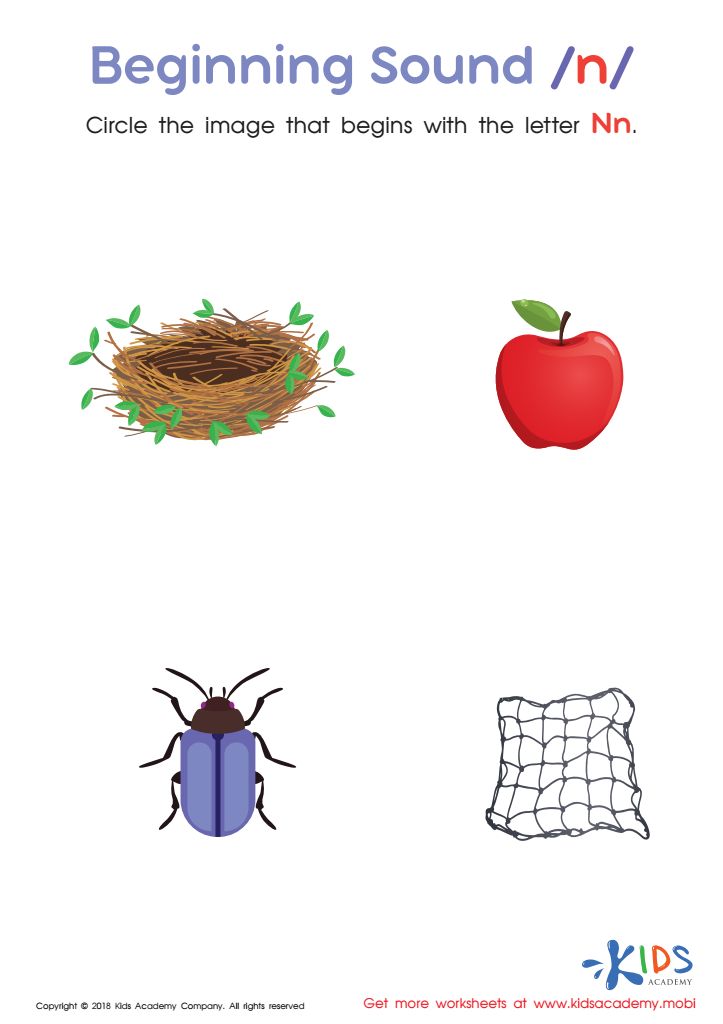
Beginning Sound «n» Worksheet
 Assign to My Students
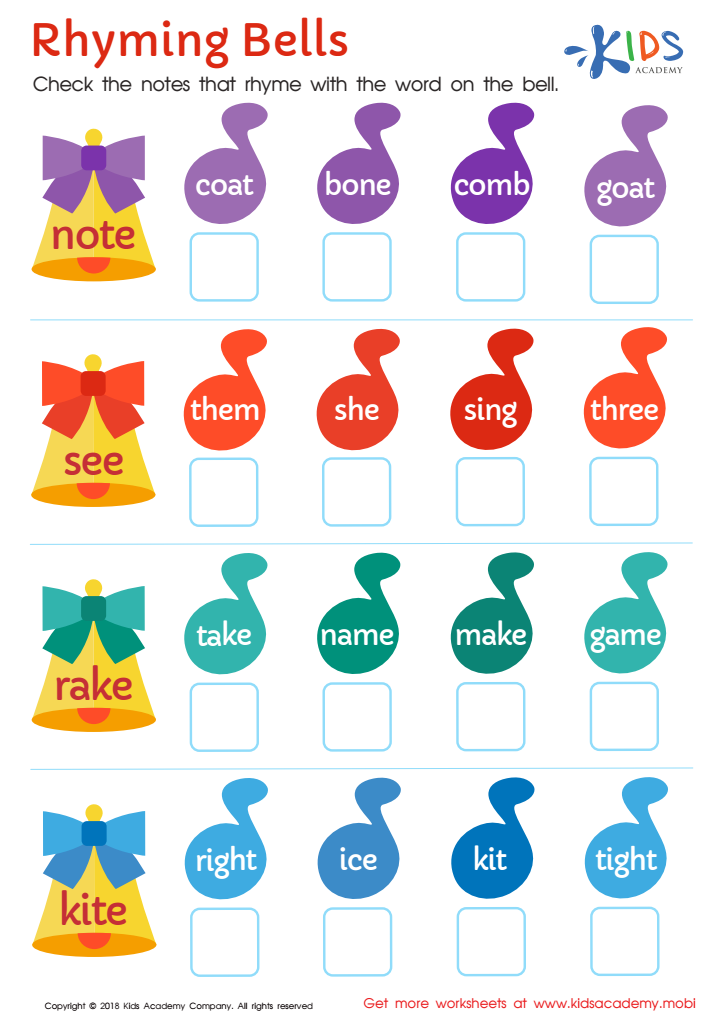
Rhyming Bells Worksheet
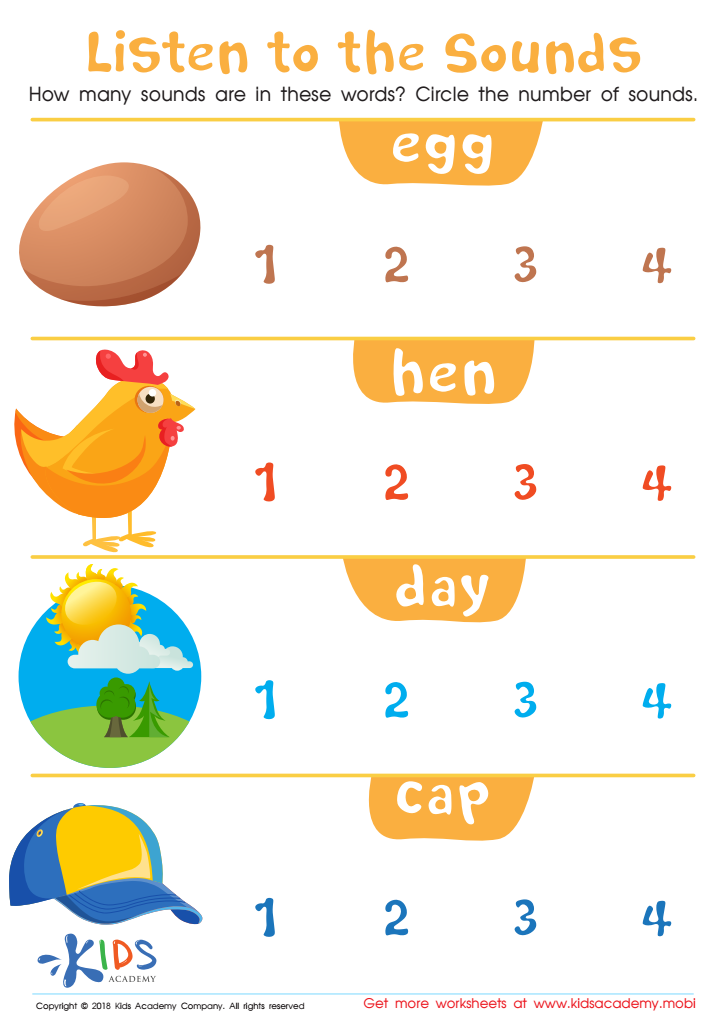
Listen to the Sounds Worksheet
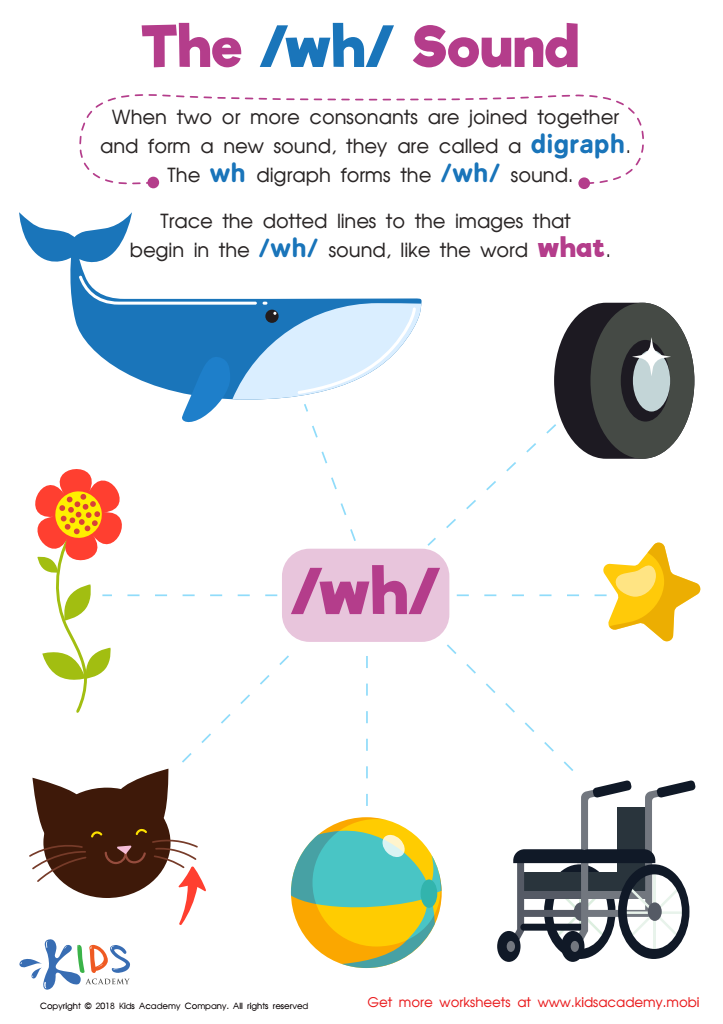
The /wh/ Sound Worksheet
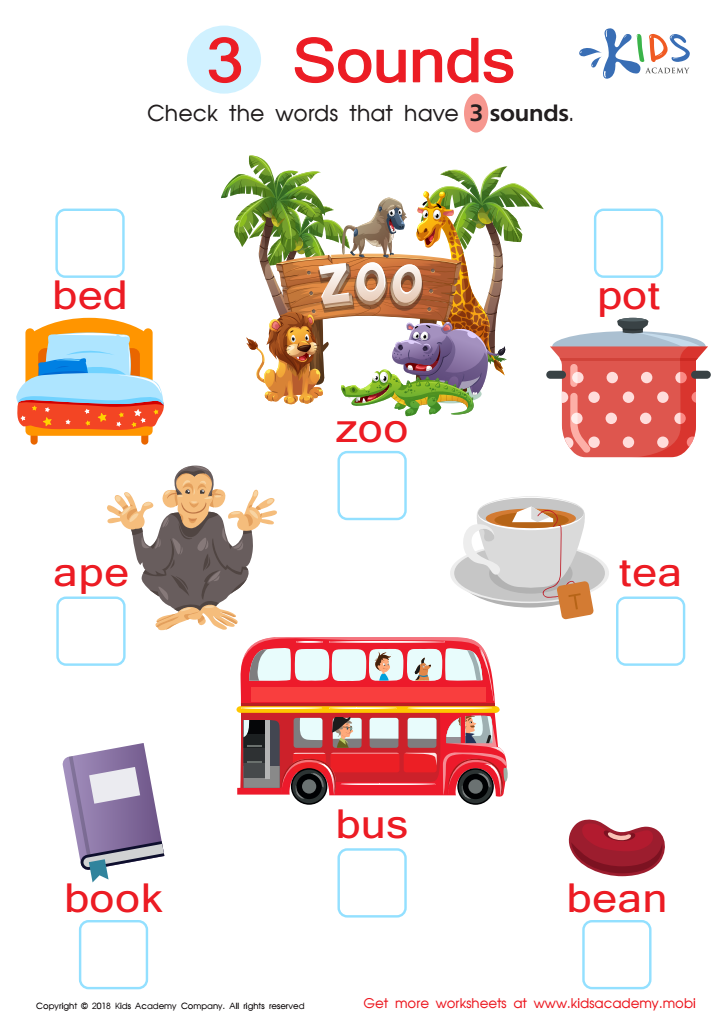
3 Sounds Worksheet
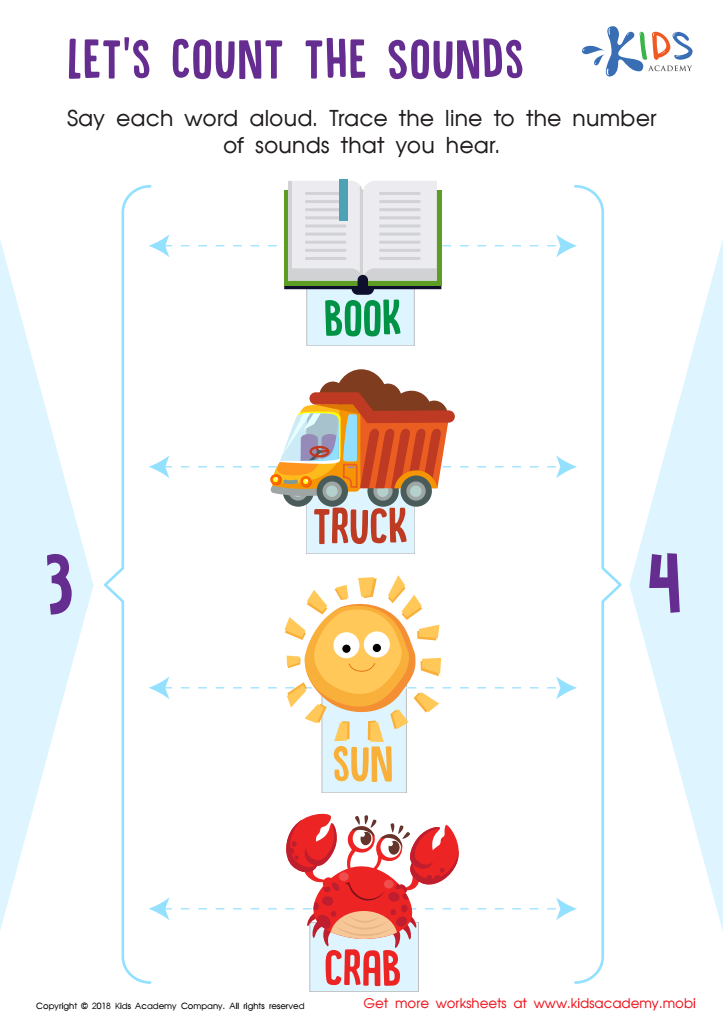
Let's Count the Sounds Worksheet


Phonics education, particularly through Sound Association, is fundamental for first graders because it lays the groundwork for essential reading and writing skills. Early proficiency in sound association helps children recognize the relationship between letters and sounds, foundational for decoding words. When parents and teachers engage with Grade 1 Phonics, they provide tools for students to sound out new words, thereby boosting reading fluency and comprehension.
Quality instruction helps children focus on sounds in words (phonemic awareness), which is a critical skill preceding effective phonics learning. Sound Association aids in developing listening skills, enhancing the ability to pinpoint distinct sounds crucial for spelling and reading accurately.
Parental and teacher support in phonics education ensures personalized attention; acknowledging each child’s unique learning pace fosters a positive, effective learning environment. Encouraging phonics activities at home bridges classroom skills with daily practice, ensuring deeper knowledge absorption.
In summary, dedicated phonics education, with an emphasis on sound association, buttresses literacy skills, offering aspiring readers the means to navigate increasingly complex texts. Above all, it triggers an interest in reading, a lifelong pleasure and essential competency for academic success and personal growth.