Color Identification Grade 1 Worksheets - Page 2
30 filtered results
-
From - To
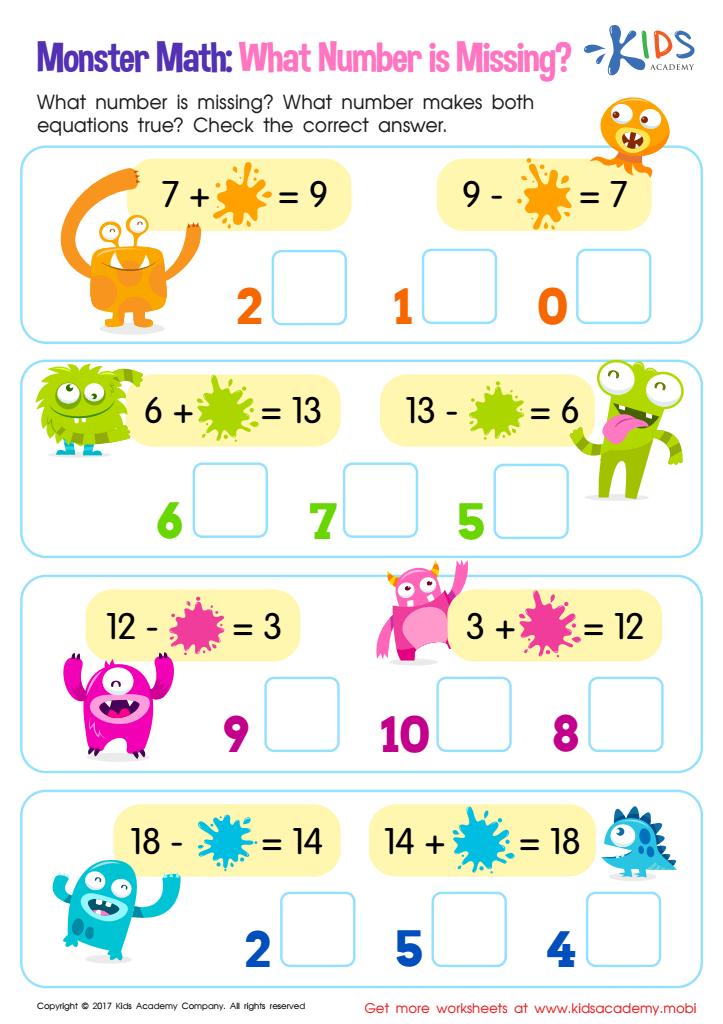
Missing Number: Monster Math Worksheet
 Assign to My Students
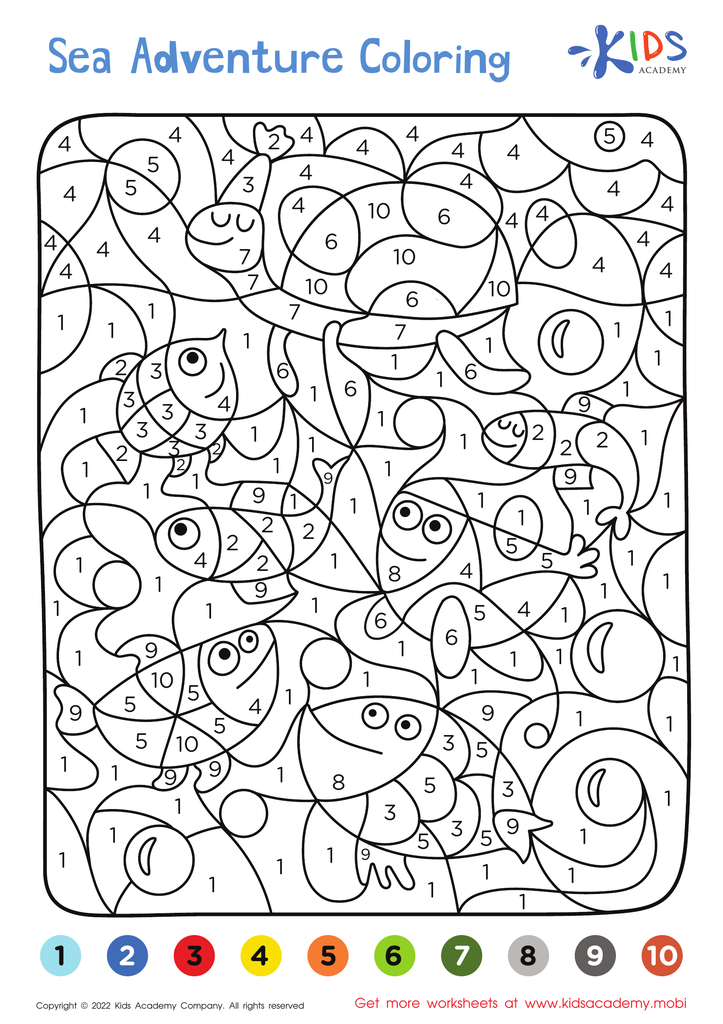
Sea Adventure – Coloring by Numbers
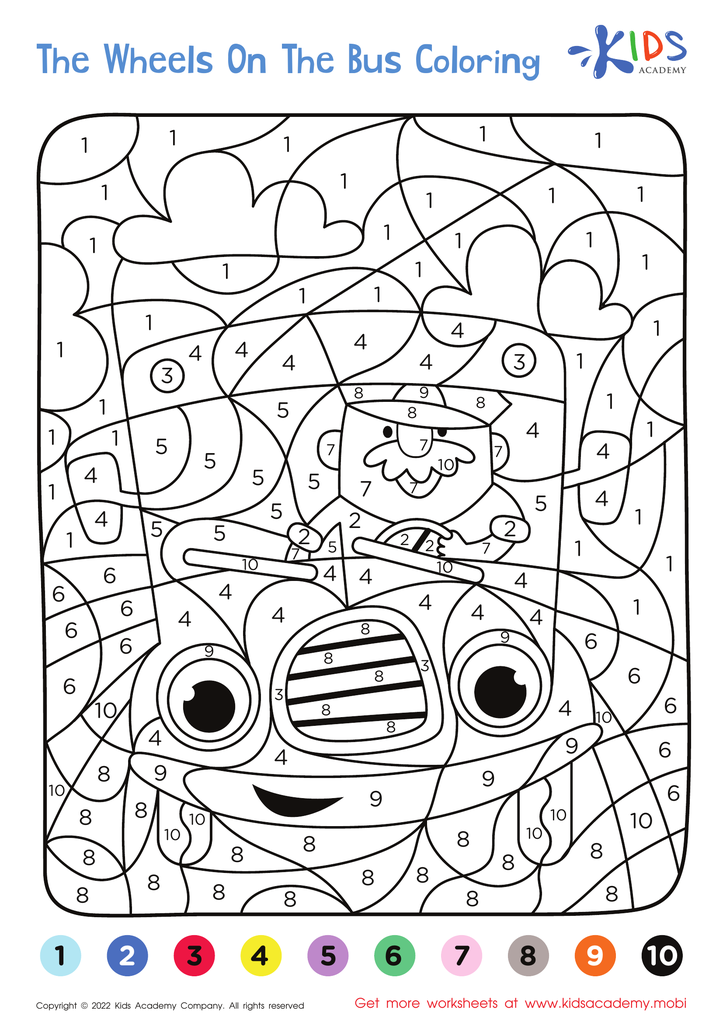
Wheels on the Bus – Coloring by Numbers
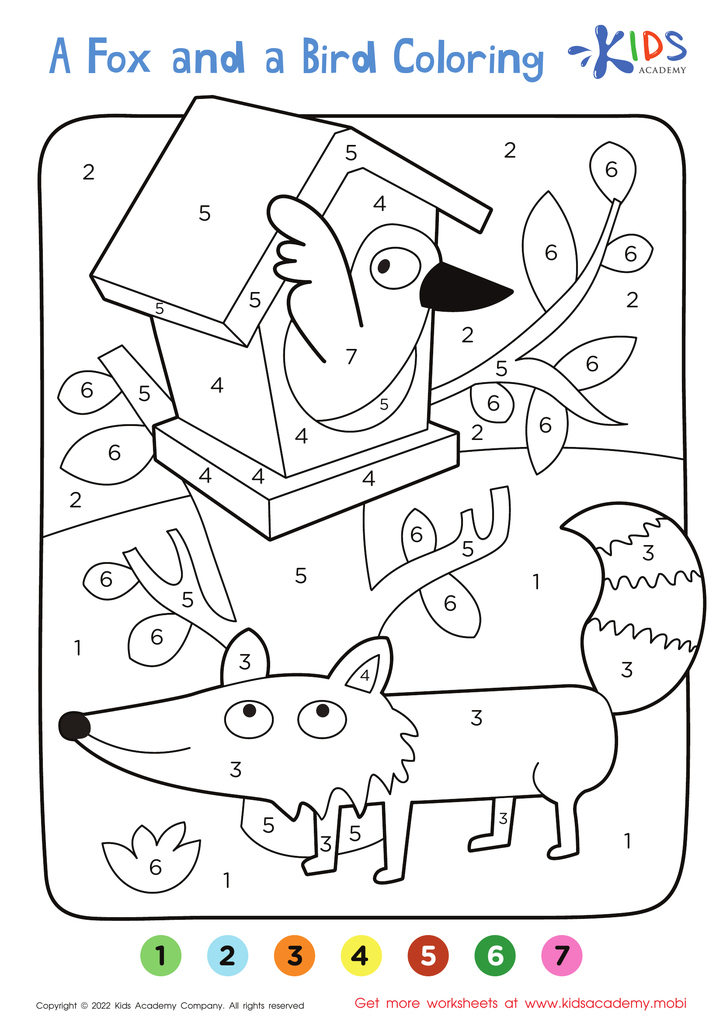
A Fox and a Bird – Coloring by Numbers







Color identification is a foundational skill that plays a crucial role in early childhood education, particularly in Grade 1. Understanding colors is vital for cognitive development, as it enhances a child's ability to categorize objects, engage in problem-solving, and build their vocabulary. When children learn to identify colors, they gain essential skills in recognizing differences and similarities, which fosters critical thinking.
Further, color identification supports social and emotional development. Children use colors to express themselves in art, storytelling, and play, helping to improve their creativity and imagination. Teachers and parents can incorporate color activities to promote collaboration and communication with peers, enhancing social skills.
In educational settings, color recognition can enhance subjects like math and science. For instance, when learning about graphs or nature, identifying colors helps children grasp essential concepts and observations.
Additionally, color identification plays an important role in daily life skills. Recognizing colors allows children to make choices, such as in selecting clothing or food, encouraging independence.
Overall, fostering color recognition nurtures children's overall growth and lays the groundwork for more sophisticated learning as they progress through their education. Therefore, it's essential for parents and teachers to prioritize and support color identification in Grade 1.