Animal recognition Grade 1 Addition and Subtraction Word Problems Worksheets
4 filtered results
-
From - To
Explore our engaging "Animal Recognition Grade 1 Addition and Subtraction Word Problems Worksheets." Tailored for young learners, these worksheets blend math with fun animal themes, stimulating children's interest in both math and wildlife. Each worksheet presents real-world scenarios involving animals, encouraging students to practice addition and subtraction through relatable situations. By solving these problems, first graders enhance their math skills while developing critical thinking and fostering a love for animals. Perfect for classroom activities or home learning, our worksheets are designed to make learning enjoyable and effective, ensuring students build a solid foundation in basic math concepts. Discover the joy of learning today!
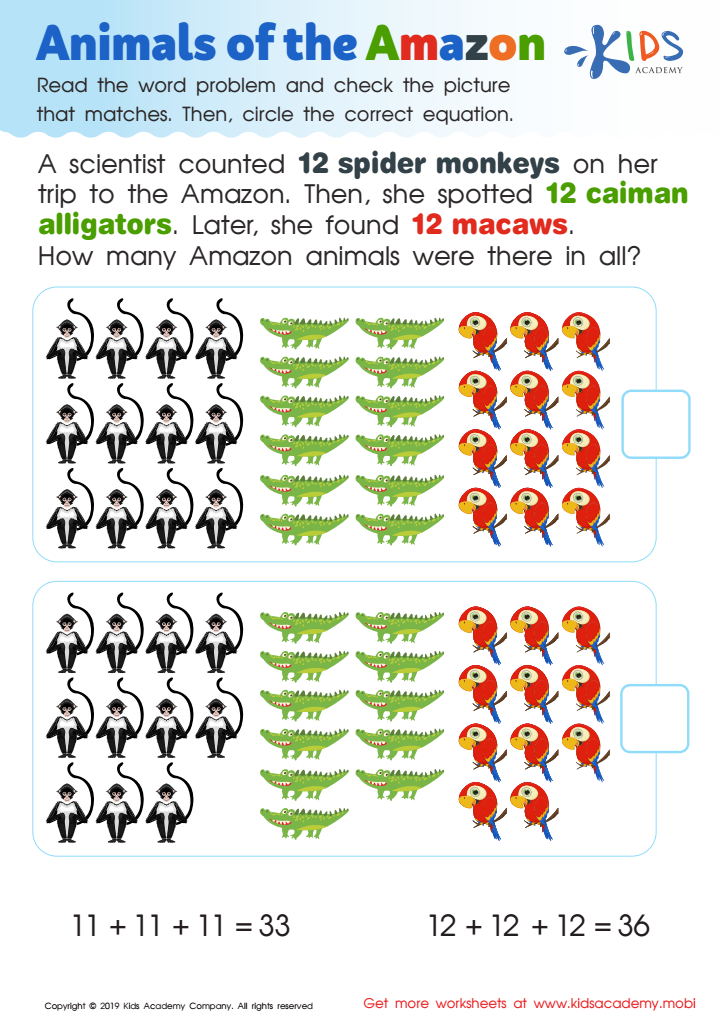
Animals of Amazon Worksheet
 Assign to My Students
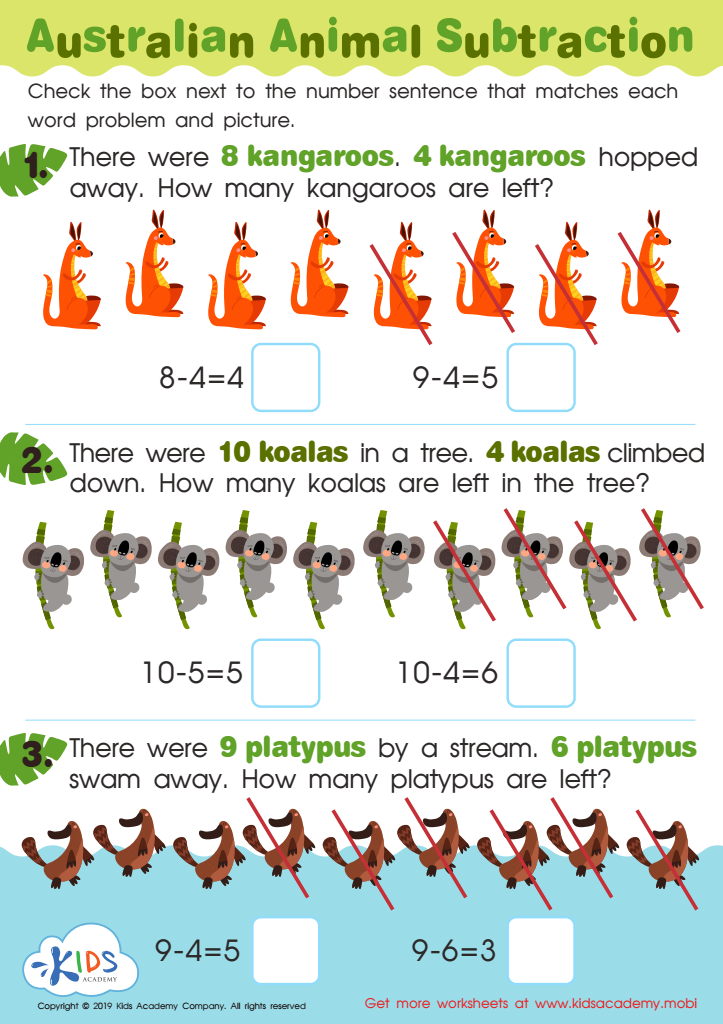
Australian Animal Subtraction Worksheet
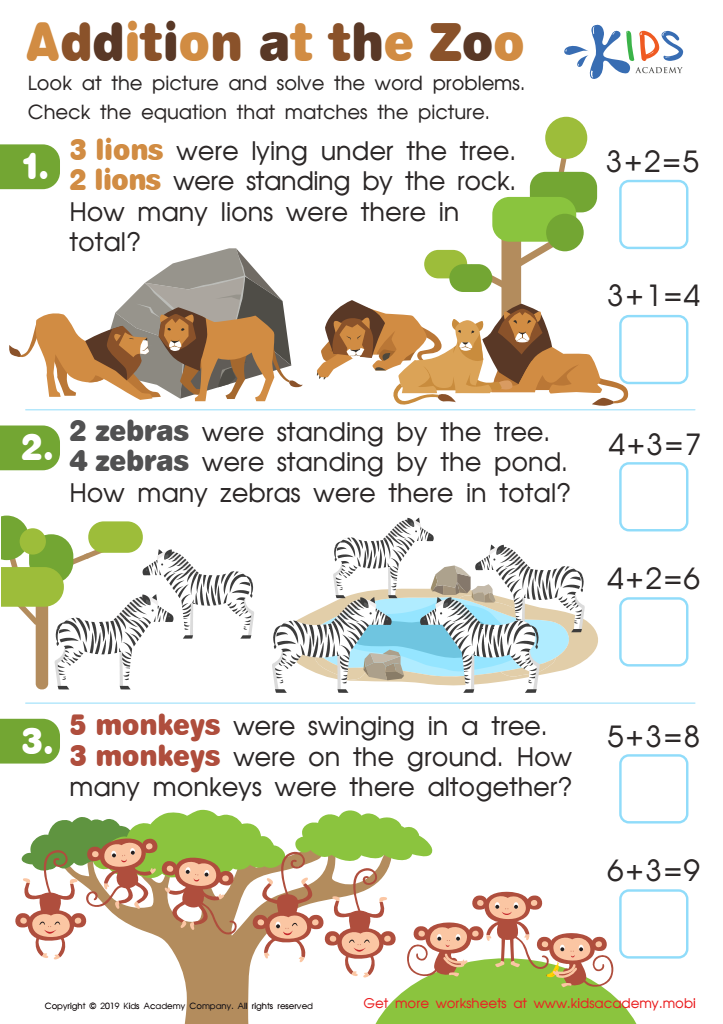
Addition at the Zoo Worksheet
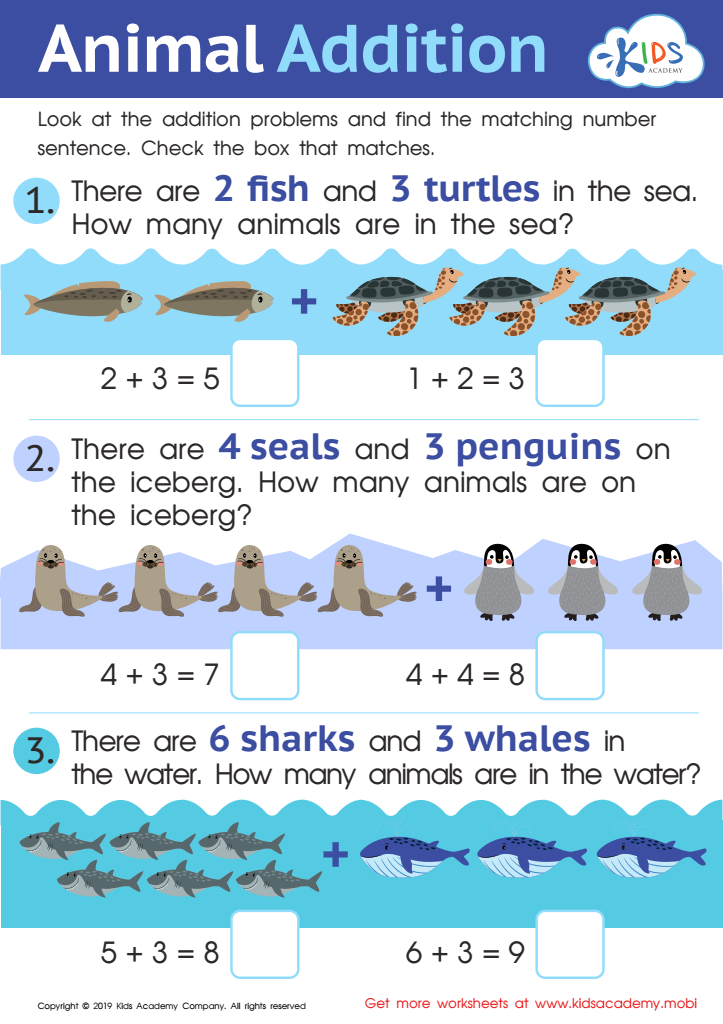
Animal Addition Worksheet








Animal recognition in Grade 1 addition and subtraction word problems serves an essential dual purpose for young learners. Firstly, integrating animals into math problems makes the learning experience engaging and relatable, leveraging children's natural curiosity and interest in animals. When students associate math with real-world concepts, they are more likely to grasp fundamental skills and enjoy the learning process.
Secondly, these word problems enhance critical thinking and comprehension skills. Children learn to interpret information presented in sentences and understand what is being asked before applying mathematical operations. For example, scenarios involving animals can help students practice addition, such as counting how many ducks are in a pond or subtracting to find out how many are left after some have flown away.
Moreover, these types of problems foster a connection to nature and can be tied to broader educational themes such as biology and environmental awareness. Encouraging conversations around animal ecosystems can deepen understanding and caretaking messages.
Ultimately, by focusing on animal recognition within addition and subtraction word problems, parents and teachers can create enriching educational experiences. They help prepare children not only in math skills but also facilitate holistic development, reinforcing the joy of learning through meaningful contexts.