Visual Learning Grade 1 Addition & Subtraction Worksheets
6 filtered results
-
From - To
Enhance your child's math skills with our "Visual Learning Grade 1 Addition & Subtraction Worksheets." Designed specifically for first graders, these vibrant and engaging worksheets make learning fun and effective. Through colorful visuals and interactive activities, children grasp essential addition and subtraction concepts effortlessly. Emphasizing hands-on learning, these resources help students develop strong computational skills and build confidence in solving math problems. Perfect for classroom use or at-home practice, our worksheets are an invaluable tool for fostering a love of math in young learners. Dive in and watch your child thrive with our dynamic and educational visual learning materials.
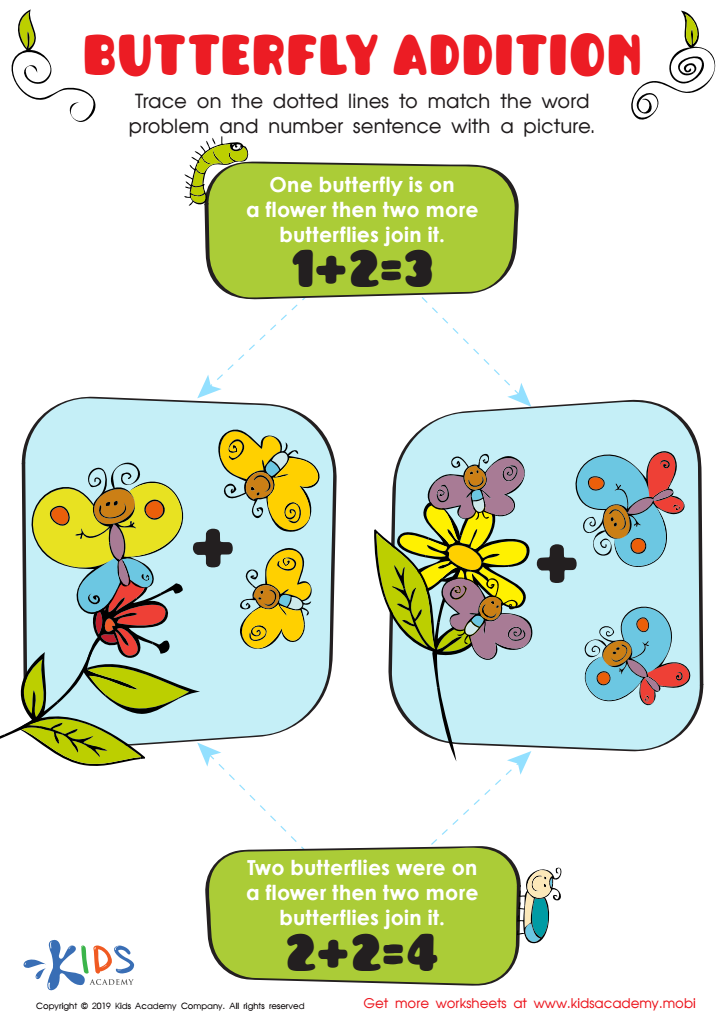
Butterfly Addition Worksheet
 Assign to My Students
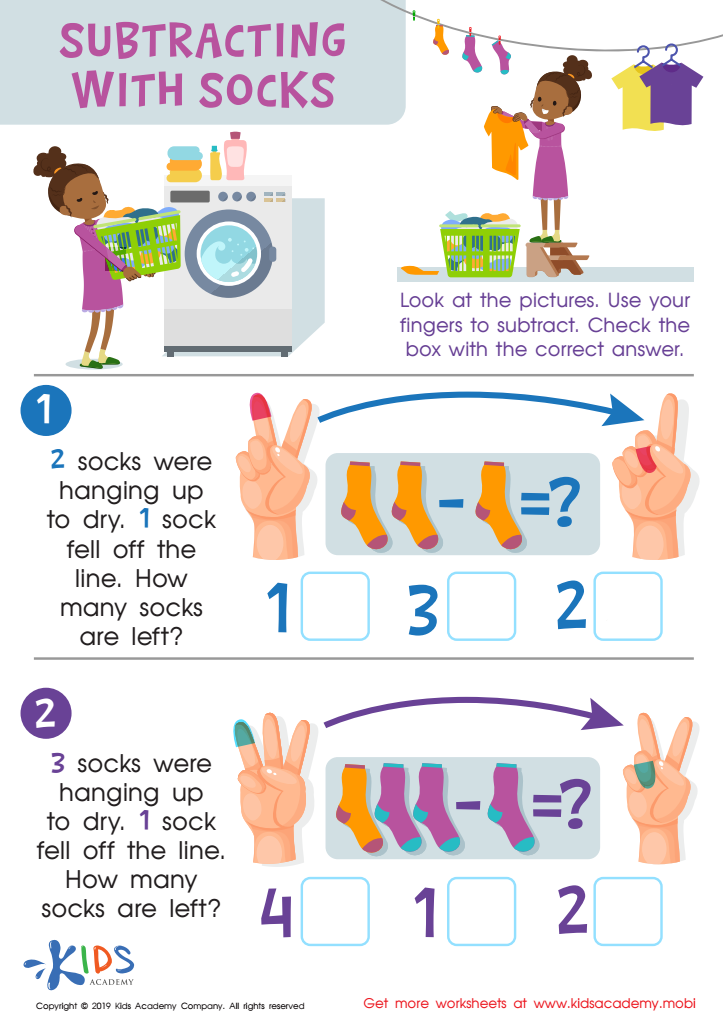
Subtracting Socks Worksheet
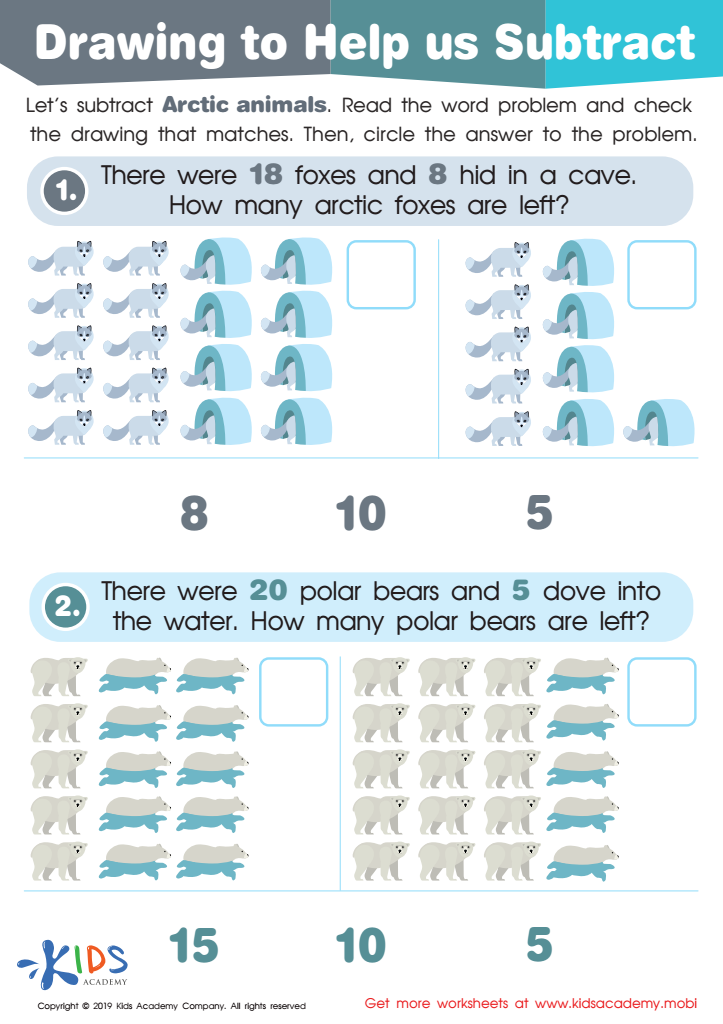
Drawing to Help Us Subtract Worksheet
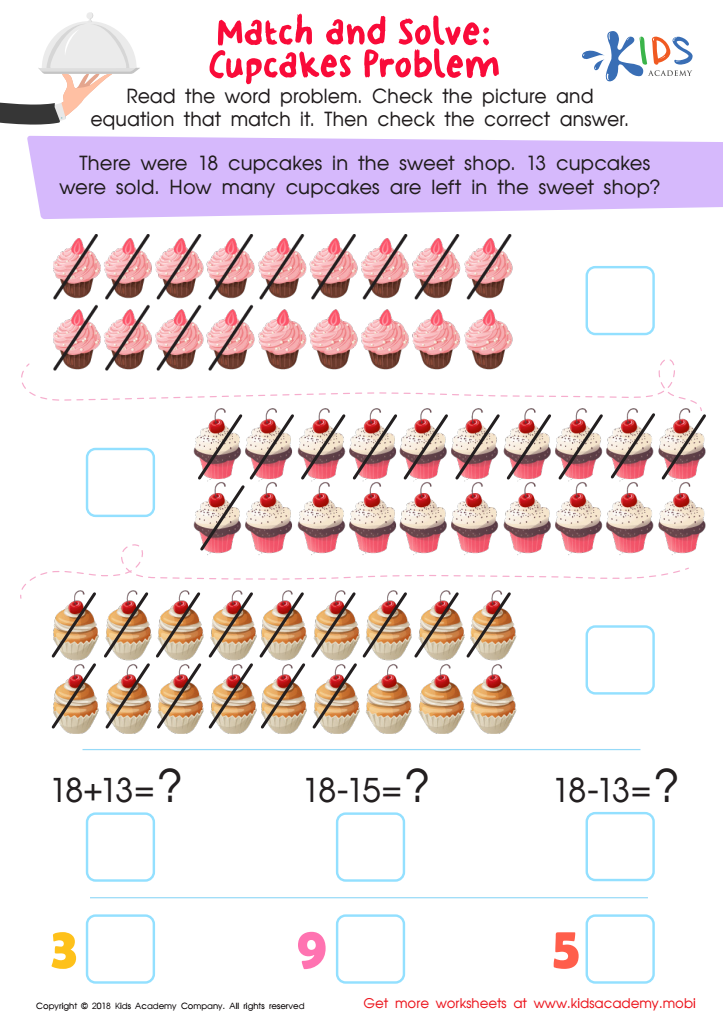
Match and Solve: Cupcakes Problem Worksheet
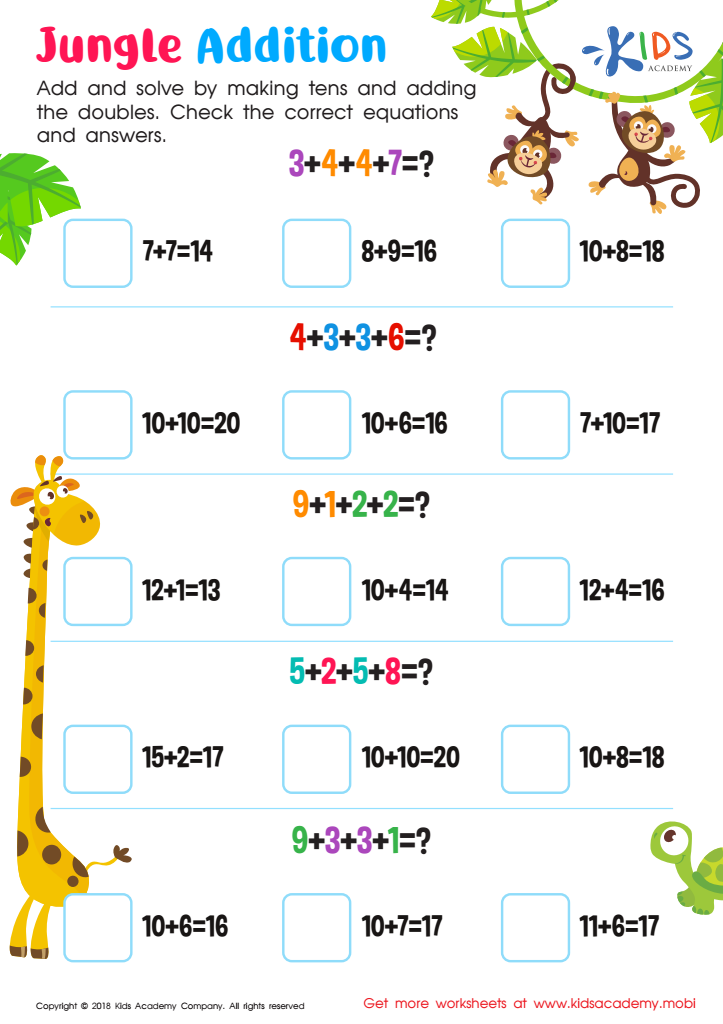
Jungle Addition Worksheet
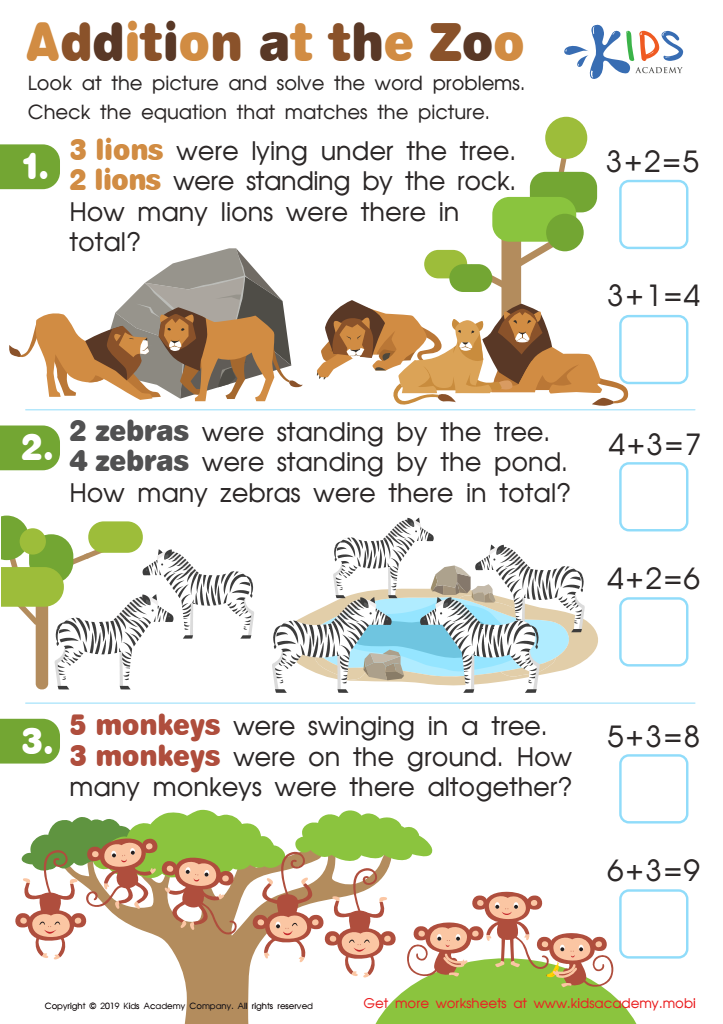
Addition at the Zoo Worksheet








Visual learning is a powerful tool in teaching first-grade students essential math skills like addition and subtraction. Here are some key reasons why parents and teachers should prioritize visual learning in this context:
-
Cognitive Development: Young children are primarily visual learners. Using objects, pictures, or drawings makes abstract concepts more concrete, aiding in their understanding of addition and subtraction.
-
Engagement and Interest: Colorful manipulatives and visual aids are more engaging for young students. They make learning fun and can spark curiosity, which encourages children to participate actively.
-
Clear Visualization: Visual tools help students clearly see the relationship between numbers. For example, using number lines or visual blocks can show how numbers add up or reduce, reinforcing the concept of numerical relationships.
-
Error Reduction: Visual learning often decreases the chances of mistakes. When children can see their problems, they're more likely to understand where they might be going wrong, fostering better problem-solving skills.
-
Building a Strong Foundation: Mastering these basic math skills using visual aids helps build a solid foundation for more complex mathematical concepts as children progress through their education.
-
Support Diverse Learning Styles: Not all students learn the same way. Visual learning accommodates diverse learning styles, ensuring that visual, tactile, and even kinesthetic learners grasp fundamental math concepts.
Through visual learning techniques in teaching addition and subtraction, parents and teachers can ensure a more inclusive, robust, and enjoyable learning experience for first-grade students.