Basic arithmetic practice Grade 1 Numbers Worksheets
3 filtered results
-
From - To
Welcome to our Basic Arithmetic Practice worksheets for Grade 1! Designed to reinforce foundational math skills, these engaging printable activities help young learners master essential concepts related to numbers and basic operations. Our thoughtfully created worksheets cover addition and subtraction, encouraging students to build confidence as they practice simple equations and number recognition. Perfect for classroom use or at-home learning, these resources support various learning styles, featuring colorful illustrations and clear instructions. Boost your child's math skills today with our easy-to-use worksheets that make learning fun while laying the groundwork for future academic success in mathematics!
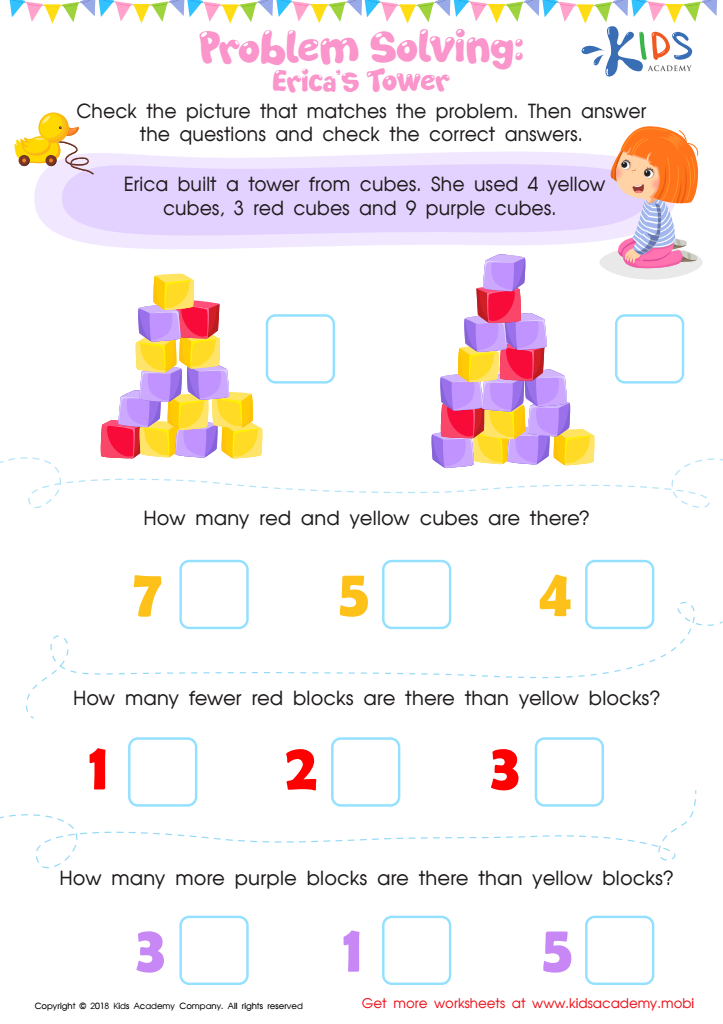
Problem Solving: Erica's Tower Worksheet
 Assign to My Students
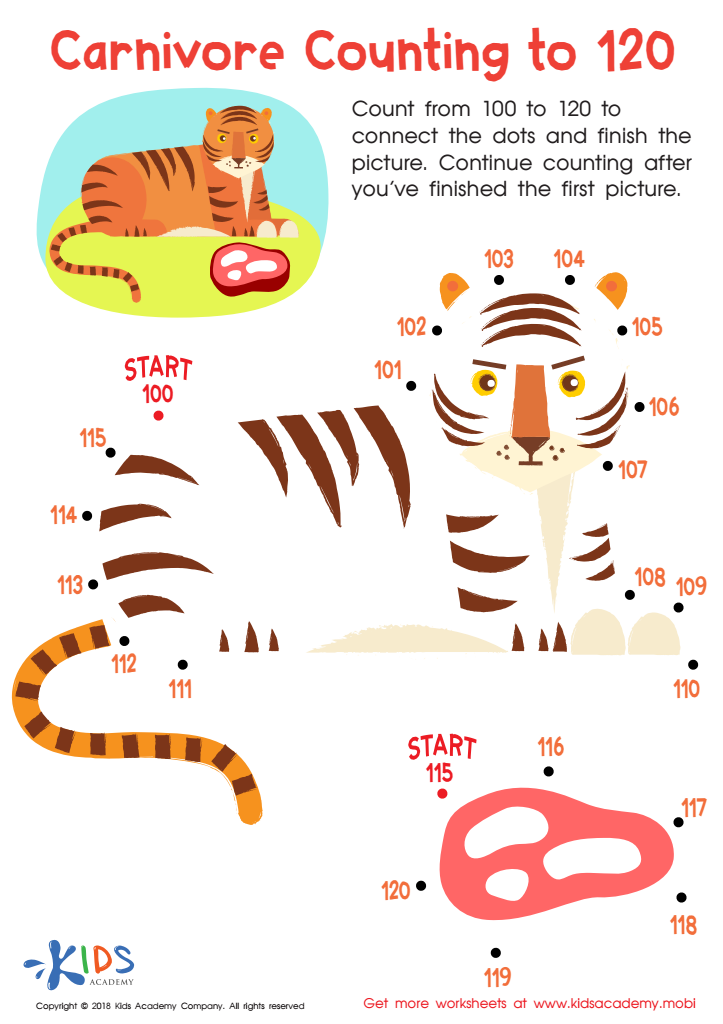
Carnivore Counting to 120 Worksheet
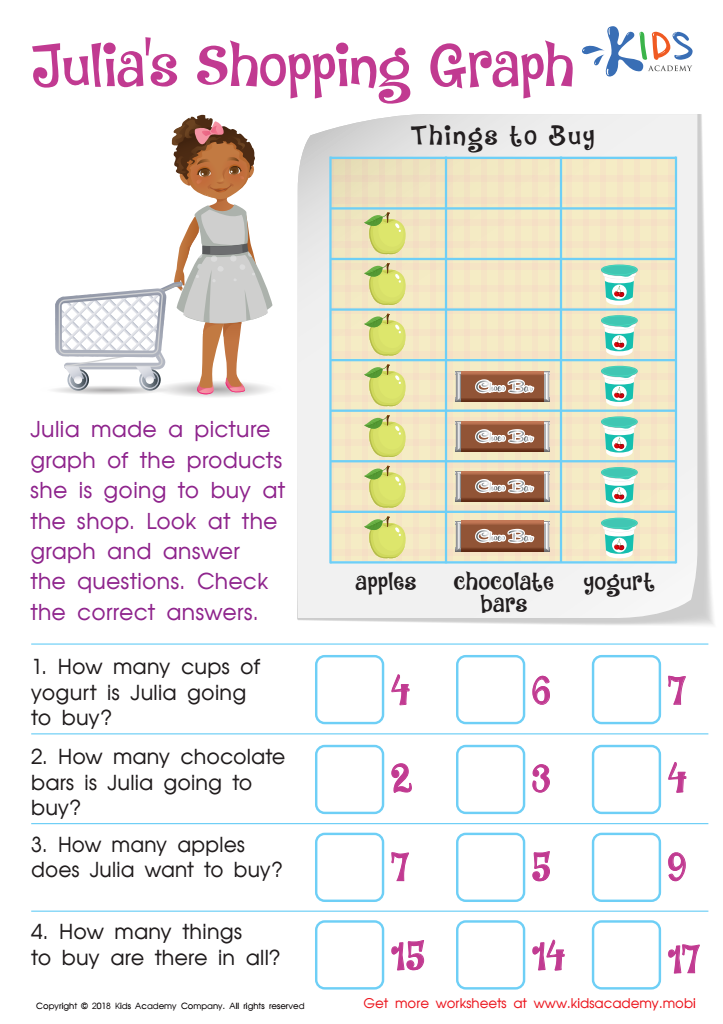
Julia's Shopping Graph Worksheet








Basic arithmetic practice in Grade 1 is foundational for a child’s academic success and overall development. At this stage, children are introduced to essential mathematical concepts such as addition, subtraction, and understanding numbers. This early engagement with arithmetic nurtures critical thinking and problem-solving skills, which are essential for everyday life and future learning.
Parents and teachers should care about arithmetic practice as it lays the groundwork for more complex math learning later. Early proficiency in numbers enhances a child's confidence and belief in their mathematical abilities. Additionally, consistent practice helps develop cognitive skills like pattern recognition and logical reasoning, which are beneficial across various subjects.
Furthermore, in an increasingly data-driven world, a solid foundation in arithmetic equips children with essential skills for future academic pursuits and their careers. Involvement from parents through supportive practices at home can reinforce what children learn in school, bridging the gap between classroom learning and everyday applications. Teachers play a crucial role in creating engaging lesson plans that capture children's interest, making learning fun and effective. In summary, early arithmetic practice is critical as it fosters a lifelong appreciation for mathematics and equips children with necessary skills for their futures.