Comparing lengths Grade 1 Math Worksheets
7 filtered results
-
From - To
Explore our engaging "Comparing Lengths" Grade 1 Math Worksheets, designed to help young learners develop essential measurement skills. These interactive worksheets provide a fun and effective way for students to compare the lengths of various objects using visual aids and hands-on activities. Ideal for classroom or home use, our resources enhance critical thinking while reinforcing key concepts such as longer, shorter, and equal lengths. With a variety of exercises tailored to first graders, children will gain confidence in their abilities to measure and compare as they embark on their mathematical journey. Start fostering a love for math today!
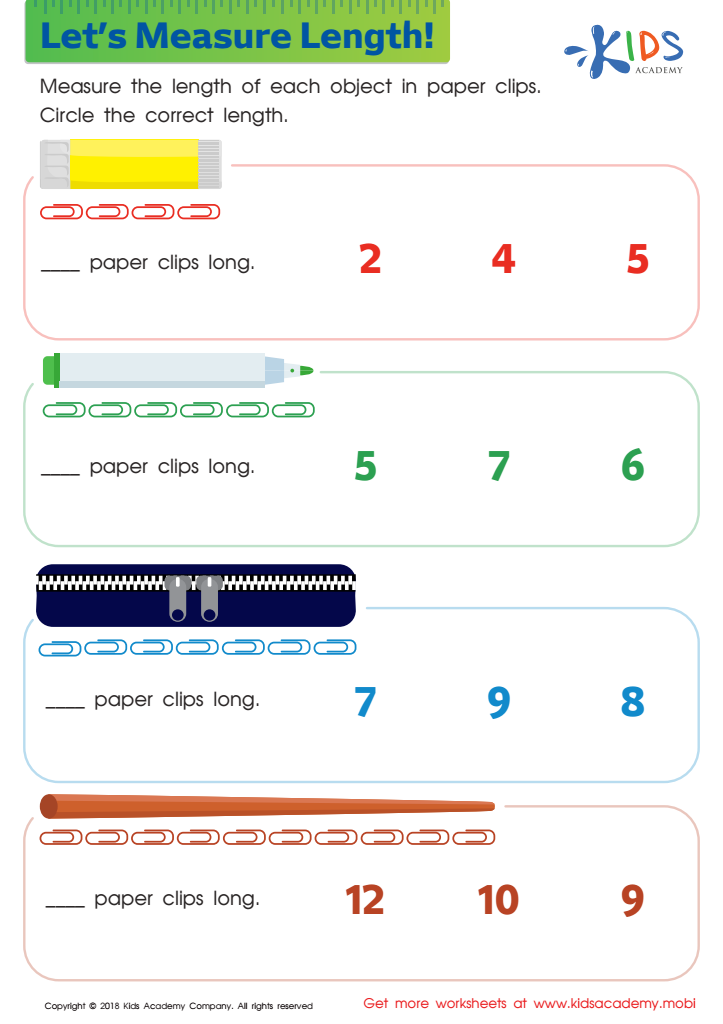
Lets Measure Length Worksheet
 Assign to My Students
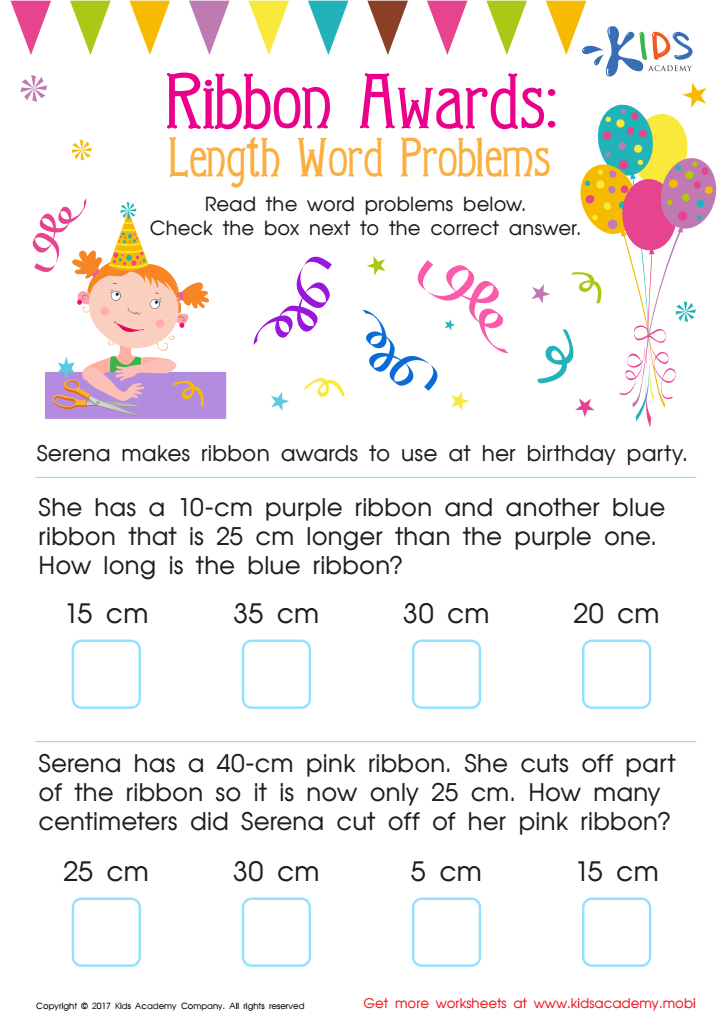
Length Word Problems Worksheet
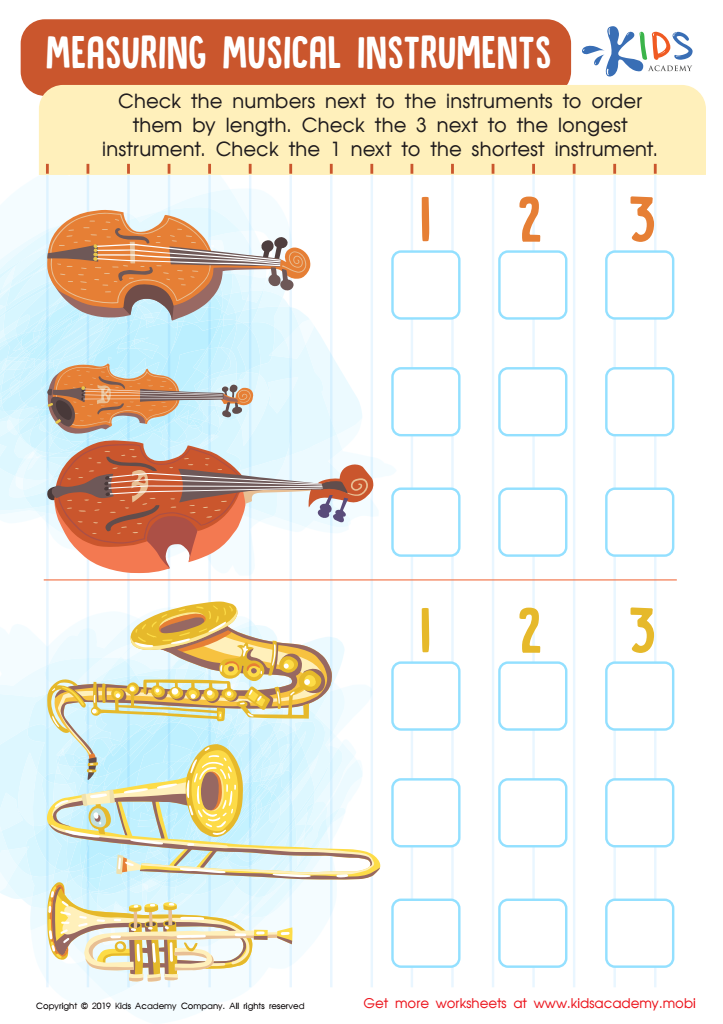
Measuring Musical Instruments Worksheet
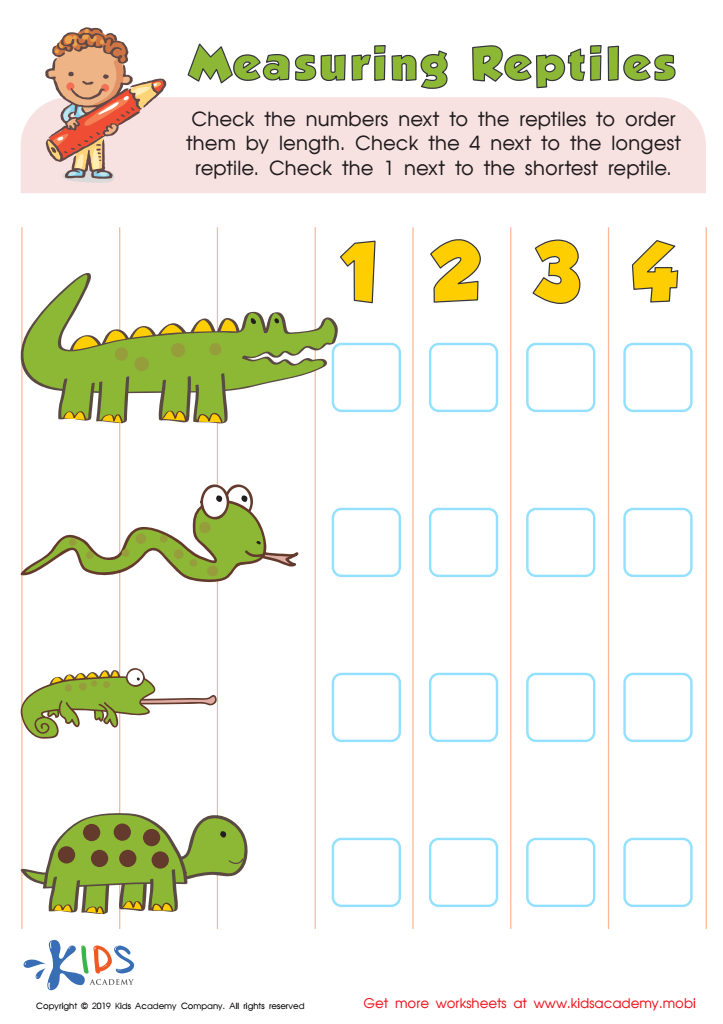
Measuring Reptiles Worksheet
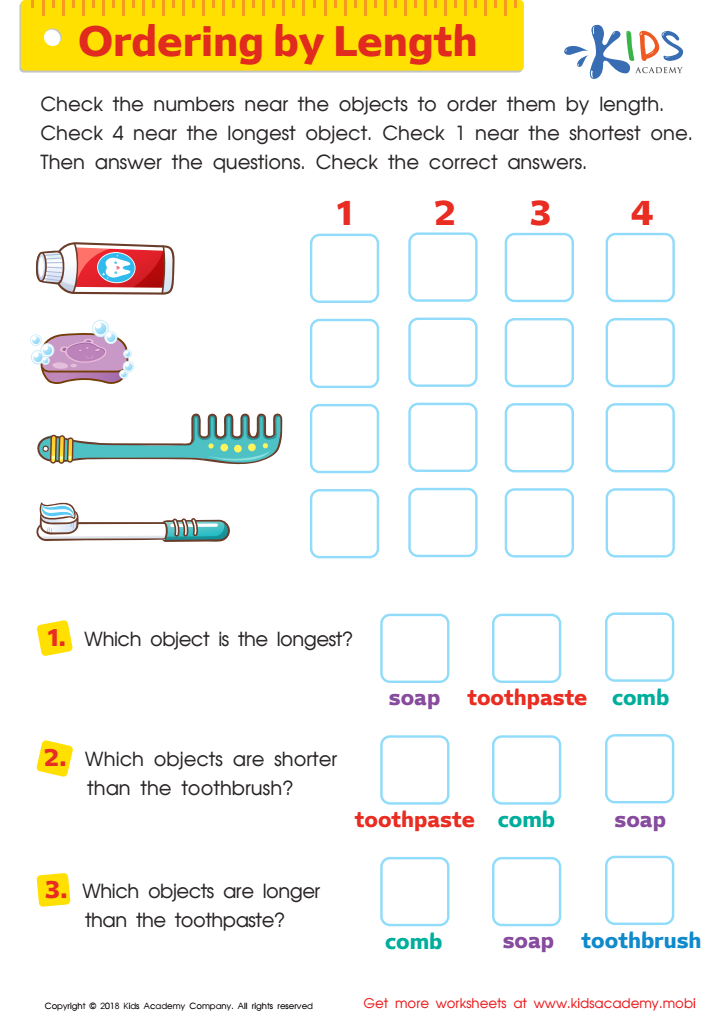
Ordering by Length Worksheet
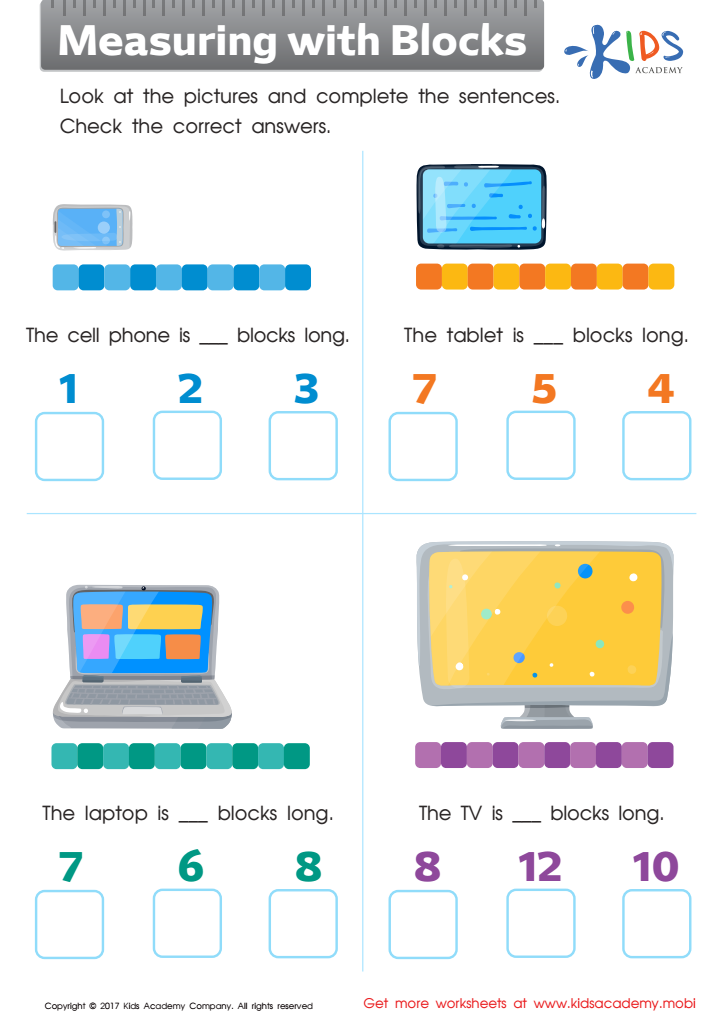
Measuring with Blocks Worksheet
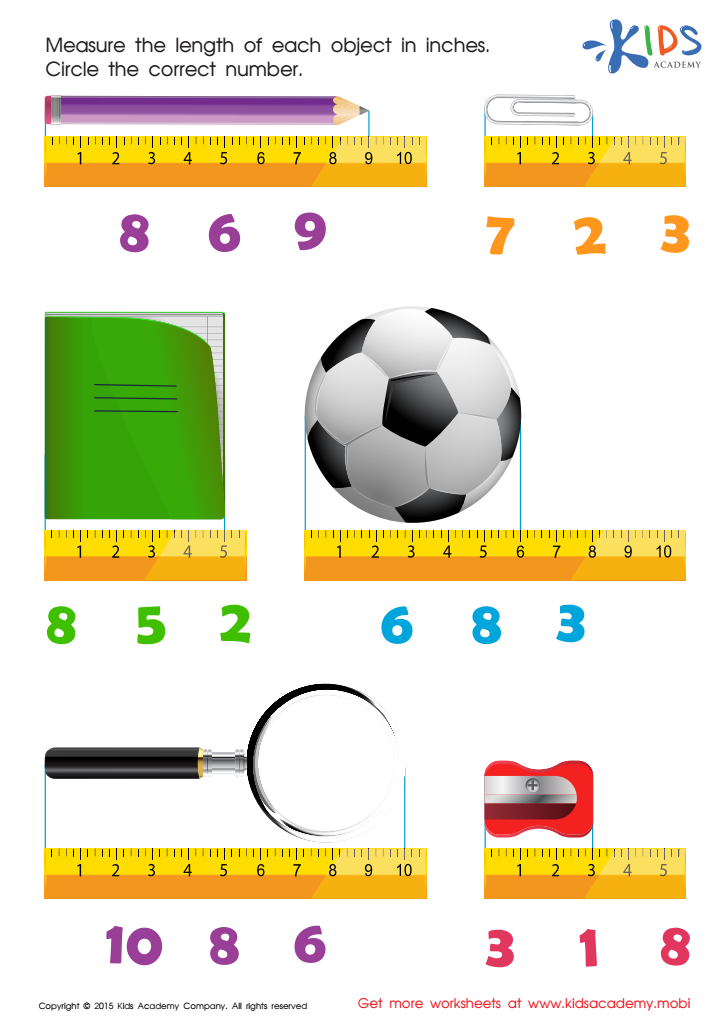
Learning measuring objects in inches Worksheet







Comparing lengths is a fundamental math skill that serves as the foundation for more advanced measurements and mathematical concepts. For parents and teachers, emphasizing the importance of comparing lengths in Grade 1 math is crucial for several reasons.
Firstly, it promotes essential problem-solving skills. By engaging in activities that encourage children to compare the lengths of various objects, students develop critical thinking skills and learn to make observations based on measurable attributes. This lays the groundwork for understanding larger mathematical concepts such as measurement, geometry, and even data analysis.
Furthermore, comparing lengths enhances students' understanding of real-world contexts. When children comprehend how to measure and compare lengths, they can apply these skills in everyday situations—such as comparing the height of family members, measuring items at the grocery store, or understanding distances during outdoor play.
Moreover, this skill fosters collaboration and communication. Grouping students for measurement activities encourages dialogue about their observations, promoting social interaction while reinforcing learning.
Lastly, focusing on comparing lengths in Grade 1 fosters confidence in young learners. As they successfully compare and measure various objects, they become more comfortable with math, paving the way for a positive attitude toward their mathematical journey. Encouraging this skill sustains a lifelong appreciation for learning and mathematics.