Recognizing shapes Grade 1 Math Worksheets
3 filtered results
Difficulty Level
Grade
Age
-
From - To
Subject
Activity
Standards
Enhance your child's math skills with our engaging Recognizing Shapes Grade 1 Math Worksheets! Perfect for young learners, these worksheets introduce geometric shapes through fun activities designed to foster creativity and critical thinking. Students will identify, draw, and compare shapes while exploring real-life applications. Our worksheets cater to various learning styles, ensuring every child can grasp essential concepts at their own pace. With colorful illustrations and interactive exercises, your first grader will love the challenge of recognizing shapes in a playful and intuitive way. Download our printable worksheets today and watch your child's confidence and math skills grow!
Favorites
With answer key
Interactive
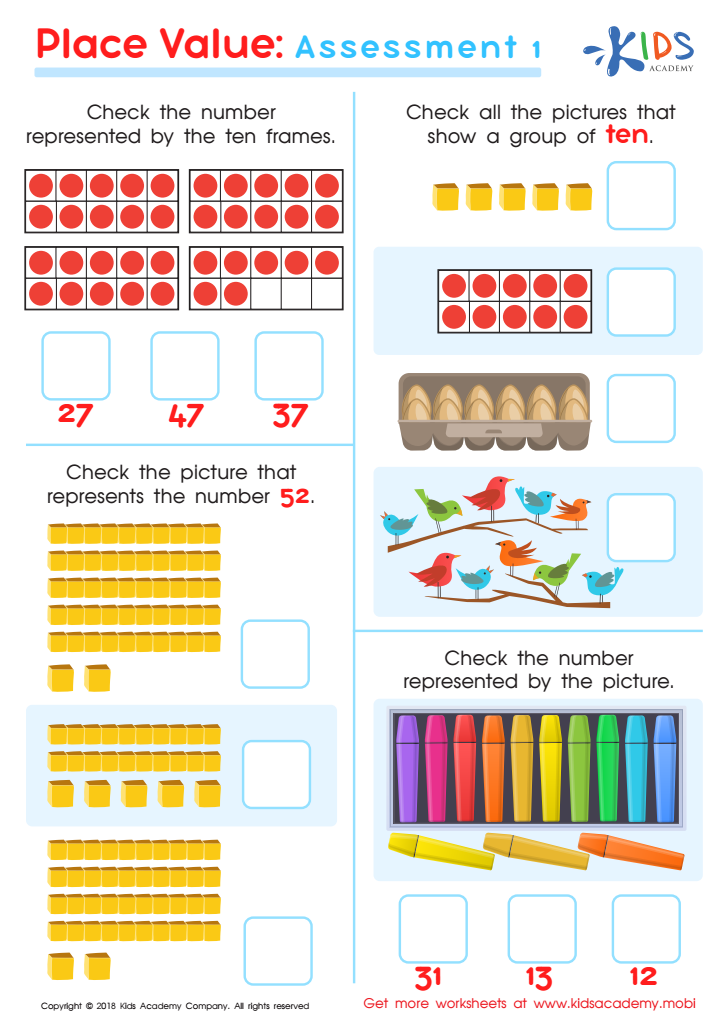
Place Value: Assessment 1 Worksheet
Assess your child's place value and number representation with this PDF worksheet. It lets them count and compare numbers and practice chiseling numbers into groups of ten. It's a great way to identify any concepts that need to be reinforced.
 Assign to My Students
Place Value: Assessment 1 Worksheet
Worksheet
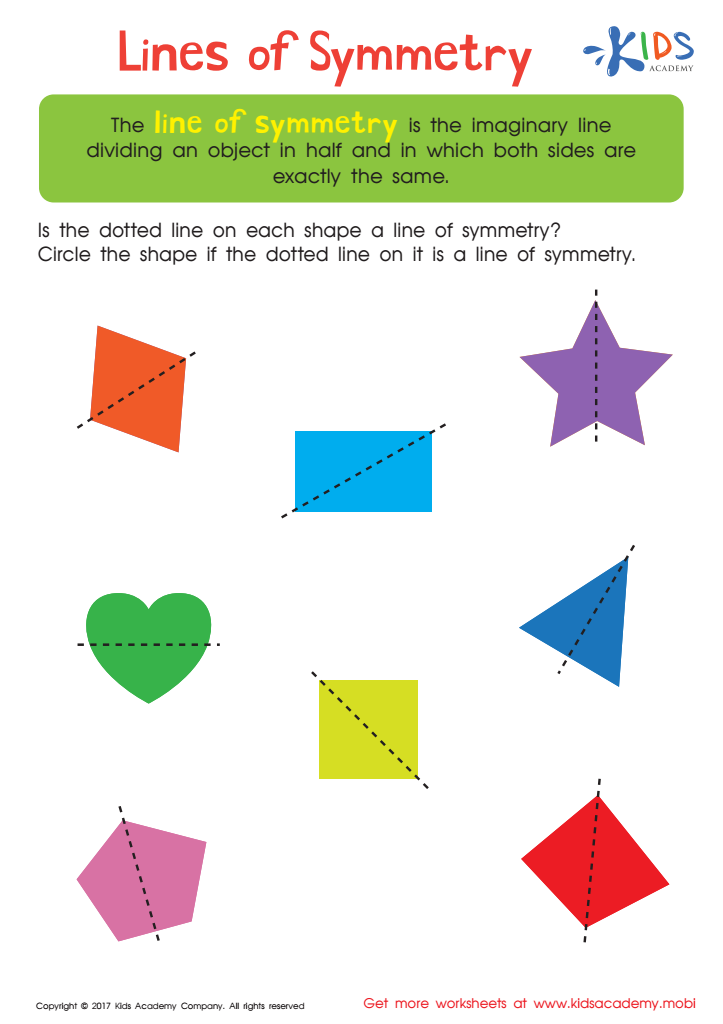
Lines of Symmetry Printable
Symmetry is a key math concept that kids must learn to develop their geometry skills. This fun worksheet helps build this skill, by encouraging kids to recognize symmetrical shapes and find equal parts.
Lines of Symmetry Printable
Worksheet
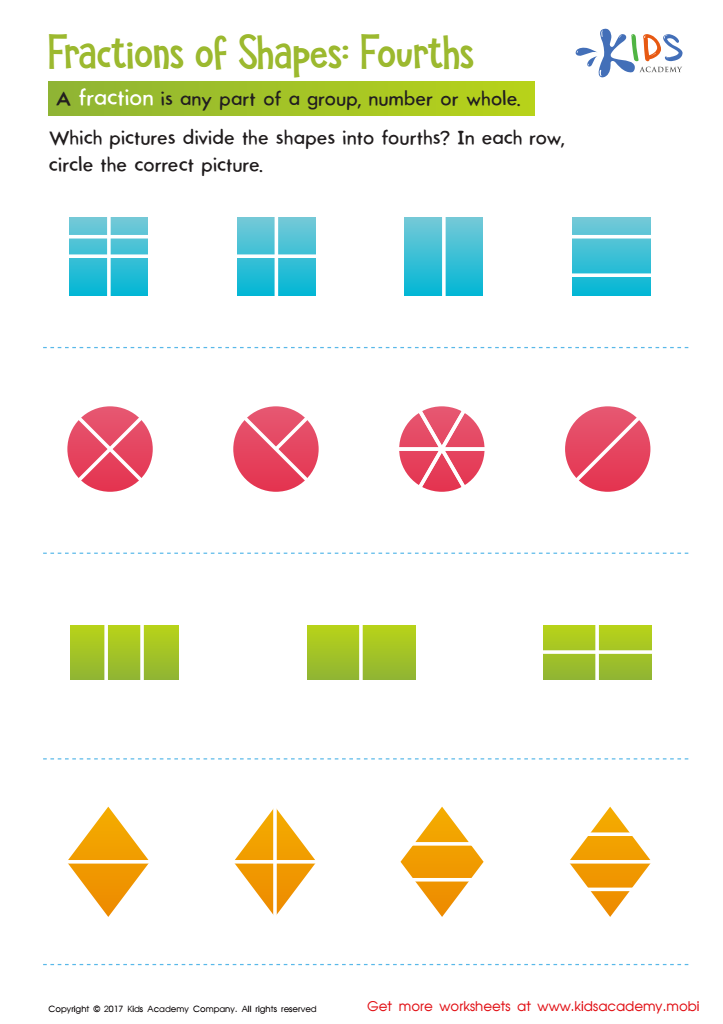
Fractions of Shapes Worksheet
It will also show them how fractions are represented in everyday shapes.
Fractions of Shapes Worksheet
Worksheet
Join Kids Academy for Free
Who is primarily going to use this learning content?








Recognizing shapes is a foundational skill in Grade 1 math that plays a crucial role in a child’s overall cognitive development. By engaging with shapes, children enhance their spatial awareness, which is vital for problem-solving skills in both mathematical contexts and everyday life. Understanding shapes also lays the groundwork for more complex concepts like geometry, measurement, and even fractions later on.
Parents and teachers should prioritize shape recognition because it enhances critical thinking and logical reasoning abilities. For instance, when children learn to differentiate between circles, squares, and triangles, they practice categorization and classification, skills necessary for logical organization. Furthermore, these activities can increase their observational skills, enabling them to notice geometric patterns in their environment.
Additionally, shape recognition encourages creativity and artistic expression, as children utilize shapes in drawing and building. When parents engage in shape-related activities at home, they reinforce classroom learning, creating a cohesive educational experience. Overall, laying a solid foundation in recognizing shapes fosters a positive attitude towards math, making it an enjoyable part of a child’s developmental journey, and thereby enhancing future academic success.