Understanding shapes Grade 1 Math Worksheets
3 filtered results
Difficulty Level
Grade
Age
-
From - To
Subject
Activity
Standards
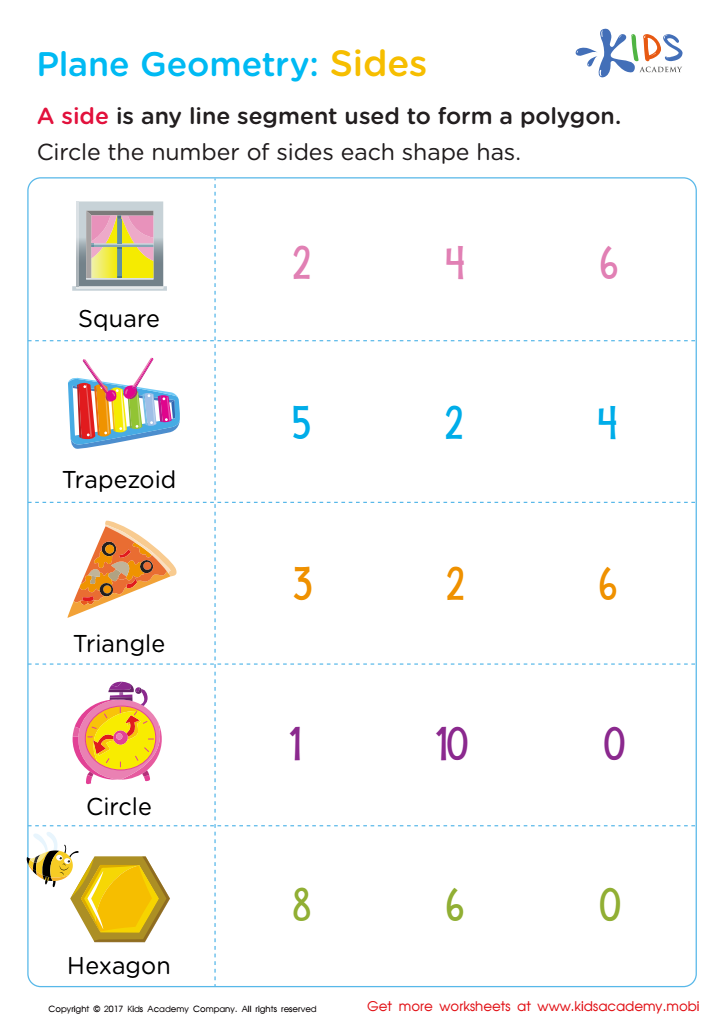
Explore our engaging "Understanding Shapes" Grade 1 Math Worksheets, designed to help young learners grasp foundational geometry concepts in a fun and interactive way. These worksheets incorporate vibrant visuals and diverse activities to reinforce recognition and understanding of various shapes, including circles, squares, triangles, and more. Through tracing, coloring, and matching exercises, students will enhance their shape identification skills while building confidence in their mathematical abilities. Perfect for home or classroom use, our worksheets support early learners as they journey into the world of geometry, making learning enjoyable and effective. Dive into shape exploration and watch your child's math skills flourish!
Favorites
With answer key
Interactive
 Assign to My Students
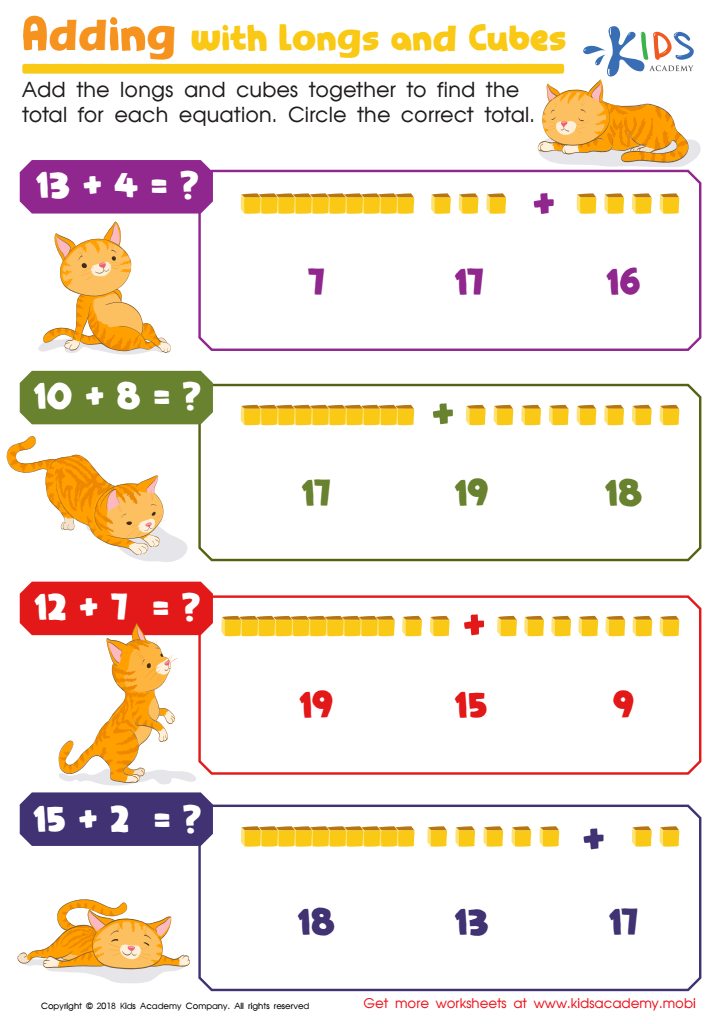
Adding With Longs and Cubes Worksheet
Math might not be your child's favorite, but they must master it to advance. If they're having difficulties or don't like it, use this worksheet to make it easier. Have them add longs and cubes together to find the total for each question, then circle the correct answer. This exercise can help make math experiences better.
Adding With Longs and Cubes Worksheet
Worksheet
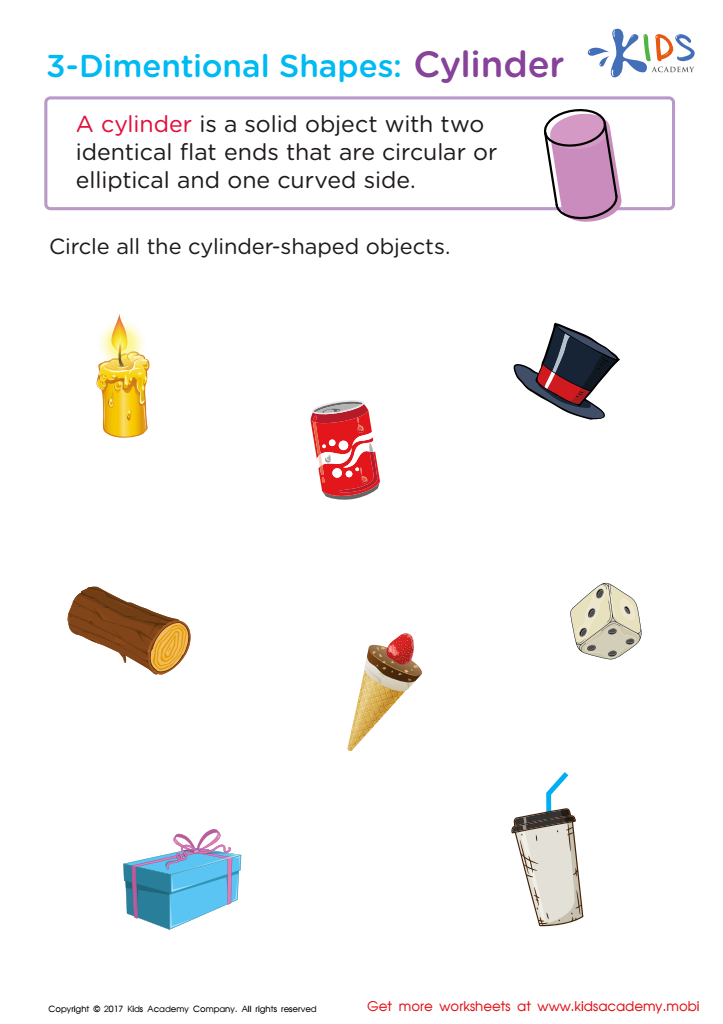
Three–Dimensional Shapes: Cylinder Worksheet
Introduce your toddler to geometry and 3D cylinders with this printable and watch their knowledge grow. It will help them recognize, define, and identify cylinders, as well as differentiate between 3D objects.
Three–Dimensional Shapes: Cylinder Worksheet
Worksheet
Join Kids Academy for Free
Who is primarily going to use this learning content?








Understanding shapes is a fundamental aspect of Grade 1 math that lays the groundwork for critical thinking, problem-solving, and spatial awareness in young learners. First, recognizing and distinguishing between different shapes helps children develop their observational skills, which are essential for effective learning across all subjects. Shape identification fosters a sense of curiosity about the world, encouraging children to explore and appreciate their environment.
Moreover, learning about shapes enhances a child's ability to connect mathematical concepts to real-life situations. For example, recognizing shapes in everyday objects can deepen a child's understanding of geometry and measurement, applying these principles contextually and practically. Mastering shapes also paves the way for future math skills, as students gain confidence in their ability to classify, compare, and manipulate shapes.
Additionally, this foundational knowledge is tied to cognitive development and spatial reasoning, both crucial for advanced study in science, technology, engineering, and math (STEM) fields. When parents and teachers prioritize understanding shapes, they are investing in a child's overall academic success and fostering essential skills that promote lifelong learning and problem-solving capabilities. Ultimately, shape recognition is not just about recognizing circles and squares; it’s about equipping children with the tools they need for future challenges beyond the classroom.