Improving counting skills Grade 1 Measurement Worksheets
3 filtered results
-
From - To
Boost your first grader's counting skills with our comprehensive measurement worksheets! Specifically designed to enhance numerical fluency, these engaging worksheets offer a variety of fun activities that make learning to count enjoyable. Students will explore counting objects, matching quantities, and solving simple equations, all while developing foundational math skills. Each worksheet encourages hands-on learning and critical thinking, making it easy to differentiate instruction based on your child's needs. Perfect for classroom or at-home practice, our resources help young learners gain confidence in their counting abilities. Download today and watch as your child excels in early mathematics while having fun!
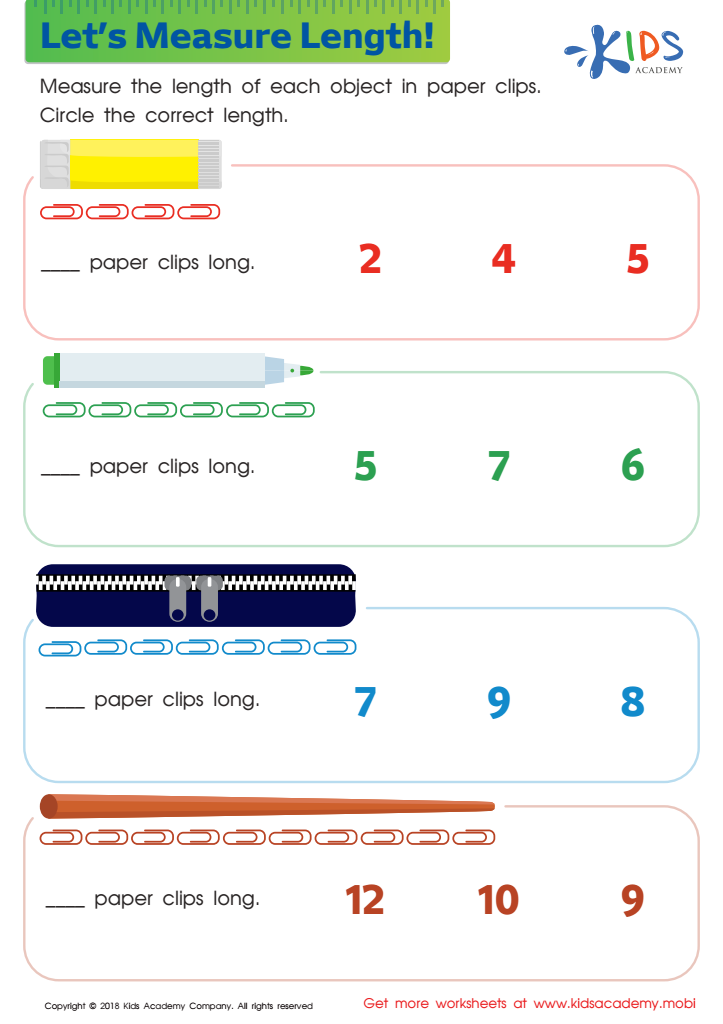
Lets Measure Length Worksheet
 Assign to My Students
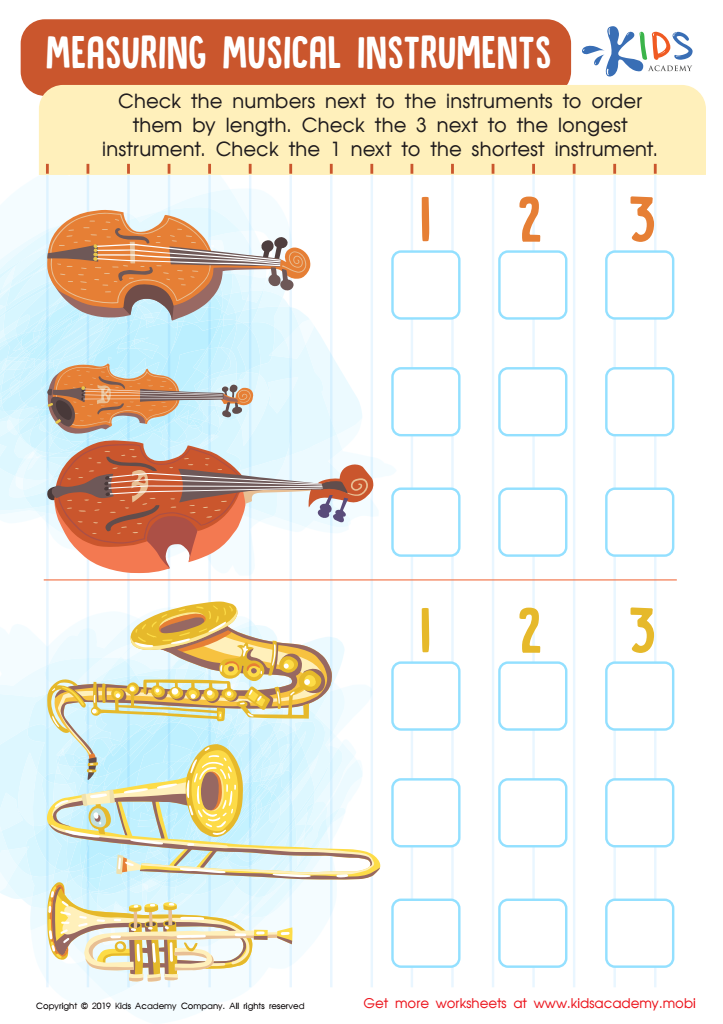
Measuring Musical Instruments Worksheet
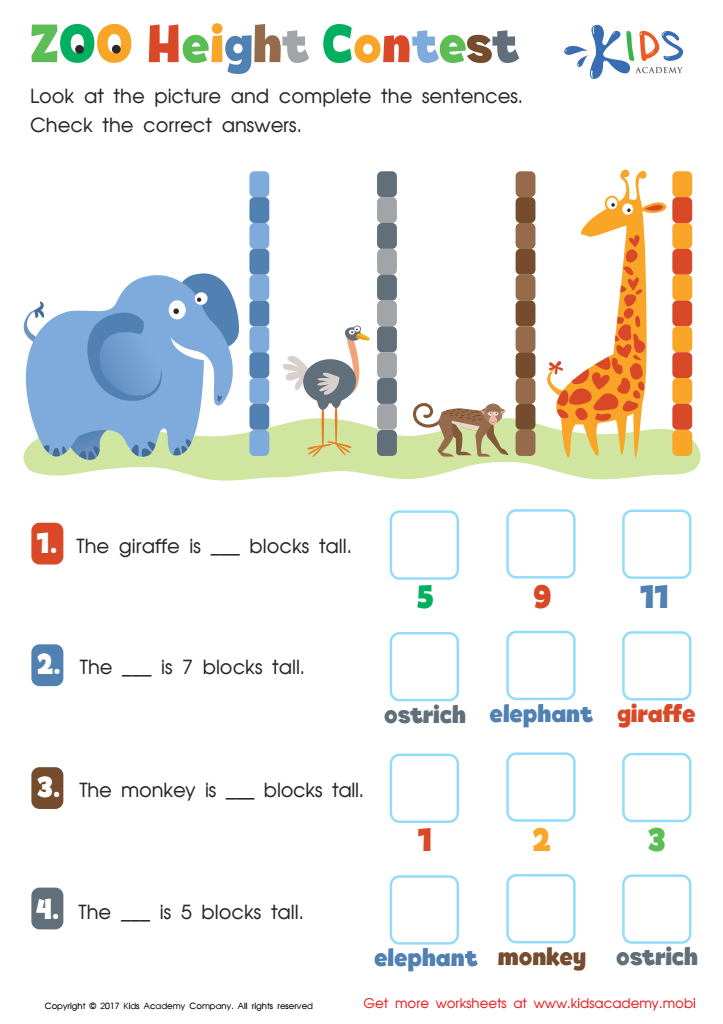
Zoo Height Contest Worksheet






Improving counting skills in Grade 1 is crucial for children's overall development and future success in mathematics. Counting serves as the foundation for all mathematical concepts and operations. Early proficiency in counting not only fosters confidence but also enhances children's problem-solving abilities. Through consistent practice, students learn to recognize numbers, understand their order, and grasp the basics of addition and subtraction, creating a strong groundwork for more complex math concepts in later grades.
Moreover, counting skills contribute to daily life applications. Parents and teachers who prioritize these skills enable children to handle real-world situations—such as managing money, telling time, and measuring objects—more effectively. This practical knowledge fosters independence and critical thinking abilities.
Additionally, active involvement in counting activities can create meaningful parent-child and teacher-student interactions. Engaging children through games, songs, and hands-on activities makes learning enjoyable and strengthens relationships. As students become proficient in counting, they also develop concentration, patience, and resilience—valuable traits that go beyond math.
In summary, emphasizing counting skills in Grade 1 is essential for building a child’s confidence, fostering mathematical understanding, and equipping them for practical daily interactions, laying the groundwork for lifelong learning.