Time reading skills Grade 1 Time Worksheets
9 filtered results
-
From - To
Enhance your first grader's understanding of time with our engaging Time Reading Skills worksheets! Designed specifically for Grade 1, these printable resources help young learners develop essential clock-reading abilities. Students will practice telling time with both digital and analog clocks, reinforcing important concepts like hours, skip counting, and time intervals. Our worksheets are colorful and interactive, making learning about time fun and effective. Perfect for classroom activities or at-home practice, these resources support early math skills and boost confidence. Encourage your child’s independent learning with these carefully crafted materials tailored to the unique needs of young learners. Start their time-telling adventure today!
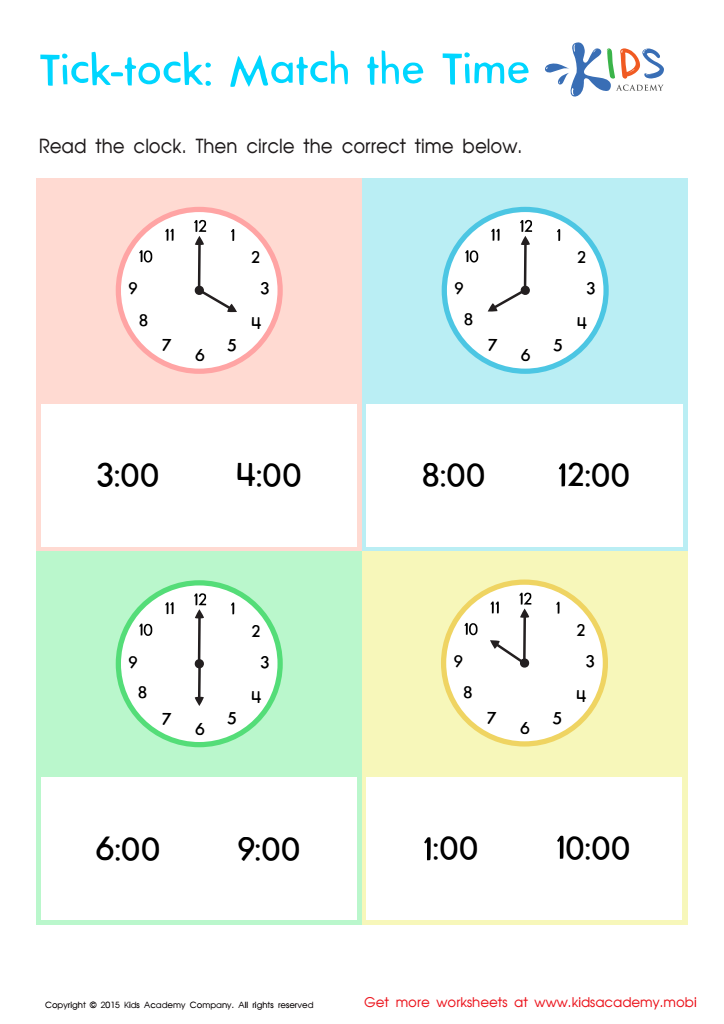
Telling The Time Worksheet: Part 4
 Assign to My Students
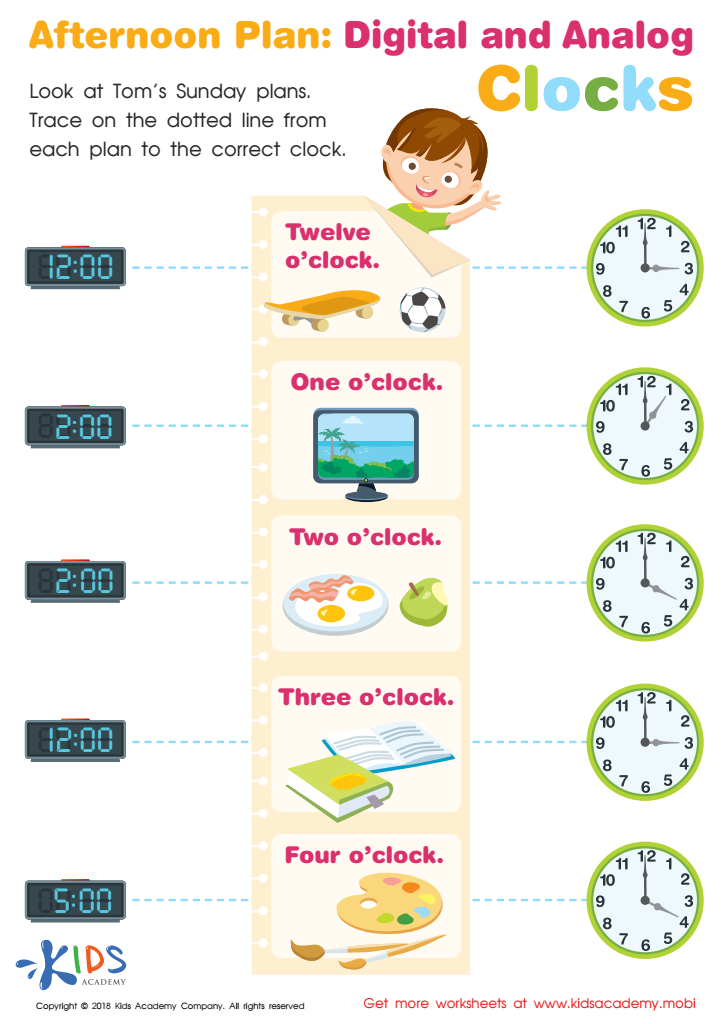
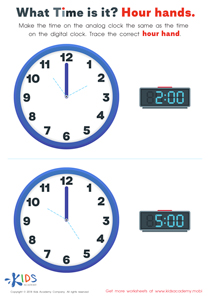
Afternoon Plan: Digital and Analog Clocks Worksheet
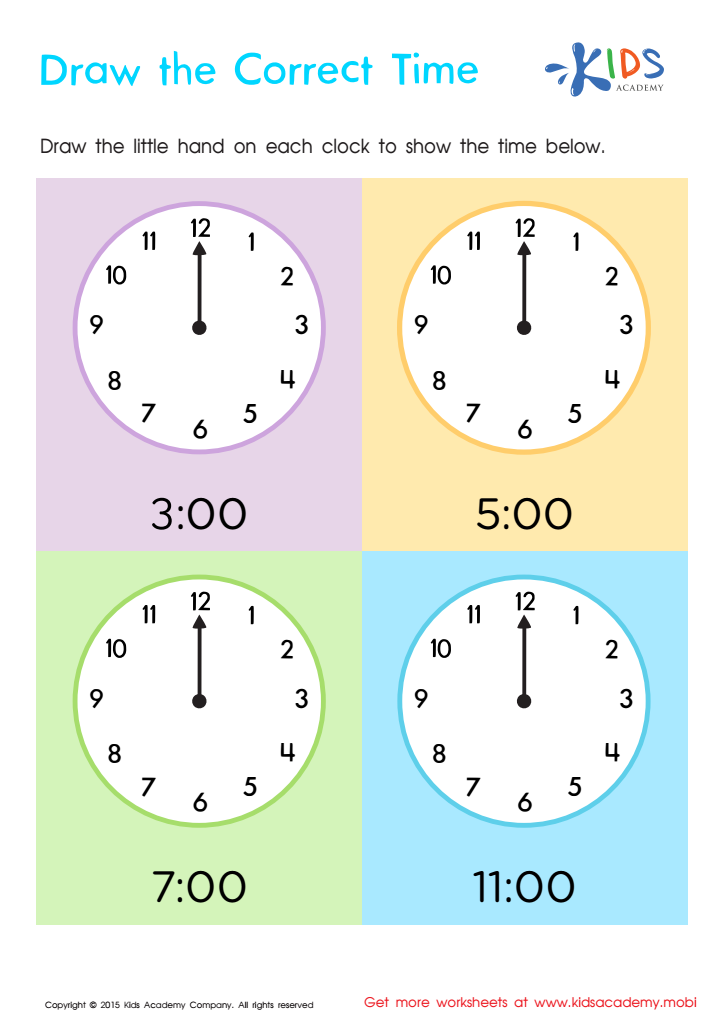
Telling The Time Worksheet: Part 1
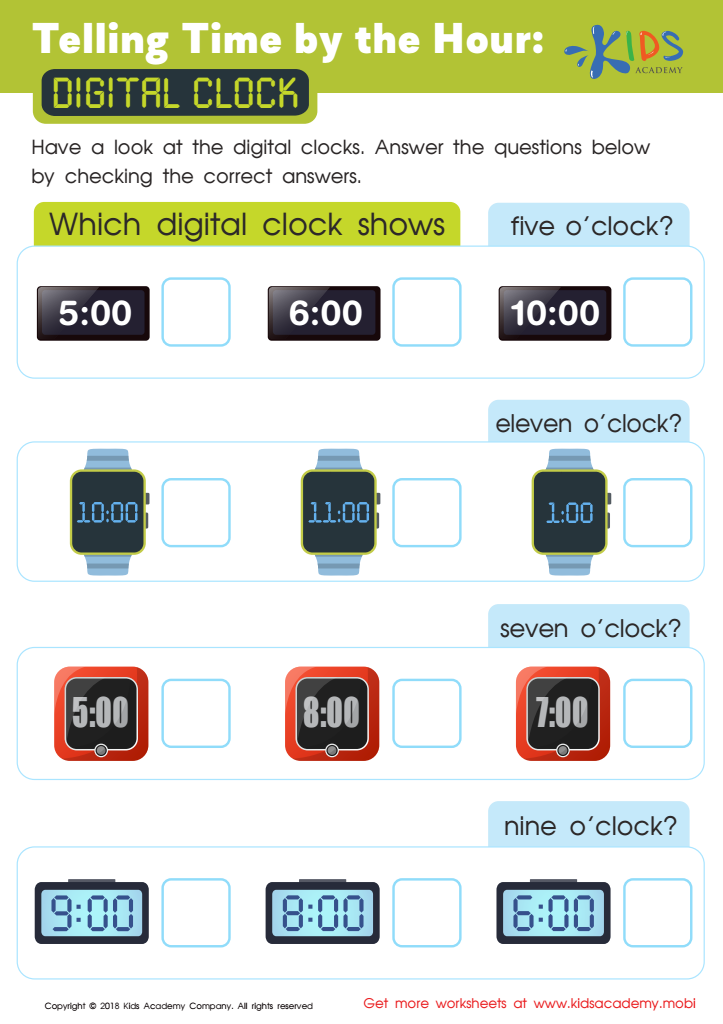
Telling Time by the Hour: Digital Clock Worksheet
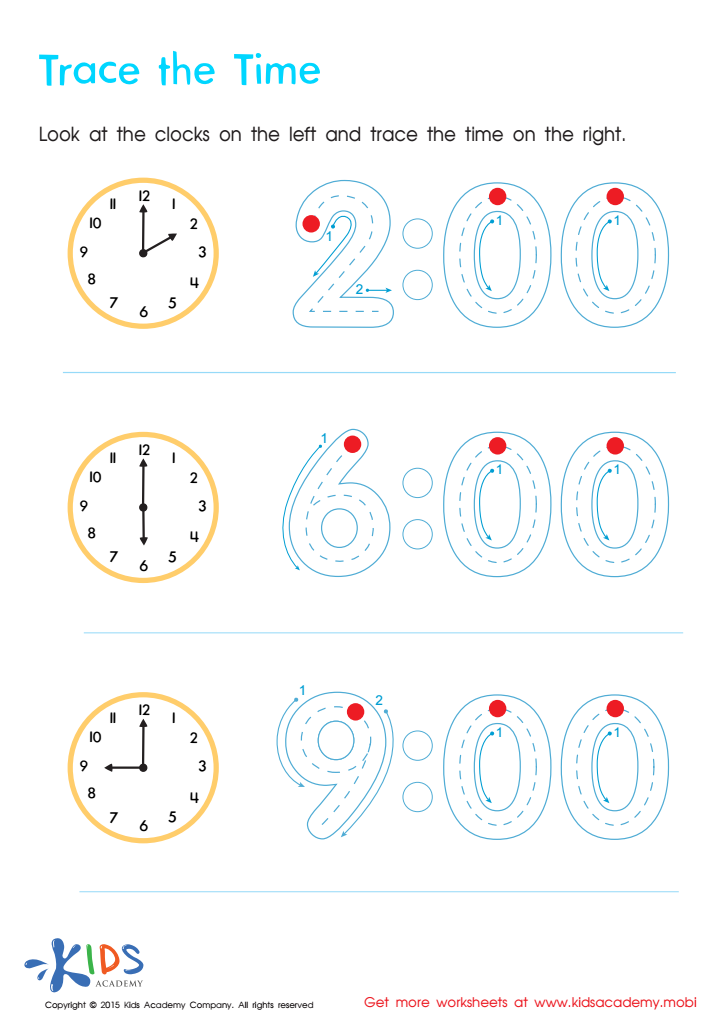
Telling The Time Worksheet: Part 2
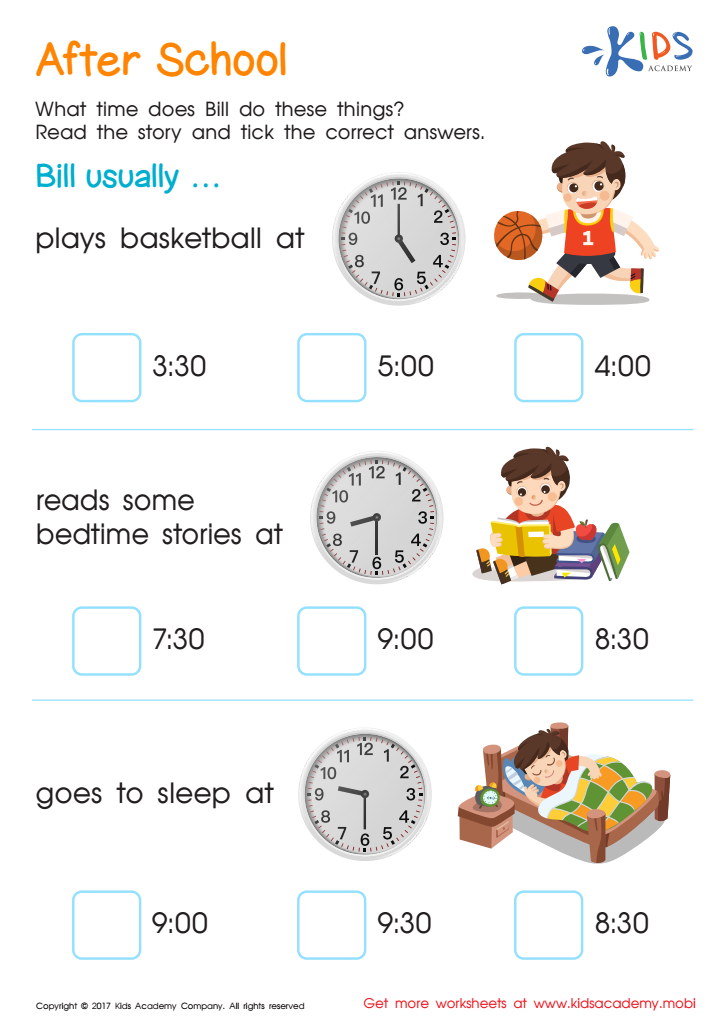
After School Time Printable
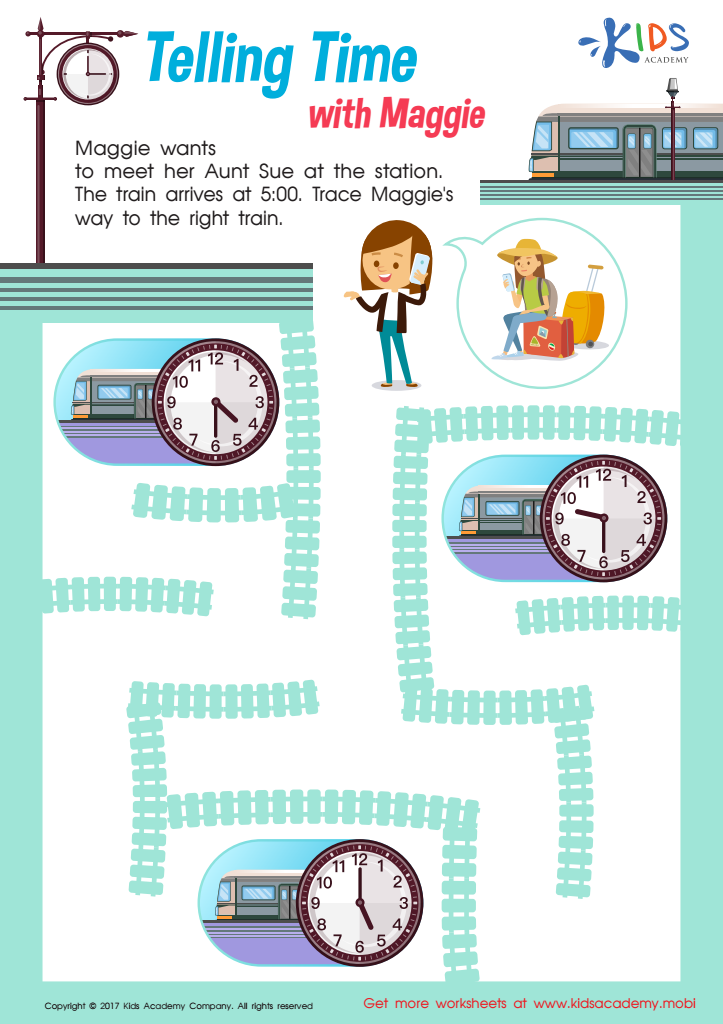
Telling Time With Maggie Time Worksheet
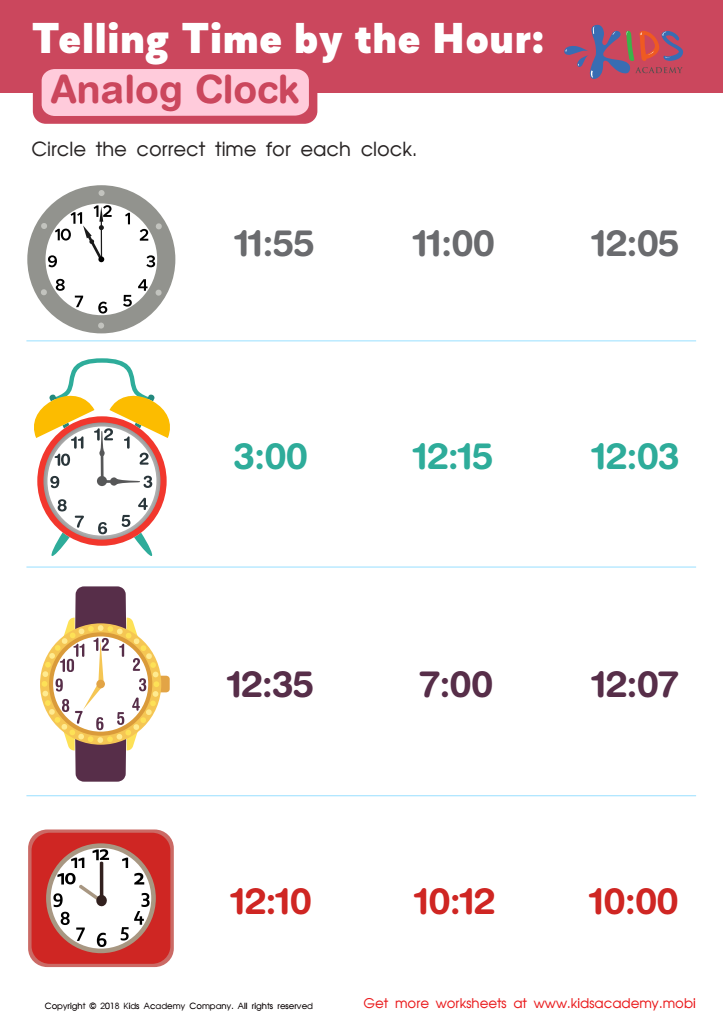
Telling Time by the Hour: Analog Clock Worksheet
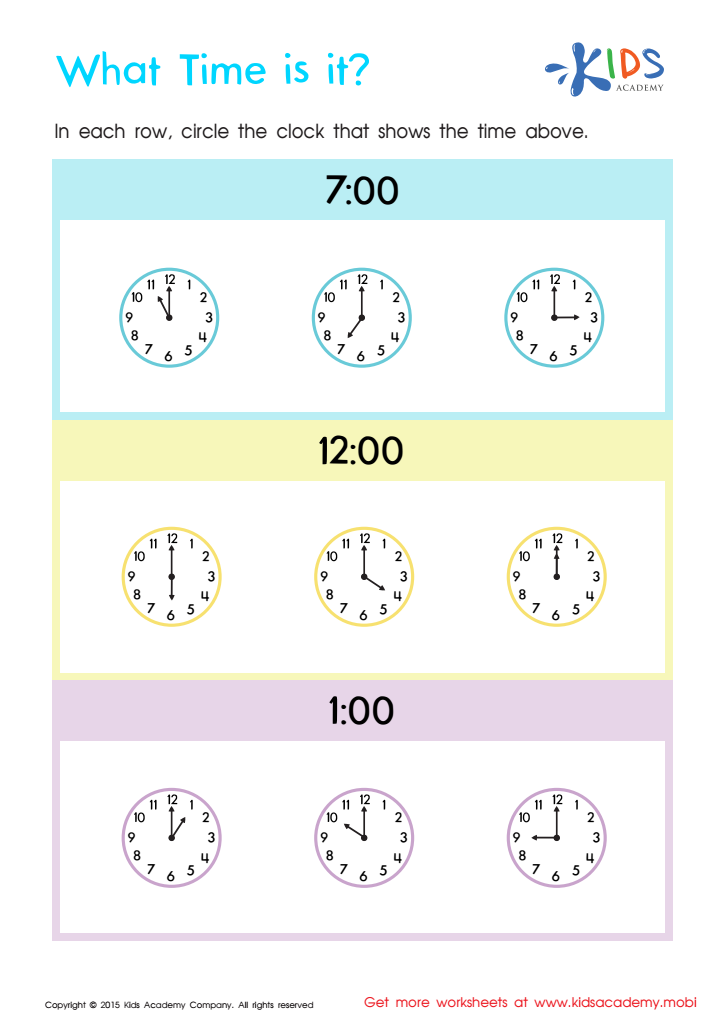
Telling The Time Worksheet: Part 3







Reading skills are foundational for a child's overall development, especially in early grades like Grade 1. As children begin to learn how to read and manage the concept of time, the importance of understanding time reading skills becomes pivotal for parents and teachers alike.
Firstly, time reading skills are crucial for a child’s daily routines. Mastering concepts like telling time helps children manage schedules, enhancing their independence and responsibility. When they learn to interpret clocks—both analog and digital—they can better understand when to engage in tasks, whether it be starting homework or preparing for bed.
Secondly, time reading skills promote math literacy. Learning about hours and minutes develops numeracy skills that are essential as they progress to more complex mathematical concepts. Additionally, these skills foster logical thinking.
Moreover, teachers should prioritize time reading as it enhances classroom dynamics; children who are aware of time can transition more smoothly between activities, minimizing disruptions. When parents actively involve themselves in teaching time-related skills at home, they reinforce learning and boost their children’s confidence.
In conclusion, instilling time reading skills in first graders benefits their independence, academic growth, and enhances their overall classroom experience, making it a vital focus for parents and educators.