Understanding time Grade 1 Time Worksheets
3 filtered results
-
From - To
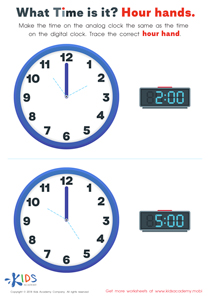
First-grade students explore the exciting world of time with our 'Understanding Time' worksheets. Specially crafted for young learners, these worksheets offer fun activities that simplify concepts like hours, minutes, and the sequence of events in a day. Interactive tasks such as matching clocks to times, ordering daily activities, and solving time-based puzzles help kids grasp the fundamentals of time-telling. Perfect for classroom or at-home learning, our worksheets are designed to build confidence and proficiency, ensuring that your child develops a strong foundation in understanding and managing time effectively and enjoyably.
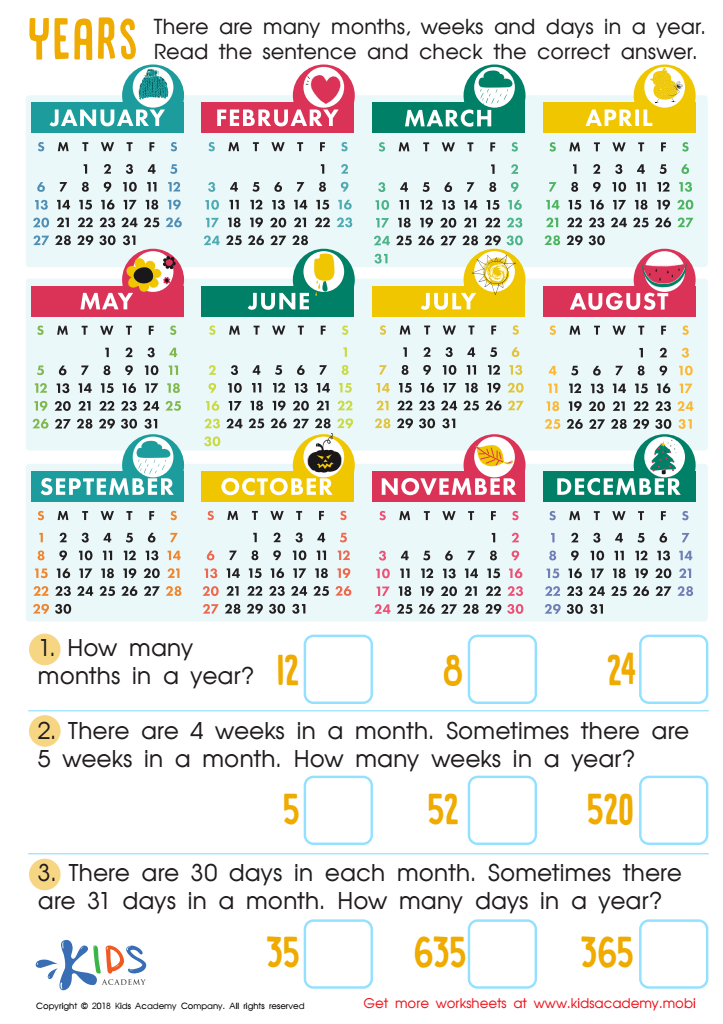
Years Worksheet
 Assign to My Students
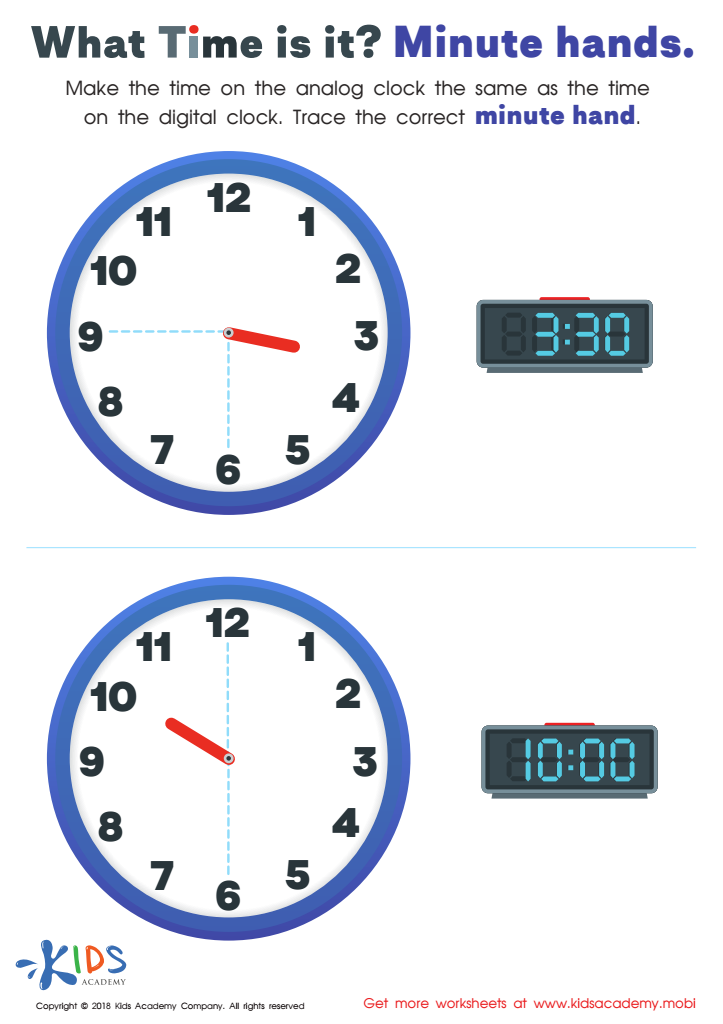
What Time Is it? Minute Hands Worksheet
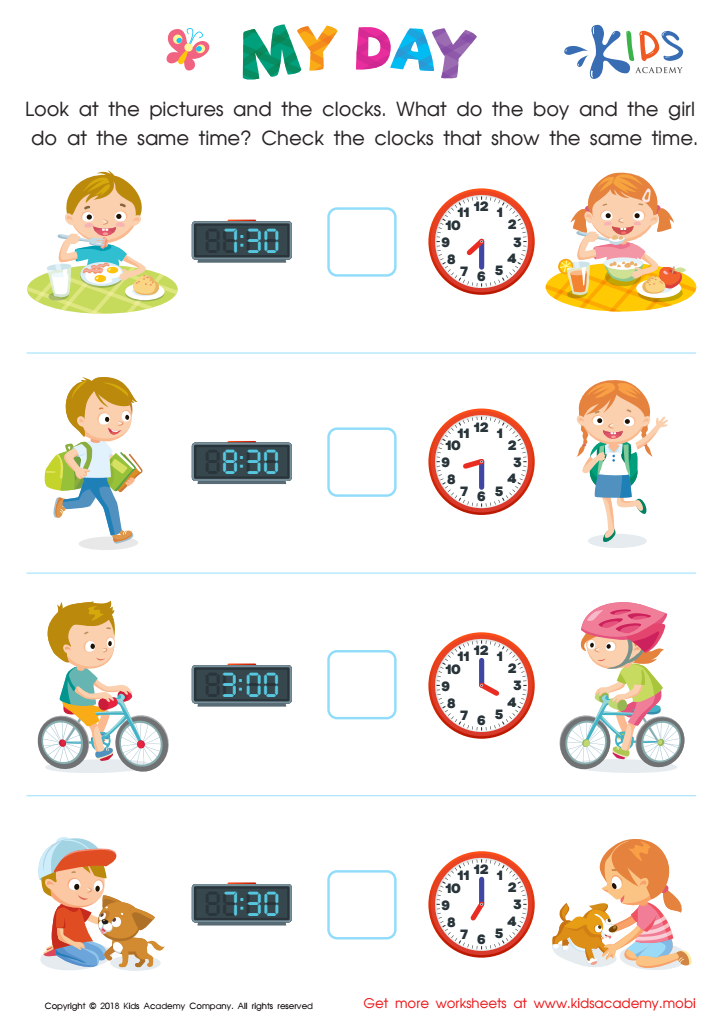
My Day Worksheet








Understanding time is an essential skill for first graders, and both parents and teachers play a crucial role in facilitating this learning milestone. Time concepts, such as identifying the hours and minutes on a clock, days of the week, and the months of the year, are foundational elements that help young children in organizing their day-to-day activities.
For children, grasping the idea of time fosters a sense of routine and reliability, which is important for their cognitive and emotional development. When kids understand when to wake up, go to school, or engage in their favorite activities, they learn to manage their time more efficiently. This independence can boost their confidence and reduce anxiety about the unknown.
From an educational perspective, time-telling skills are also directly tied to math and reading literacy. Recognizing sequences (like the hands of the clock) involves a range of abilities, from spatial awareness to number sense. Plus the ability to comprehend and follow schedules enhances their readiness to tackle more complex concepts as they progress in their education.
For these reasons, parents and teachers should prioritize teaching time in Grade 1. Leveraging practical, everyday examples and interactive activities can make learning about time engaging and relevant. Children are then better equipped to navigate life’s routines and commitments successfully.