Filters

6 filtered results

Clear all filters
Favorites
With answer key
Interactive

6 filtered results

Difficulty Level

Grade


Our "Critical Thinking Grade 1 Word Problems Worksheets" are designed to engage young minds in solving a variety of math challenges. Focusing on developing essential problem-solving and logical thinking skills, these worksheets feature engaging scenarios that require students to think critically and apply basic math concepts. Each worksheet emphasizes reasoning and comprehension, helping first graders to build a strong mathematical foundation. Perfect for classroom use or at-home practice, our worksheets are an excellent tool for fostering analytical abilities and confidence in math. Spark your child’s love for learning with our thoughtfully crafted critical thinking resources.

Check out this FREE Grade 1 Trial Lesson on Word Problems!

More Word Problems

Favorites
With answer key
Interactive
  • Grade 1
  • Critical Thinking
  • Word Problems
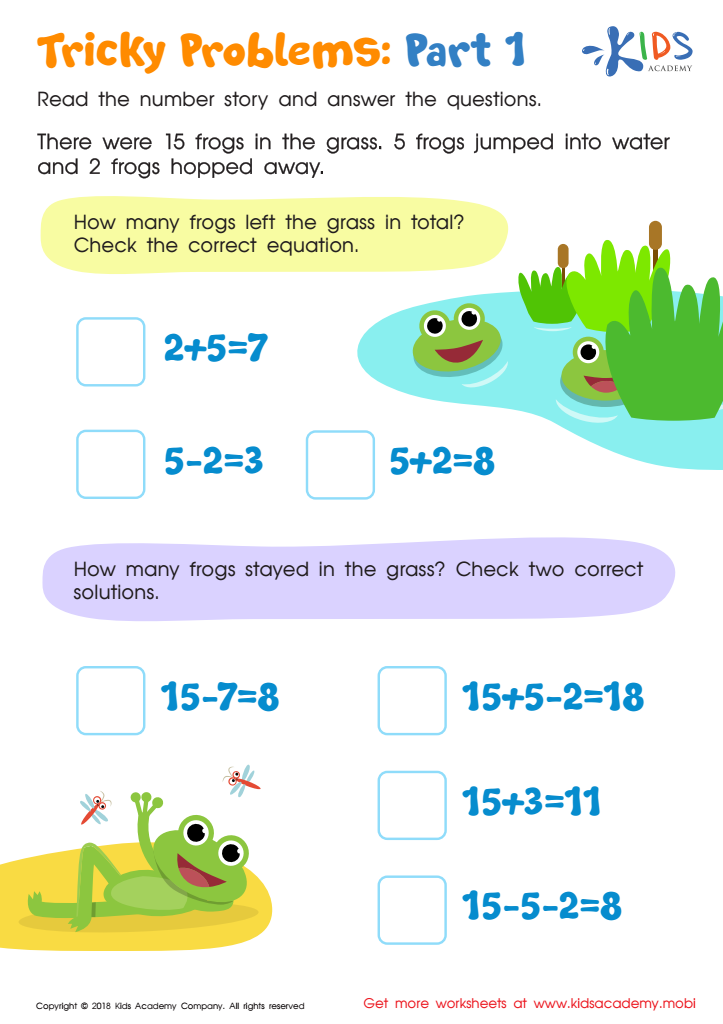
Tricky Problems Worksheet: Part 1

Tricky Problems Worksheet: Part 1

Visualizing word problems can help students solve them. This fun PDF worksheet encourages students to create mental images using math facts, then check boxes to match the equations for basic addition problems. It's a great way to build confidence in solving math.
Tricky Problems Worksheet: Part 1
Worksheet
Eagle Subtraction Worksheet

Eagle Subtraction Worksheet

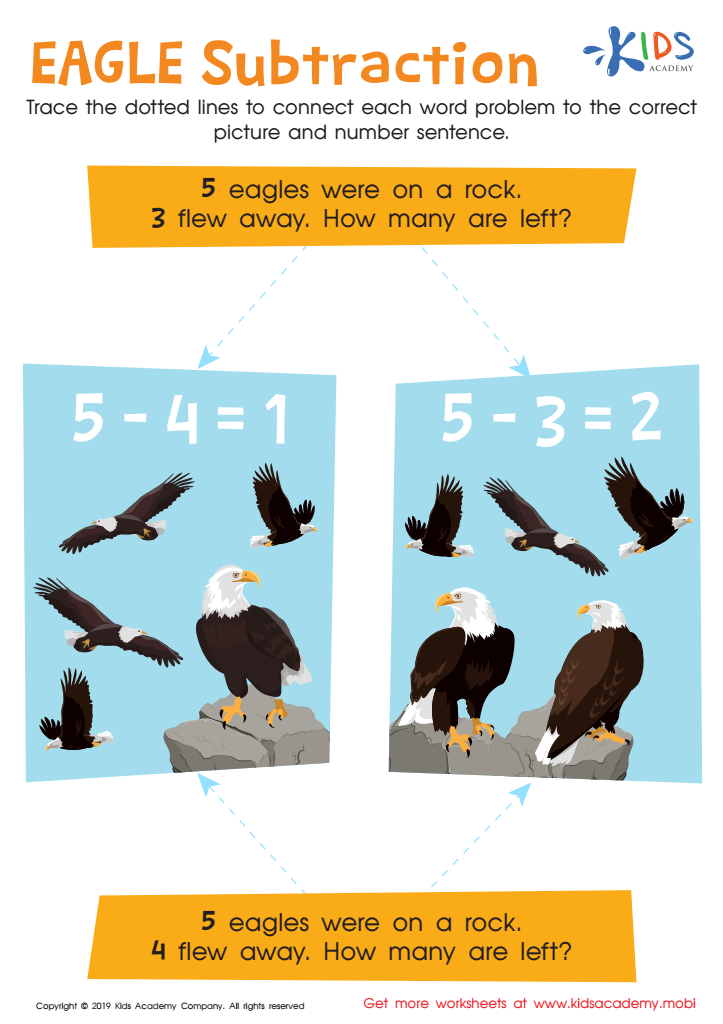
Help your kids become math experts! Through practice and adult guidance, even addition and subtraction can seem simple. Show them how with this worksheet - get them to trace the dotted lines to connect each word problem to the correct picture and solve the number sentence with some eagles!
Eagle Subtraction Worksheet
Worksheet
Word Problems: Assessment 1 Worksheet

Word Problems: Assessment 1 Worksheet

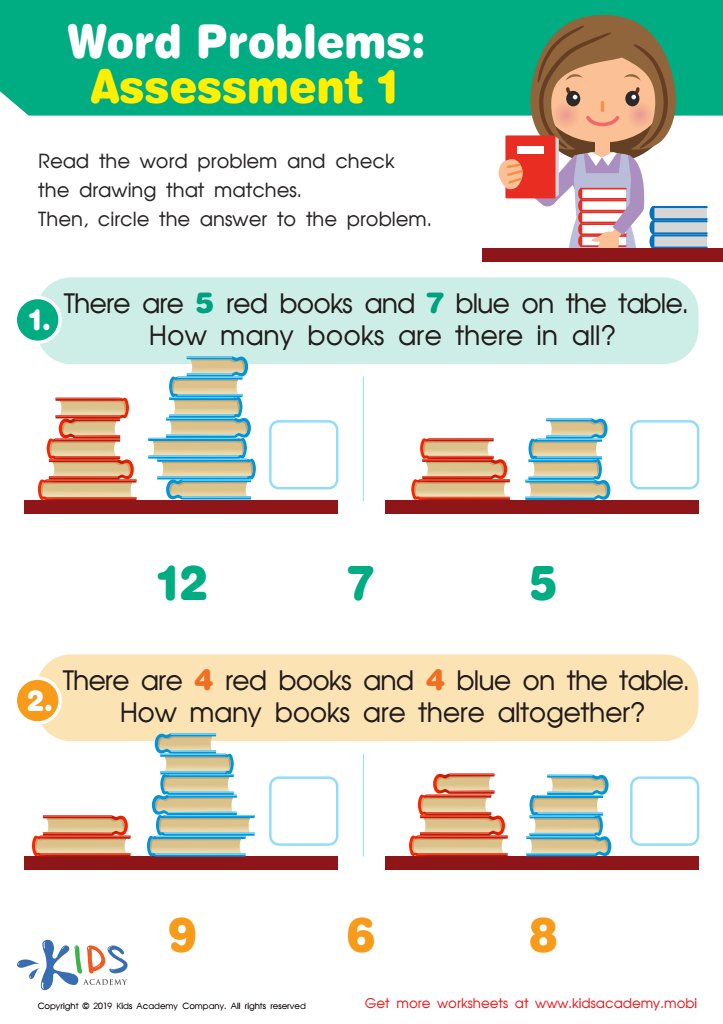
This free worksheet assesses your child's basic addition word problem skills. It presents word problems with pictures offering clues in one-to-one representation. Your child will select the correct drawing to match the problem, without even knowing they're being assessed! This is a great way to gauge their math computation and reasoning abilities.
Word Problems: Assessment 1 Worksheet
Worksheet
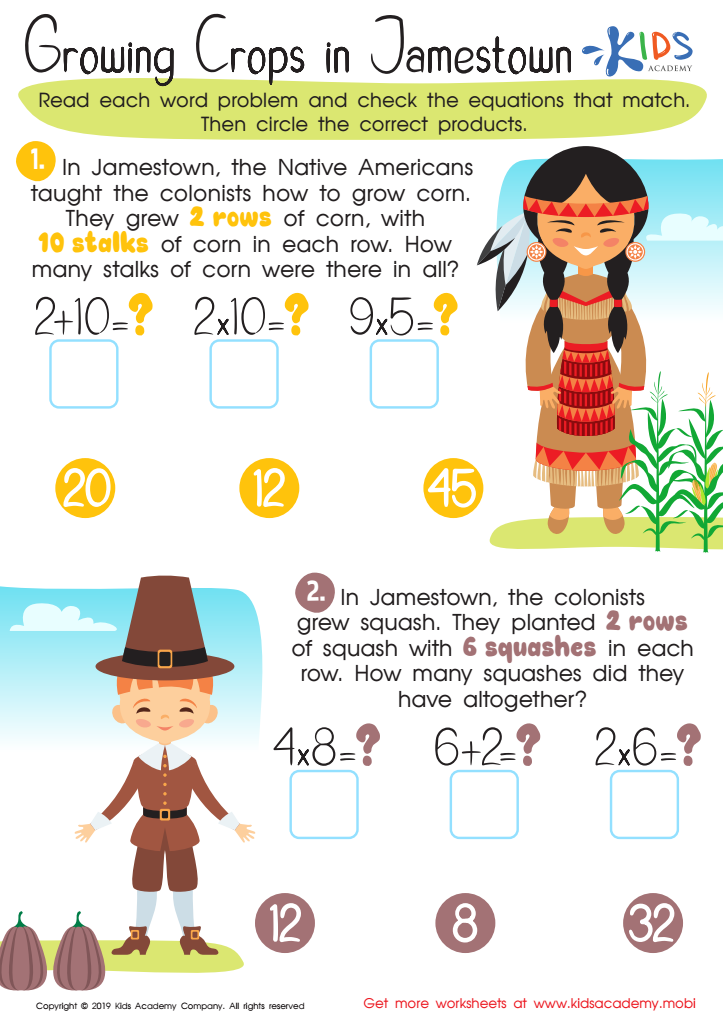
Growing Jamestown Worksheet

Growing Jamestown Worksheet

This exciting multiplication worksheet from Kids Academy uses American history facts as its theme. Kids learn about Native Americans helping early Americans at Jamestown, then read the word problems, match the equations and solve for the product. Finally, circle the correct answer!
Growing Jamestown Worksheet
Worksheet
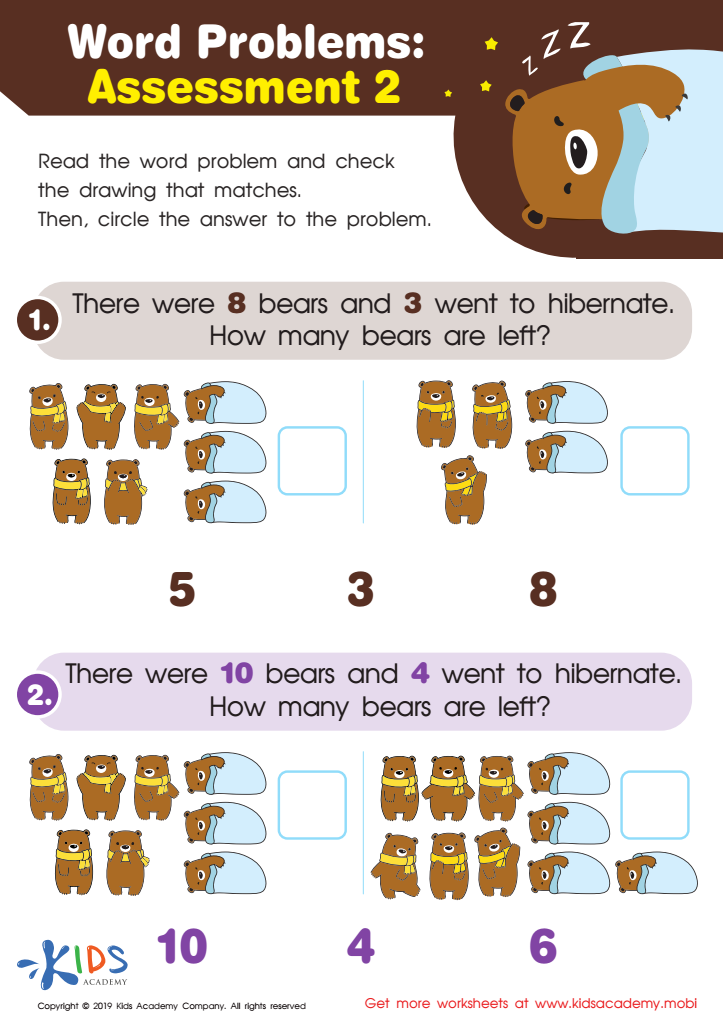
Word Problems: Assessment 2 Worksheet

Word Problems: Assessment 2 Worksheet

This bear-themed worksheet is a great way to test subtraction skills. Have your child read the word problems and match the correct drawing with the answer. It's a fun way to quiz them without them even knowing. Enjoy counting cute snoozing bears! (80 words)
Word Problems: Assessment 2 Worksheet
Worksheet
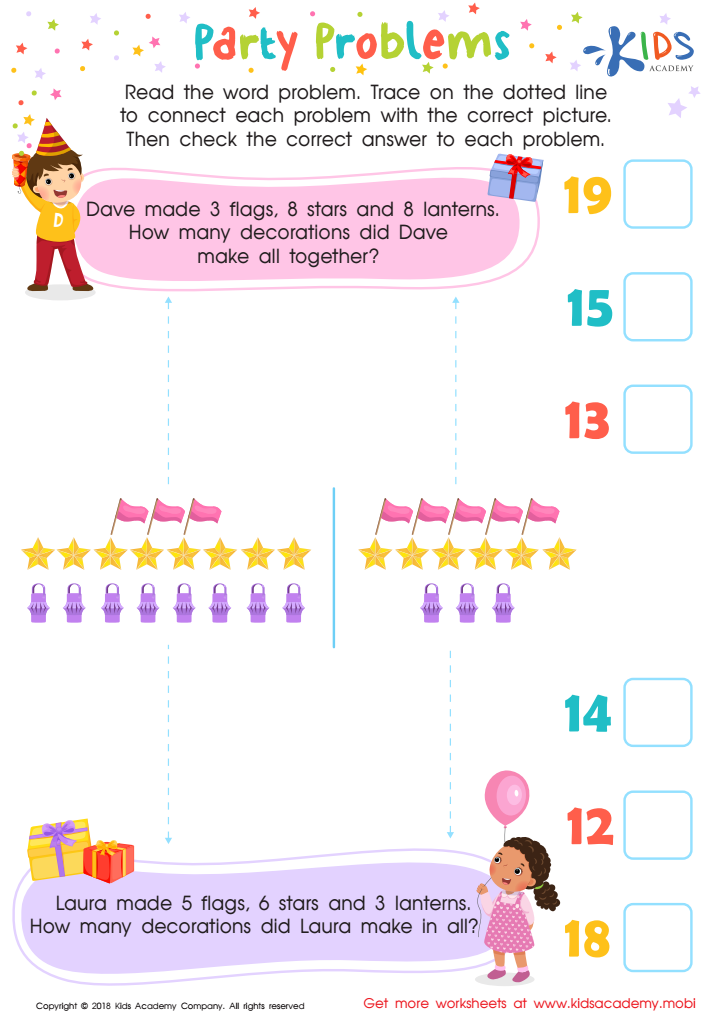
Party Problems Worksheet


Party Problems Worksheet

Problems at parties? No problem! With this engaging PDF worksheet, your student can connect word problems to pictures, check correct answers, and find the sum of 3 addend problems. They'll be a party-saving hero in no time!
Party Problems Worksheet
Worksheet


Critical thinking in Grade 1 word problems is foundational for young learners as it fosters essential cognitive skills that will benefit them throughout their education and daily life. Parents and teachers should prioritize developing these skills for several reasons.

Firstly, critical thinking boosts problem-solving abilities by encouraging children to analyze information, make connections, and decide the best approach to a solution. This holistic thinking process is pivotal for tackling more complex problems in later schooling years.

Secondly, engaging in word problems enhances comprehension and literacy skills. By deciphering the language and context of a problem, students improve their reading comprehension and vocabulary.

Thirdly, critical thinking nurtures creativity. Children are encouraged to think beyond obvious solutions and consider multiple facets of a problem, fostering innovative thinking.

Lastly, it builds confidence and independence. Successfully navigating word problems gives children a sense of achievement and encourages a growth mindset, making them more willing to take on challenges.

Incorporating critical thinking in early education equips children with the tools to approach academic and real-life situations thoughtfully and effectively. This foundational skill set is indispensable not only within the classroom but as a lifelong competency.