Motor skills development Grade 1 Reading Worksheets
3 filtered results
Difficulty Level
Grade
Age
-
From - To
Subject
Activity
Standards
Our "Motor Skills Development Grade 1 Reading Worksheets" are designed to strengthen your child's fine motor abilities while enhancing their foundational reading skills. Each worksheet offers engaging activities that promote hand-eye coordination, control, and handwriting precision. These activities not only aid in the development of crucial motor skills but also lay a strong foundation for literacy as children practice letter recognition, sentence tracing, and simple reading comprehension tasks. Tailored specifically for first graders, these worksheets provide a fun, interactive, and educational way for kids to boost their dexterity and confidence in both writing and reading.
Favorites
With answer key
Interactive
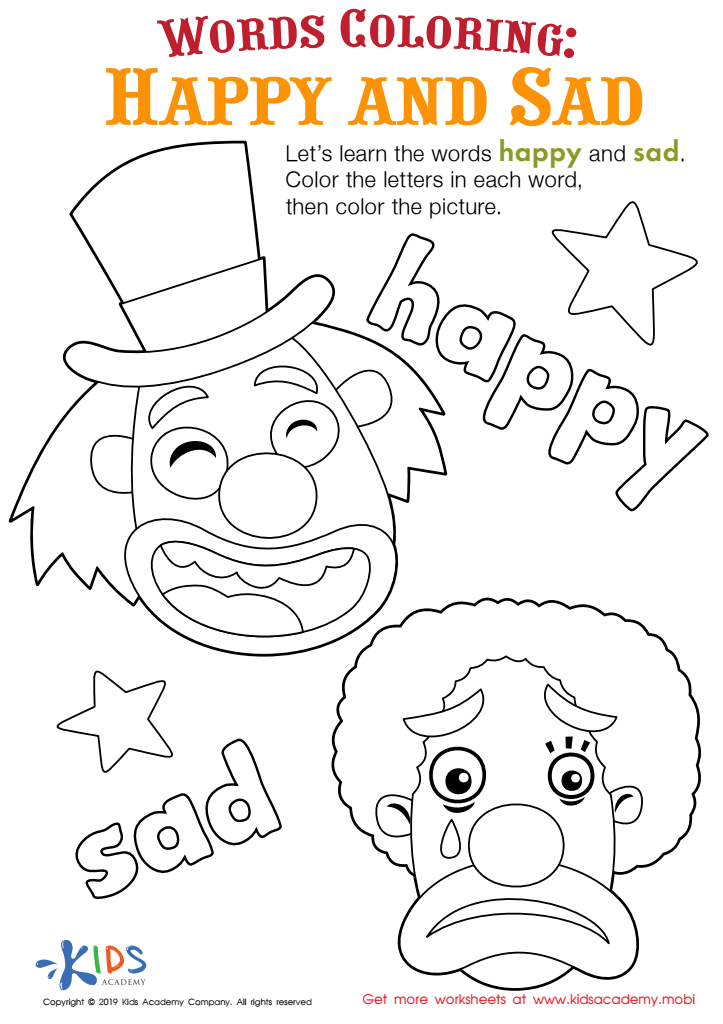
Happy and Sad Words Coloring Worksheet
Help students understand emotions by using this fun worksheet. It features smiling and sad clowns and the words 'happy' and 'sad'. Read the words with your students, then have them color the clowns and the emotion words. This PDF is an effective way to teach kids how to express how they feel.
Download (PDF)
 Assign to My Students
Assign to My Students
Happy and Sad Words Coloring Worksheet
Worksheet
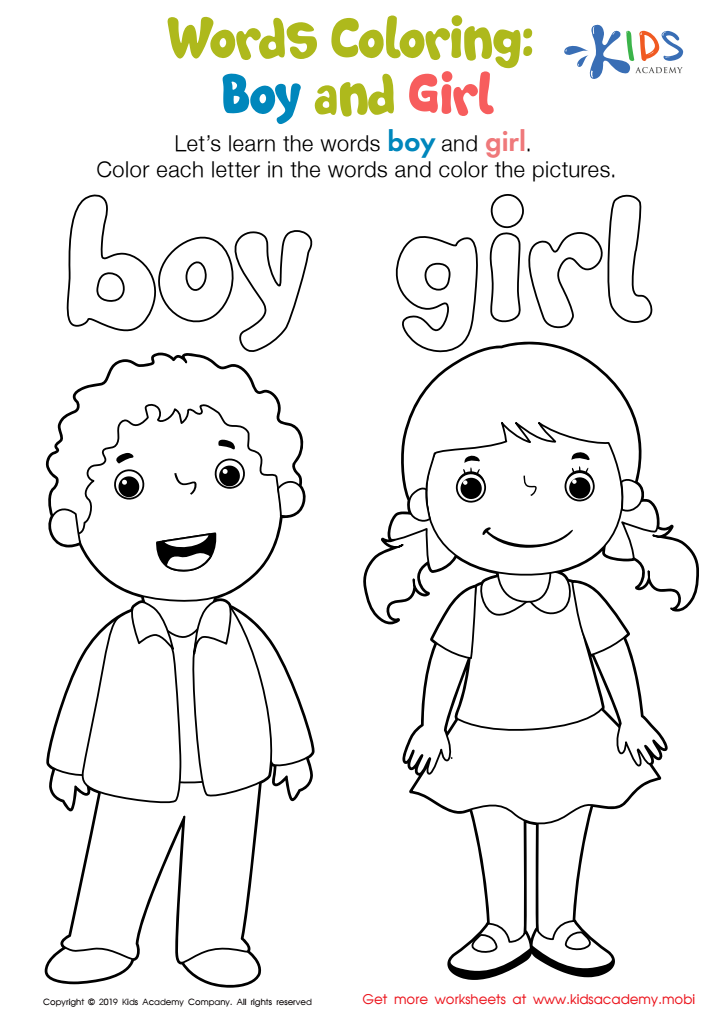
Boy and Girl Words Coloring Worksheet
Help your students build their sight word vocabulary! Early readers may not be able to sound out all words, so this worksheet teaches them to read two important sight words: boy and girl. They will color the letters and a picture of each, making it a fun and educational way to learn. Download the PDF now.
Download (PDF)
Assign to My Students
Assign to My Students
Boy and Girl Words Coloring Worksheet
Worksheet
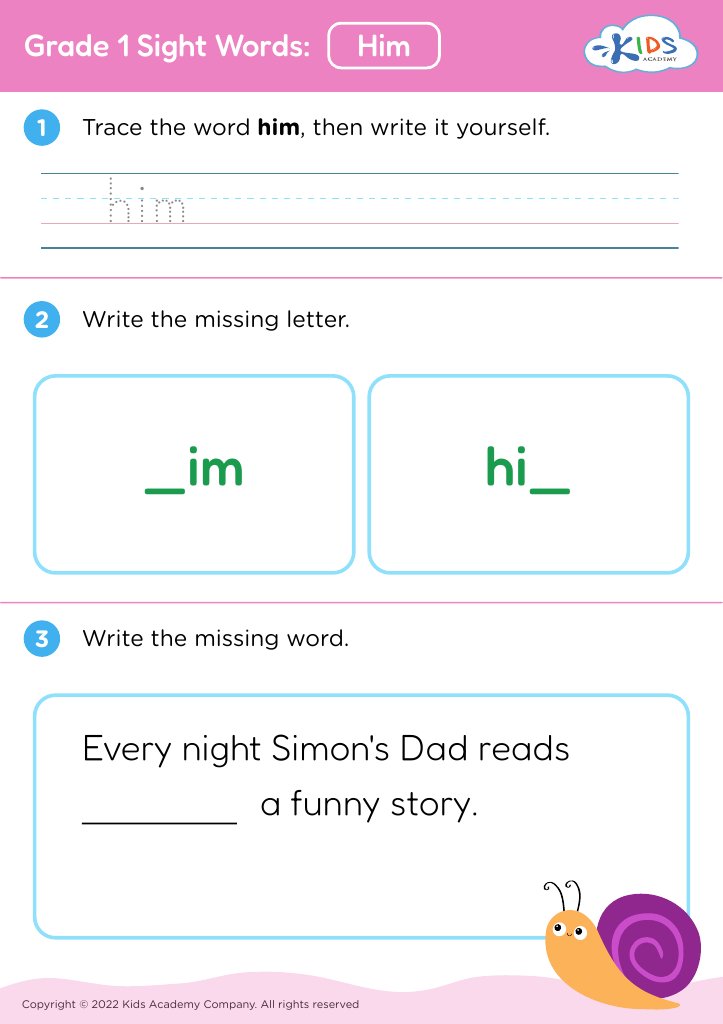
Join Kids Academy for Free
Who is primarily going to use this learning content?








Motor skills development is crucial in Grade 1 as it significantly impacts a child's reading abilities, essential for academic success. Gross motor skills — like coordination and balance — enable children to sit still, focus, and navigate classroom environments. Fine motor skills directly influence a child's ability to perform tasks such as writing, cutting with scissors, and manipulating small objects. For reading, fine motor skills are particularly important; turning pages, holding a book correctly, and following text with a finger require precision and control.
Strong motor skills foster independence and confidence, allowing children to take part in a wider range of learning activities. Reading, a foundational skill, sets the stage for learning across all subjects. Early reading proficiency is linked with better academic outcomes and heightened enthusiasm for learning. By nurturing motor skills alongside reading, parents and teachers support holistic development, ensuring children are physically able to engage with and enjoy their reading experiences.
Moreover, engaging in activities that develop motor skills, such as playing with building blocks, drawing, or interactive reading sessions, can make learning fun and reinforce essential pre-reading and reading skills. Therefore, recognizing the interconnectedness of motor development and reading is key to fostering well-rounded, capable young learners.