Shape identification Grade 1 Reading Worksheets
3 filtered results
Difficulty Level
Grade
Age
-
From - To
Subject
Activity
Standards
Welcome to our Shape Identification Grade 1 Reading Worksheets page, where young learners can enhance their reading and comprehension skills while exploring various shapes! Our engaging worksheets are designed for first graders, incorporating vivid illustrations and fun activities to make learning enjoyable. Students will practice identifying shapes through interactive exercises that encourage critical thinking and creativity. These worksheets not only promote shape recognition but also help develop essential reading skills, making them a perfect resource for both teachers and parents. Foster your child's love for learning with our fun and effective shape identification worksheets today!
Favorites
With answer key
Interactive
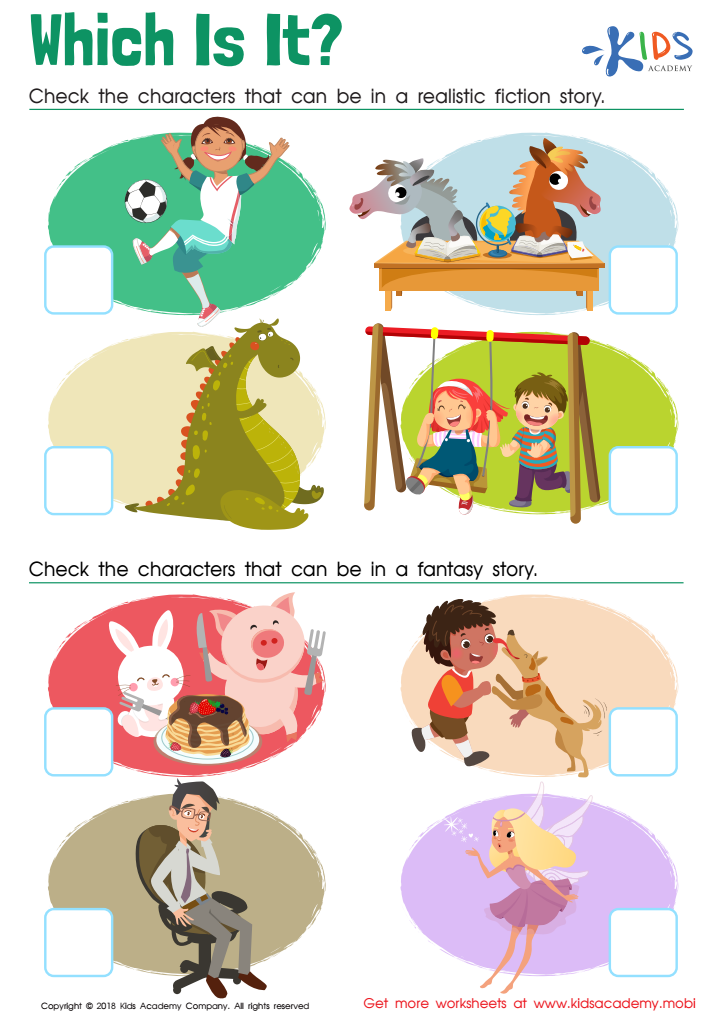
Which Is It? Worksheet
This colorful worksheet helps young readers identify elements of fact and fiction using fun picture clues. They can check off characters who exist in realistic fiction stories, which makes learning the difference between the two genres fun and engaging.
 Assign to My Students
Which Is It? Worksheet
Worksheet
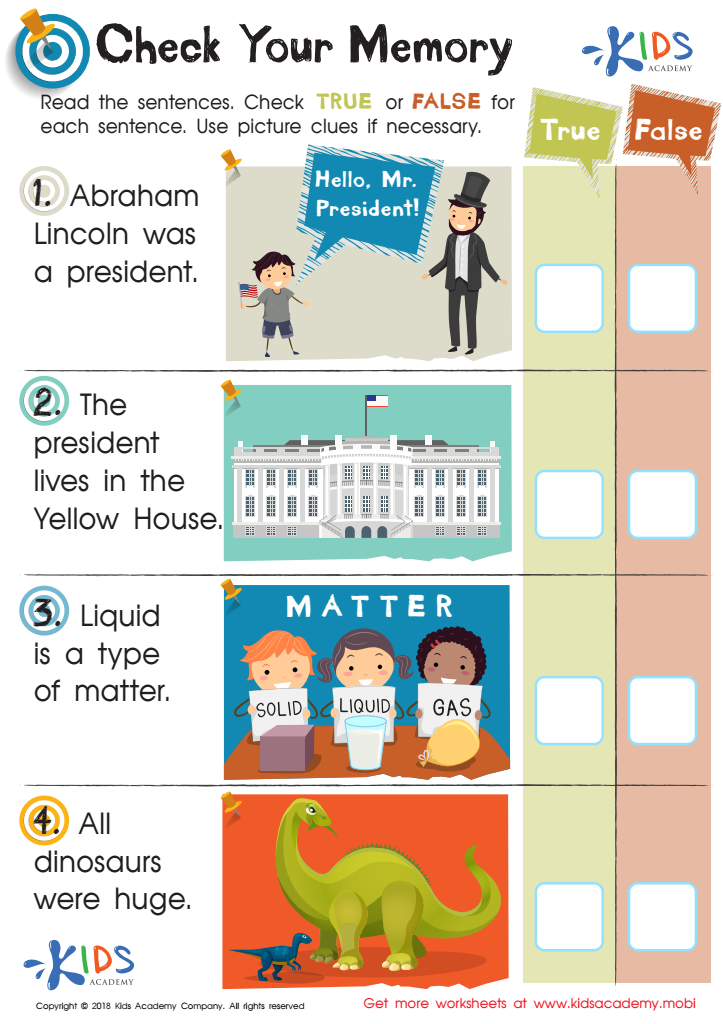
Check Memory Worksheet
Assisting your kids with their homework and using worksheets is a great way for them to learn. The vibrant visuals in this printout can help stimulate the mind and motivate your child. Have them read the sentences and then point to the associated images. Afterwards, ask them to state True or False for each sentence. If they are still uncertain, offer them the picture clues to assist further.
Check Memory Worksheet
Worksheet
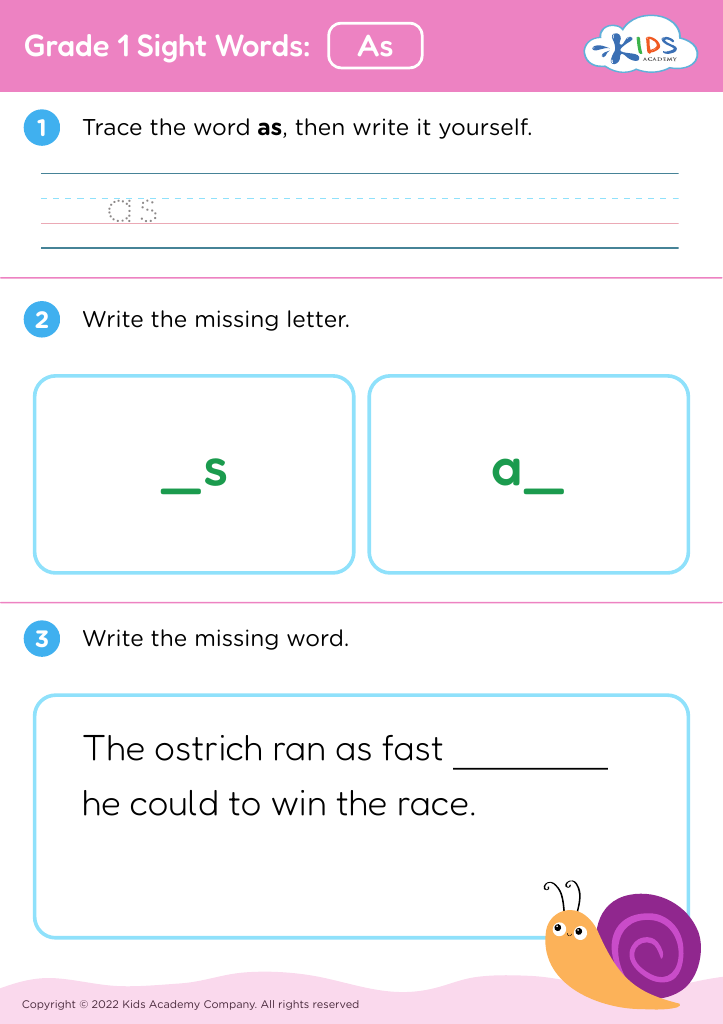
Join Kids Academy for Free
Who is primarily going to use this learning content?




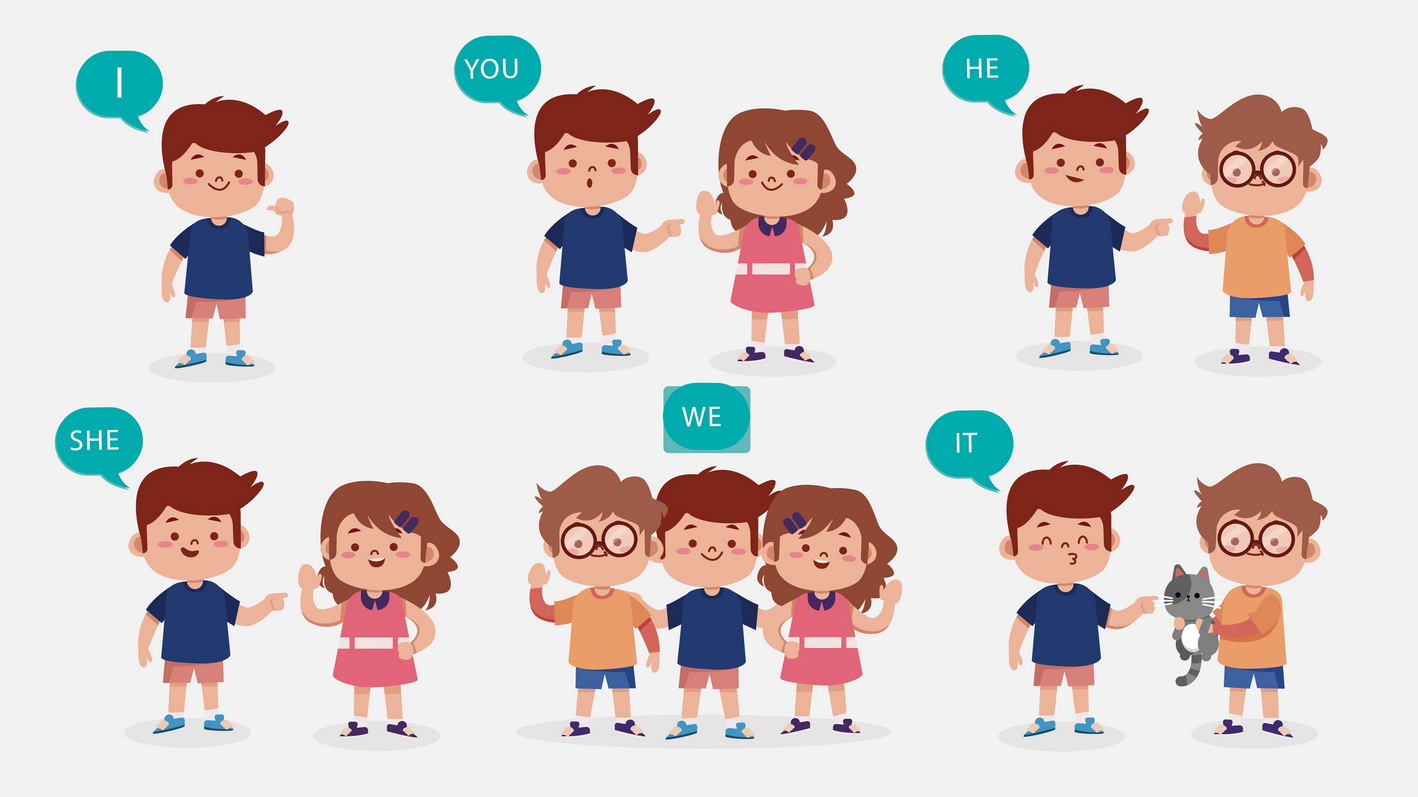


Shape identification is a fundamental skill that plays a crucial role in early grade education, particularly in Grade 1 reading. As children embark on their literacy journey, understanding shapes aids in the development of critical thinking and visual-spatial skills, which are essential for learning more complex concepts later on. Shape identification activities often incorporate descriptive language that enhances vocabulary, supporting reading comprehension and expression.
Furthermore, integrating shape recognition into reading activities fosters engagement and keeps young learners motivated. By recognizing shapes in letters and words, students build a stronger foundation for literacy, enhancing their ability to decode and make sense of text. This skill also connects to math, as understanding shapes helps children grasp basic geometric concepts.
For parents and teachers, emphasizing shape identification opens up opportunities for interactive learning experiences, such as storytelling that incorporates shapes or hands-on activities with art. By nurturing this skill, adults empower students to see connections between different subjects, promote a well-rounded education, and pave the way for success in both reading and mathematics. Supporting shape identification ultimately contributes to building confident learners who are prepared for future academic challenges.