Sound recognition Grade 1 Reading Worksheets
3 filtered results
Difficulty Level
Grade
Age
-
From - To
Subject
Activity
Standards
Explore our engaging "Sound Recognition Grade 1 Reading Worksheets," designed to enhance your child's phonemic awareness and reading skills. These interactive worksheets help first graders identify and distinguish different sounds in words, laying the foundation for successful reading. With fun activities that include matching sounds to objects, filling in missing letters, and practicing sound-letter correspondence, children will develop critical skills while enjoying learning. Perfect for classroom use or at-home practice, these worksheets cater to various learning styles and keep students motivated. Foster a love for reading and support your little learner's journey towards fluency with our sound recognition resources!
Favorites
With answer key
Interactive
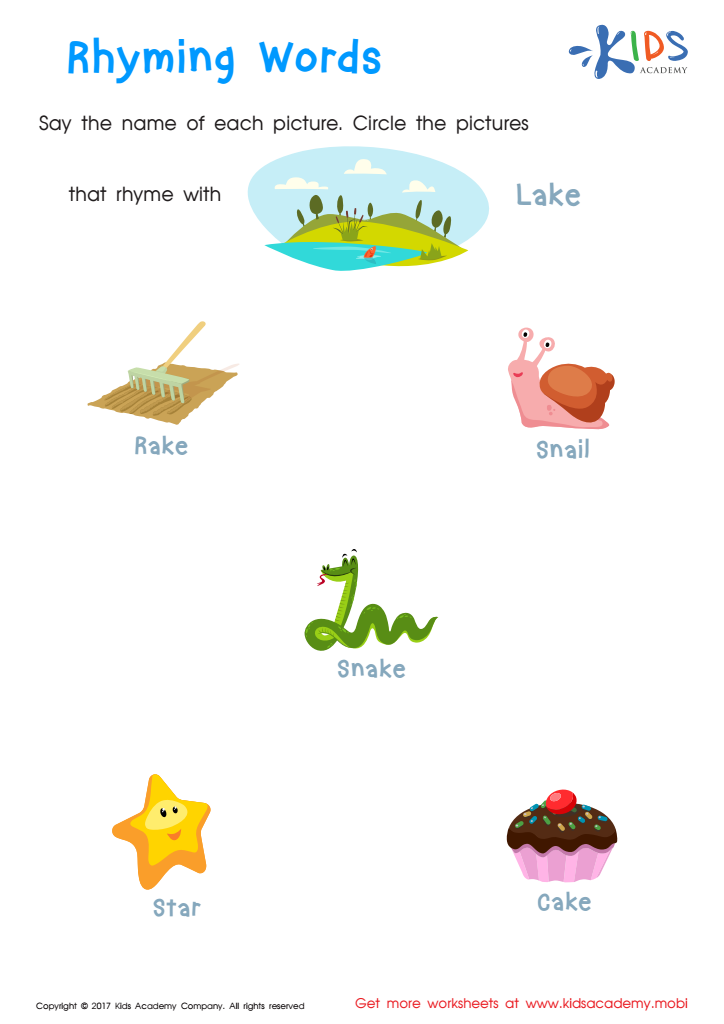
Rhyming Words Rhyming Worksheet
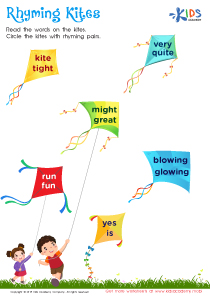
This worksheet is great for honing pre-reading skills. It helps kids make connections between pictures and written words, use problem-solving, and recognize sounds and words that rhyme. Have fun exploring rhyming words with your child, and they'll be rhyming in no time!
Rhyming Words Rhyming Worksheet
Worksheet
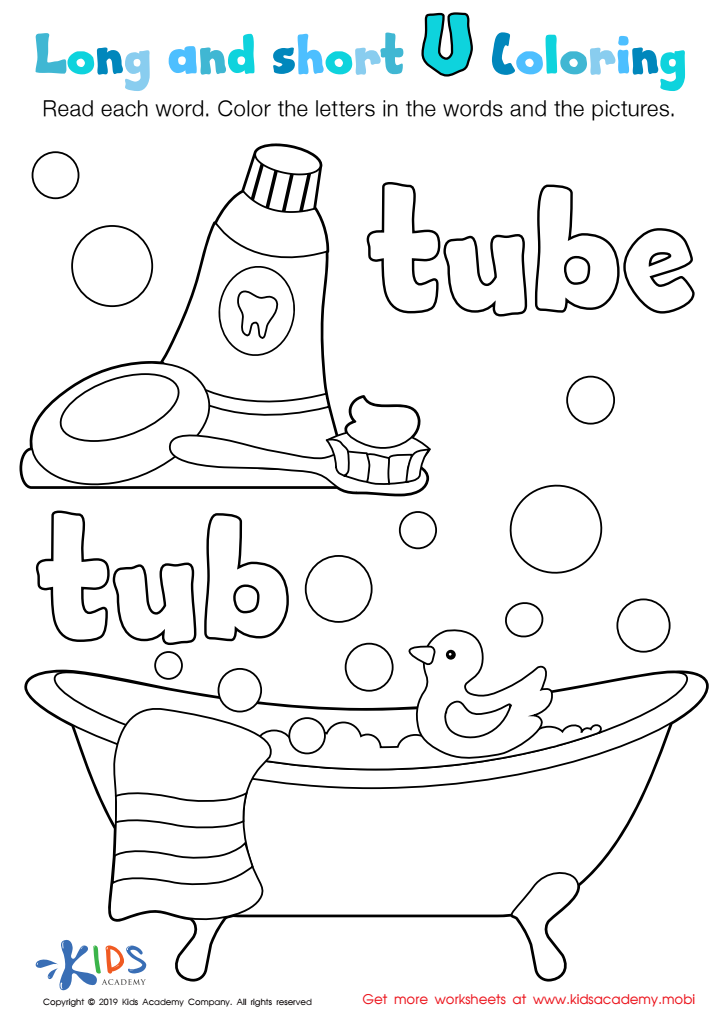
Long and Short U Worksheet
Revised: Spice up your lesson on long and short vowels with this fun printout! Kids read the words "tube" and "tub," then reinforce the sound by coloring in the words and pictures. It's a great way to make phonics class enjoyable!
Download (PDF)
 Assign to My Students
Assign to My Students
Long and Short U Worksheet
Worksheet
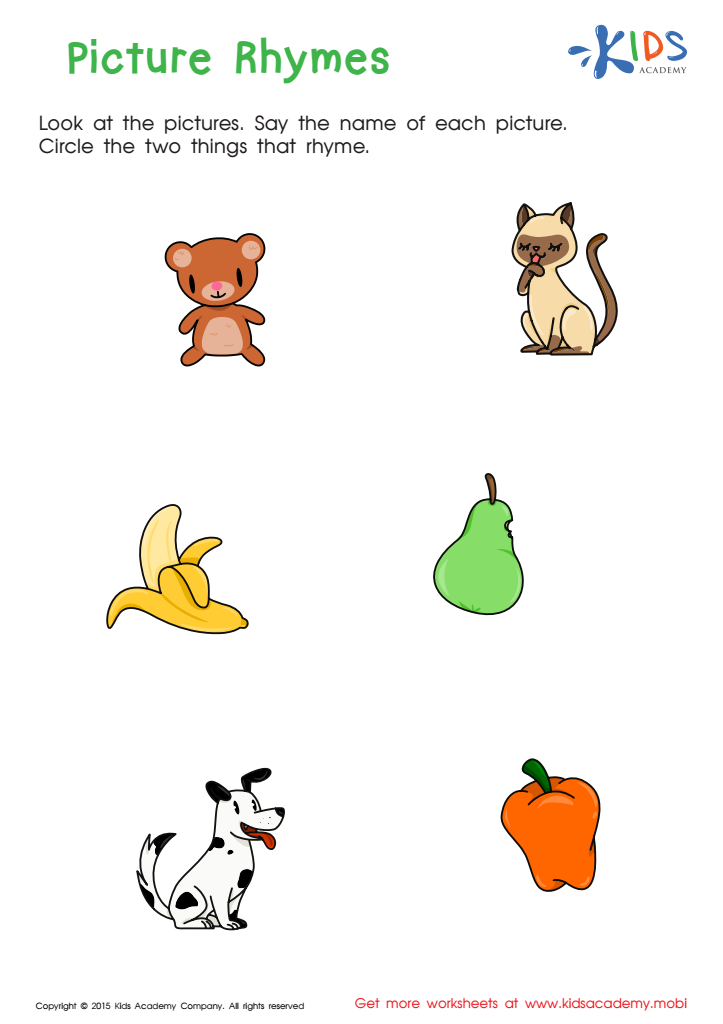
First Words: Picture Rhymes Worksheet
Rhyming helps kids understand language, read and write better. This printable worksheet boosts problem-solving and cognitive skills with vibrant pictures. It teaches kids to identify words, recognize rhymes, complete mental tasks and write words. An extra activity: show them how rhyming words share some of the same letters.
First Words: Picture Rhymes Worksheet
Worksheet
Join Kids Academy for Free
Who is primarily going to use this learning content?







Sound recognition is a crucial component of reading development, particularly in Grade 1. At this early stage, children begin to decode words, and the ability to recognize sounds is foundational for their literacy skills. Sound recognition involves identifying and manipulating phonemes, the smallest units of sound in language, which is essential for reading fluency and comprehension.
Parents and teachers should care about sound recognition because it directly influences a child’s ability to read and spell. When students can accurately identify sounds, they are better equipped to sound out words, leading to greater confidence in reading and improved academic performance. Early mastery of sound recognition also aids in phonemic awareness, which is linked to later reading success.
Fostering sound recognition in young learners sets the stage for lifelong literacy habits. Engaging activities, such as rhyming games, phonetic songs, and interactive reading support, can make learning fun and effective. Furthermore, early intervention for those struggling with sound recognition can help prevent future reading difficulties. Ultimately, prioritizing sound recognition enables children to thrive not only in literacy but across subjects, paving the way for successful communication and learning throughout their education.