Spatial awareness Grade 1 Science Worksheets
3 filtered results
-
From - To
Our Spatial Awareness Grade 1 Science Worksheets are designed to help young learners develop key skills essential for understanding their environment. These engaging and interactive worksheets focus on directional language, shapes, and object relationships, all tailored to enhance a child's ability to navigate and interpret space effectively. Each activity is crafted to be fun and educational, encouraging critical thinking and problem-solving. Perfect for classroom or at-home learning, our worksheets align with common core standards to ensure your first graders are on the path to success in spatial reasoning. Empower your child’s learning journey with our expertly designed resources.
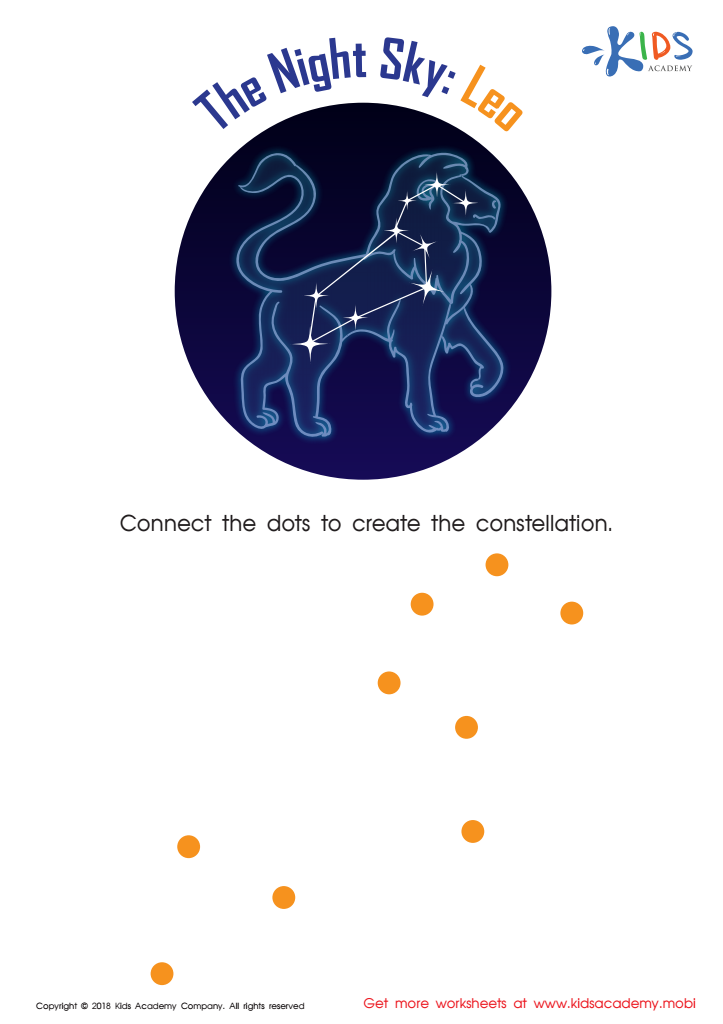
The Night Sky: Leo Worksheet
 Assign to My Students
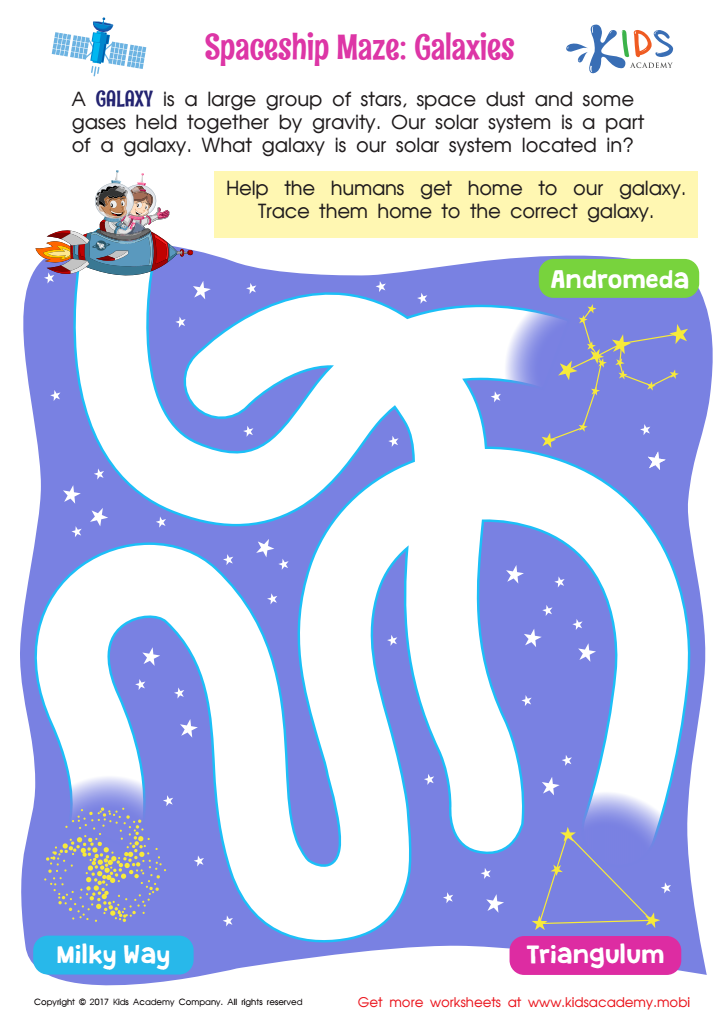
Spaceship Maze: Galaxies Worksheet
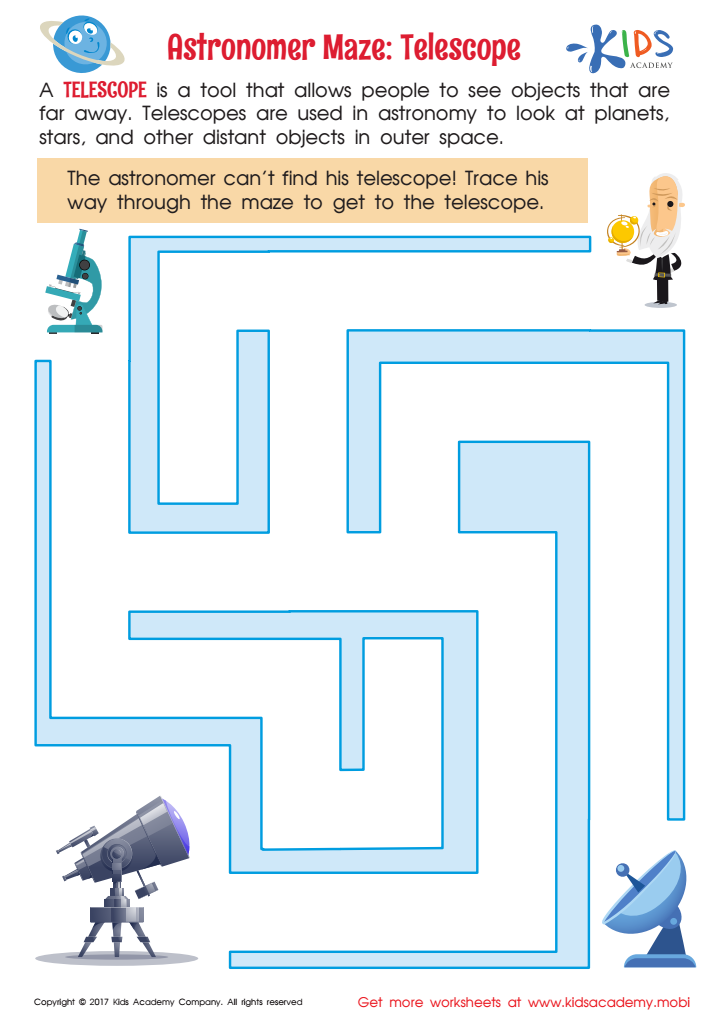
Astronomer Maze: Telescope Worksheet







Spatial awareness is a foundational skill that greatly benefits Grade 1 science learners, bridging the gap between abstract concepts and practical understanding. For parents and teachers, nurturing this skill is essential for several reasons.
Firstly, spatial awareness aids in cognitive development. It enables children to grasp the relationships between objects, which is fundamental in science when discerning distances, directions, and the arrangement of parts in a whole. For example, understanding the spatial layout of the solar system or how different elements of an ecosystem interact requires strong spatial reasoning.
Secondly, spatial skills are critical for mathematics, another core subject in early education. Geometry, measurement, and problem-solving tasks often need a well-developed sense of spatial relationships. By integrating spatial awareness with science education, children can create mental models that facilitate better comprehension of both subjects.
Thirdly, developing spatial awareness enhances fine motor skills vital for conducting experiments and engaging hands-on activities in science. Tasks like organizing lab equipment, drawing scientific diagrams, or using tools require precision and coordination.
Lastly, strong spatial skills correlate with better preparedness for STEM fields. Nurturing these skills early not only fosters scientific curiosity but also prepares children for future technological advancements and problem-solving challenges.
Parents and teachers play a pivotal role in providing opportunities to develop spatial abilities through play, structured activities, and interdisciplinary teaching methods. Prioritizing this creates a robust educational foundation for young learners.







