Alphabet Recognition Extra Challenge Tracing Letters Worksheets for Ages 3-4
3 filtered results
-
From - To
Enhance your child’s alphabet recognition with our "Alphabet Recognition Extra Challenge Tracing Letters Worksheets" designed for ages 3-4. Each worksheet offers engaging activities that help young learners identify and trace letters, boosting their motor skills and phonetic awareness. Perfectly crafted to make learning fun, these worksheets provide an excellent foundation for early literacy by combining visual cues with hands-on tracing exercises. Kids will enjoy mastering the alphabet while developing essential pre-reading skills. Whether at home or in preschool, these worksheets are an ideal resource to support your child’s educational journey. Download and start tracing today!

Letter A Tracing Page
 Assign to My Students
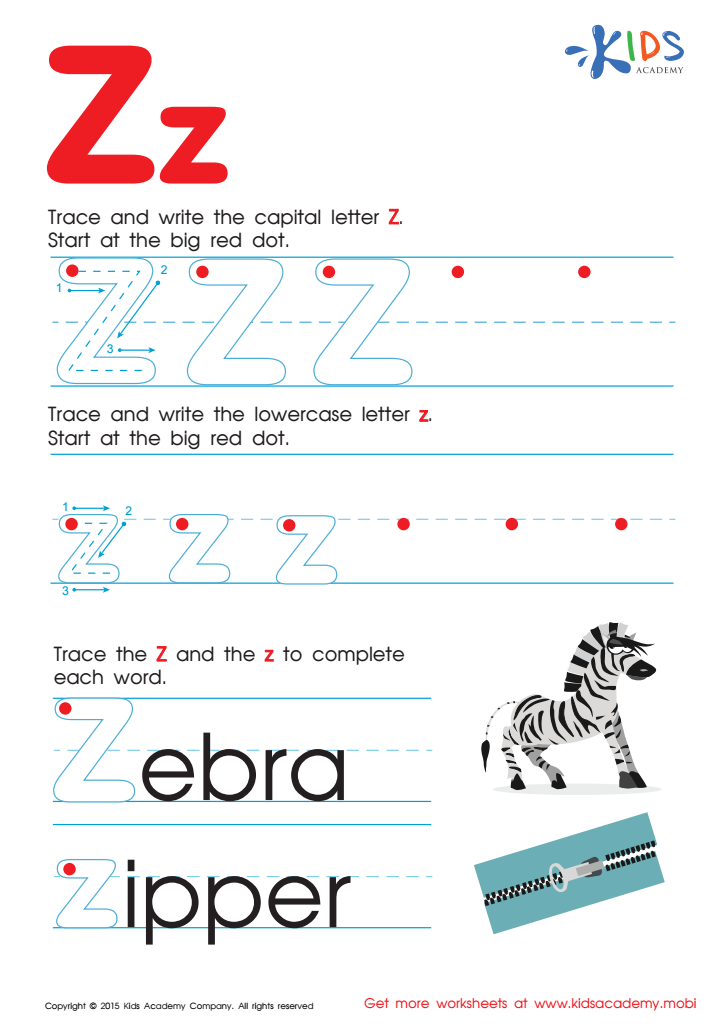
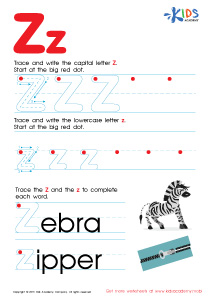
Letter Z Tracing Page
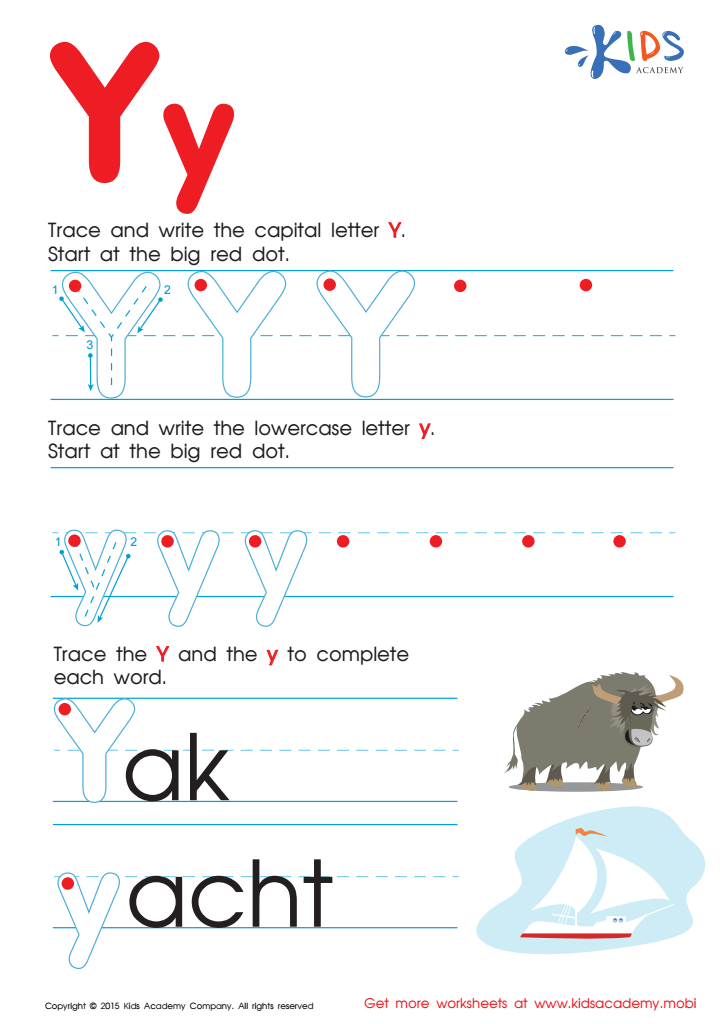
Letter Y Tracing Page








Parents and teachers should prioritize Alphabet Recognition Extra Challenge Tracing Letters for ages 3-4 because it lays the foundation for early literacy and fosters essential developmental skills. At this tender age, young children are highly receptive and curious about the world around them. Introducing them to alphabet recognition in an engaging and playful manner ignites a love for learning and keeps their natural curiosity alive.
This activity specifically enhances fine motor skills through the act of tracing, an essential precursor to writing. By guiding little hands to follow the shape of each letter, children improve their pencil control and hand-eye coordination, crucial for future handwriting fluency. Furthermore, recognizing and tracing letters reinforces cognitive development by forging strong visual and auditory associations. As children learn to identify and sound out each letter, they build the basic blocks necessary for reading proficiency.
Additionally, the focused attention and repetition involved in tracing letters improve concentration and memory retention. Providing children with alphabet recognition challenges encourages perseverance and a sense of achievement, which builds self-confidence. In summary, incorporating these learning activities can dramatically impact a child's academic success and holistic growth, making it a highly worthwhile endeavor for both parents and educators.