Addition skills Extra Challenge Addition & Subtraction Worksheets for Ages 3-4
6 filtered results
-
From - To
Boost your child's early math skills with our "Extra Challenge Addition & Subtraction Worksheets" designed specifically for ages 3-4. These engaging worksheets introduce the foundational concepts of addition and subtraction in a fun and interactive way. Each activity encourages critical thinking, problem-solving, and number recognition, making learning enjoyable. With colorful visuals and age-appropriate exercises, children will develop confidence in their math abilities. Perfect for home or classroom use, our worksheets provide a fantastic way for young learners to practice while having fun. Start your child's mathematical journey today with these essential addition skills worksheets!
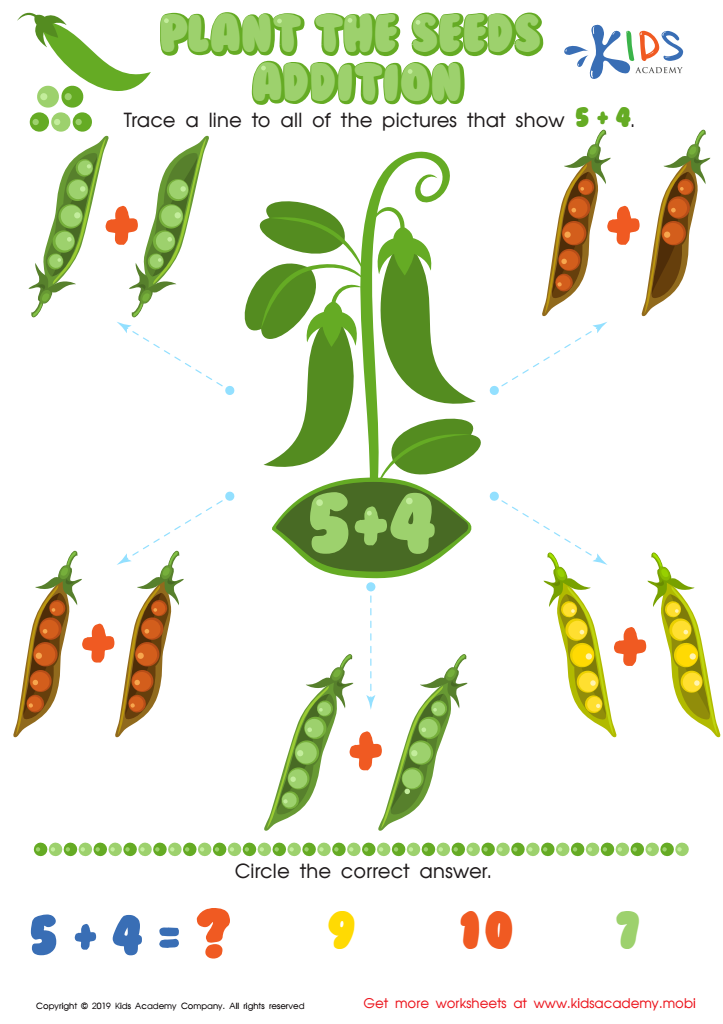
Plant the Seeds Addition Worksheet
 Assign to My Students
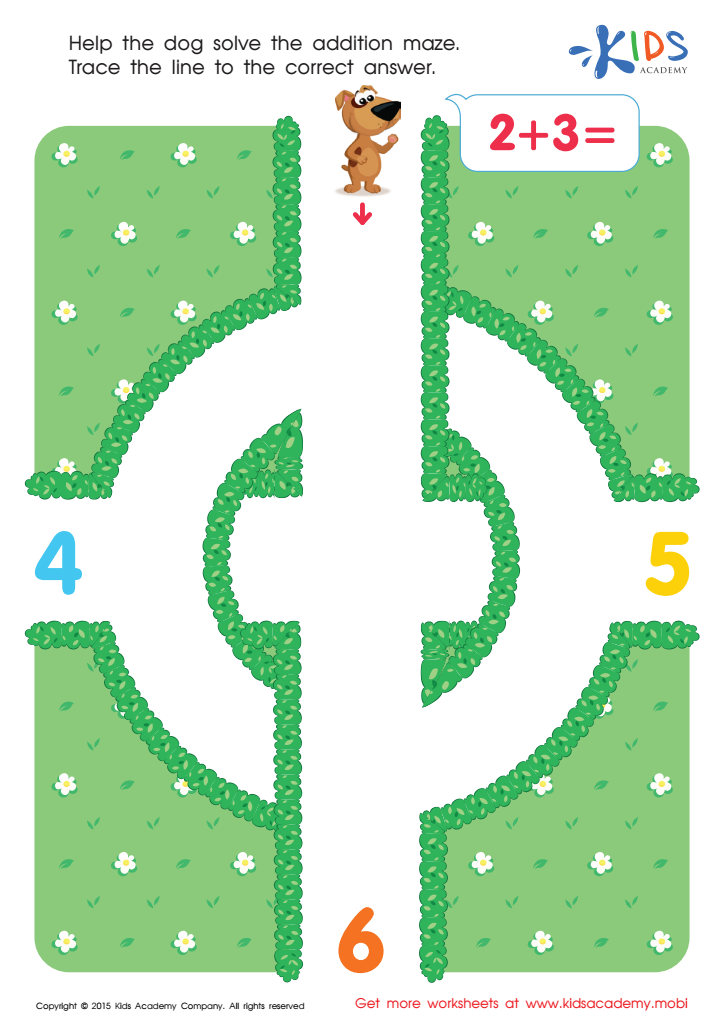
Two And Three Addition Worksheet
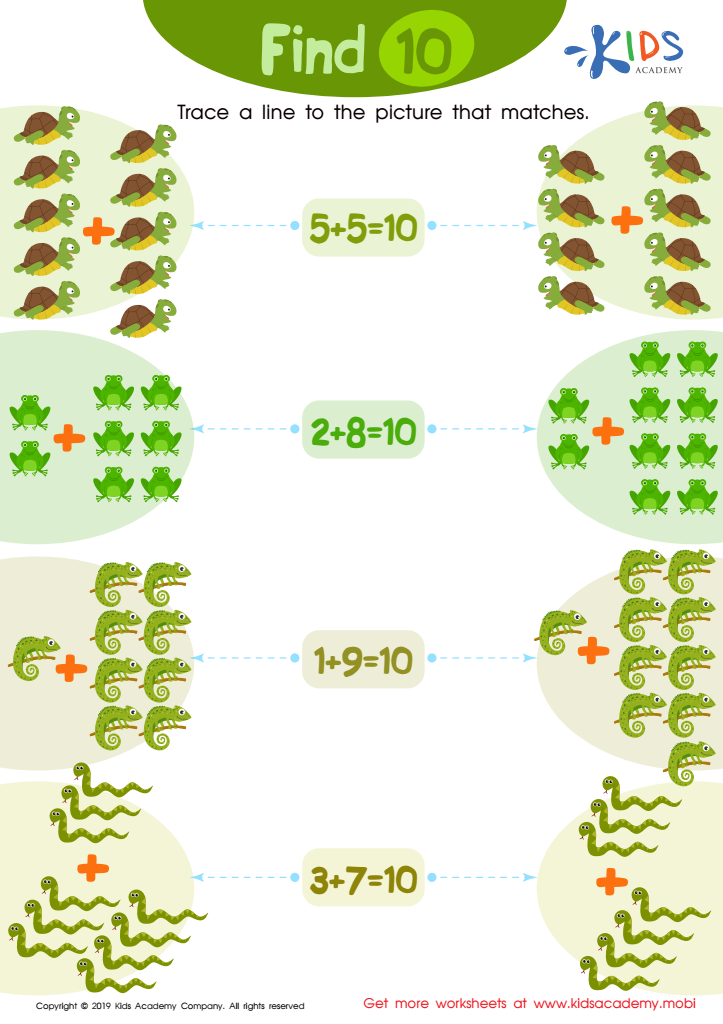
Find 10 Worksheet
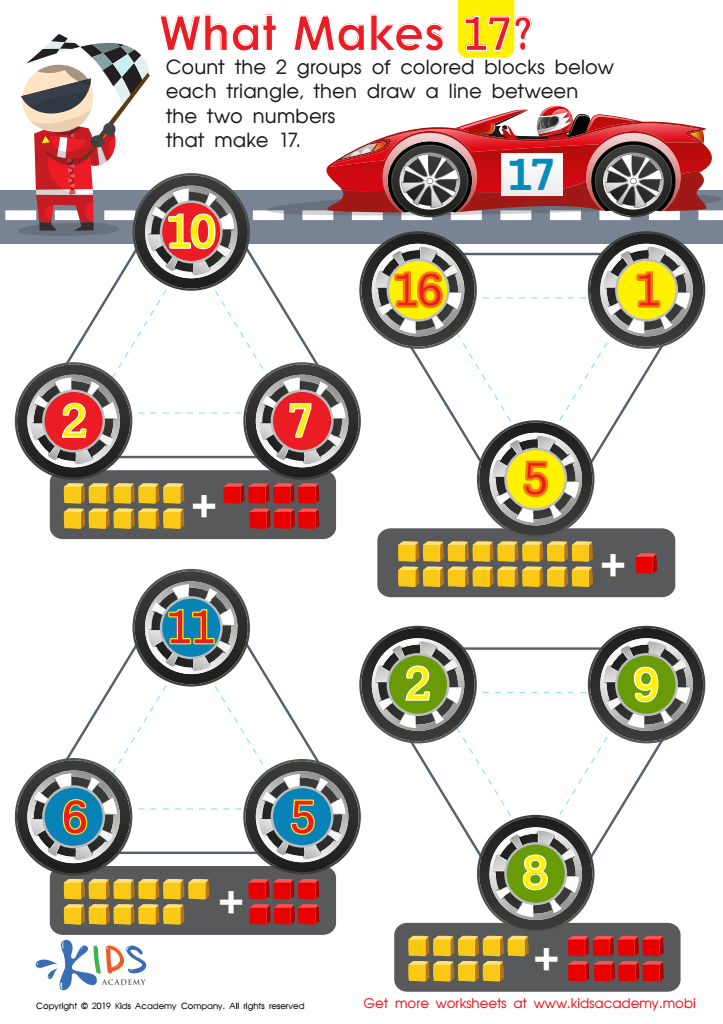
What Makes 17 Worksheet
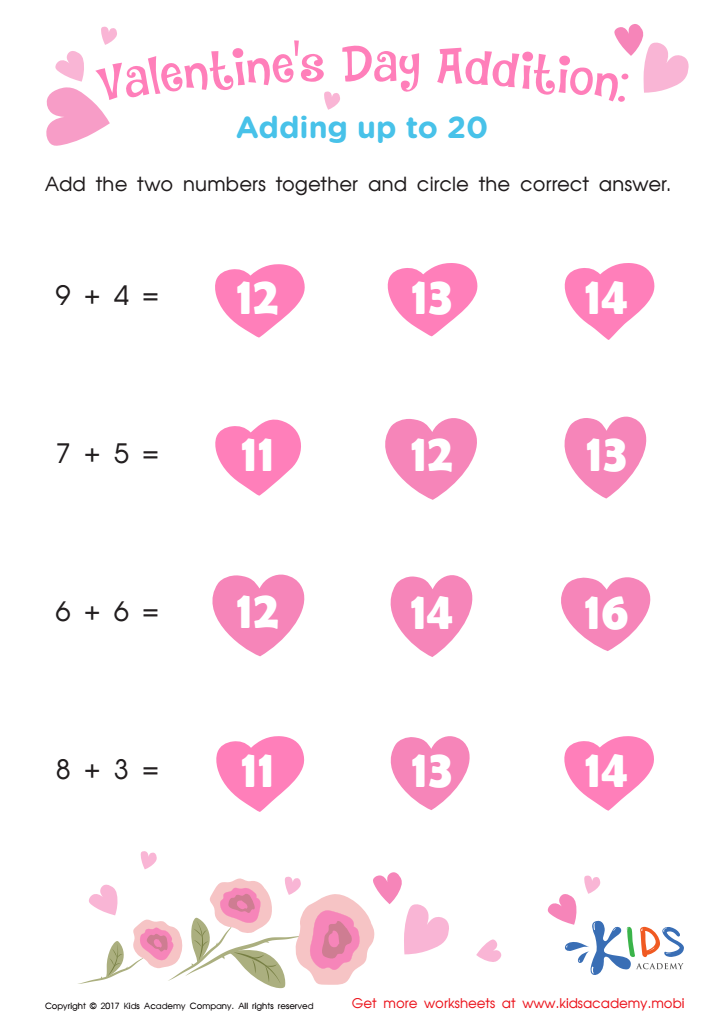
Valentine's Day Addition Worksheet
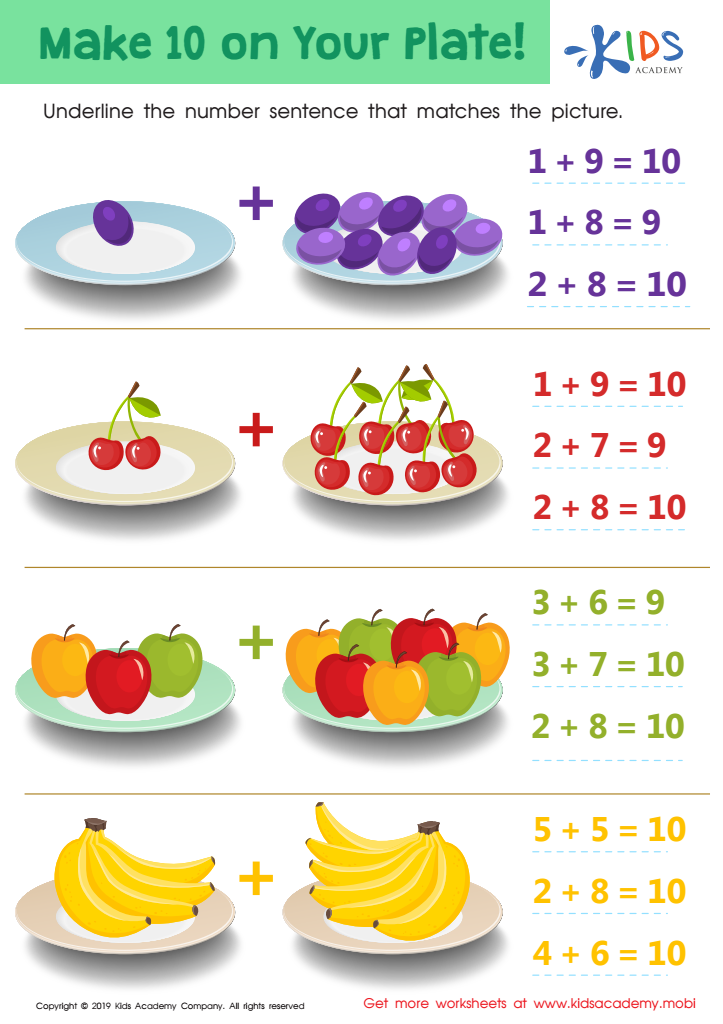
Make 10 on Your Plate! Worksheet








Parents and teachers should prioritize Addition skills, particularly Extra Challenge Addition & Subtraction for ages 3-4, due to the foundational role early math plays in a child's overall development. Mastering basic addition and subtraction at a young age fosters numeracy skills essential for later academic success. Engaging children in these activities promotes critical thinking, problem-solving, and cognitive skills, essential in all areas of learning.
Moreover, early introduction to addition and subtraction helps build a positive attitude towards math. Children who develop confidence in their math abilities early on are more likely to engage in higher-level math challenges in the future. Extra Challenge activities specifically cater to curious and advanced learners, ensuring they are appropriately stimulated, thereby maintaining their interest and motivation in learning.
Additionally, these skills support everyday practical scenarios, from counting objects to understanding simple concepts of quantity and comparison. Familiarity with addition and subtraction also facilitates social interactions, enhancing communication skills as children discuss and share their math experiences with peers.
In summary, fostering these foundational skills is essential for holistic development, laying the groundwork for future educational pursuits and lifelong learning. Parents and teachers play a pivotal role in nurturing this critical aspect of early childhood education.