Comparing sizes Extra Challenge Math Worksheets for Ages 3-4
3 filtered results
-
From - To
Boost your child's early math skills with our "Comparing Sizes Extra Challenge Math Worksheets" designed specifically for ages 3-4. These engaging worksheets provide a fun and educational way for preschoolers to learn how to compare and contrast the sizes of various objects. Each worksheet presents colorful illustrations and interactive activities that challenge young learners to identify, compare, and discuss sizes, fostering critical thinking and early problem-solving skills. Perfect for at-home practice or classroom use, these worksheets support your child’s development in a playful and intuitive manner. Make learning math exciting and effective today!
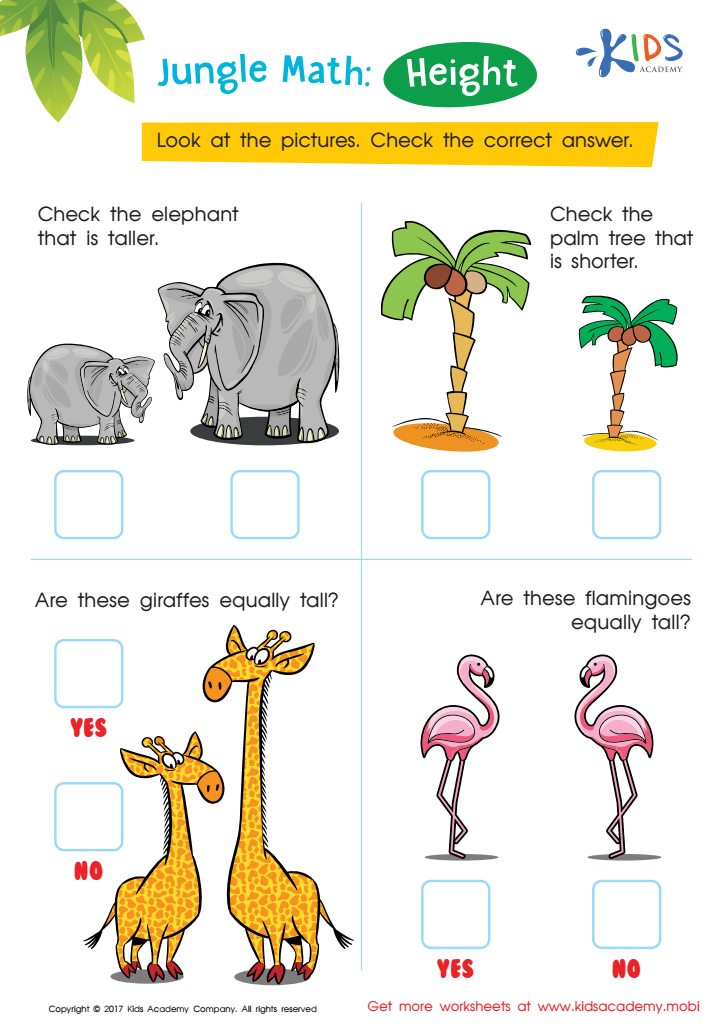
Which Is Taller Worksheet
 Assign to My Students
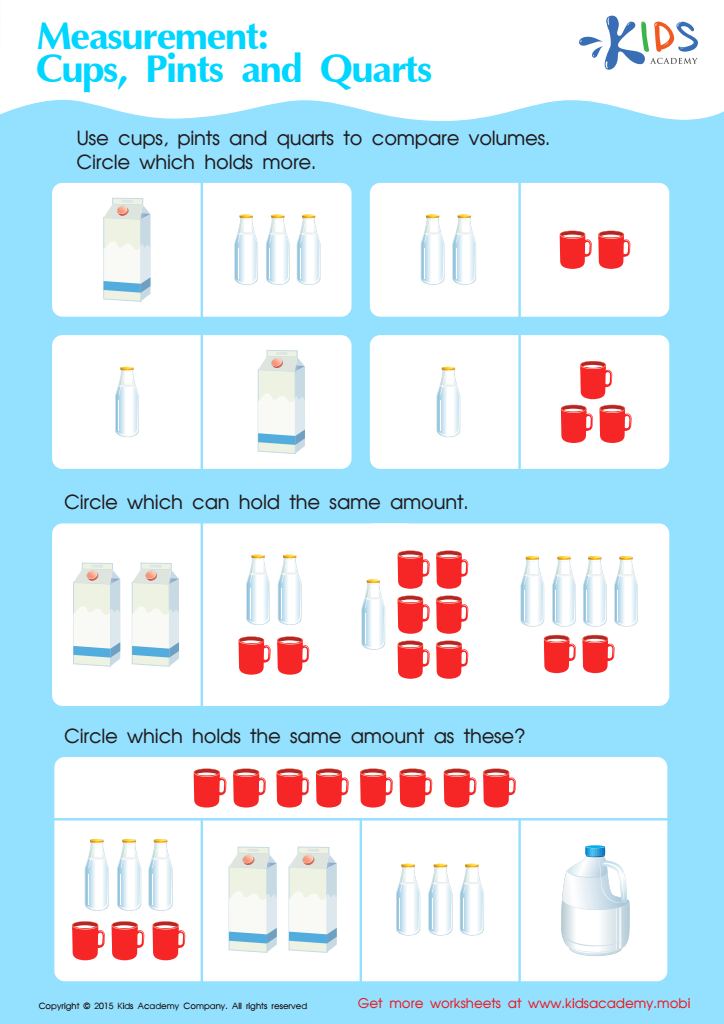
Measurement: Compare Volumes Worksheet
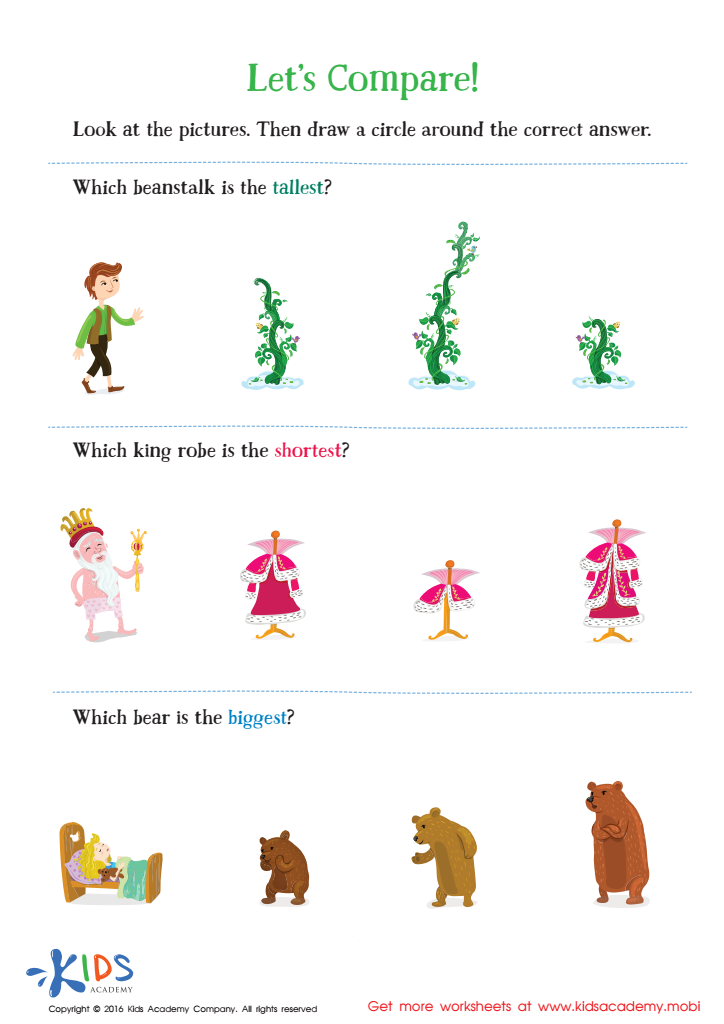
Fairy Tale Worksheet: Let's Compare








Parents and teachers should care about "Comparing Sizes Extra Challenge Math" for ages 3-4 because it plays a critical role in early childhood cognitive development. At this formative age, children are beginning to understand the concepts of size, quantity, and order, which build essential foundations for future math learning. By engaging in activities that compare sizes, children develop spatial awareness and logical thinking skills.
Furthermore, such activities bolster language development as children learn descriptive terms like "big," "bigger," "small," and "smaller." This expands their vocabulary and enhances their ability to express comparisons and observations clearly. These activities also encourage problem-solving as children figure out which objects are larger or smaller and why.
Engaging in comparative size activities fosters fine motor skills since children often manipulate objects physically, deepening their kinesthetic learning experience. Also, these tasks inherently teach patience and attention to detail, as kids need to focus to discern size differences accurately.
Overall, comparing sizes not only prepares children for kindergarten math standards but also boosts their confidence as learners. It sets an early positive experience with math, fostering a lifelong interest and competence in the subject. Teachers and parents investing time in these small yet impactful activities are supporting children’s comprehensive developmental growth.








