Vocabulary expansion Extra Challenge Grammar Worksheets for Ages 3-4
6 filtered results
-
From - To
Discover our "Vocabulary Expansion Extra Challenge Grammar Worksheets" designed specifically for ages 3-4! These engaging worksheets offer exciting activities that promote language development and enhance vocabulary skills in young learners. Through fun exercises and colorful visuals, children will explore new words and their meanings while practicing essential grammar concepts. Each worksheet encourages creativity and critical thinking, making learning an enjoyable experience. Our materials are perfect for home or classroom use, providing educators and parents with tools to support early literacy. Inspire a love for language in your little ones and watch their vocabulary thrive with our specially crafted resources!
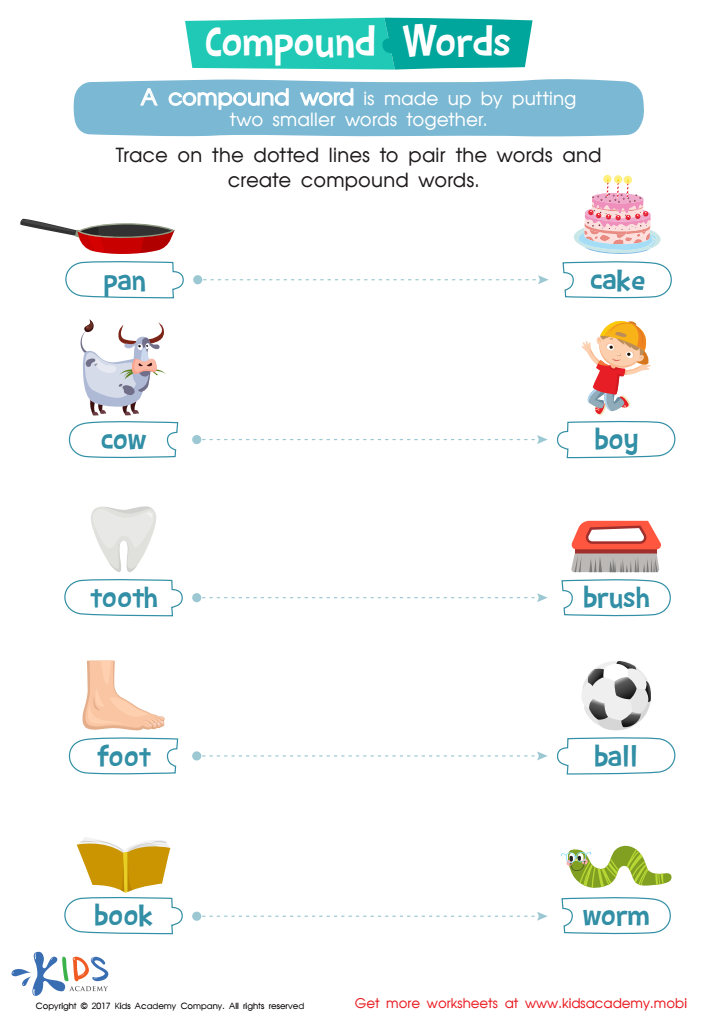
Compound Words Word Structure Worksheet
 Assign to My Students
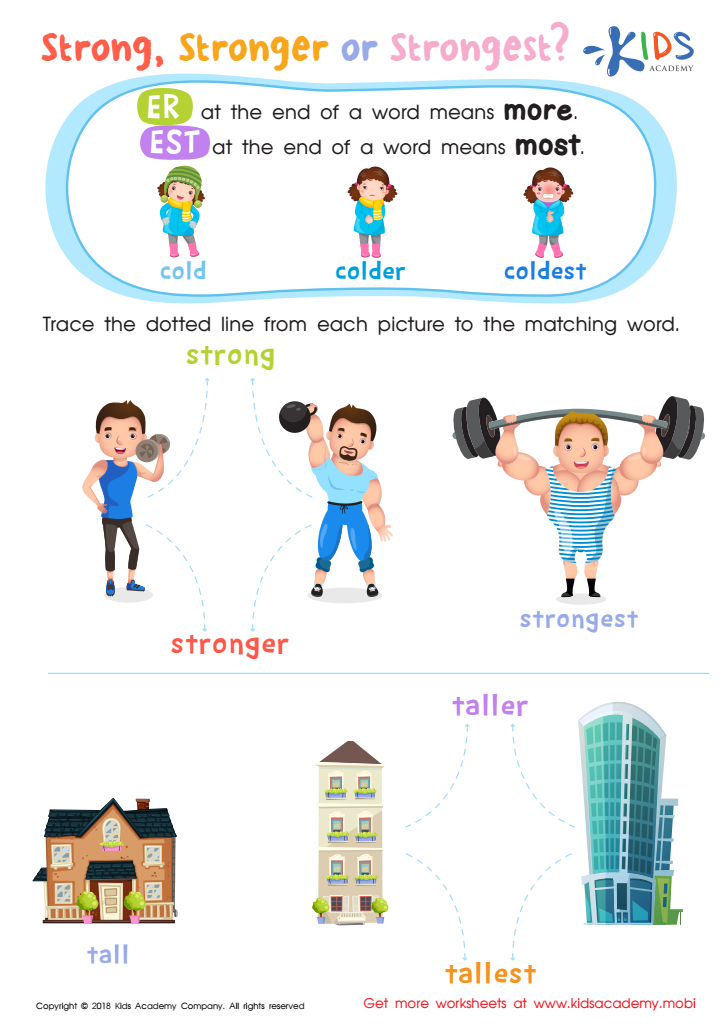
Strong or Stronger? Worksheet
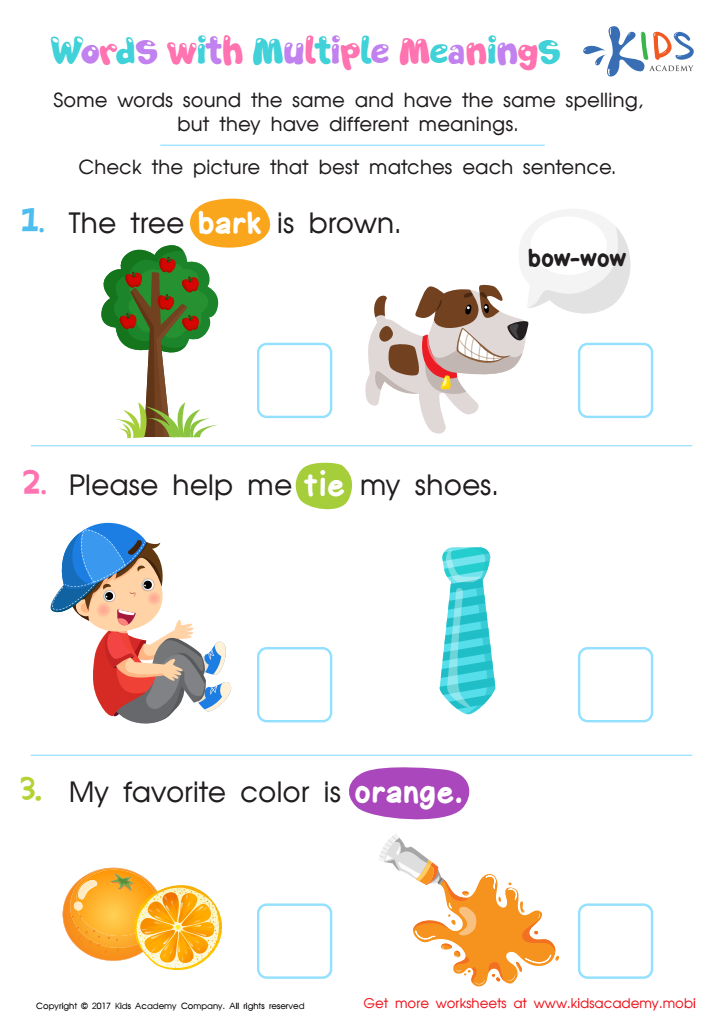
Words with Multiple Meanings Worksheet
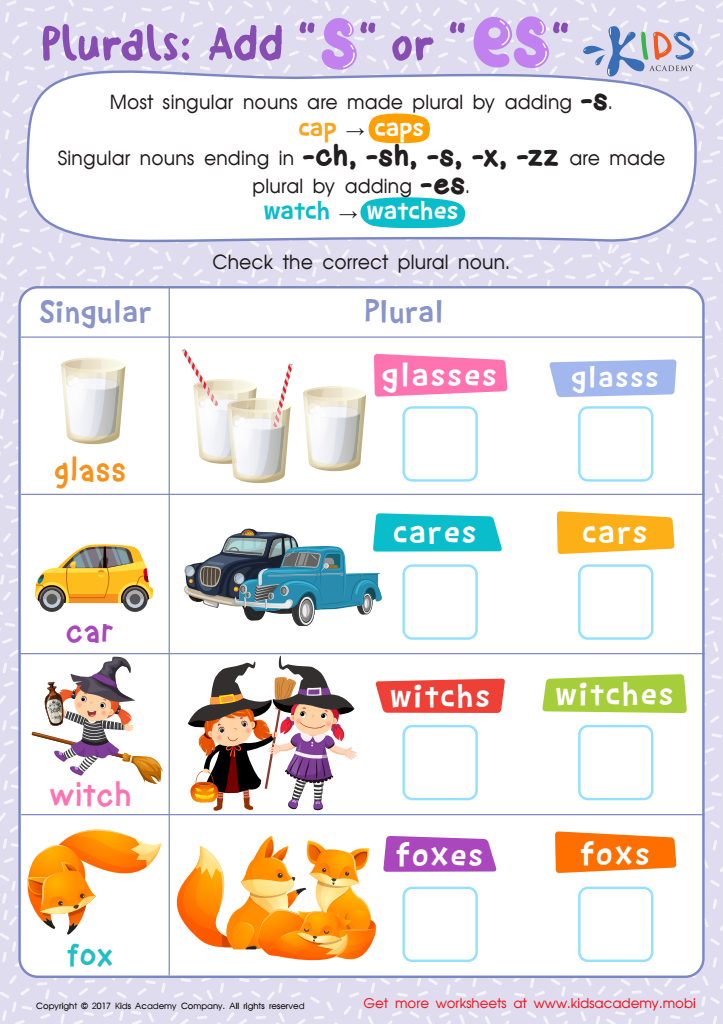
Plurals: "–es" or "–es"? Worksheet
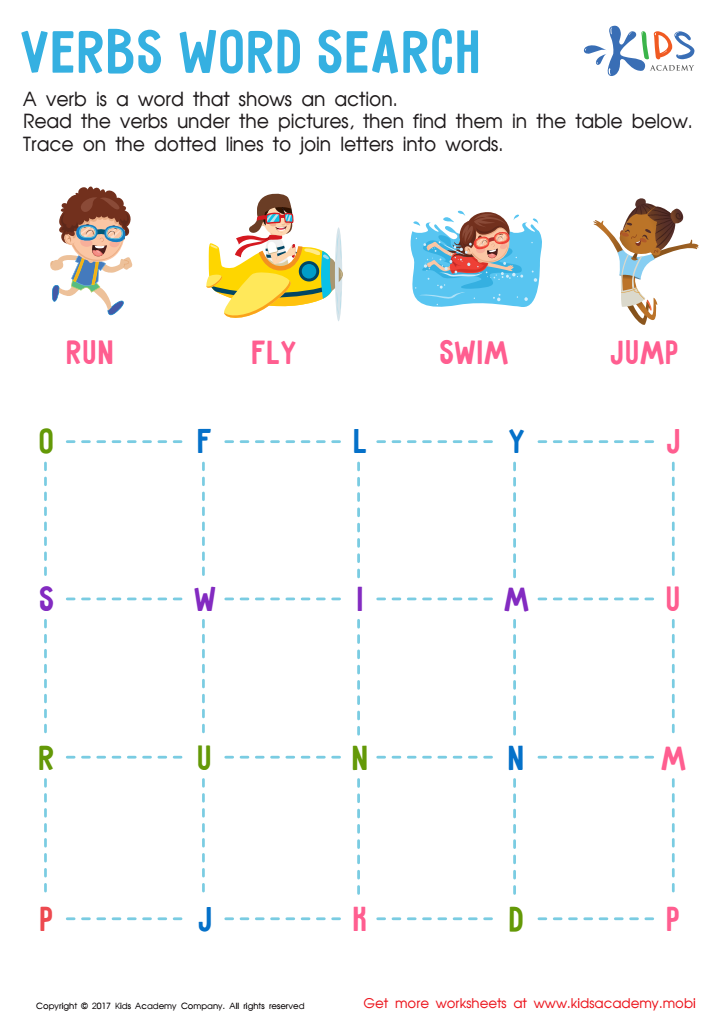
Verbs Word Search Worksheet
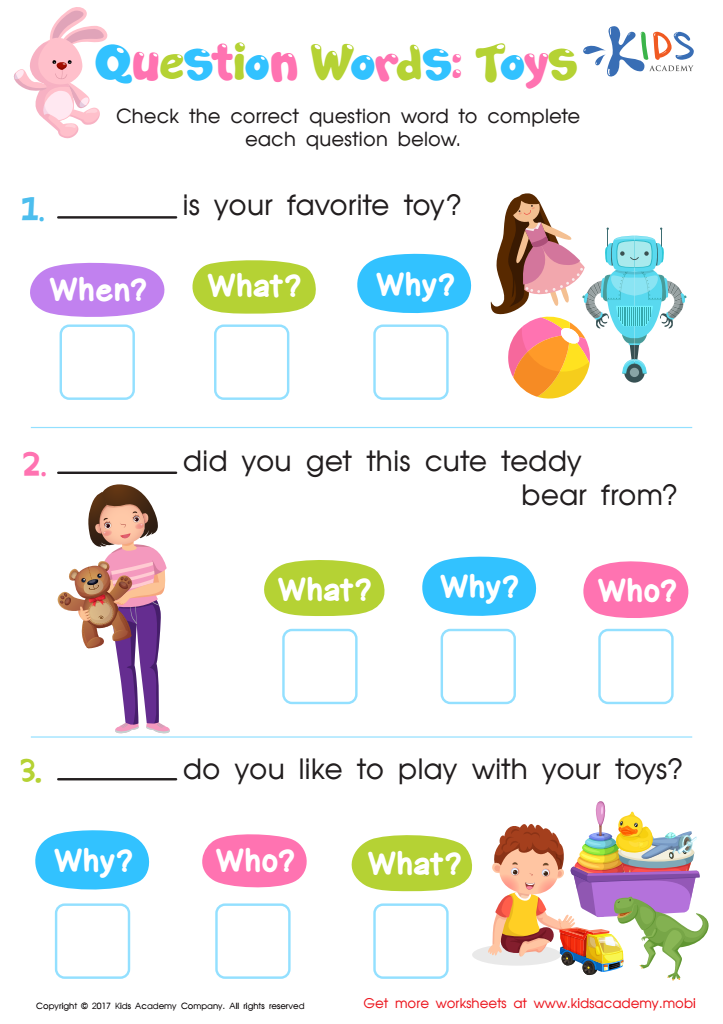
Question Words: Toys Worksheet


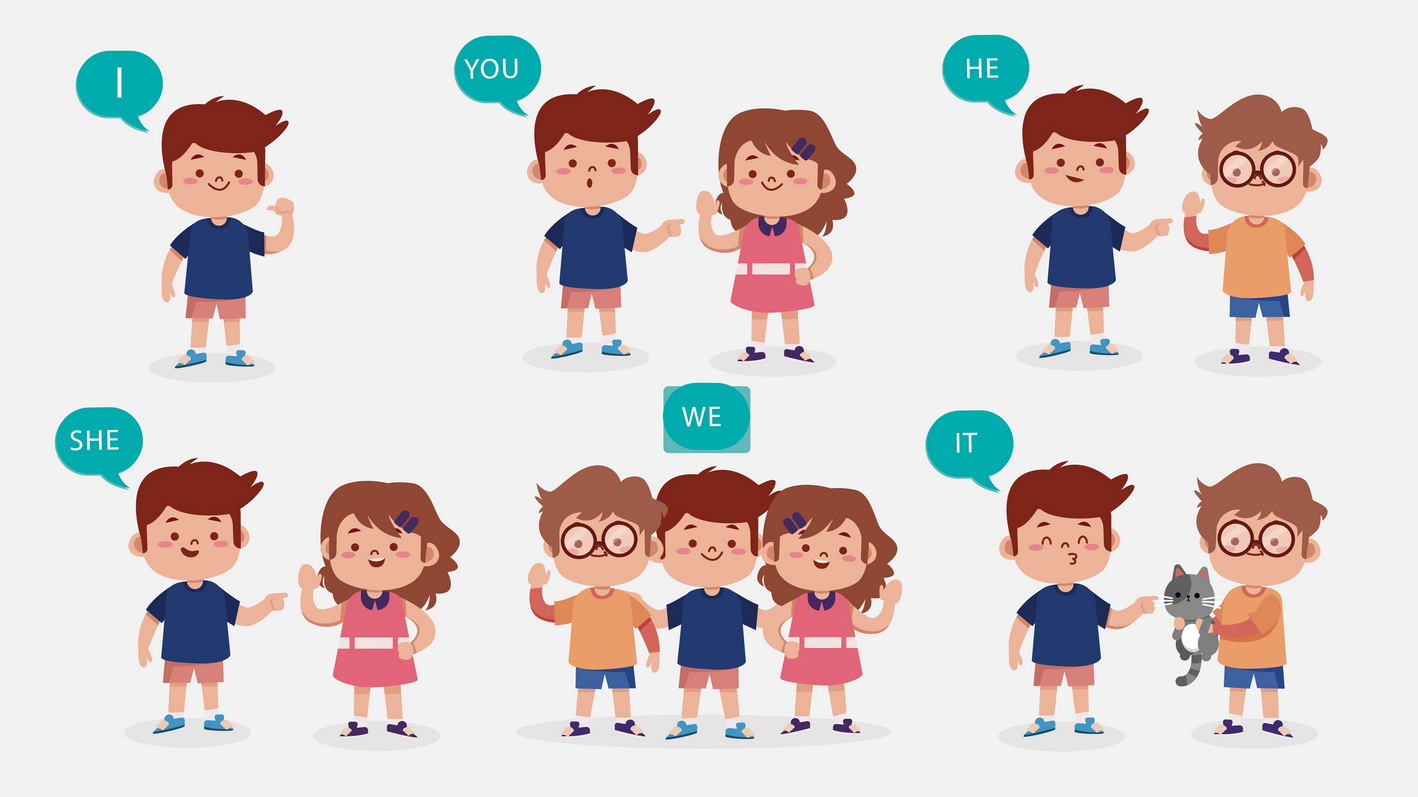




Parents and teachers should prioritize vocabulary expansion and grammar activities for children aged 3-4 because these early years are crucial for language development. At this age, children rapidly absorb new words and language structures, laying the foundation for effective communication skills that are essential for their social and academic success.
Engaging in vocabulary expansion and grammar exercises helps children articulate their thoughts, express their feelings, and interact with peers confidently. This skill is vital as it enriches their overall cognitive development, improving their ability to comprehend new concepts across various subjects later in school. When children encounter diverse vocabulary, their listening and reading comprehension abilities naturally improve.
Moreover, understanding basic grammar concepts nurtures clear communication from a young age, helping them grasp complex ideas as they grow. It also supports literacy skills, as a rich vocabulary and grammar knowledge are critical for reading and writing readiness.
By investing time in vocabulary expansion and grammar for preschoolers, parents and teachers are not just guiding them toward language proficiency; they are also fostering a love for learning and curiosity. Overall, these early efforts create a solid groundwork for lifelong educational achievements and effective interpersonal connections.