Basic counting skills Extra Challenge Worksheets for Ages 3-5
3 filtered results
-
From - To
Enhance your child's numeracy with our "Basic Counting Skills Extra Challenge Worksheets for Ages 3-5"! Designed to support early math learning, these engaging printables offer a range of fun activities, including counting objects, number tracing, and matching numbers. Perfect for preschoolers and kindergarteners, these worksheets help solidify foundational counting skills and improve number recognition. Give your little learners a head start in math with these exciting educational resources, making learning enjoyable and effective. Explore now and watch your child's confidence grow as they master counting, all while having fun!
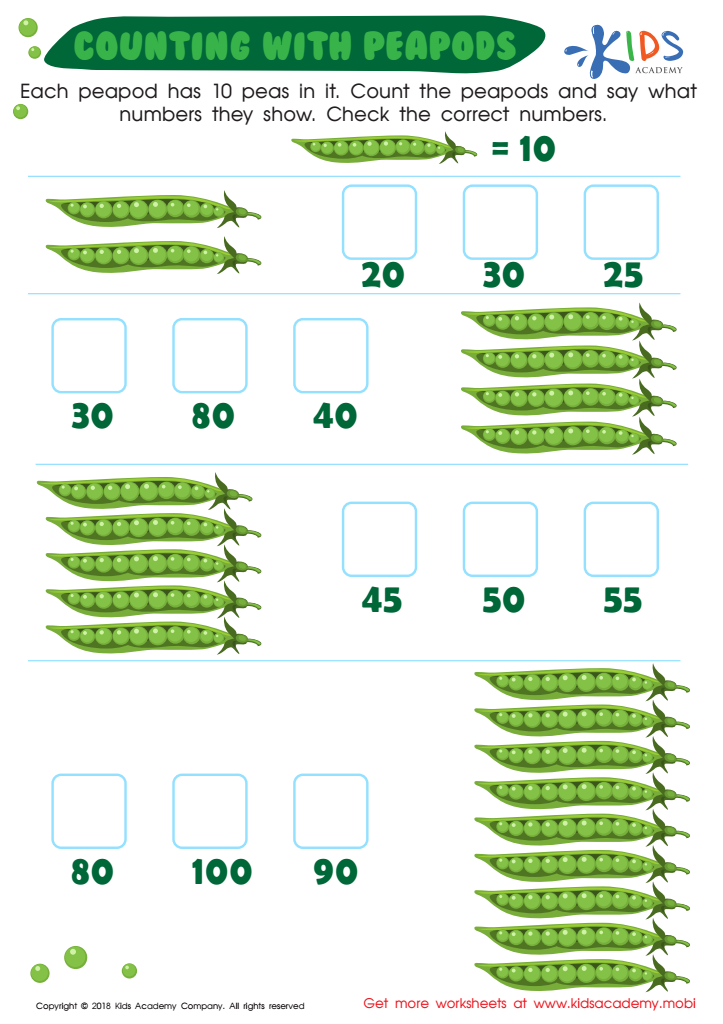
Number Worksheet: Counting With Peapods
 Assign to My Students
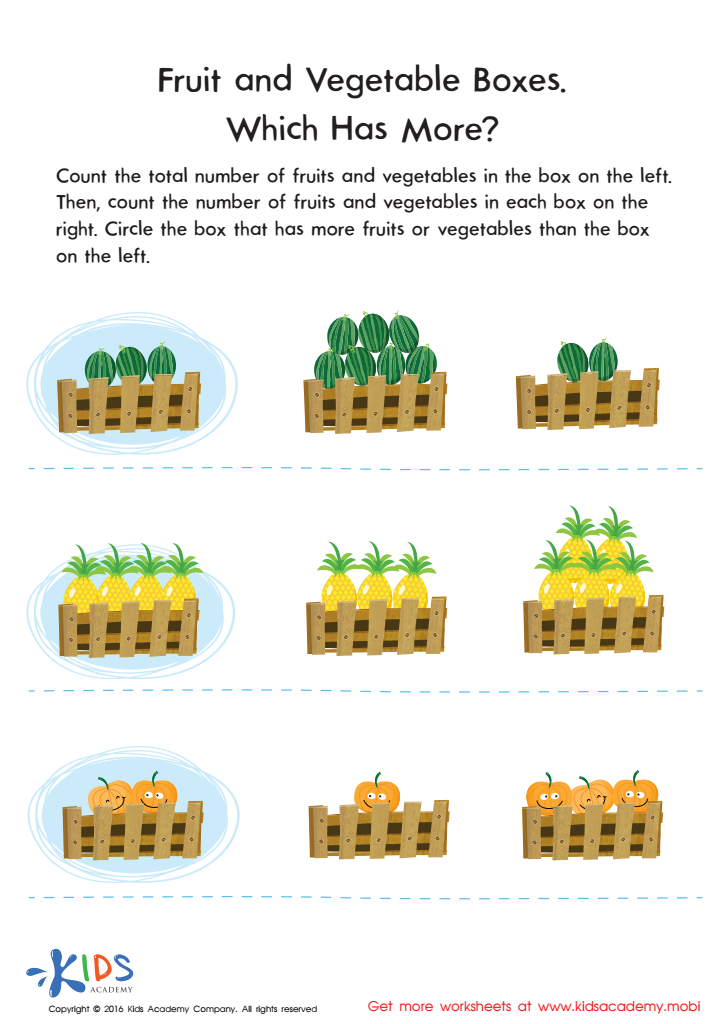
Which Has More? Size Worksheet
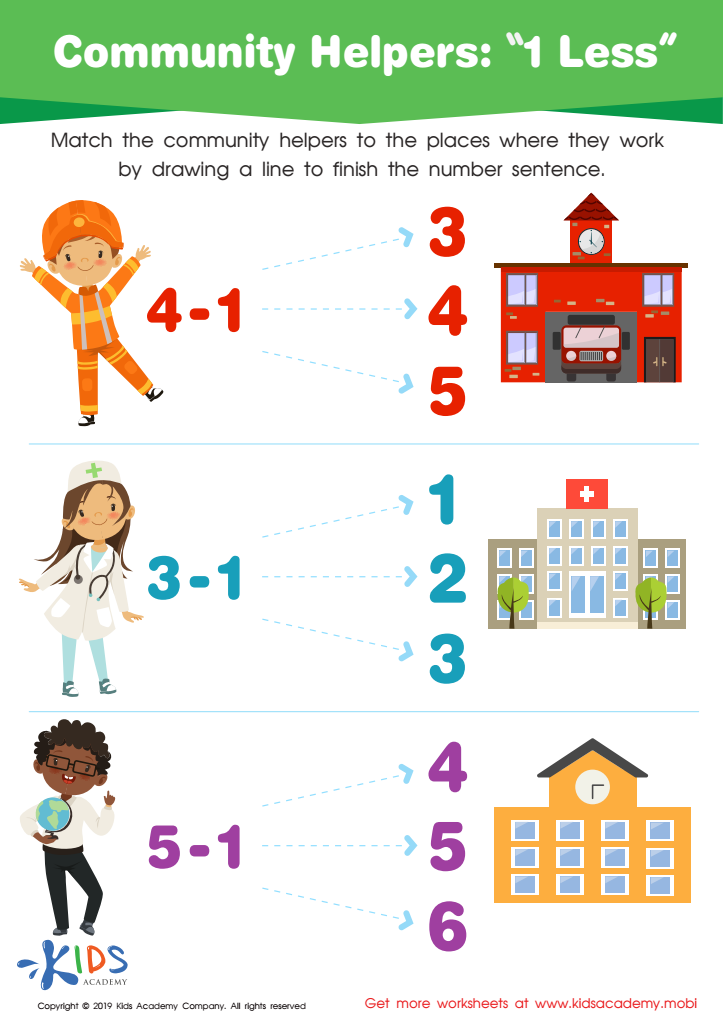
Community Helpers: 1 less Worksheet








Basic counting skills are foundational for young children, and providing extra challenges in this area is crucial for their overall cognitive development. For parents and teachers, understanding the importance of this can guide them in offering the best support to children in their early years.
Counting skills extend beyond mere recitation of numbers. They encompass the ability to recognize quantities, understand number sequences, and grasp the concept of 'more' and 'less,' which are fundamental for later mathematical learning. During ages 3-5, children are in a critical period of brain development, where they are highly receptive to learning new concepts. By introducing extra challenges in counting, such as counting objects in different groups or depicting numbers in various combinations, adults can stimulate children's problem-solving and reasoning abilities.
Furthermore, early mastery of counting skills fosters confidence and a positive attitude toward mathematics. Kids who are adept at counting are more likely to perform better in math when they enter formal schooling. It also prepares them for future academic challenges, as mathematics is a cumulative subject where advanced concepts build on basic ones.
Ultimately, investing time in developing children's counting skills through an extra challenge enhances their academic readiness, supports their cognitive development, and sets a strong foundation for lifelong learning. Therefore, parents and teachers have compelling reasons to prioritize and engage children in enriched counting activities.








