Basic subtraction skills Extra Challenge Math Worksheets for Ages 3-5
3 filtered results
-
From - To
Enhance your child's foundational math skills with our Basic Subtraction Skills Extra Challenge Math Worksheets designed for ages 3-5. These printable worksheets offer engaging, age-appropriate activities that make learning subtraction fun and effective. Crafted to support early childhood education, our materials focus on helping young learners master basic subtraction through interactive exercises and visual aids. Perfect for parents and teachers, these worksheets provide the extra challenge needed to boost your child's confidence and proficiency in math. Start your child's journey to math success today with our expert-crafted, educational resources from Kids Academy.
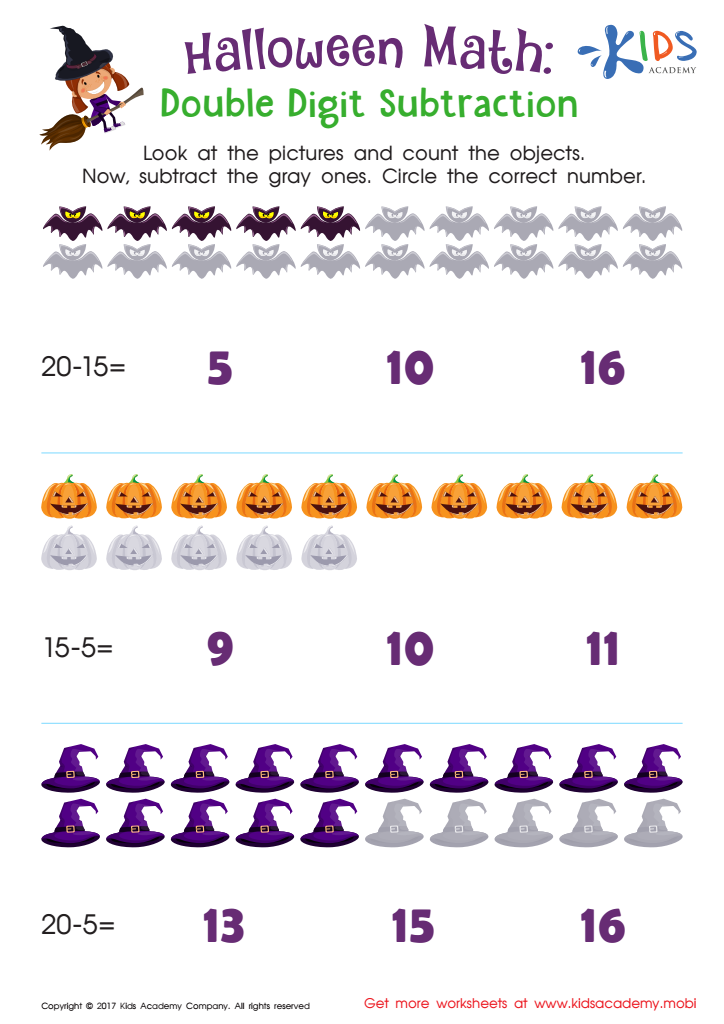
Halloween Math Subtraction Worksheet
 Assign to My Students
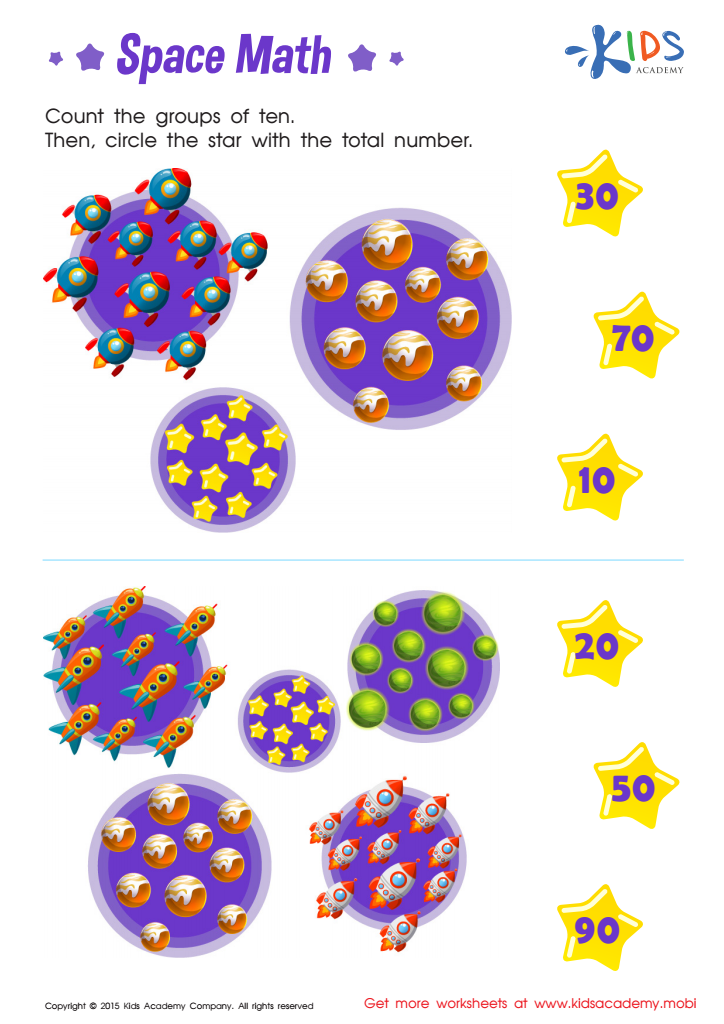
Learn dozens: Space math Worksheet
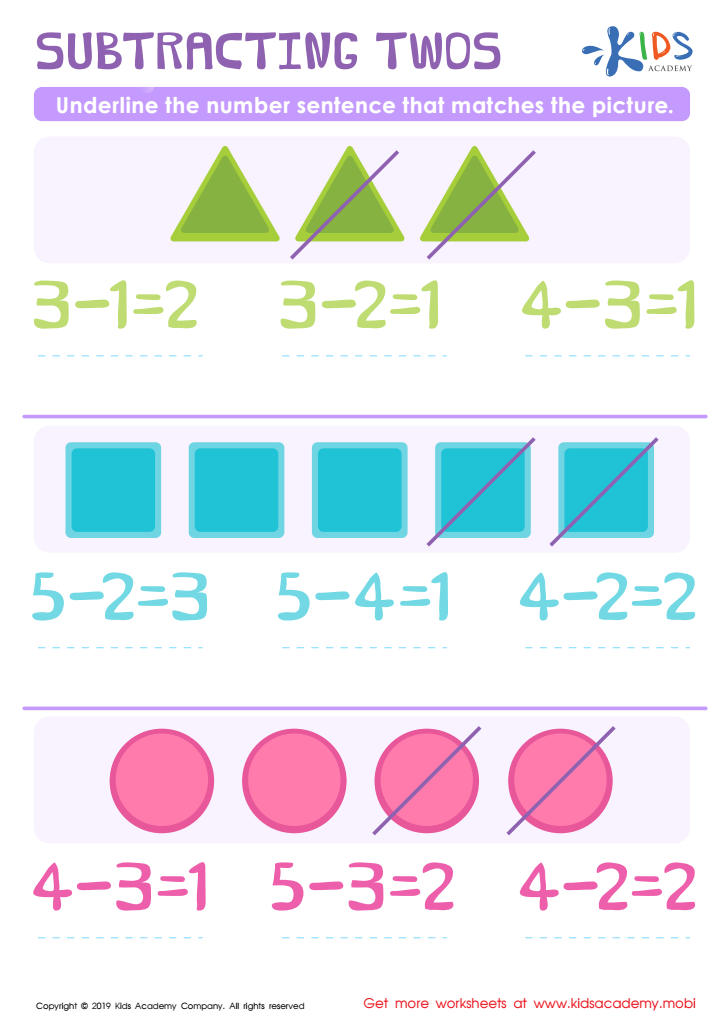
Subtracting Twos Worksheet








Developing basic subtraction skills in children aged 3 to 5 is foundational for several reasons. At this young age, children's brains are highly receptive to new information, making it an ideal time to introduce mathematical concepts. Subtraction is one of the core operations in math, and mastering it early enables children to build a strong mathematical foundation that will support more advanced learning later.
Subtraction helps children understand the concept of "taking away" and is essential for solving real-world problems, such as determining how many apples are left after eating a few. Introducing an extra challenge in subtraction helps to stimulate cognitive development, enhancing problem-solving abilities, critical thinking, and numerical literacy.
For parents and teachers, effectively teaching basic subtraction improves a child's confidence in their mathematical abilities. Engaging children with fun, interactive subtraction challenges can make learning enjoyable and foster a positive attitude toward math. This foundational skill also promotes logical thinking and concentration, which are beneficial across all areas of learning.
Ultimately, early proficiency in subtraction not only aids future academic success but also equips children with essential life skills. An early introduction to these concepts ensures children are better prepared for the increasing complexity of mathematical tasks as they progress in their education.








