
Emotional identification Extra Challenge Worksheets for Ages 3-6
3 filtered results
Difficulty Level
Grade
Age
-
From - To
Subject
Activity
Standards
Discover our "Emotional Identification Extra Challenge Worksheets" specifically designed for ages 3-6! These engaging activities help young children explore and identify emotions through fun and interactive exercises. Tailored to enhance emotional intelligence, the worksheets include colorful pictures, relatable scenarios, and various challenges to keep kids intrigued. Perfect for preschoolers and kindergartners, they guide little ones in recognizing different feelings, understanding their nuances, and expressing themselves effectively. Ideal for both classroom and home settings, these worksheets are a fantastic resource for parents and educators to support early social-emotional learning. Get started and nurture their emotional growth today!
Favorites
With answer key
Interactive
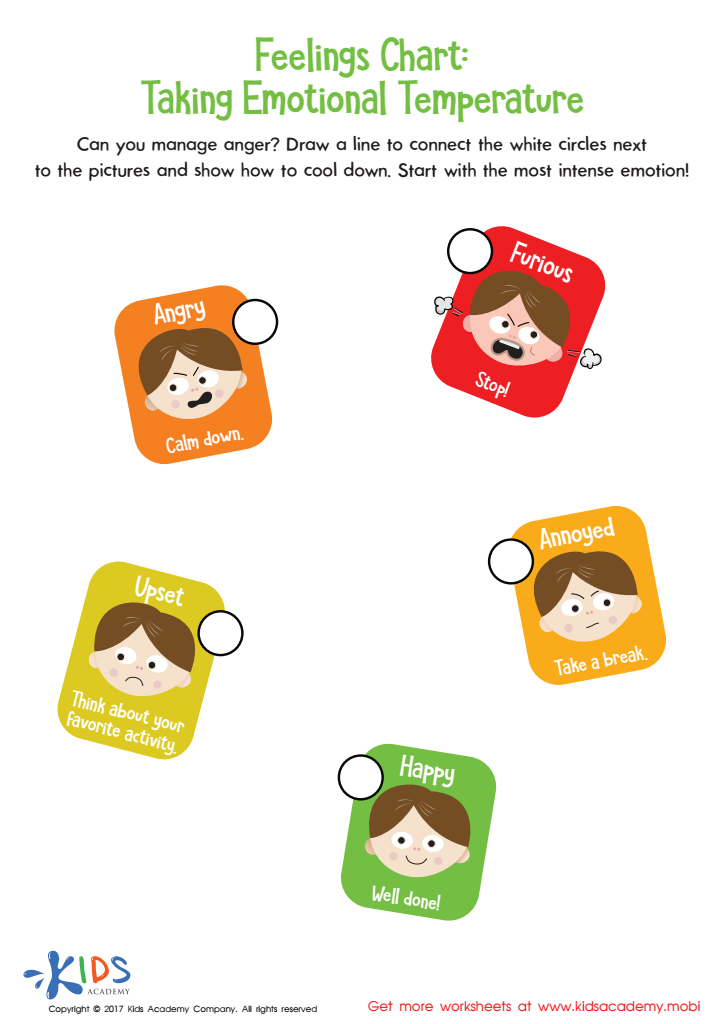
Feelings Chart Worksheet
Anger can be tricky to manage, so help your child learn techniques for coping. Use this feelings chart worksheet which leads them through identifying the most intense face and connecting the dots to help them calm down.
 Assign to My Students
Feelings Chart Worksheet
Worksheet
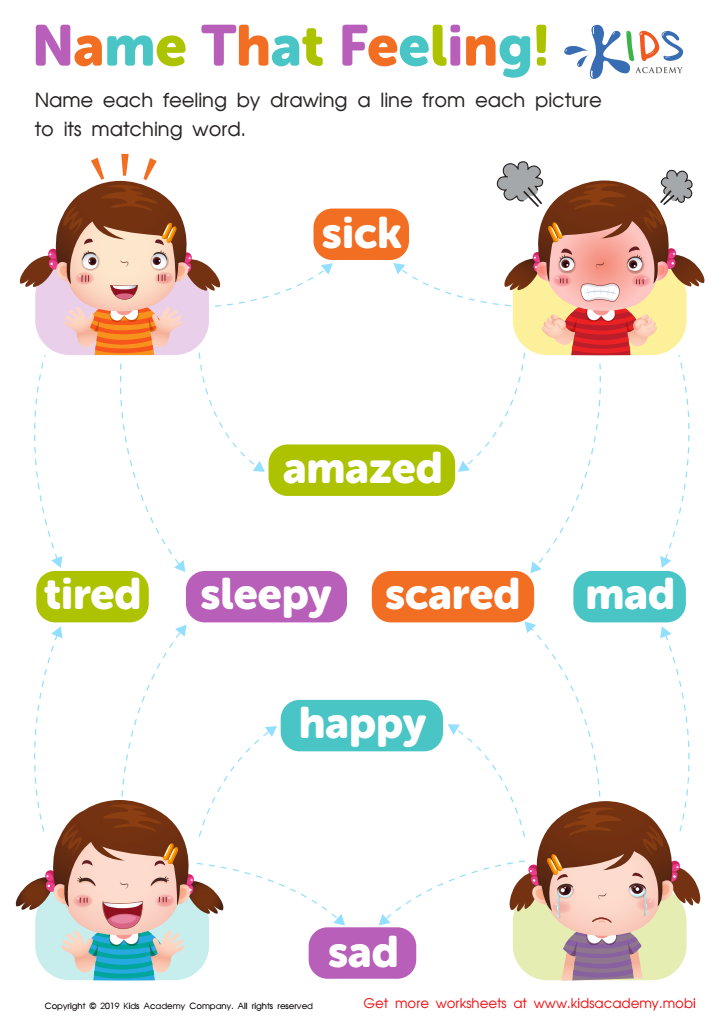
Name that Feeling Worksheet
Fostering your child's emotional intelligence is essential for their development. This worksheet helps them associate feelings with words, improving their social skills and fine motor coordination. They'll trace pictures and words to learn the feeling vocabulary.
Name that Feeling Worksheet
Worksheet
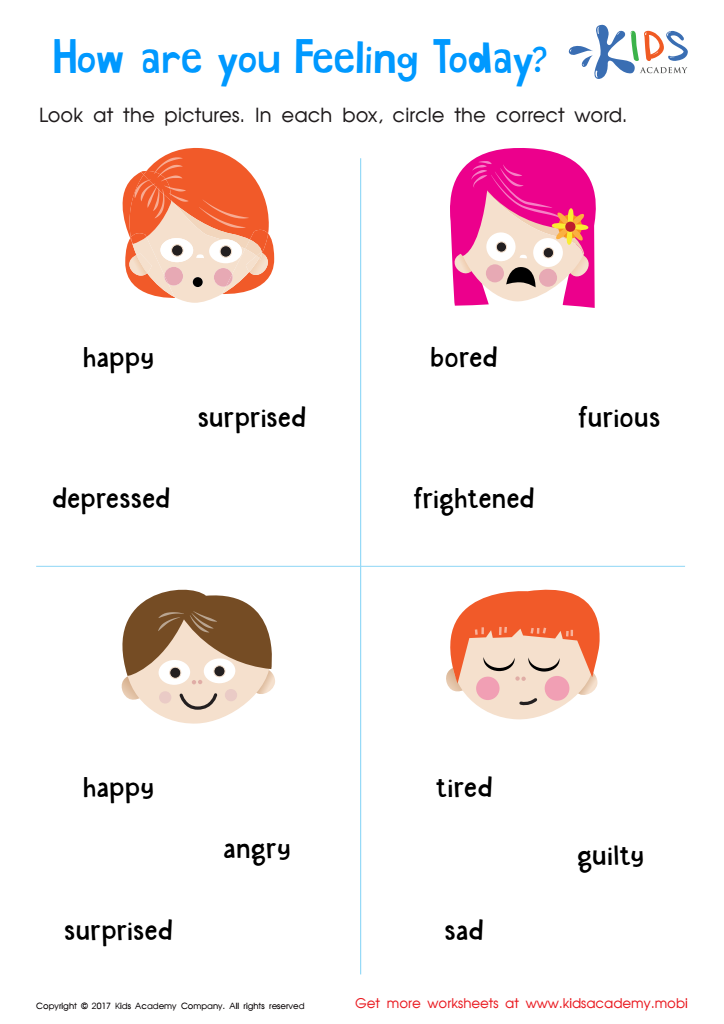
Understanding Feelings Worksheet
It helps them learn to empathize with others and regulate their own emotions. Try it today!
Develop your child's understanding of empathy and emotional regulation with this worksheet! It is a great way to help them acquire important life skills beyond academic knowledge. Print it and start using it to take their social and emotional skills to the next level. Try it now!
Understanding Feelings Worksheet
Worksheet
Join Kids Academy for Free
Who is primarily going to use this learning content?







Emotional identification is a crucial component of early childhood development, and it's essential for both parents and teachers to understand the benefits of introducing an Emotional Identification Extra Challenge for children ages 3-6. During these formative years, children are learning to navigate their emotions, which directly influences their social skills, behavior, and academic success. By providing structured opportunities to identify and discuss emotions, we help them build a strong emotional vocabulary. This skill allows children to express their feelings more accurately and maturely, reducing instances of frustration and inappropriate behavior.
Furthermore, early emotional identification enhances empathy. When children are capable of recognizing their own emotions and those of others, they are more likely to exhibit compassionate behaviors and build healthy, lasting relationships. For teachers, fostering emotional understanding in the classroom creates a positive learning environment where all students feel heard and supported.
Parents benefit significantly as well; understanding and communicating about emotions at home strengthens the parent-child bond, promotes open dialogue, and prepares children to deal with complex emotions as they grow. Investing time in these early lessons pays dividends, setting a strong foundation for emotional resilience and mental well-being throughout a child’s life.








