
Handwriting improvement Extra Challenge Worksheets for Ages 3-6
3 filtered results
Difficulty Level
Grade
Age
-
From - To
Subject
Activity
Standards
Discover the perfect tool to boost your child's writing journey with our Handwriting Improvement Extra Challenge Worksheets for Ages 3-6. These expertly designed printable sheets focus on enhancing fine motor skills, letter formation, and overall penmanship. Engaging and age-appropriate, each activity is crafted to aid in muscle memory development and hand-eye coordination, laying a strong foundation for your child's academic success. Ideal for preschool and kindergarten learners, these worksheets add a fun yet educational twist to handwriting practice, ensuring that little hands are well-prepared for future writing endeavors. Try them today and see the improvement!
Favorites
With answer key
Interactive
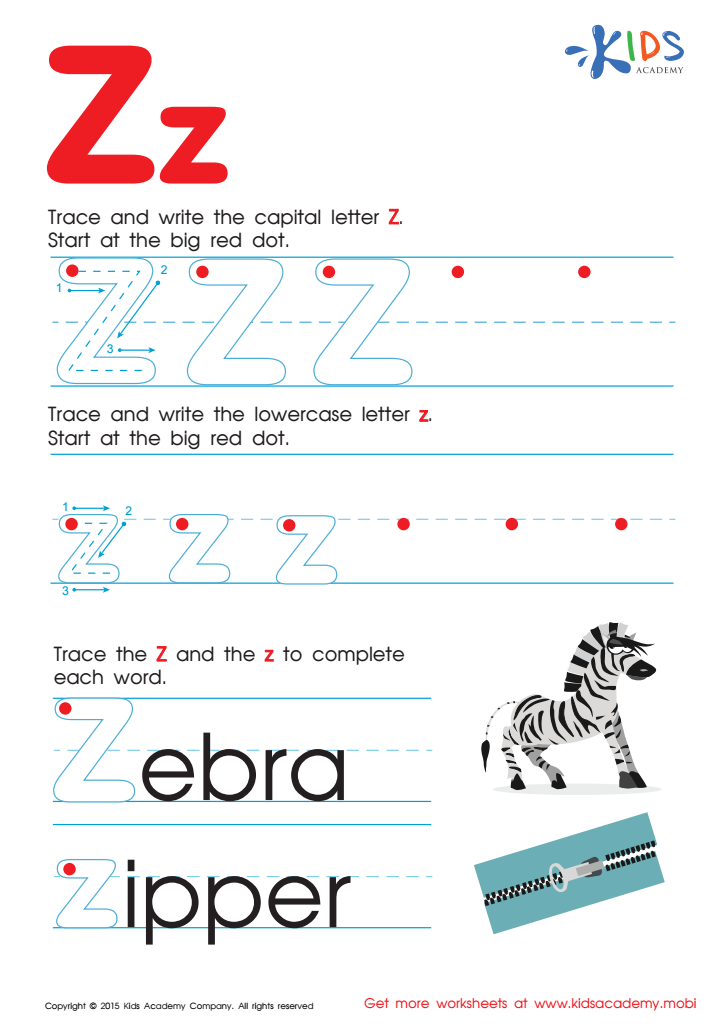
Letter Z Tracing Page
Trace and write capital "Z" and lowercase "z". Complete words "zebra" and "zipper". Be attentive and have fun! (80 words)
 Assign to My Students
Letter Z Tracing Page
Worksheet
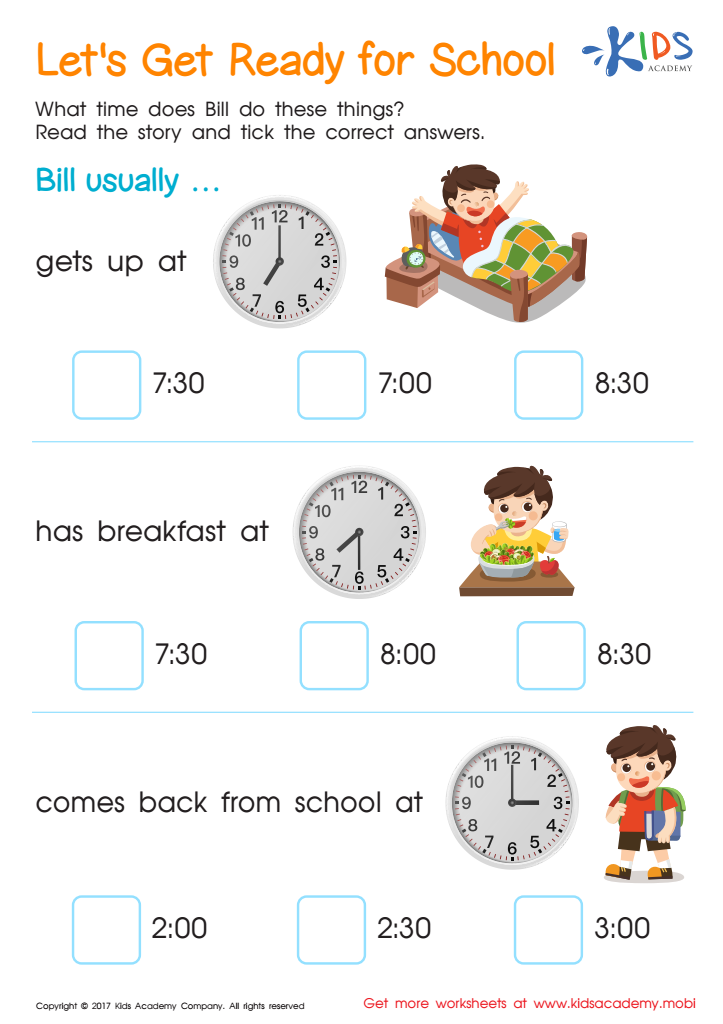
Lets Get Ready For School Time Printable
Believe it or not, kids today are struggling with reading traditional clocks. This vital skill shouldn't be lost, so why not try this fun telling time worksheet to get ready for school? Don't miss out!
Lets Get Ready For School Time Printable
Worksheet
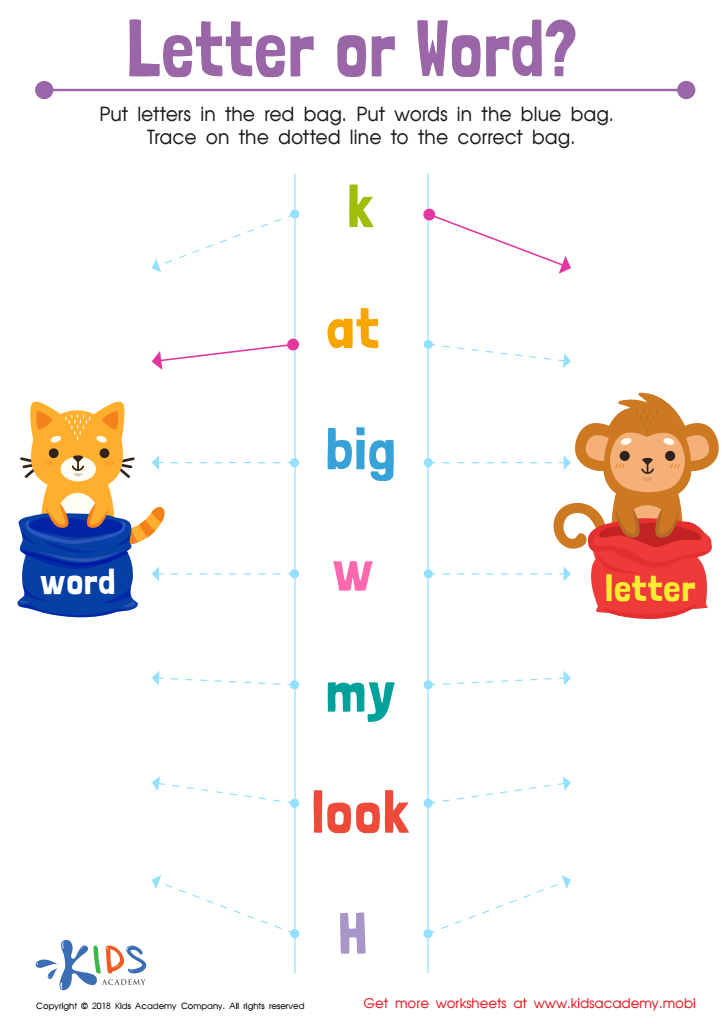
Letter or Word? Worksheet
Help your kids differentiate between words and letters. If they can recite their alphabets and identify common words, this tracing sheet will be a breeze. Have them trace on the dotted lines to place the letters in the red bag with the kitten, and the words in the blue bag with the monkey.
Letter or Word? Worksheet
Worksheet
Join Kids Academy for Free
Who is primarily going to use this learning content?







Handwriting improvement in early childhood, encompassing ages 3-6, holds a vital role in a child's development, making it a crucial area for both parents and teachers to emphasize. During these formative years, children's fine motor skills are rapidly evolving. Enhancing handwriting capabilities augments these fine motor skills, facilitating more adept and precise hand movements. Additionally, as children learn to write, they reap cognitive benefits. The act of forming letters and words nurtures memory retention, attention to detail, and comprehension abilities.
Early intervention in handwriting aids in establishing correct posture, pencil grip, and the foundational strokes necessary for efficient writing. This foundational skill manuscript carries with it an elasticity that spurs creativity and self-expression. Within an academic context, proficient handwriting ensures that children can neatly present their work, bolstering academic performance and fostering a sense of accomplishment. Moreover, by integrating handwriting improvement challenges, parents and teachers nurture patience and persistence—integral life skills.
Consider also the emotional bond that can be forged through spending focused time together on handwriting activities. Positive reinforcement from parents and teachers strengthens self-esteem and encourages a love for learning. Therefore, investing time in handwriting improvement for young children doesn't solely build writing aptitude but contributes to comprehensive developmental and educational success.








