Mental math skills Extra Challenge Addition & Subtraction Worksheets for Ages 3-6
3 filtered results
Difficulty Level
Grade
Age
-
From - To
Subject
Activity
Standards
Boost your child's math prowess with our "Mental Math Skills Extra Challenge Addition & Subtraction Worksheets" designed for ages 3-6! These engaging and educational printables from Kids Academy enhance early math comprehension by focusing on developing quick-thinking mental arithmetic abilities. Tailored to challenge young minds, these worksheets combine fun illustrations with practical problems, creating an enjoyable learning experience. Perfect for preschoolers and kindergarten students, our resources provide essential practice in addition and subtraction, laying a solid foundation for future math success. Simplify learning and help your child build confidence in their math skills with our expertly crafted challenges!
Favorites
With answer key
Interactive
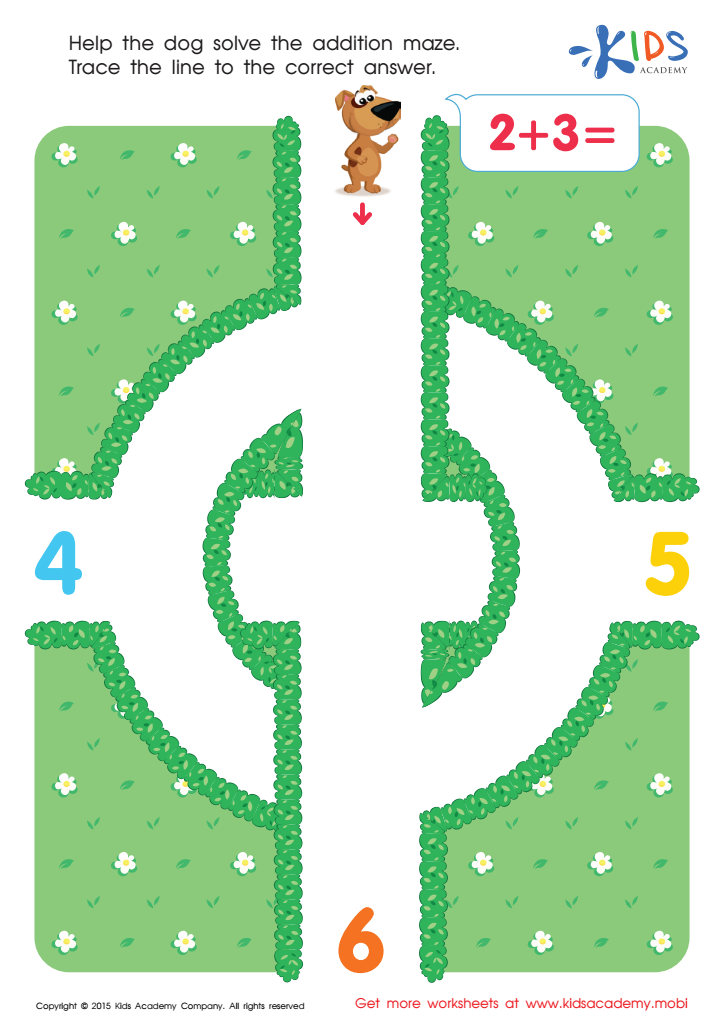
Two And Three Addition Worksheet
Give your children the task and let them find the path to the right answer while they make their way through the maze, and don't forget to let them trace the path.
 Assign to My Students
Two And Three Addition Worksheet
Worksheet
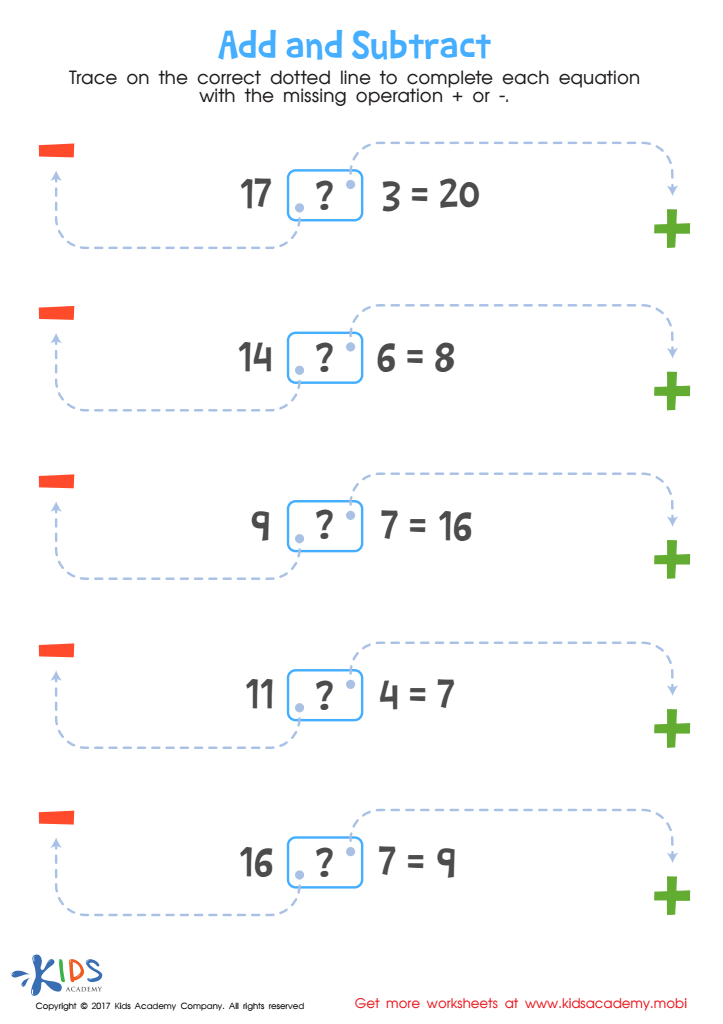
Add and Subtract Worksheet
Introduce your child to equations and advanced math concepts with this worksheet - designed to help them learn add and subtract up to 20. This logical reasoning exercise will help them gain a better understanding of math, preparing them for future success. Start early and watch them excel!
Add and Subtract Worksheet
Worksheet
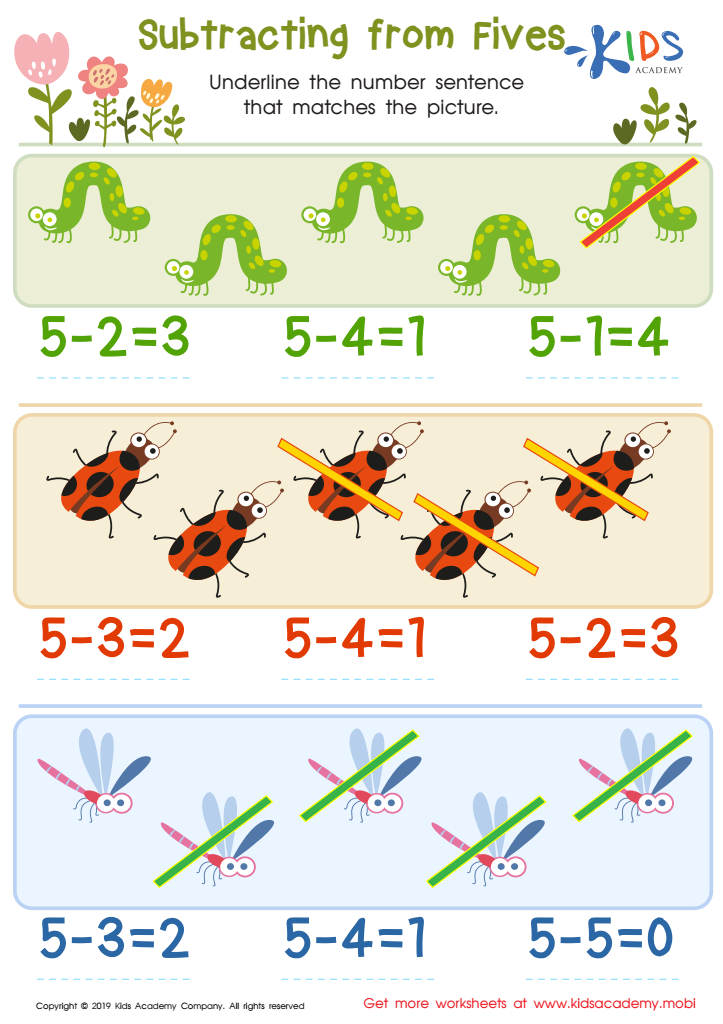
Subtracting From Fives Worksheet
Help your kids practice subtraction with this fun worksheet! Have them identify the insects, then solve the equations and find the matching number sentence. It's a great way to give them an edge in math and enjoy doing it!
Subtracting From Fives Worksheet
Worksheet
Join Kids Academy for Free
Who is primarily going to use this learning content?








Mental math skills, particularly in addition and subtraction, are cornerstones of cognitive development for children aged 3-6. Parents and teachers should prioritize these skills for several reasons. Firstly, mental math fosters numerical literacy, helping young learners grasp foundational arithmetic concepts that are essential for advanced mathematical reasoning. Early proficiency in mental addition and subtraction contributes to smoother transitions to more complex math operations in later grades.
Moreover, mental math strengthens working memory and improves concentration. By engaging in these mental exercises, children enhance their cognitive flexibility and problem-solving abilities. This practice also fosters a sense of achievement and confidence, as children see improvement and understand their capabilities, which is crucial for their overall academic self-esteem.
Teaching mental math in an engaging, game-like manner can additionally lay the groundwork for a positive relationship with learning and education. Involving children in fun mental math challenges not only keeps them intellectually stimulated but also makes math seem less daunting and more enjoyable.
Overall, nurturing mental math skills from a young age sets the stage for lifelong learning and problem-solving abilities, making it a vital educational focus for parents and teachers who aim to support their children’s intellectual and emotional development.