Color recognition Extra Challenge Math Worksheets for Ages 3-6
4 filtered results
-
From - To
Enhance your child's learning with our engaging Color Recognition Extra Challenge Math Worksheets for ages 3-6. Designed to boost cognitive skills, these printable worksheets blend fun and education seamlessly. Kids will embark on a colorful journey, solving puzzles and math problems that not only strengthen their color recognition but also sharpen counting, sorting, and critical thinking skills. With a variety of challenging activities, each worksheet ensures that young learners stay excited and confident in their abilities. Perfect for home or classroom use, these resources empower children to master important foundational skills in a playful, interactive way.
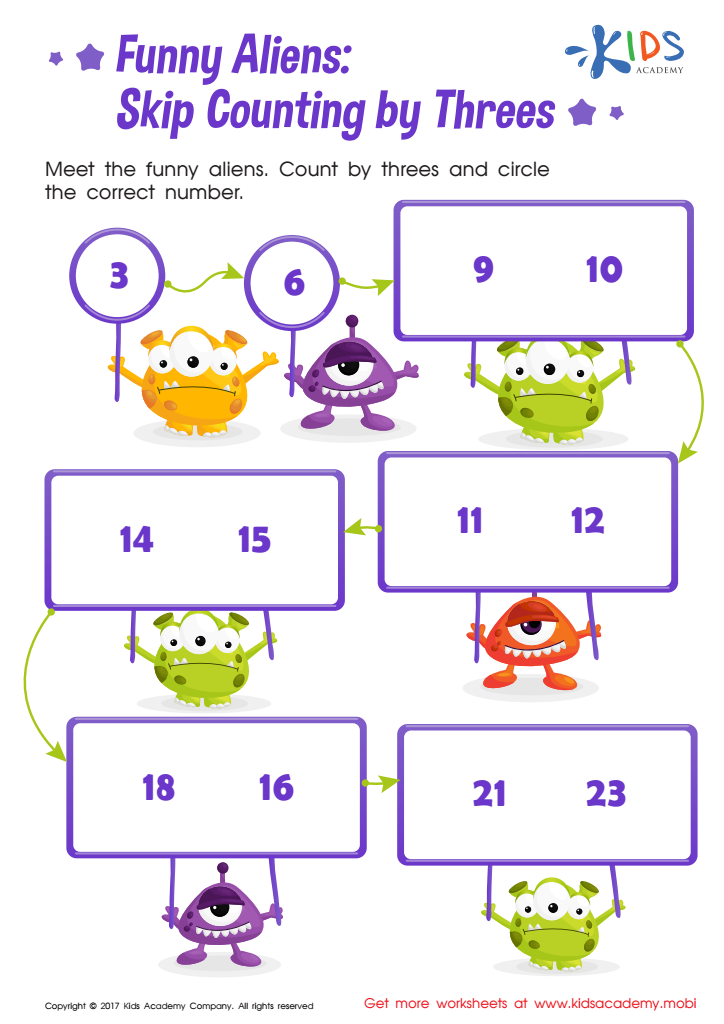
Skip Counting by 3s: Funny Aliens Printable
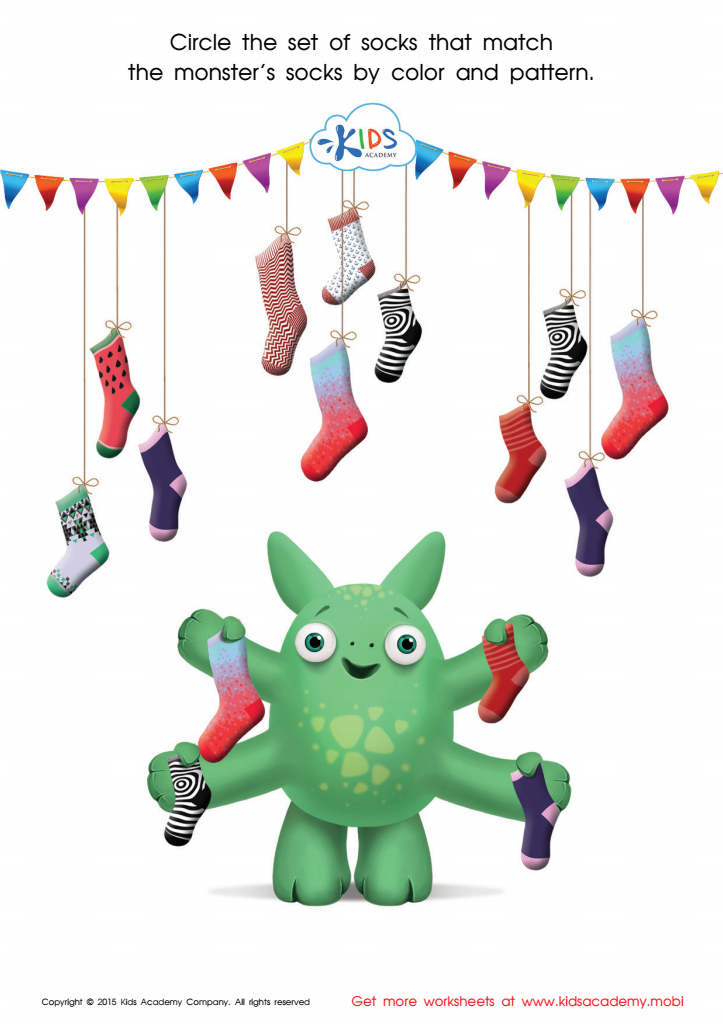
Sort the Monster's Socks Worksheet
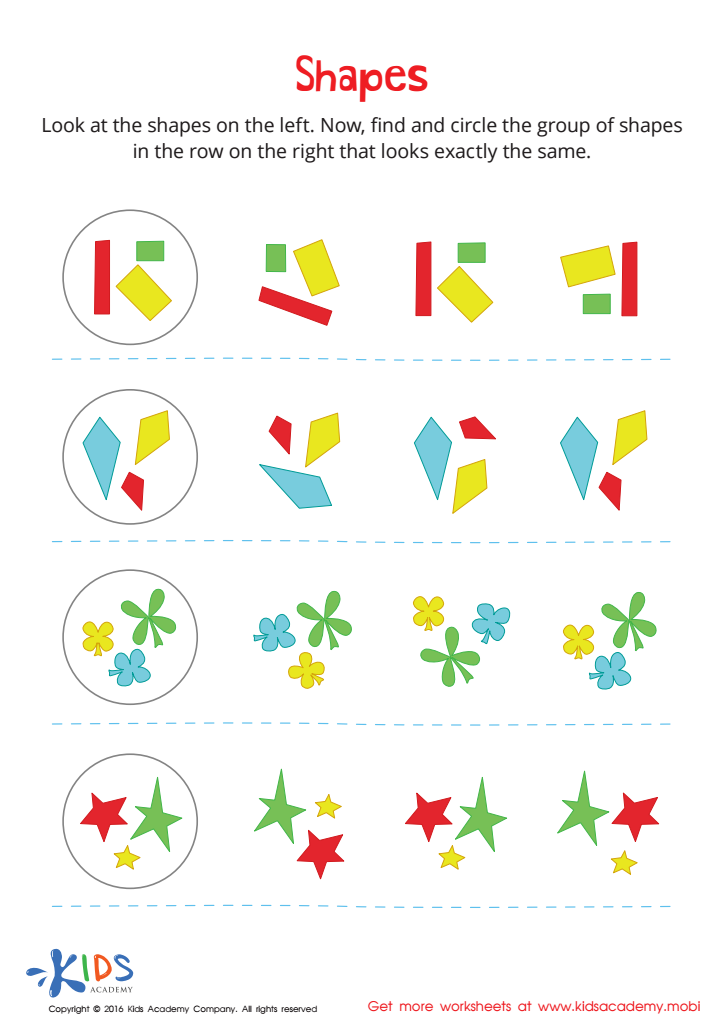
Shapes Worksheet
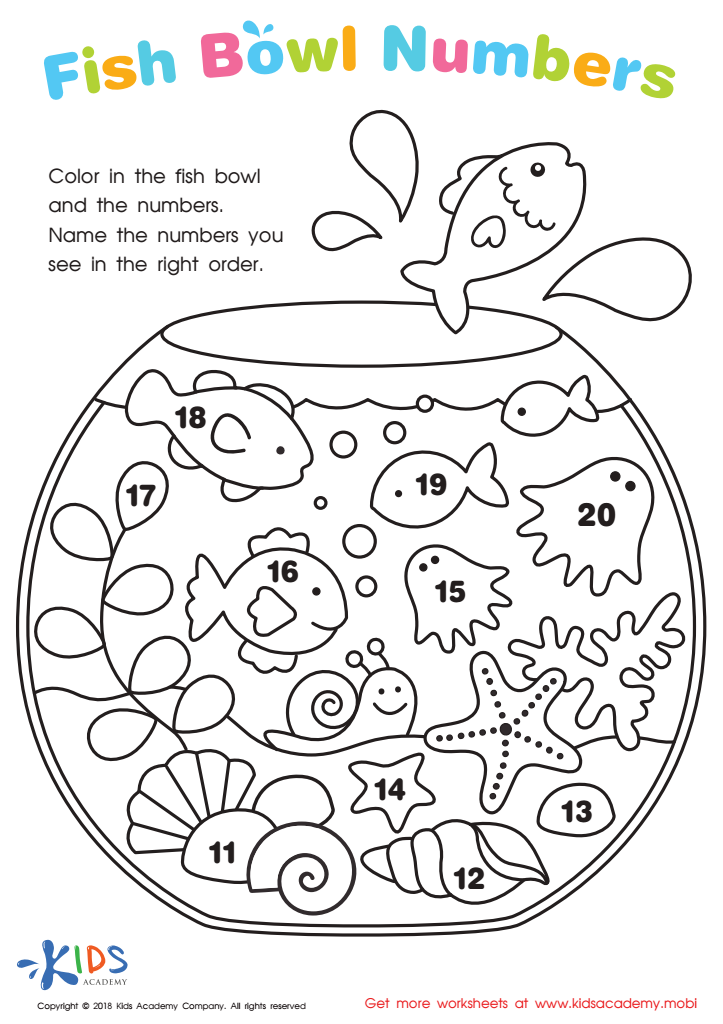
Fish Bowl Numbers Worksheet
 Assign to My Students





.jpg)


Color recognition and extra challenge math activities for young children, ages 3-6, are crucial for several developmental reasons. Firstly, learning to identify and differentiate colors helps enhance cognitive abilities. It sharpens memory and reasoning skills as children begin to associate colors with objects and patterns in their environment. This familiarity aids in establishing the foundational skills for observation and analysis, which are vital in later academic pursuits.
Secondly, integrating color recognition into math challenges instills an early appreciation for problem-solving. Using colors to sort, count, and perform simple arithmetic tasks makes abstract concepts more tangible and relatable. These activities promote numerical fluency and the ability to discern relationships and patterns, strengthening a child's mathematical foundation.
Thirdly, such exercises cater to diverse learning styles. For visual learners, color recognition is a natural way to engage with content, while kinesthetic learners benefit from handling colorful objects during hands-on activities. This multi-sensory approach ensures that various types of learners are reached effectively, promoting inclusivity.
Lastly, enjoying these activities cultivates a positive attitude towards learning. When parents and teachers prioritize and celebrate these skill-building exercises, they encourage curiosity and a love for knowledge, creating a strong basis for lifelong learning.