Extra Challenge Rhyming Words Worksheets for Ages 3-6
6 filtered results
-
From - To
Discover our "Extra Challenge Rhyming Words Worksheets" designed for children aged 3-6! These engaging activities foster early literacy skills while making learning fun. Each worksheet encourages young learners to identify and match rhyming words, enhancing their phonemic awareness and vocabulary development. Perfect for parents and educators, these printables support individualized learning and can be easily incorporated into lesson plans or used for at-home practice. With colorful illustrations and thoughtfully crafted exercises, children will enjoy exploring the world of rhyme. Plus, our worksheets are printable for convenience! Spark your child's love for reading with these exciting rhyming challenges today!
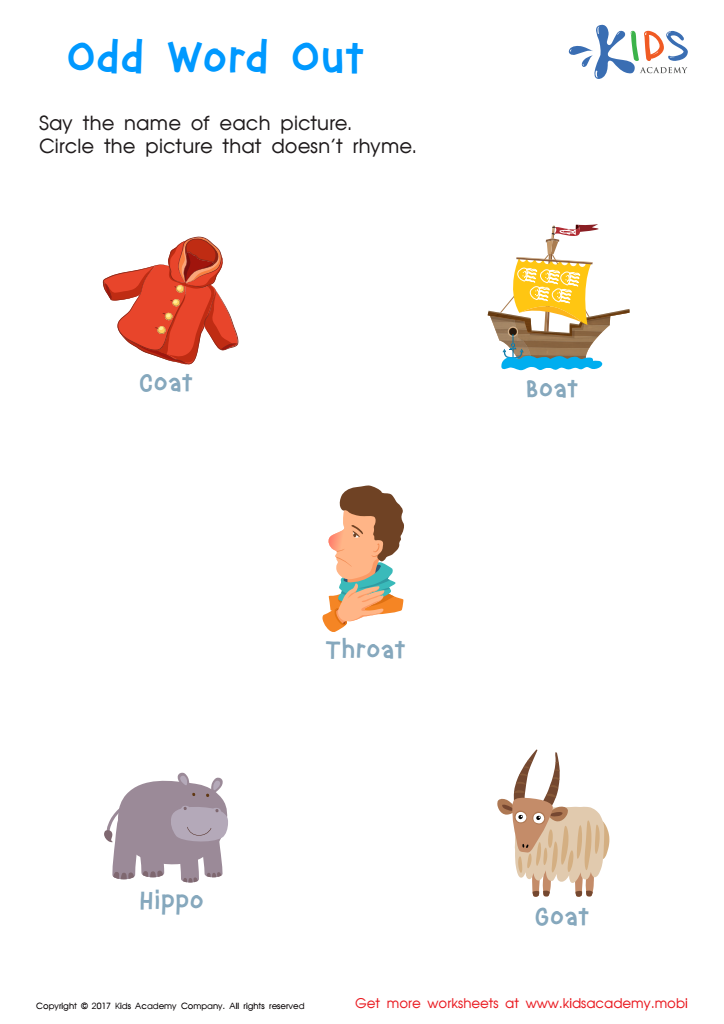
Odd Word Out Rhyming Worksheet
 Assign to My Students
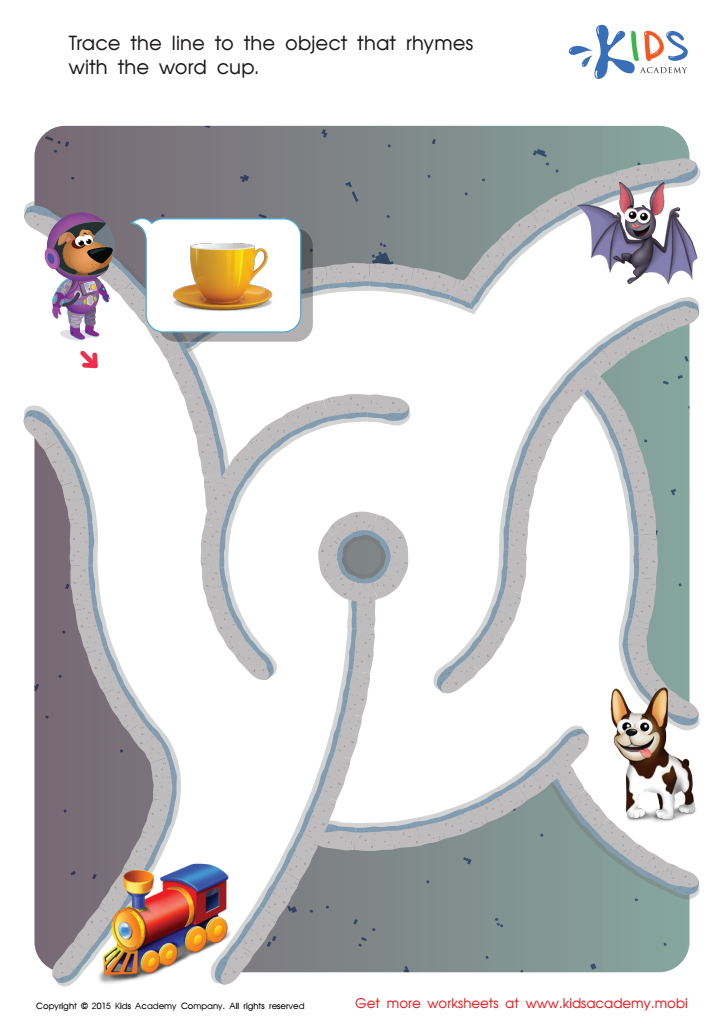
Cup Rhyming Words Worksheet
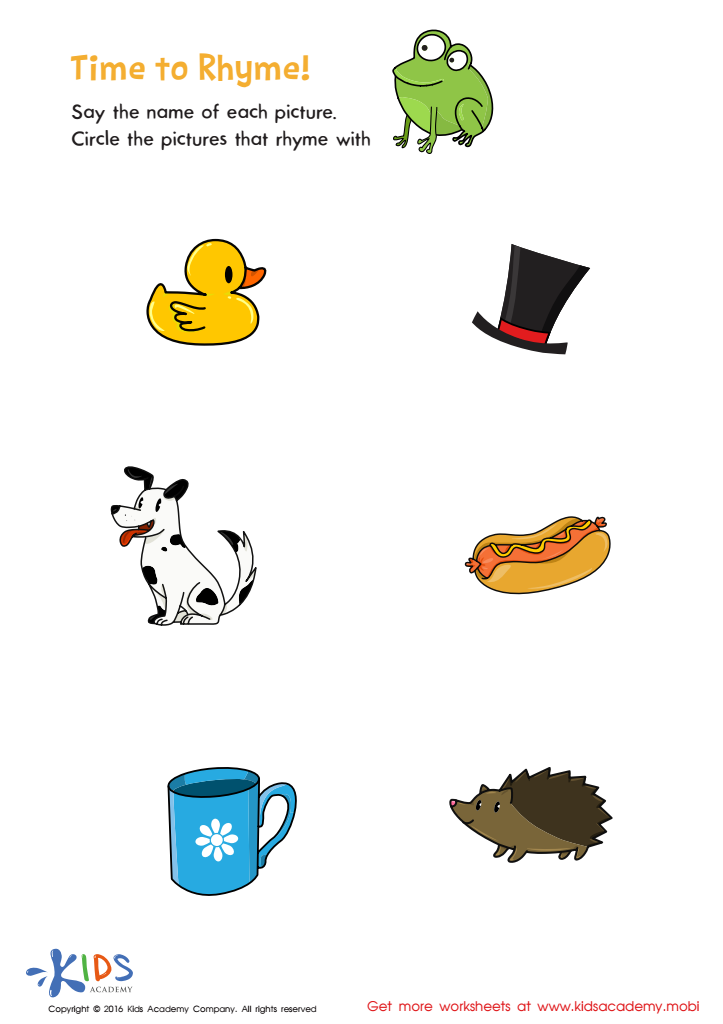
Rhyming Worksheet: Time to Rhyme Rhyming Worksheet
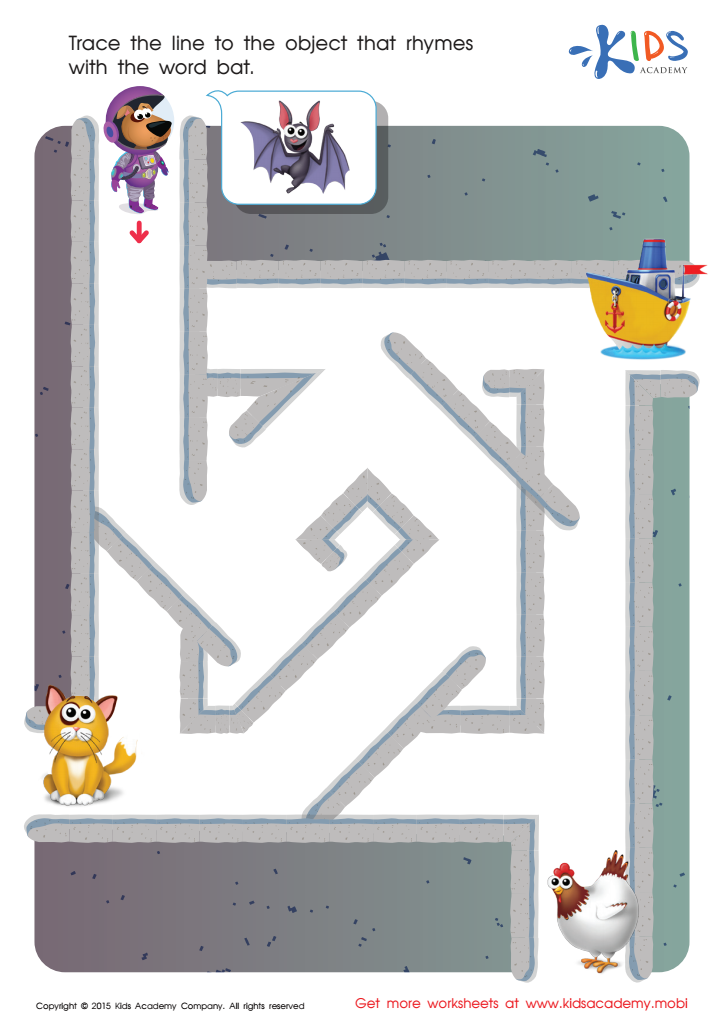
Bat Rhyming Words Worksheet
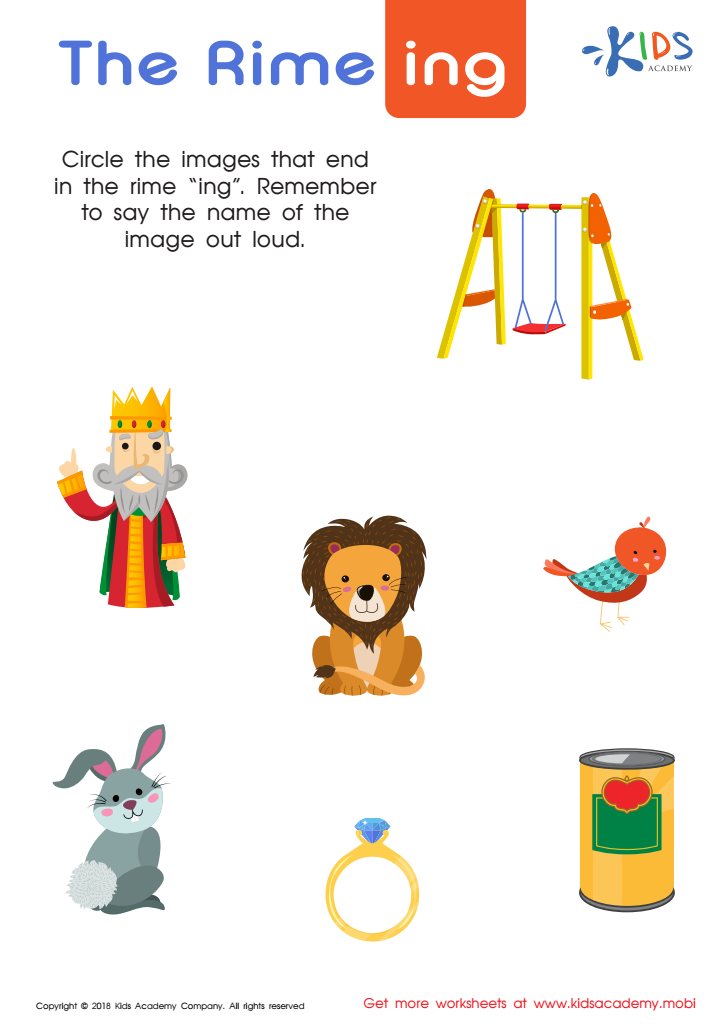
The Rime "ing" Worksheet
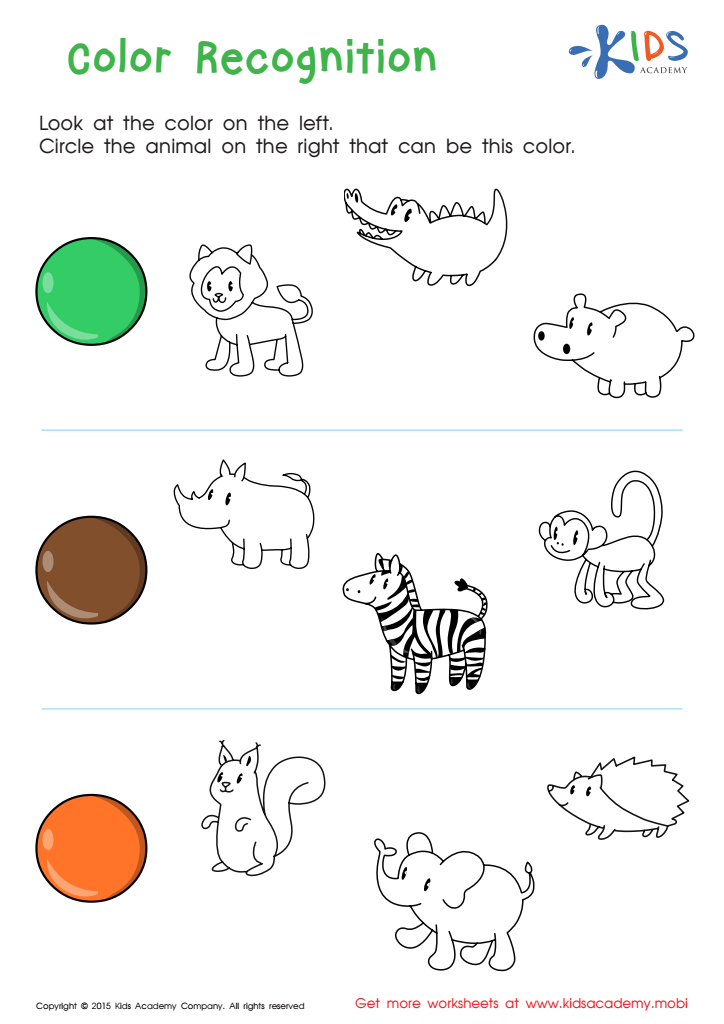
First Words: Color Recognition Worksheet






.jpg)

Extra Challenge Rhyming Words for ages 3-6 is essential for fostering early literacy skills and language development. Rhyming enhances phonemic awareness, allowing young children to recognize and manipulate sounds in words, a critical foundation for later reading success. When parents and teachers engage children in rhyming activities, they stimulate cognitive development, making learning both fun and effective.
Rhyming helps children develop vocabulary by exposing them to new words in a playful context. This not only improves language acquisition but also promotes creativity as children experiment with wordplay. Furthermore, it enhances listening skills, as children must be attentive to sound patterns and structure.
Engaging in rhyming activities also has social and emotional benefits. Sharing fun rhyming games or books creates bonding moments between adults and children, fostering positive attitudes toward learning. It encourages collaboration, turn-taking, and communication among peers.
Incorporating Extra Challenge Rhyming Words into learning routines can spark curiosity and motivate children to explore language further. Consequently, prioritizing rhyming from ages 3-6 sets the stage for strong reading and language skills that contribute to a child's overall school success. Parents and teachers have a pivotal role in nurturing these essential skills early on.