Logical thinking Extra Challenge Writing Worksheets for Ages 3-6
3 filtered results
Difficulty Level
Grade
Age
-
From - To
Subject
Activity
Standards
Unlock your child's potential with our Logical Thinking Extra Challenge Writing Worksheets designed for ages 3-6! These engaging worksheets provide young learners with stimulating activities that promote critical thinking and problem-solving skills. Each exercise is crafted to enhance logical reasoning while developing early writing abilities. Through fun and interactive tasks, children will navigate puzzles and scenarios that encourage creativity and analysis. Perfect for preschool and kindergarten, these worksheets can be used as supplementary material at home or in the classroom, fostering a love for learning. Get started today and watch your little ones thrive as they build important cognitive skills!
Favorites
With answer key
Interactive
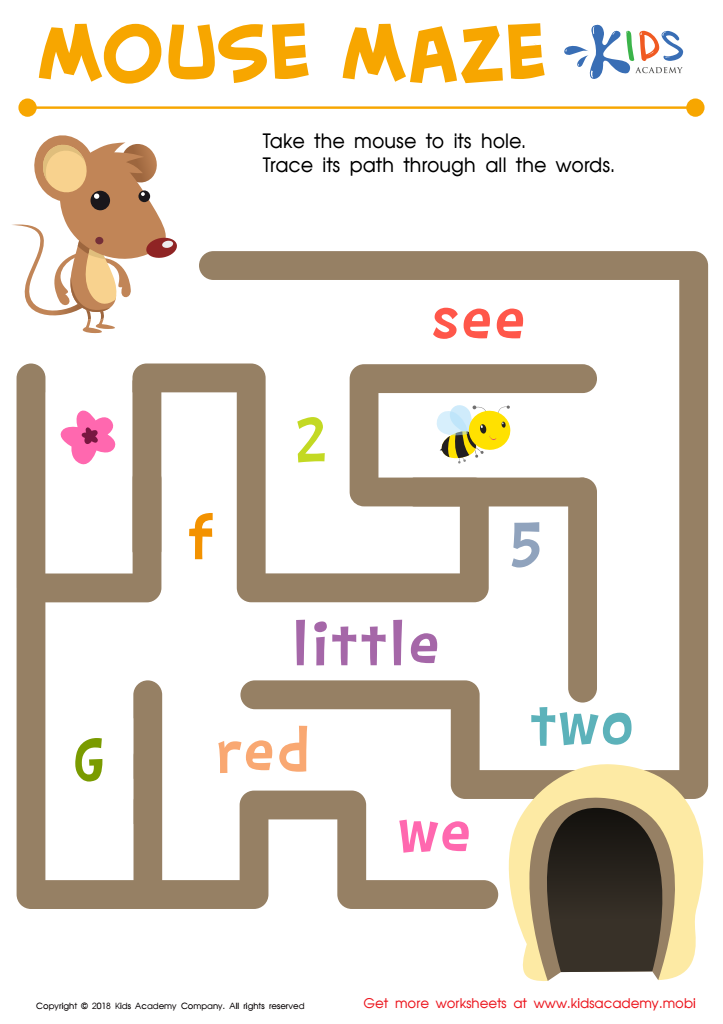
Find Words Mouse Maze Worksheet
Help your child identify words and guide the mouse home! Ask them to point out the colorful animal on the worksheet, then take their hand and show them how to trace the path, going through all the words in the maze to get the mouse back to its hole.
 Assign to My Students
Find Words Mouse Maze Worksheet
Worksheet
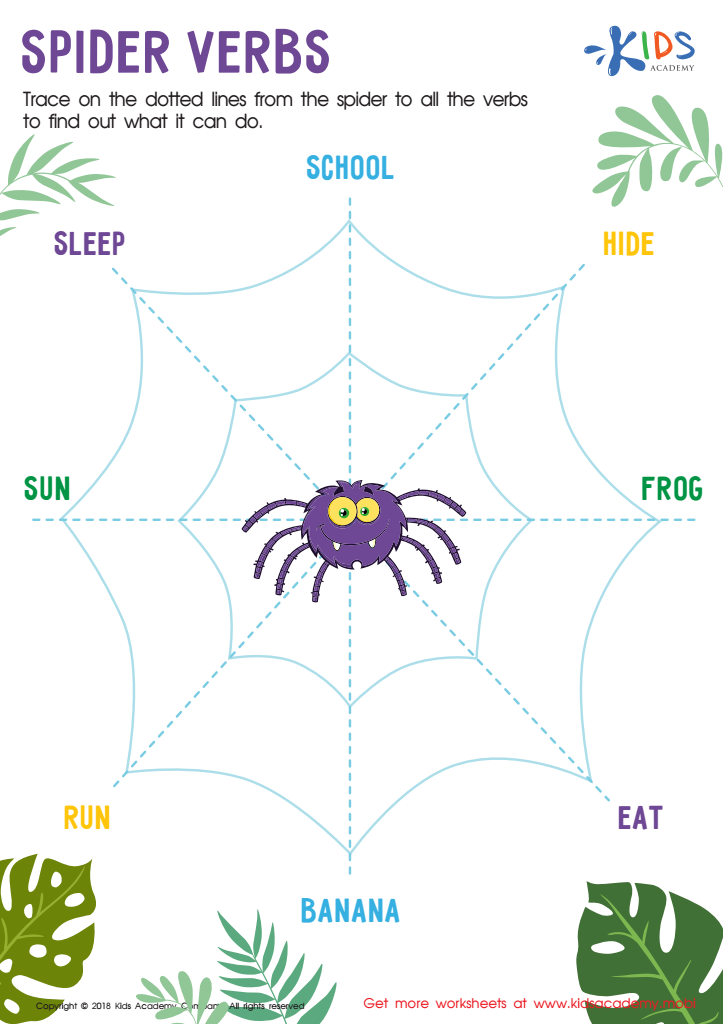
Spider Verbs Worksheet
Verbs are action words. Examples: run, play, talk. Show your child this tracing sheet for them to learn about verbs. Ask them to trace the dotted lines from the spider to the words that are verbs. These words are what the spider can do.
Spider Verbs Worksheet
Worksheet
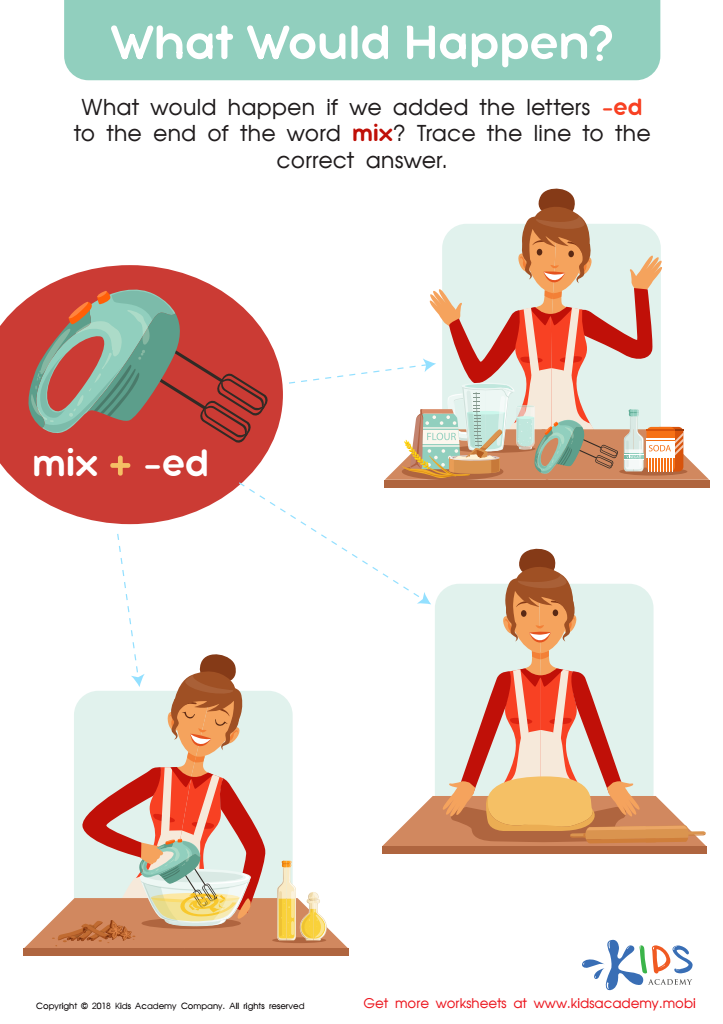
What Would Happen? Worksheet
Are your kids struggling with tenses? Use this worksheet to help them. See what they know by asking them to add '-ed' to the end of 'mix'. Guide them through the tracing sheet as they look for the correct answer.
What Would Happen? Worksheet
Worksheet
Join Kids Academy for Free
Who is primarily going to use this learning content?







Logical thinking is a cornerstone of early cognitive development and is crucial for a child's academic and personal growth. Engaging in logical thinking activities helps children aged 3-6 improve their problem-solving skills, reasoning abilities, and mathematical understanding. When parents and teachers encourage extra challenge writing, they provide children with opportunities to express ideas coherently, sequence thoughts, and draw connections between concepts, enhancing their critical thinking.
Logical thinking activities, such as storytelling or structured play, stimulate a child’s imagination while reinforcing the skills needed to analyze information and make decisions. Through extra challenge writing, children learn to articulate their thoughts, promoting language development and literacy, which are fundamental at this stage.
Moreover, these challenges build resilience as children learn to navigate complexities and thrive on overcoming hurdles. When adults prioritize and facilitate logical thinking exercises, they nurture a mindset of inquiry and exploration, encouraging a lifelong love of learning. Ultimately, fostering logical thinking from an early age equips children with the necessary tools for future academic success and everyday problem solving. By recognizing the value of these activities, parents and teachers play a vital role in shaping thoughtful, effective learners.