Fine Motor Skills Extra Challenge Tracing Letters Worksheets for Ages 3-7
7 filtered results
-
From - To
Discover our engaging "Fine Motor Skills Extra Challenge Tracing Letters Worksheets" designed for children aged 3-7. These worksheets provide an exciting way for young learners to enhance their fine motor skills while mastering the alphabet. Featuring various tracing activities, children will improve their hand-eye coordination, grip strength, and writing precision as they trace and color vibrant letter designs. Ideal for home or classroom settings, these worksheets not only make learning fun but also foster essential pre-writing skills. Give your child the tools they need for a successful start in reading and writing with our thoughtfully crafted tracing challenges.
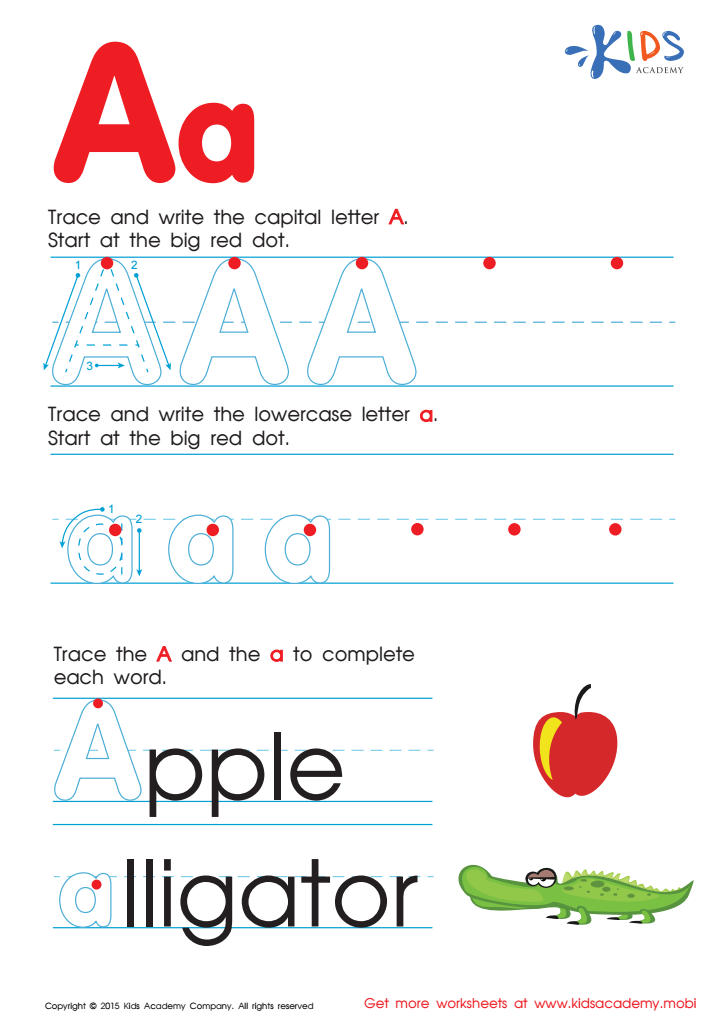
Letter A Tracing Page
 Assign to My Students
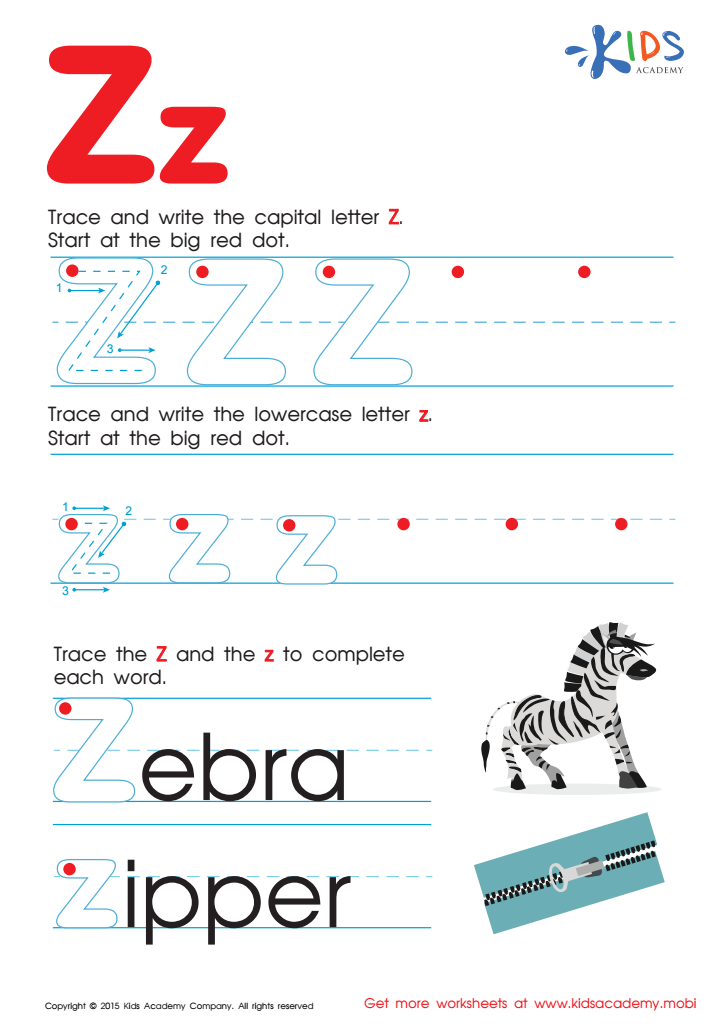
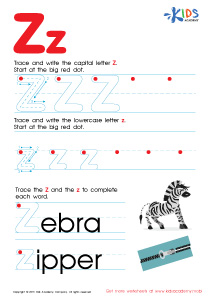
Letter Z Tracing Page
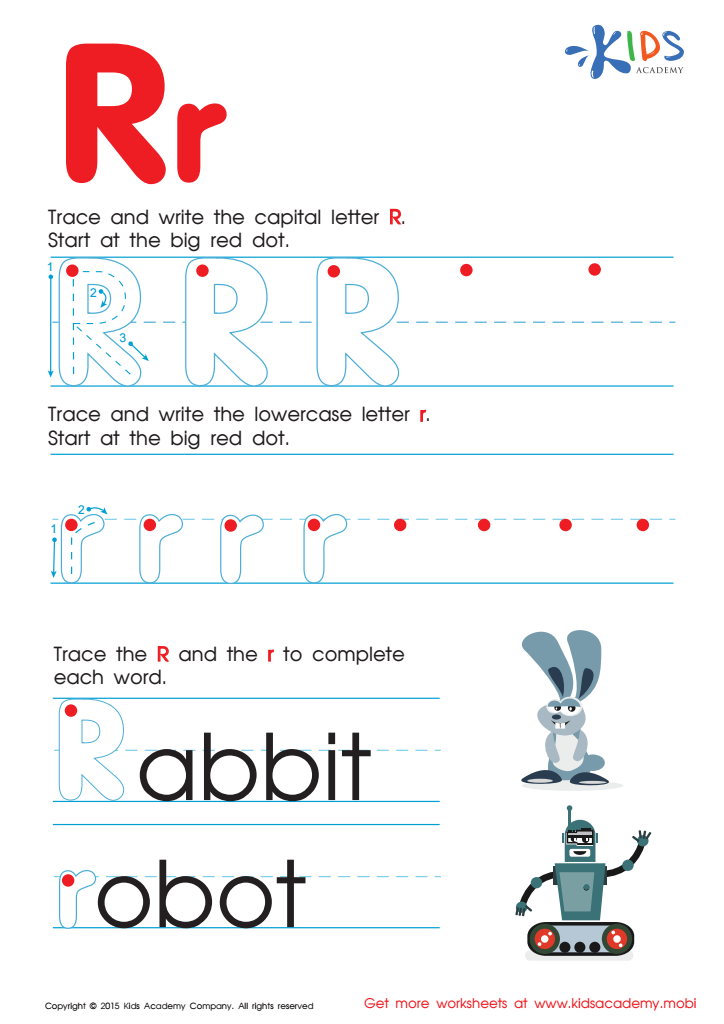
Letter R Tracing Page
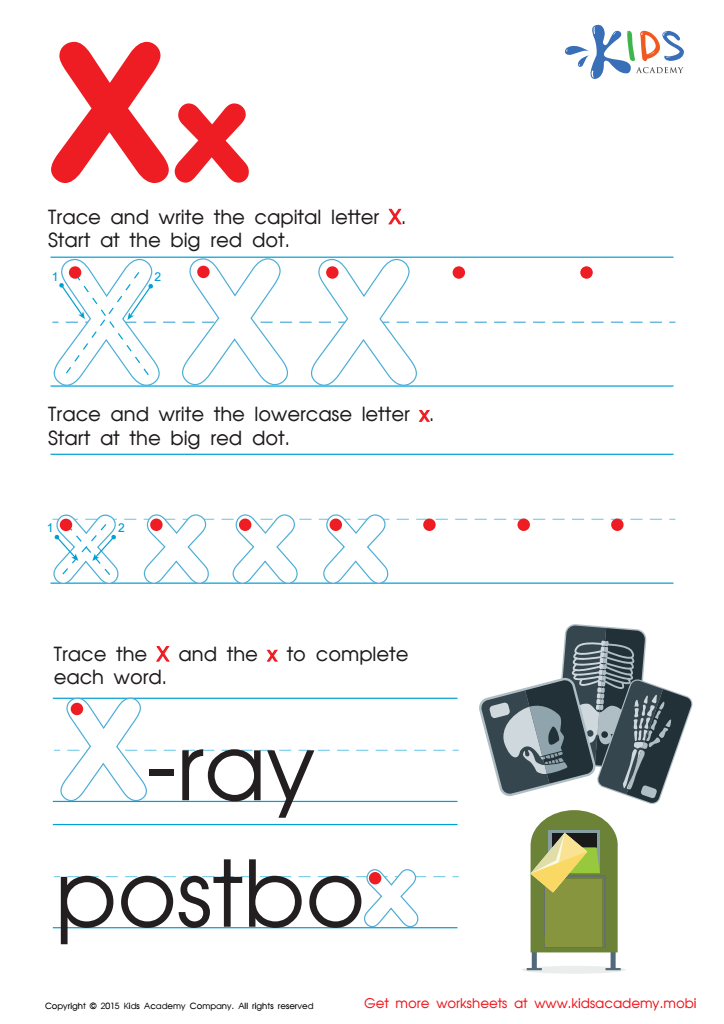
Letter X Tracing Page
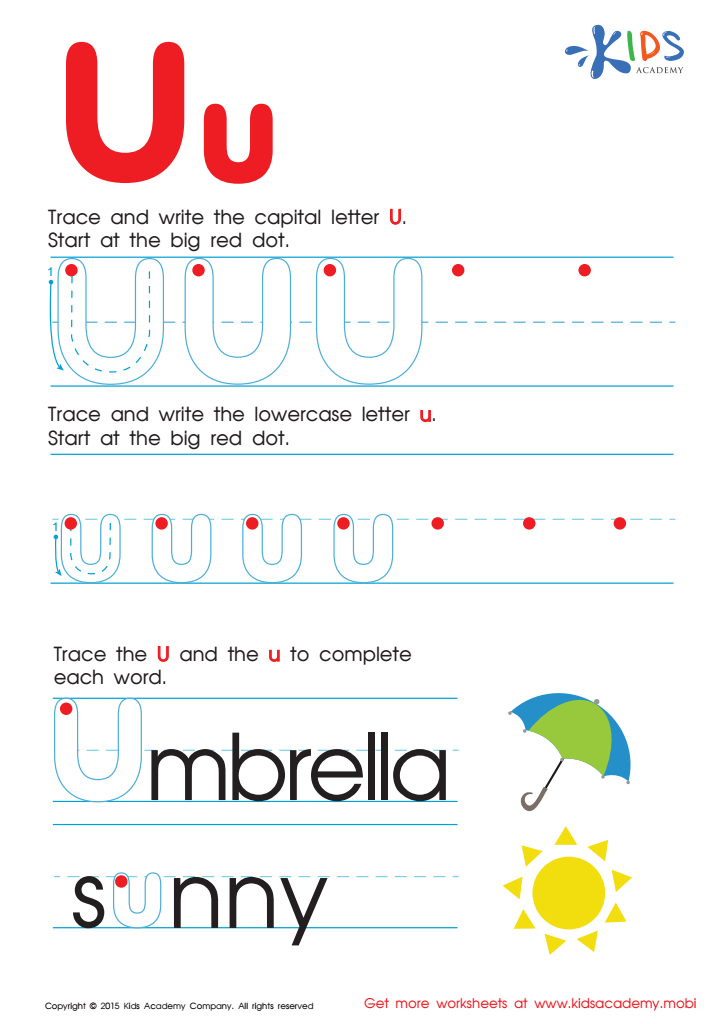
Letter U Tracing Page
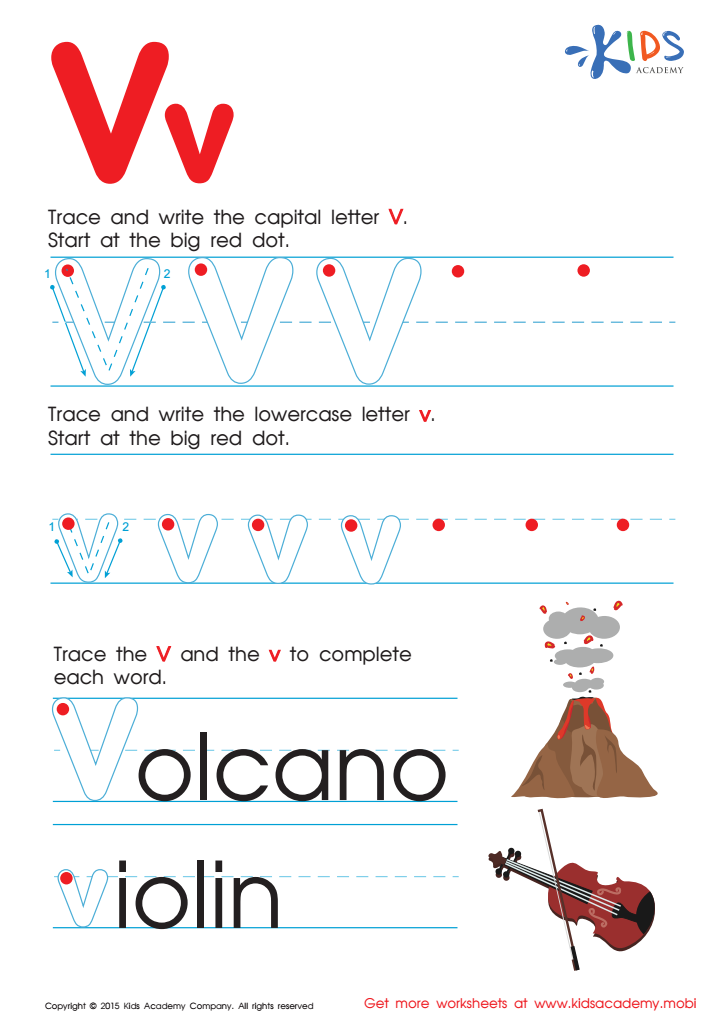
Letter V Tracing Page
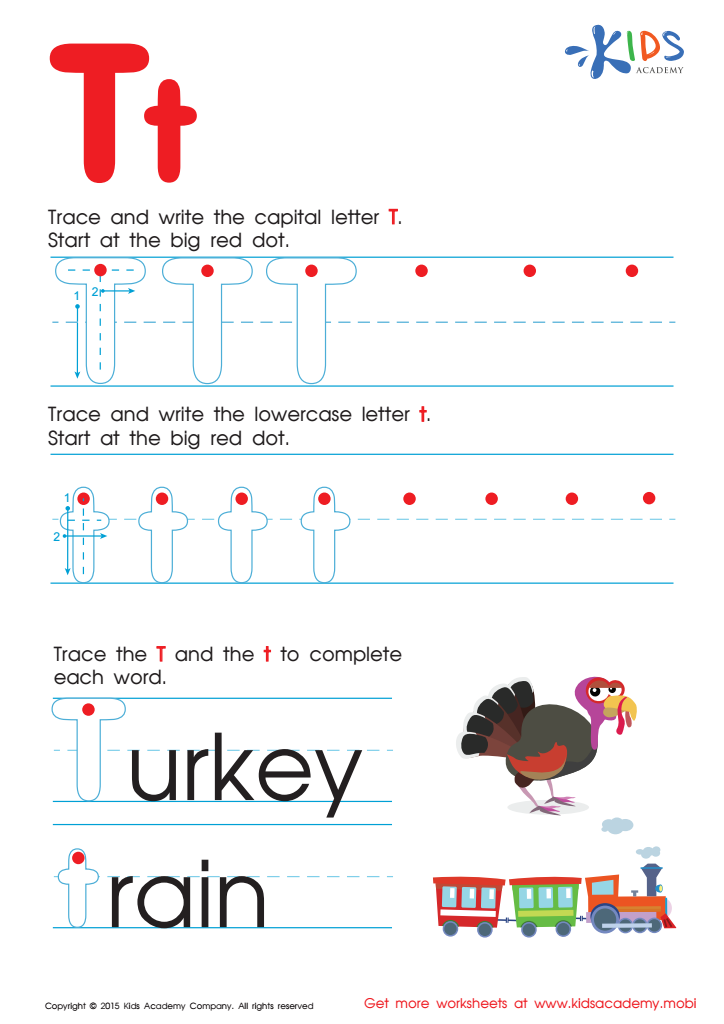
Letter T Tracing Page








Fine motor skills are crucial for young children, as they form the foundation for many everyday tasks and overall cognitive development. Engaging in activities like tracing letters not only supports the enhancement of these skills but also fosters literacy in a fun and interactive way. For parents and teachers, this educational strategy has numerous benefits.
Firstly, tracing letters requires children to use their fingers and hands with precision. This promotes coordination, dexterity, and muscle strength, essential for tasks like writing, buttoning clothes, or using scissors. Secondly, when children trace letters, they reinforce their understanding of letter shapes, improving their handwriting and recognition skills essential for reading.
Moreover, fine motor activities engage children’s focus and discipline, encouraging patience and perseverance when faced with tasks that require concentration. Tracing also integrates sensory experiences, which can enhance memory retention and cognitive links between letters and sounds.
Thus, by incorporating Fine Motor Skills Extra Challenge Tracing Letters into learning routines for ages 3-7, parents and teachers not only advance children's fine motor development but also cultivate an environment where literacy and creativity can thrive. Encouraging these skills lays critical groundwork for future academic success and everyday life skills.