Understanding currency Extra Challenge Worksheets for Ages 3-7
3 filtered results
-
From - To
Unlock the world of money math with "Understanding Currency Extra Challenge Worksheets for Ages 3-7." Specially designed to engage young learners, these worksheets offer fun, interactive activities that teach children to recognize and count money. Enhance their mathematical skills with colorful exercises featuring coins and bills. Perfect for early grade students, these printable resources build a strong foundation in financial literacy while providing engaging extra practice. Tailored for ages 3-7, these worksheets support both classroom learning and home study. Prepare your child for future financial success with our thoughtfully crafted currency worksheets. Download today and start learning!
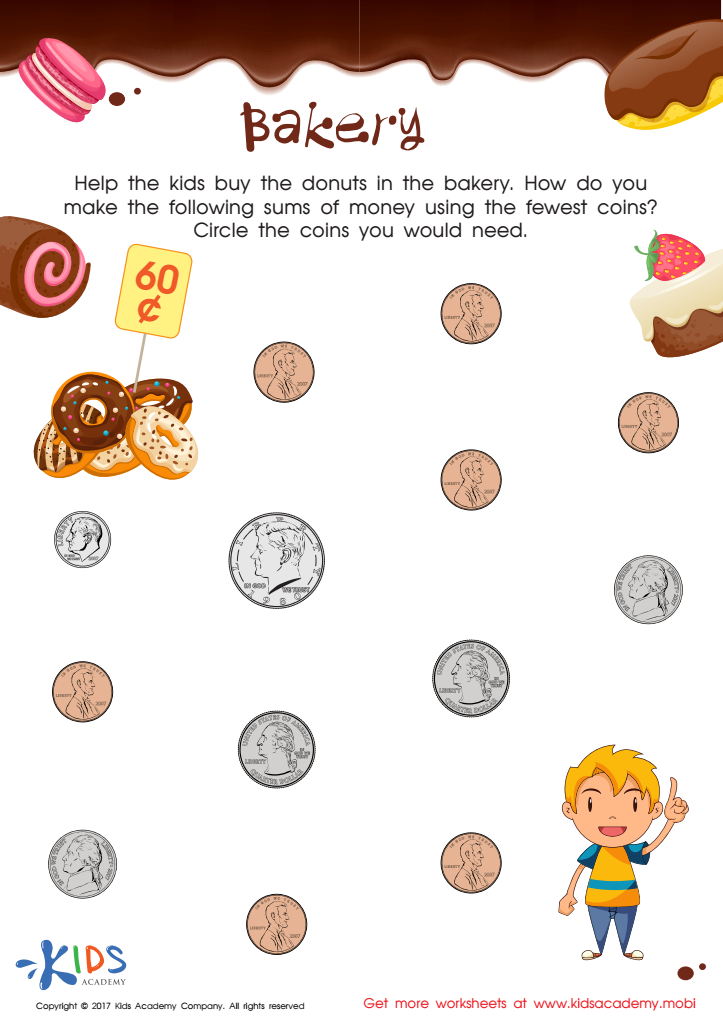
Counting Coins Worksheet
 Assign to My Students
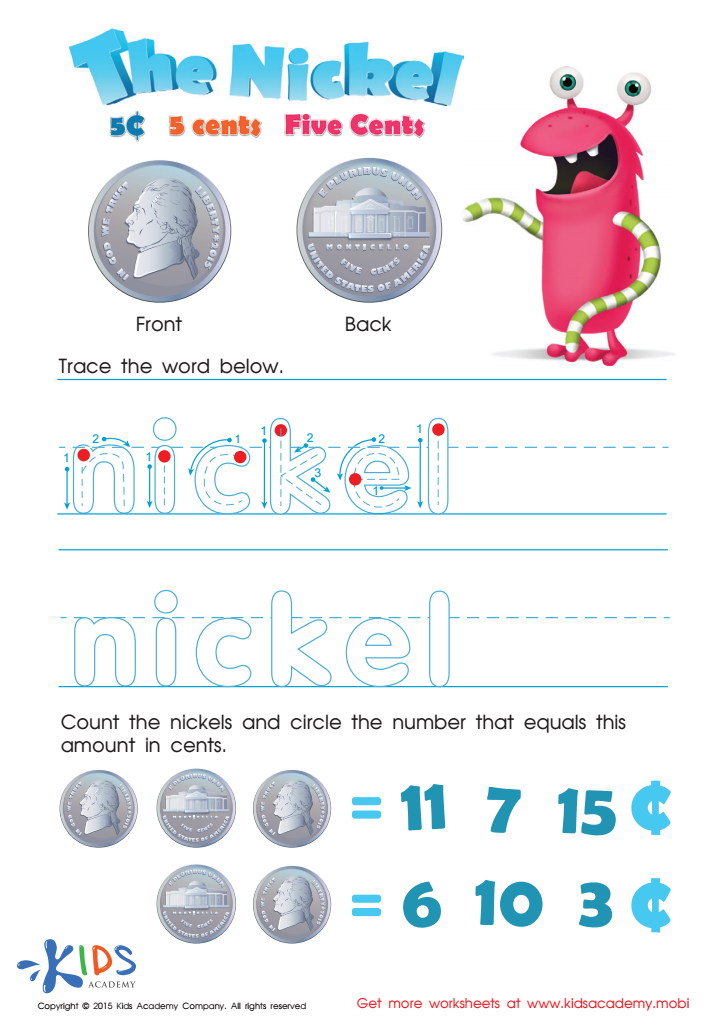
Five Cents or the Nickel Money Worksheet
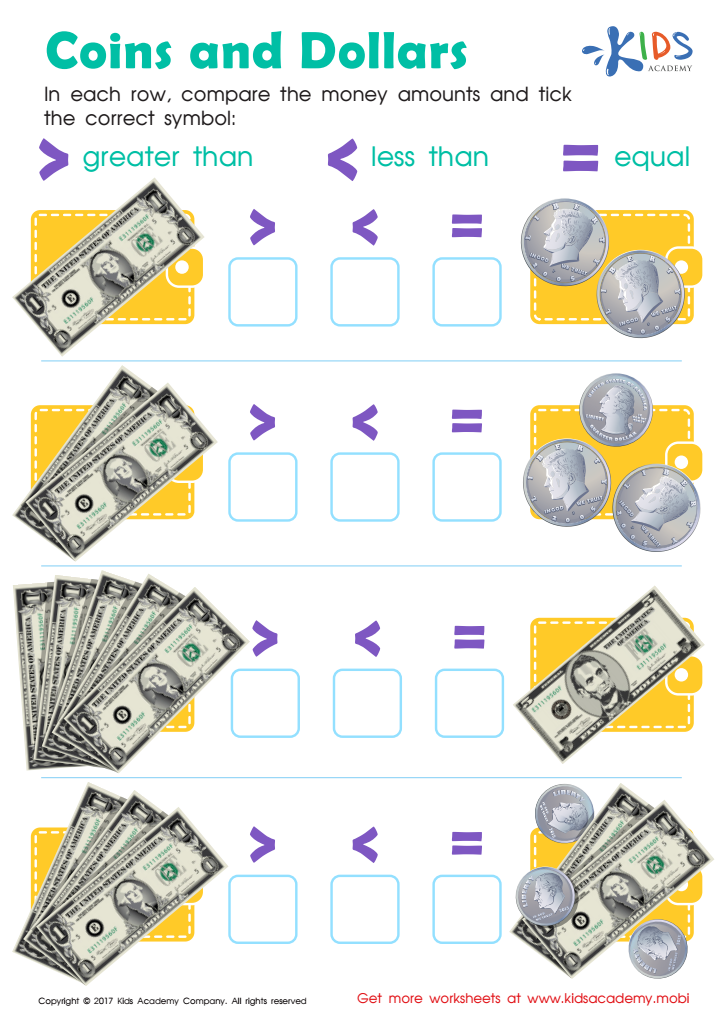
Money: Coins Dollars Printable








Understanding currency at an early age equips children with essential life skills that lay the foundation for future financial literacy. Teaching kids aged 3-7 about currency through simple activities fosters an early appreciation for money management. Parents and teachers who emphasize this learning encourage children to grasp basic concepts like counting, value, saving, and spending.
When children understand that coins and notes have different values, they also start recognizing the importance of budgeting. Through playful yet educational activities like role-playing a store, kids can experience the decision-making process regarding purchases, teaching them about choice and value. Moreover, early engagement with currency helps develop math skills. Counting coins enhances their numerical understanding and computational abilities, bridging critical thinking and problem-solving skills useful in everyday scenarios.
Incorporating currency activities enhances cognitive development and introduces the concept of responsibility. Children learn that money is earned and spent thoughtfully, fostering a sense of initiative and accountability. For parents, this means raising financially aware individuals, and teachers can integrate these lessons seamlessly across subjects, making learning multidimensional. In essence, nurturing currency comprehension in early childhood sets the stage for pragmatic financial habits and sound economic decisions in the future.








