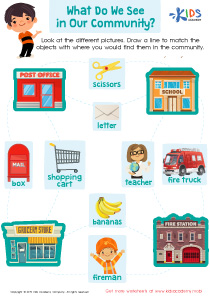
Recognizing shapes Extra Challenge Geometry Worksheets for Ages 3-7
3 filtered results
-
From - To
Unlock extra challenge and fun with our "Recognizing Shapes Extra Challenge Geometry Worksheets" designed for children ages 3-7! These printable worksheets help young learners advance their geometry skills by identifying and categorizing a variety of shapes. Patented for engaging visuals, each activity sharpens critical thinking, promotes shape recognition, and enhances spatial awareness. Perfect for classrooms or at-home learning, these resources cater to all skill levels, ensuring kids remain motivated and excited to learn. Ideal for both parents and educators looking to provide additional practice and challenge for preschool to early elementary students. Start shaping young minds today!
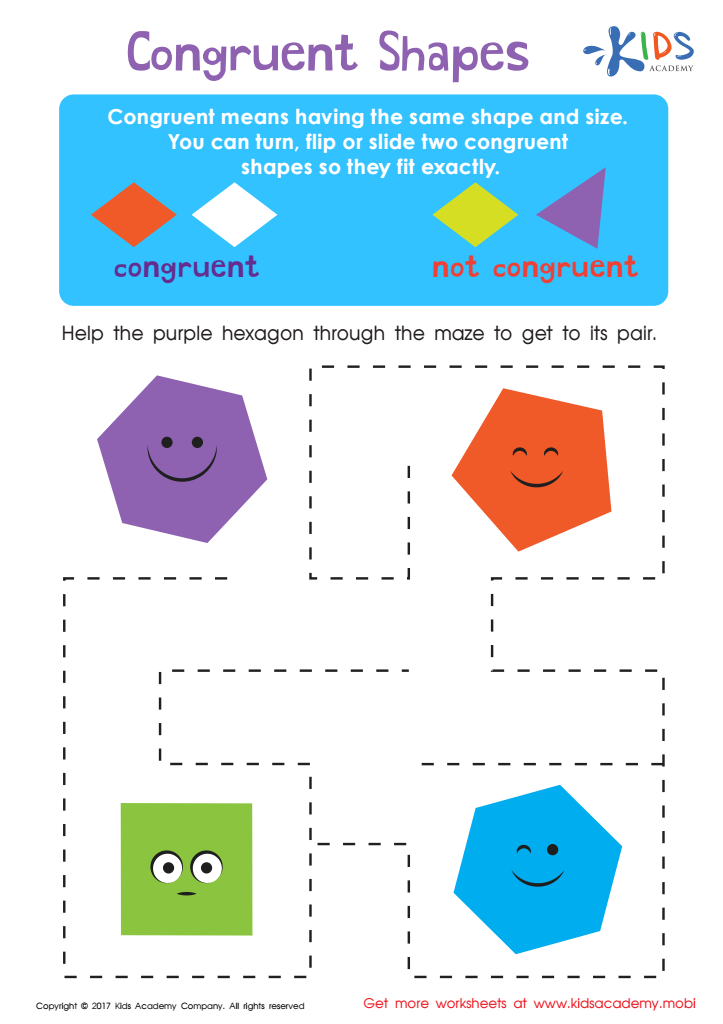
Congruent Shapes Worksheet
 Assign to My Students











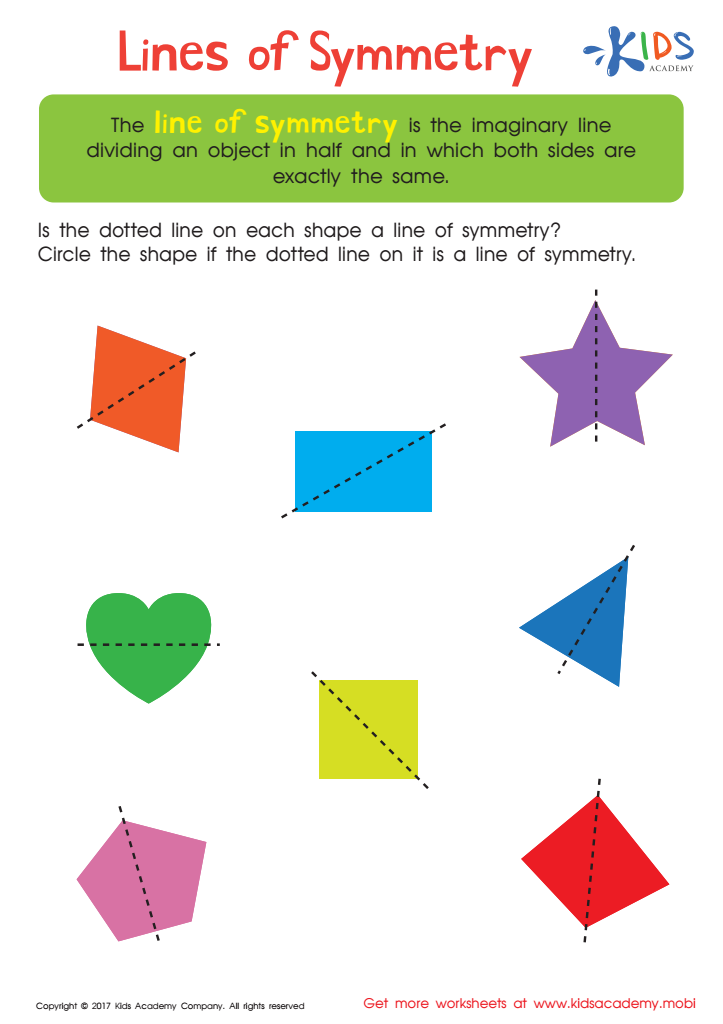
Lines of Symmetry Printable
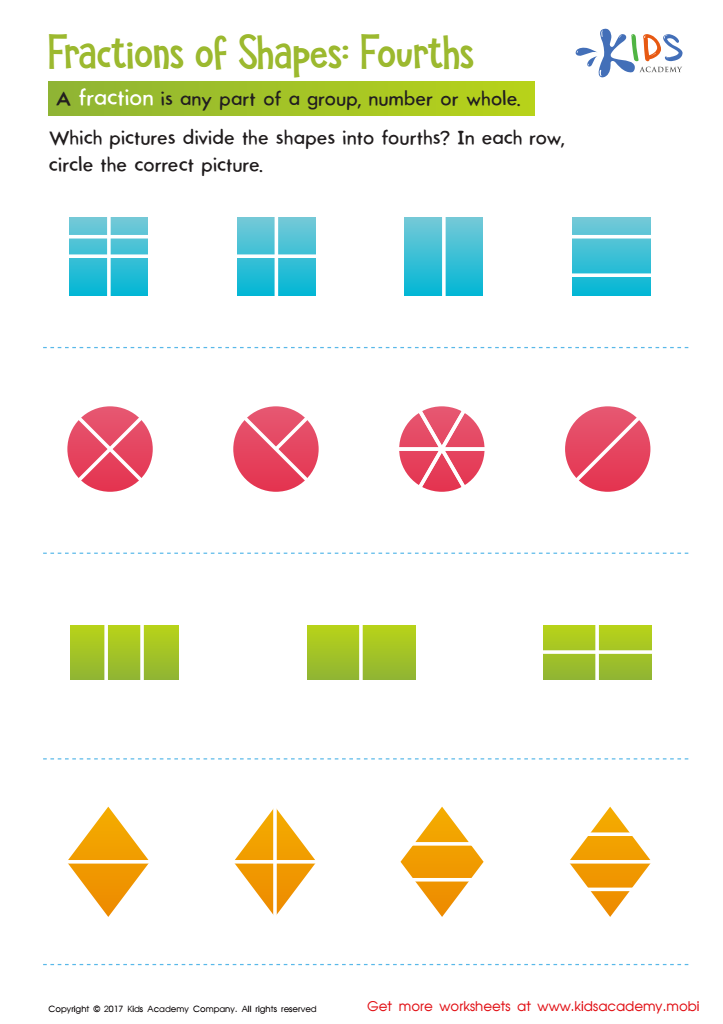
Fractions of Shapes Worksheet








Recognizing shapes is fundamentally important for children aged 3-7 as it lays the groundwork for essential cognitive skills. Geometry for young kids isn't just about knowing the names of shapes like circles, triangles, and squares; it involves understanding their properties, spatial awareness, and basic problem-solving.
Starting early with geometry fosters cognitive development by enhancing children's abilities to observe, compare, and sort different objects based on their attributes. Such activities improve critical thinking and analytical skills, which are vital for learning math and other STEM subjects in future.
Additionally, shape recognition is crucial for developing spatial awareness, which is integral for daily tasks and overall orientation in the environment. Children learn to navigate spaces, understand directions, and grasp the concept of dimensions, leading to better motor skills and coordination.
Engaging with shapes sharpens visual discrimination skills. This means children can better identify differences and similarities among objects, contributing to early literacy as they start to recognize letters and numbers based on their geometric features.
Teachers and parents should therefore prioritize shape-based extra challenges in a playful and interactive manner to not only make learning exciting but also ensure a strong educational foundation, boosting children’s confidence and enthusiasm for learning as they grow.