Visual perception Extra Challenge Numbers Worksheets for Ages 3-7
5 filtered results
Difficulty Level
Grade
Age
-
From - To
Subject
Activity
Standards
Enhance your child's learning journey with our "Visual Perception Extra Challenge Numbers Worksheets" designed for ages 3-7. These engaging worksheets focus on improving visual perception skills through fun and interactive number activities. Children will explore number recognition, sequencing, and counting while developing critical thinking and problem-solving abilities. Ideal for early learners, each worksheet is tailored to provide an extra challenge, ensuring your child stays motivated and excited about learning. Printable and easy to use, our resources support parents and educators in fostering essential math skills and visual perception. Dive into this educational adventure and watch your child's confidence soar!
Favorites
With answer key
Interactive
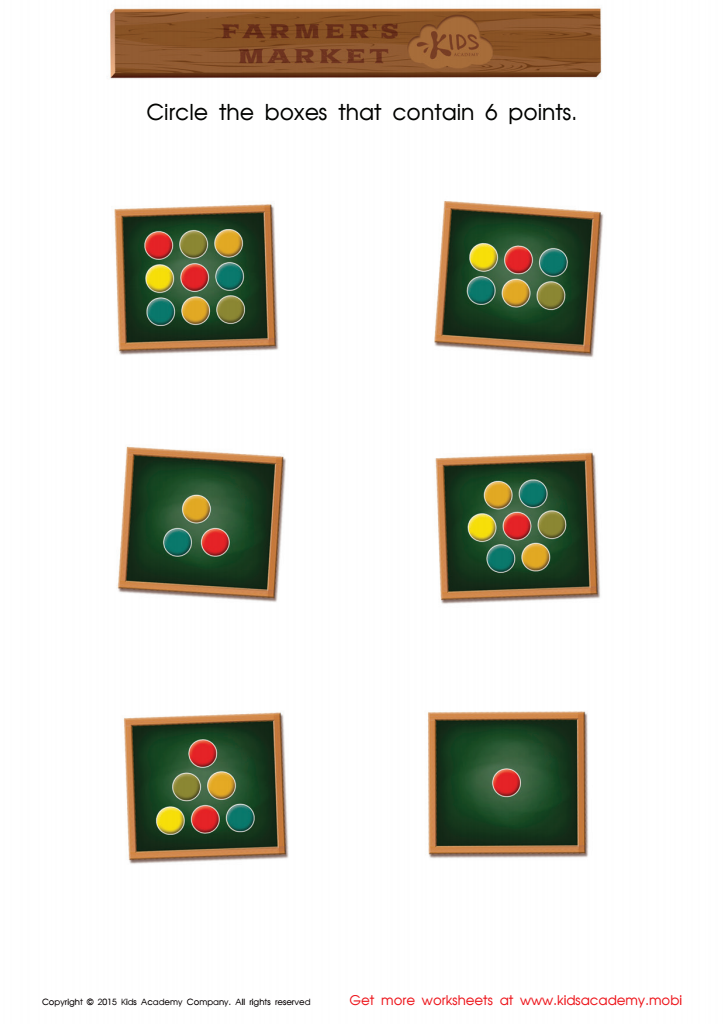
Count and Match Points 6 Math Worksheet
Help your child with mathematics by guiding them with this fun printable worksheet. They will practice counting numbers by looking at all the boxes and circling the ones containing 6 dots. Together you will gain a better understanding of mathematics.
 Assign to My Students
Count and Match Points 6 Math Worksheet
Worksheet
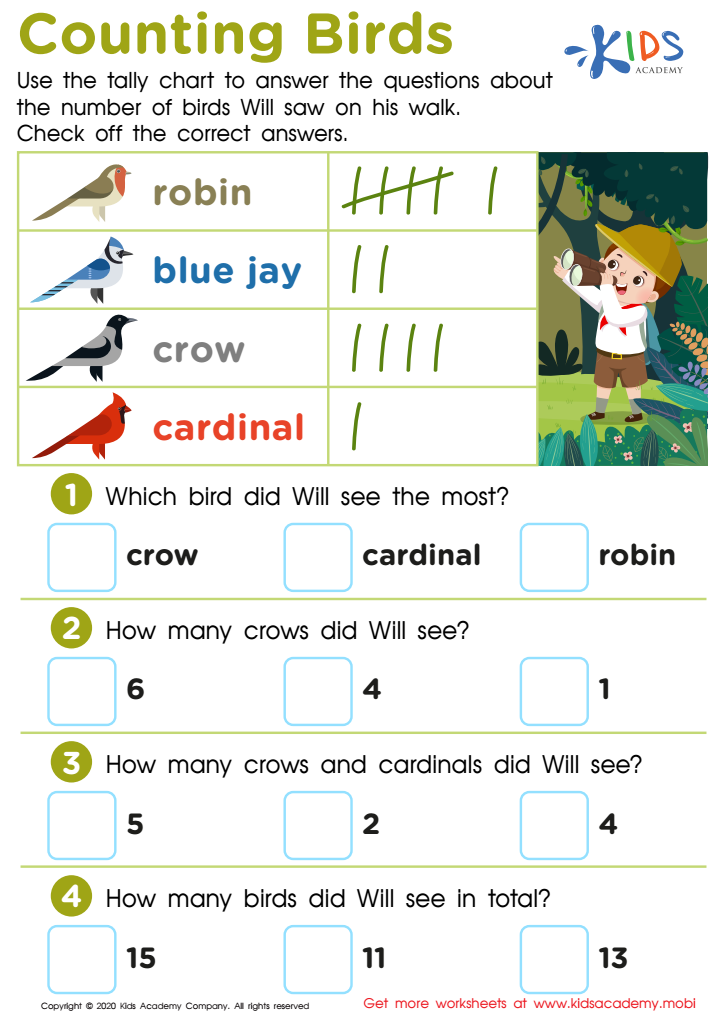
Counting Birds Worksheet
Introduce your child to the exciting activity of bird watching! This PDF worksheet features a tally chart of the different types of birds Will saw on his walk. Have your kid use the tally chart to organize information and use it to answer the questions that follow, thus boosting early science and math skills.
Counting Birds Worksheet
Worksheet
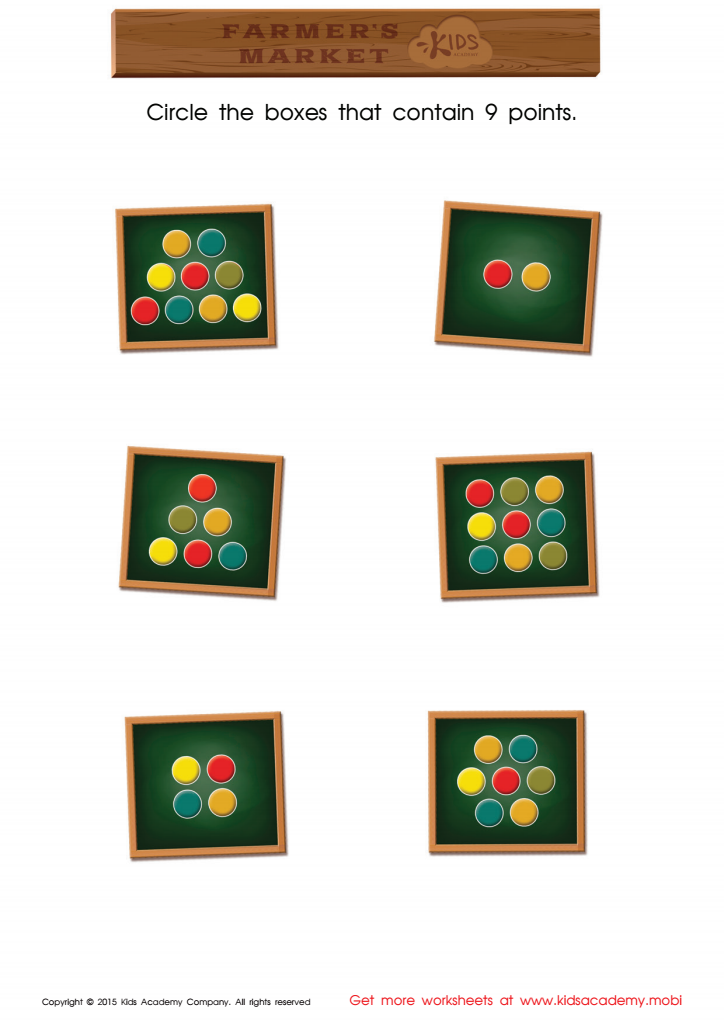
Count and Match Points 9 Math Worksheet
Circle the boxes with 9 points. Examine and count the colorful points in each of the 6 boxes. It's not easy as points are not arranged similarly, so have your child think hard and count carefully.
Count and Match Points 9 Math Worksheet
Worksheet
Count Santa's Presents Worksheet
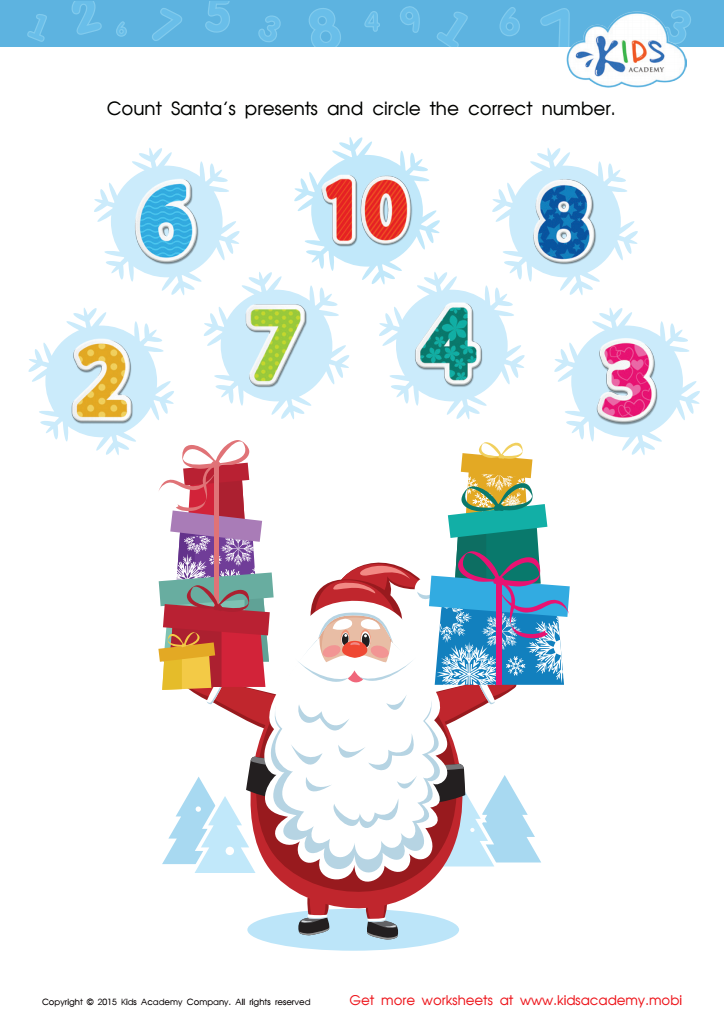
With Kids Academy's free Christmas math worksheet, your kindergartener can help Santa count presents. The worksheet encourages recognizing and counting numbers, fostering the Christmas spirit. Print it out, have fun, and get ready to circle the right number! Get more math printables to learn numbers in a fun way.
Count Santa's Presents Worksheet
Worksheet
Garden Counting Worksheet
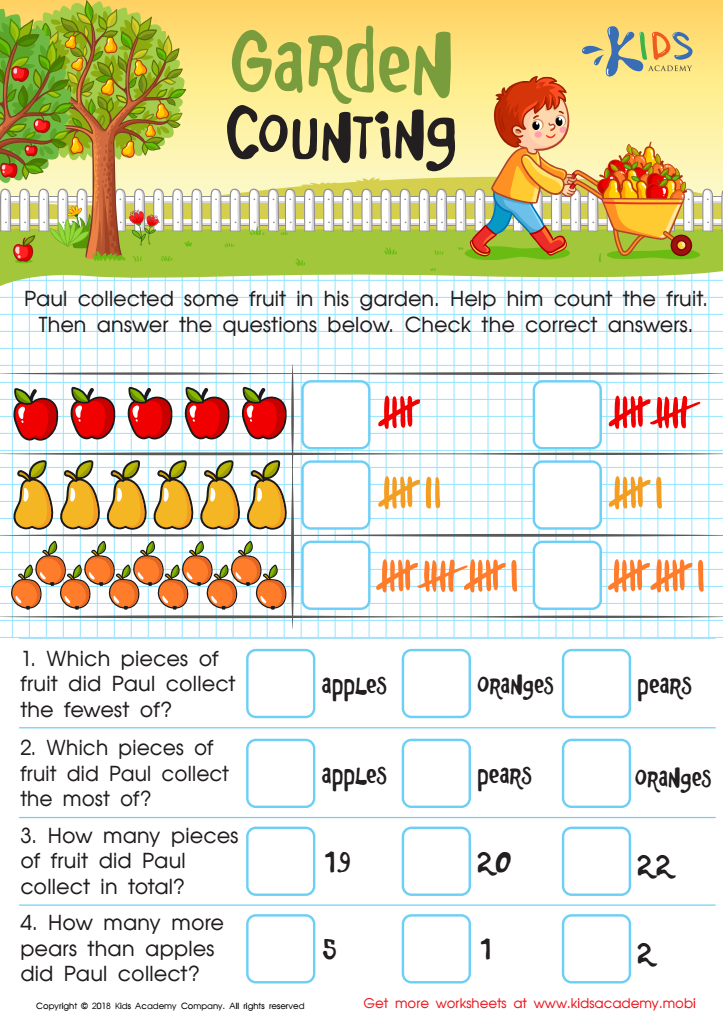
Help Paul count his fruit! Look at each type and count the total; check the box with the right number. Answer the questions below to report your findings and the types of fruit. Let's help Paul count his delicious harvest!
Garden Counting Worksheet
Worksheet
Join Kids Academy for Free
Who is primarily going to use this learning content?








Visual perception skills are crucial for young children as they form the foundation for learning and everyday functioning. For ages 3-7, the development of these skills significantly impacts their ability to recognize numbers, which is vital for early math comprehension.
Parents and teachers should prioritize visual perception activities that challenge young learners with number recognition and counting. These challenges not only enhance cognitive abilities but also improve hand-eye coordination, spatial awareness, and attention to detail. Engaging in activities that promote visual perception, such as matching games, shape sorting, and puzzles, helps children become more adept at decoding and understanding numerical information in various contexts.
Moreover, strong visual perception skills can contribute to enhanced reading abilities and overall academic success. Children who can effectively interpret visual information are more likely to excel in subjects that require analytical and critical thinking skills.
By focusing on visual perception extra challenges related to numbers, parents and teachers can lay a solid educational foundation and foster a love for learning in children. Investing time in these activities encourages persistence, exploration, and cognitive development, important components for a child’s readiness for subsequent academic challenges.