Color recognition Extra Challenge Math Worksheets for Ages 3-7
5 filtered results
-
From - To
Unlock your child’s potential with our "Color Recognition Extra Challenge Math Worksheets" for ages 3-7! Designed to enhance foundational math skills while promoting color understanding, these engaging worksheets offer a fun and interactive approach to learning. Children will enjoy sorting, matching, and identifying colors through a variety of captivating activities that integrate early math concepts. Perfect for at-home practice or classroom use, these resources encourage critical thinking and creativity. Whether your child is mastering basic numeral recognition or exploring more advanced challenges, our curated worksheets ensure a comprehensive learning experience. Boost your child's confidence in math while nurturing their imaginative spirit!
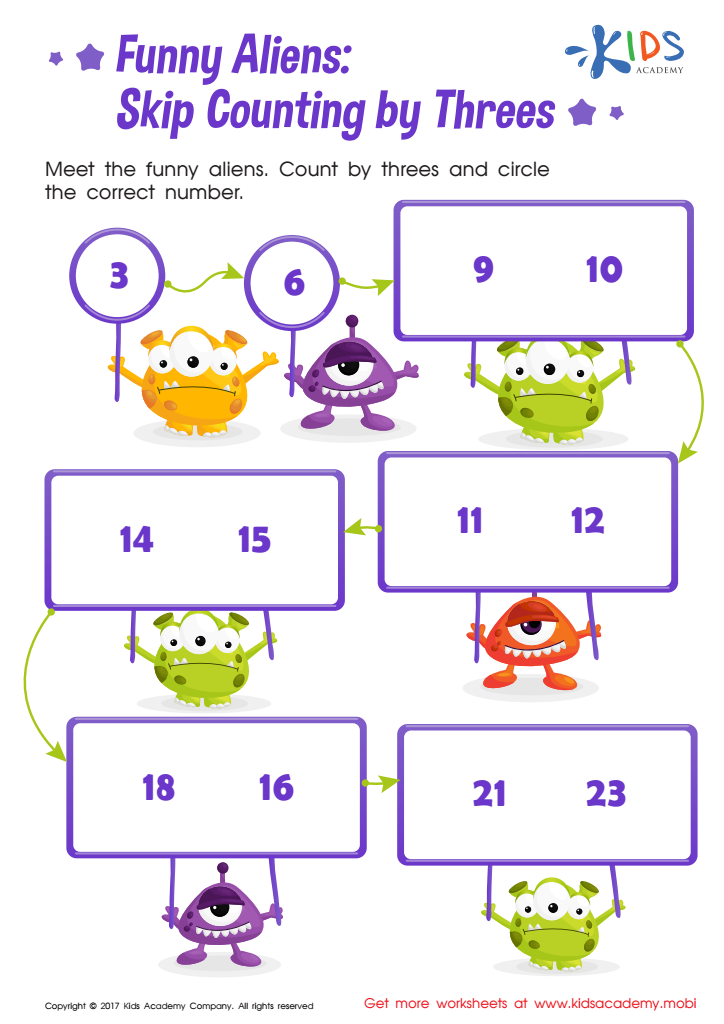
Skip Counting by 3s: Funny Aliens Printable
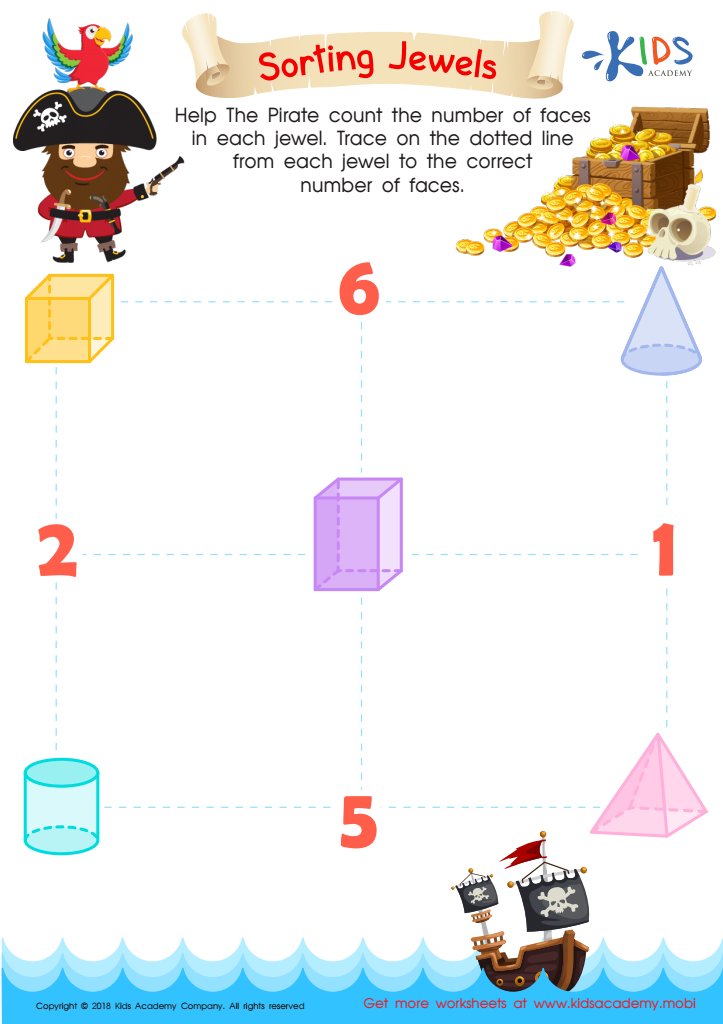
Sorting Jewels Worksheet
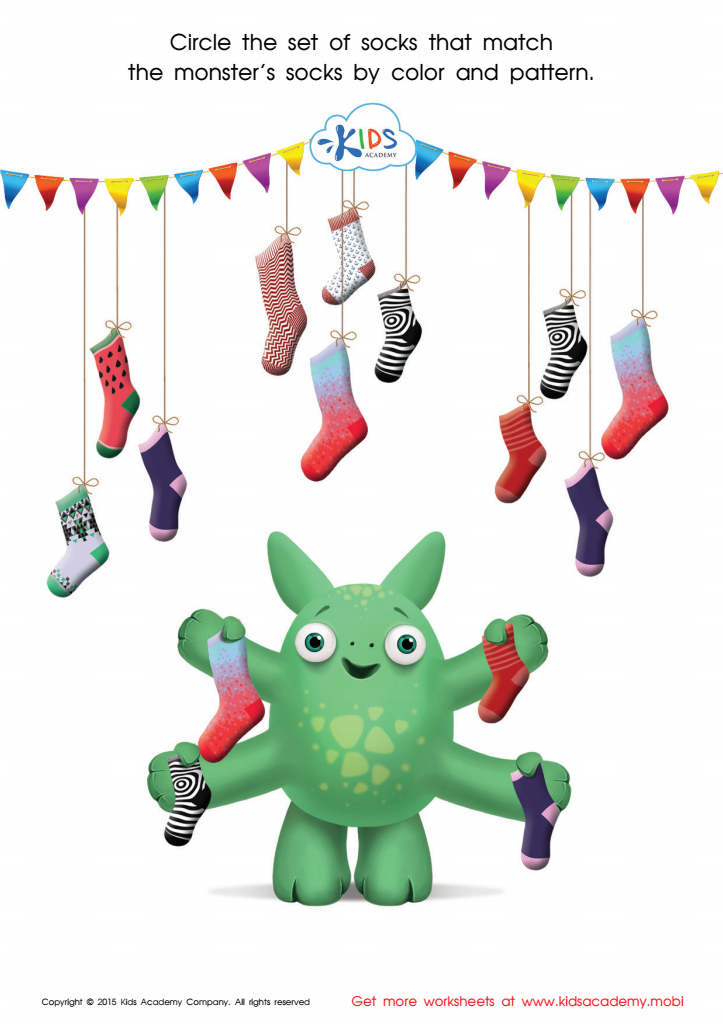
Sort the Monster's Socks Worksheet
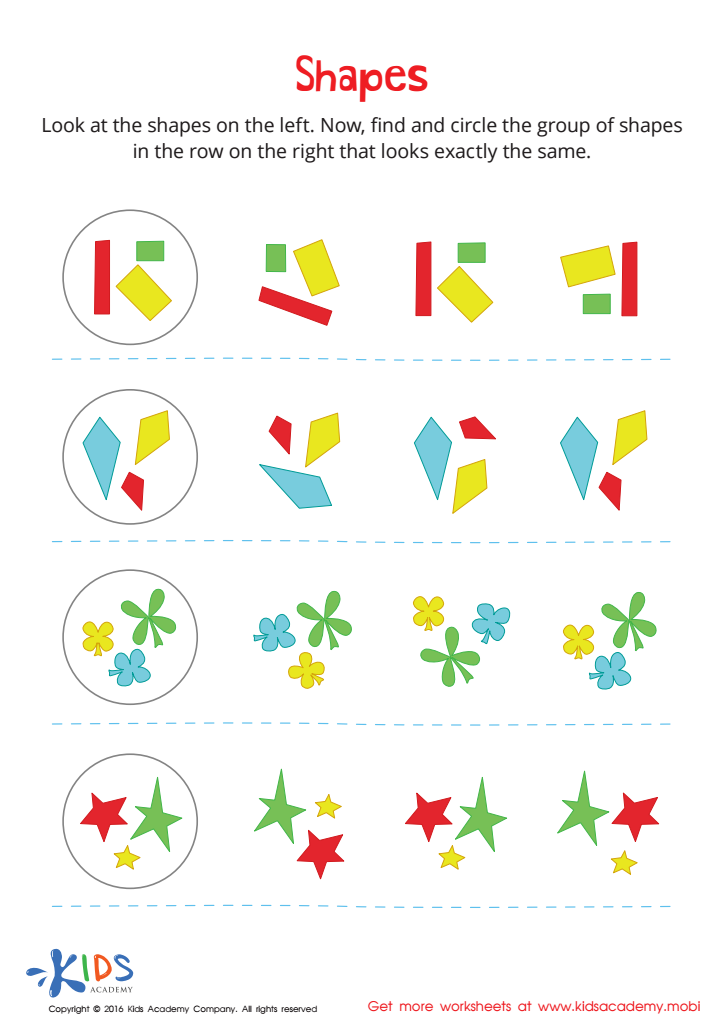
Shapes Worksheet
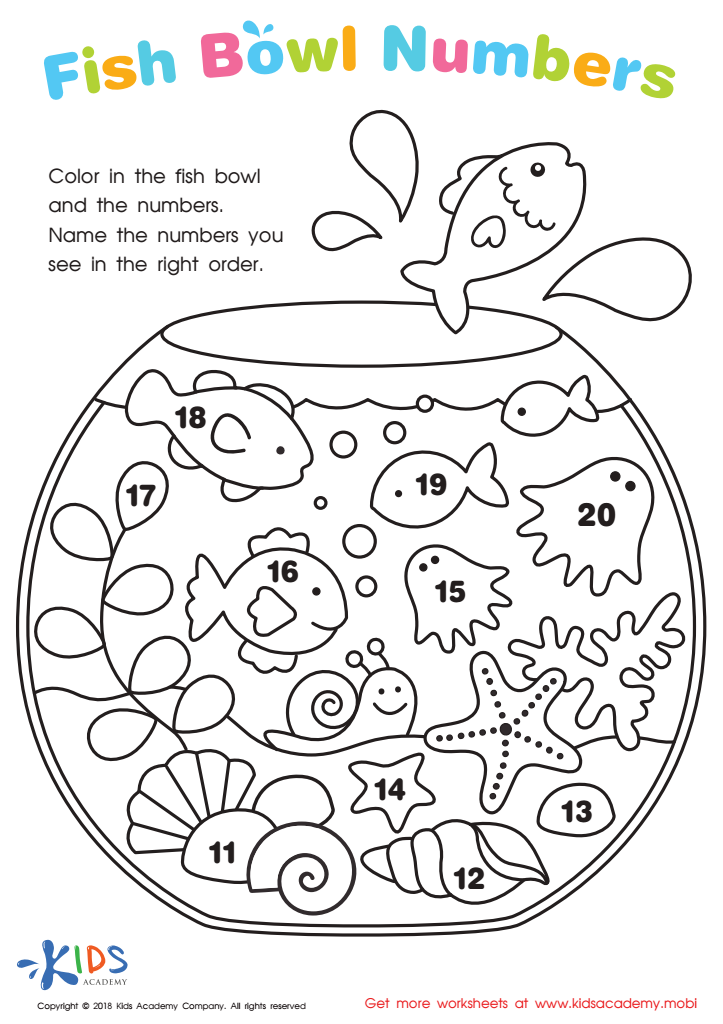
Fish Bowl Numbers Worksheet
 Assign to My Students





Color recognition is a foundational skill that sets the stage for various aspects of a child's development, making it crucial for parents and teachers to prioritize. For ages 3-7, children are at a pivotal stage for cognitive, social, and emotional growth. Understanding colors enhances their ability to categorize and interpret the world, fostering critical thinking skills as they differentiate and associate colors with everyday objects.
Incorporating Color Recognition Extra Challenge Math into learning activities provides an engaging way to strengthen this foundational skill while integrating mathematical concepts. By connecting colors with numbers and patterns, children develop a holistic understanding of both mathematics and the visual aspects of learning. This multi-sensory approach caters to diverse learning styles and keeps children motivated.
Moreover, mastering color recognition aids in the development of language skills. Children learn to articulate their observations, enhance their vocabulary, and engage in conversations. Additionally, these activities promote fine motor skills through hands-on tasks, allowing children to manipulate colors with tools like counters or crayons.
Ultimately, parents and teachers should care about Color Recognition Extra Challenge Math because it cultivates not only academic skills but also social interaction, creativity, and emotional intelligence, enriching the overall learning experience for children.








