Recognizing shapes Extra Challenge Math Worksheets for Ages 3-7
3 filtered results
-
From - To
Unlock your child's math potential with our "Recognizing Shapes Extra Challenge" worksheets, tailored for children aged 3-7. Designed to engage young minds, these worksheets offer a fun and interactive approach to learning shapes, enhancing both visual and cognitive skills. Perfect for early learners, they provide extra challenges that help build a strong foundation in geometry and spatial understanding. With a variety of activities, colorful designs, and engaging tasks, these worksheets will make shape recognition an enjoyable learning adventure. Equip your child with these excellent resources and watch their math confidence and competence grow!
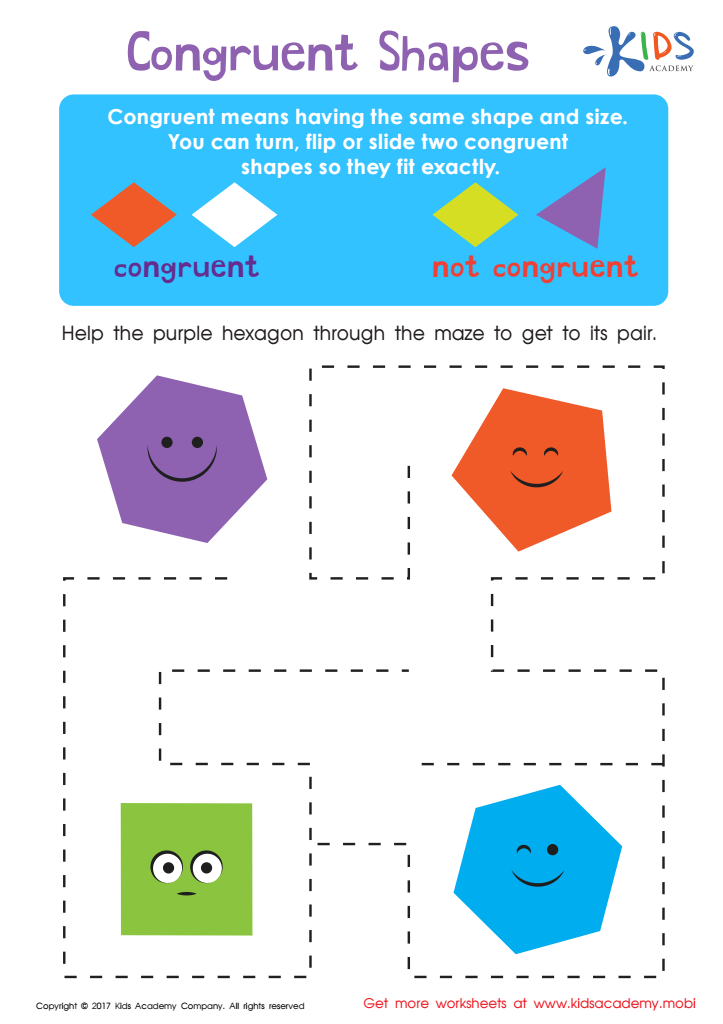
Congruent Shapes Worksheet
 Assign to My Students
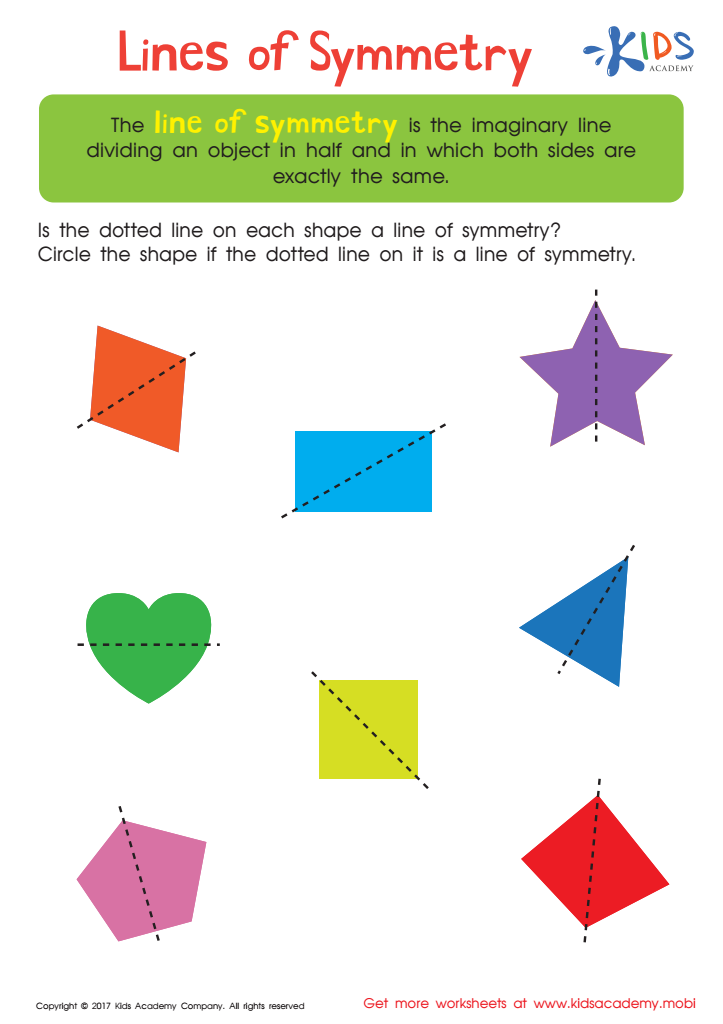
Lines of Symmetry Printable
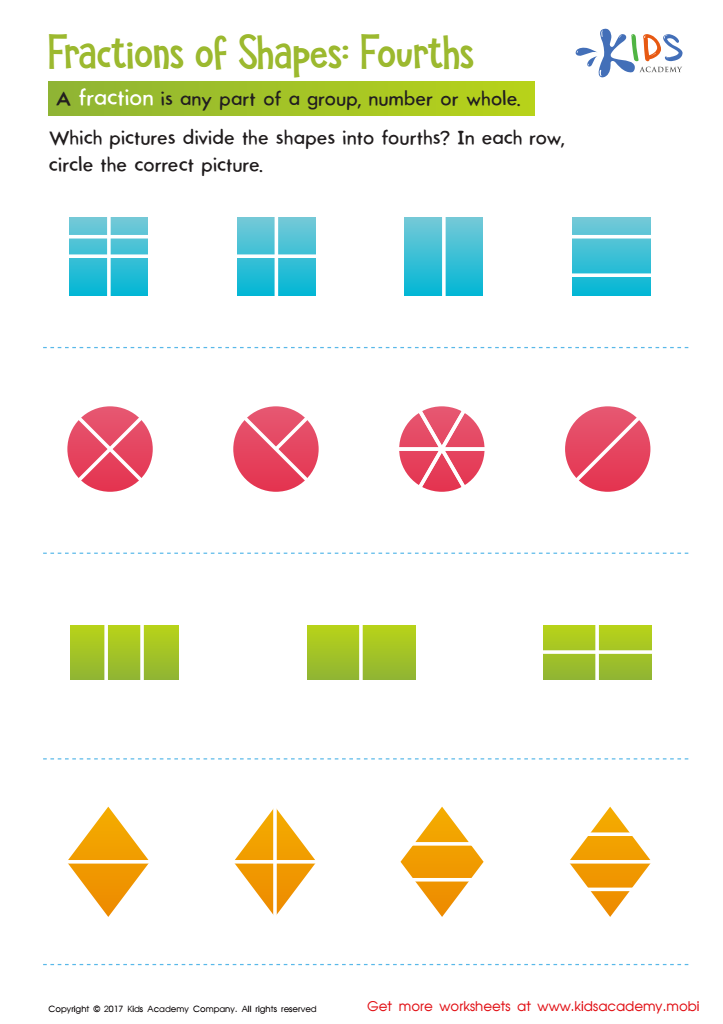
Fractions of Shapes Worksheet








Recognizing shapes extra challenge math activities are essential for children aged 3-7 as they play a fundamental role in cognitive and educational development. Understanding shapes lays the foundation for geometry and spatial awareness, critical components in both mathematics and everyday problem-solving. Engaging children in recognizing various shapes enhances their ability to identify patterns, an essential skill that supports logical reasoning and analytical thinking.
For parents and teachers, integrating shape recognition into early education also aids in language development. Describing and discussing the features of shapes—such as sides, corners, and symmetry—expands vocabulary and improves communication skills. These activities promote fine motor skills as children handle shape-related experiments or puzzles, fostering hand-eye coordination essential for writing and other tasks.
Furthermore, recognizing shapes aids visual perception, helping children distinguish items in their environment, leading to better reading readiness by understanding and identifying letters and numbers. These activities can also be adapted to be more challenging, ensuring that children remain engaged and motivated, fostering a love for learning.
In summary, ensuring children within this age group can recognize shapes through structured and fun activities prepares them for more complex math concepts and nurtures their overall intellectual growth, making it a crucial aspect of early childhood education.








